This article was first published on un.org on 12 February 2026. Available in English only.
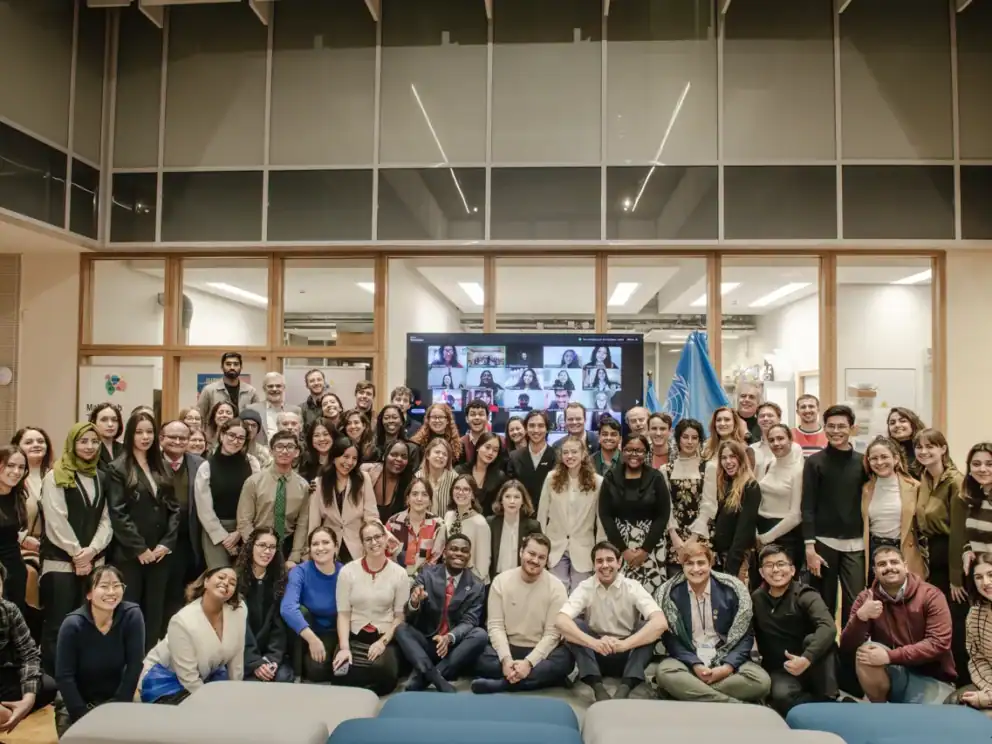
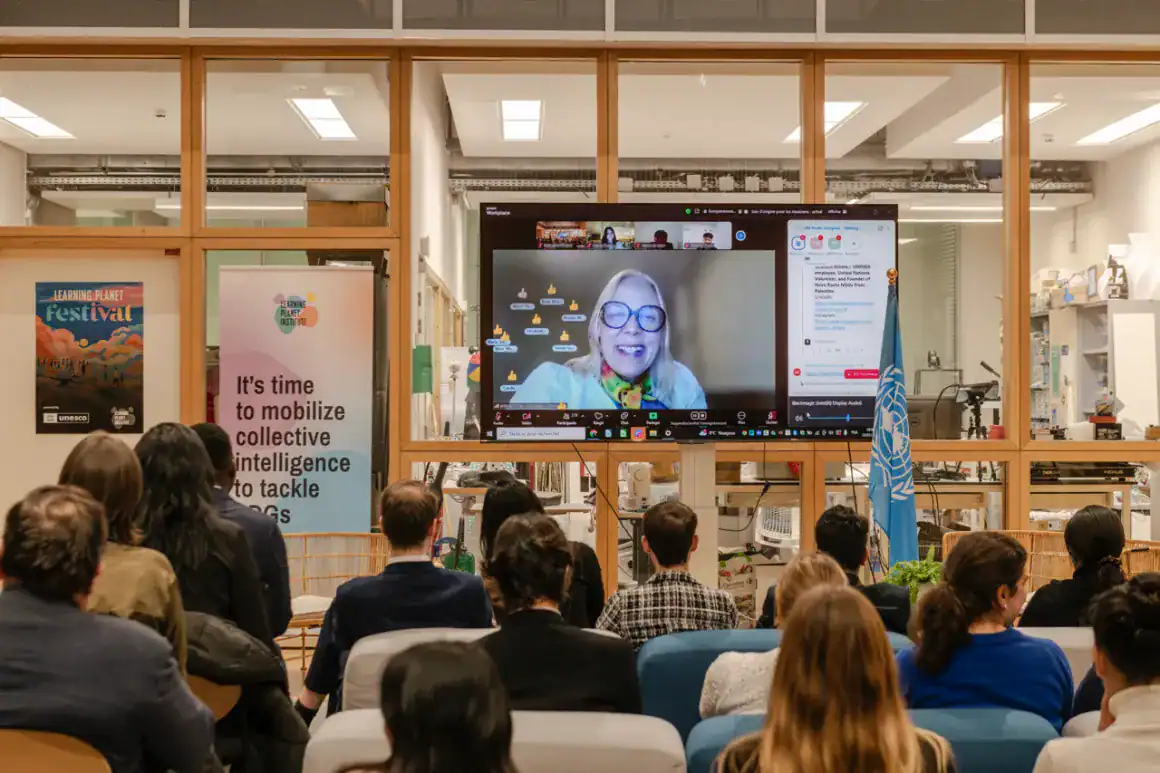
Student participants share what stood out to them during the hybrid dialogue “UN Youth Compass: Making Meaningful Youth Engagement the Norm”, co-hosted by the United Nations Youth Office and the Learning Planet Institute (LPI), with funding from the European Union. This was part of the LearningPlanet Festival, which featured over 650 events worldwide around the International Day of Education (January 24).
This session brought together youth leaders, institutions and partners to explore how youth participation can move from aspiration to real influence in practice. Discussions focused on strengthening meaningful youth engagement through greater accountability, inclusion and follow-through, especially in a global context where young people are demanding credible pathways to shape decisions that affect their lives. In this context, the UN Youth Compass was discussed as a tool to move from commitment to implementation, strengthening both youth participation pathways and institutional capacity to engage youth meaningfully.
- Click here to watch the event recording
- Click here to learn more about the speakers
- Discover the graphic facilitation summary of the session by Jodie, a student at LPI
Disclaimer: The views expressed in the reflections are those of the young co-authors and do not necessarily represent the views of the United Nations or the UN Youth Office.
Who we are?
We are Masters students at the Learning Planet Institute (LPI), joining this dialogue as young people working across education, inclusion and youth-led action.
- Maria-Angelica Meza (Colombia), with a background in Biology and teaching experience, is currently working on a research project to improve teacher training curricula so future teachers are better equipped for inclusive education;
- Jacqueline Landi (United States), with a background in biology and art, is currently working at a real-world project hub mobilising youth to build projects for a more sustainable and just world (Impact Studio at Sciences Po);
- Narges Karkhanehie (Iran), a social researcher, journalist, English tutor and psychologist-to-be.
What meaningful youth engagement looked like in practice?
- Maria-Angelica found herself coming back to a line from the opening of the event, helping her name the tension between hope and realism that many young people carry when they enter these spaces: “A couple of years ago, I heard that Utopia was made for us to walk, and that’s precisely what Head of the UN Youth Office Felipe Paullier mentioned in his opening speech, and it stayed with me. Even though the youth mobilization felt like a utopia before, that is what is moving us and made us reach this point. For me, these kinds of scenarios are the result of walking towards something that seems utopic and unrealistic, such as including youth in the real and important decisions in a system where youth voices are not fully valued. Being part of this session was quite hopeful and significantly reflective, because we can see that big organizations are starting to hear the young voices and understand their big frustration with today’s decisions and actions. However, it’s clear that there’s still a long way to go, so more spaces like this one — but at bigger scales where intergenerational communication and construction in a language accessible to everyone can happen — are completely necessary to continue moving forward to the utopia we want to reach.”
- Jacqueline experienced the conversation through a slightly different lens: she came in thinking about “learning by doing” in the practical sense, and left thinking about how learning can also look like mobilization — the slow work of building momentum, shifting norms and staying in the conversation long enough for something to change: “After interning in the LPI Makerlab, participating in this session provided me with a new and profound way to understand learning by doing and co-creation, through a lens of mobilisation rather than prototyping. During the panel discussion, Venus Aves’ (member of the UN Youth Office’s 2024-2025 Youth Reference Group) words really resonated with me when she said, “Our age gives us the unique advantage of not being attached to solutions that do not work anymore.” For me, one of the greatest conflicts we face as a society is the youth’s drive for change and older generations’ resistance to it, or fear of it. I have often framed this fight for change as an uphill battle, but now, as Venus suggested, I am trying to reframe this hunger for change as a deep strength.
- For Narges, what stood out first was not a single panel moment, but the tone of the space, and what it made possible as a first UN experience: “In my first experience of a UN event, I found myself feeling safe to talk, raise questions and truly express. Particularly, once again, I took François Taddei’s (President, Learning Planet Institute) insight, as it went so well with this occasion about youth: ’to make the best for the planet instead of the best of [the planet].’ This is definitely what we need to hear with all the competitions and struggles youth go through, even to become a changemaker. Following what François believes, anyone can be a changemaker. I believe what we saw could be even greater with only the youth and new voices as the speakers, or even have the event held by them. Maximising their visibility and experiencing a day made totally by them for everyone would be a step forward. I look forward to seeing the next steps in action after hearing all those great ideas.”
What should come next?
- Maria-Angelica’s reflection points to the need for scale and accessibility: more spaces like this, designed for intergenerational dialogue in language that people can actually use, so youth engagement does not stay confined to those already inside institutional settings.
- Jacqueline’s takeaway is about mindset and process: treating young people’s push for change as a strength, and designing engagement so that new approaches are tested rather than filtered out by attachment to legacy solutions.
- Narges’ ask is about shifting visibility into leadership: creating more moments where youth and new voices not only intervene, but host, shape the agenda and show what “youth-led” can look like in practice.
If meaningful youth engagement is to become a norm, these moments must connect to continuity — clear pathways from dialogue to influence, and feedback loops that show young people how their participation is shaping what happens next.
This article was co-written by Maria-Angelica Meza, Jacqueline Landi, and Narges Karkhanehie, students at the Learning Planet Institute, alongside Ed Stevenette, project manager at Learning Planet Institute. This article is also available online at un.org.
The event “UN Youth Compass: Making Meaningful Youth Engagement the Norm” was hosted on 23 January 2026 by the United Nations Youth Office and the Learning Planet Institute, with funding from the European Union.
Photos: LPI/Kasia Strek