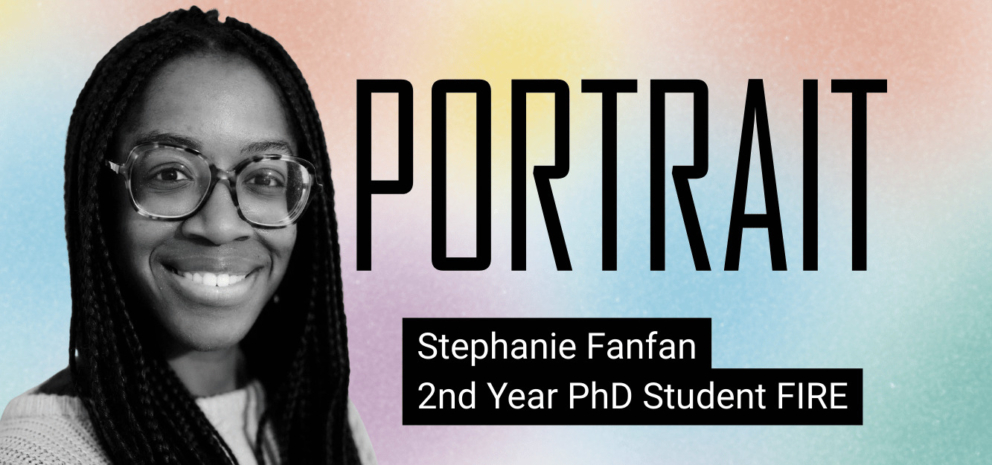
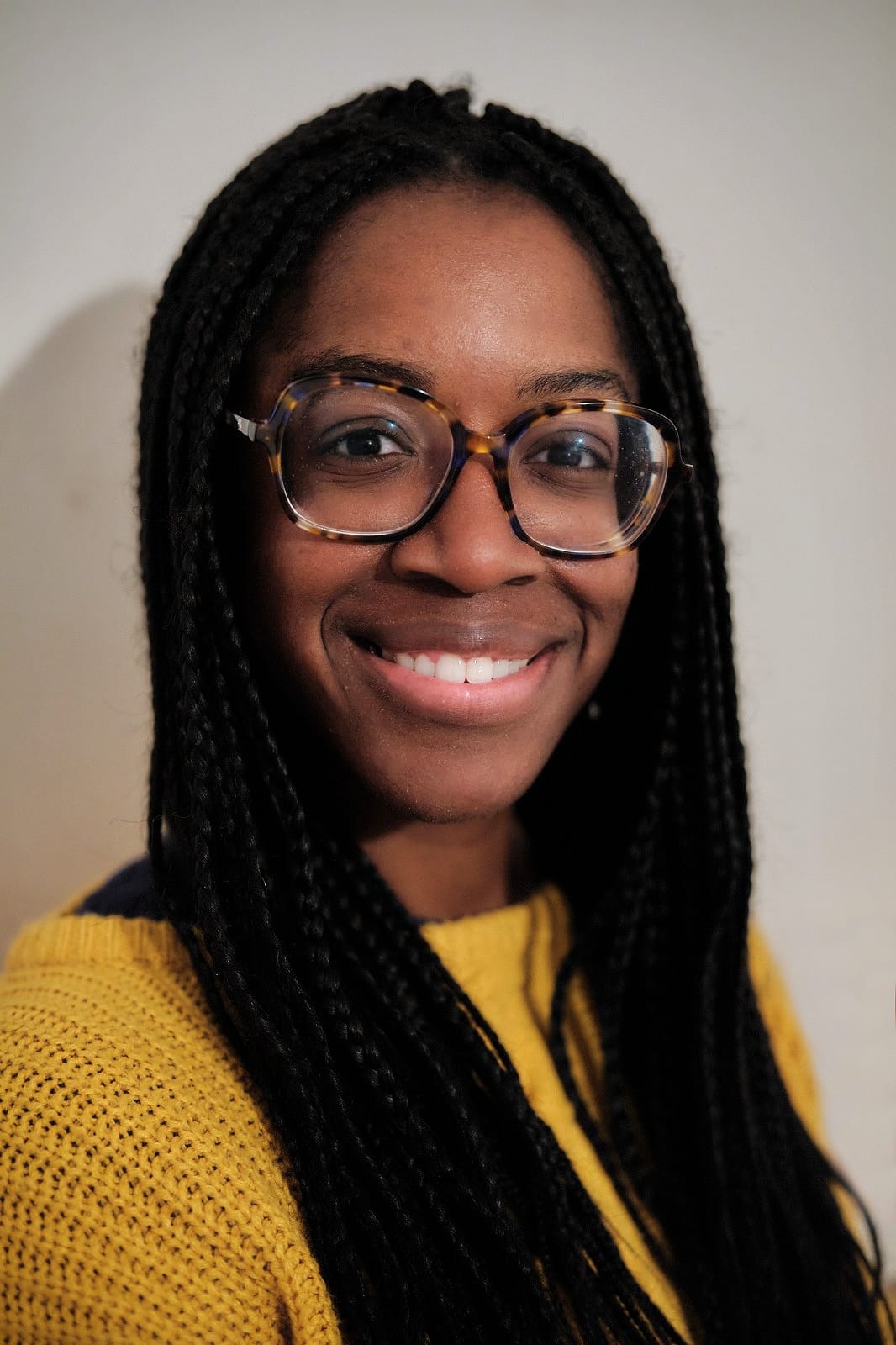
Stephanie Fanfan is a French, Afro-Caribbean scholar, social innovator, and doctoral researcher in Social Innovation Policy and Criminology at Université Lumière Lyon 2 (Centre Max Weber; Research Unit Learning Transitions – Learning Planet Institute/CY Cergy Paris Université).
Her research examines how carceral education, institutional recognition, and the distribution of social and justice capital shape women’s post-incarceration trajectories. Her doctoral work advances transferable, evidence-based frameworks aimed at strengthening reintegration policy across national and transnational contexts.
Stephanie Fanfan
2nd Year PhD Student FIRE
Lab 1: Centre Max Weber, Université Lyon 2
Lab 2: John Jay College of Criminal Justice, New York
Background: Master Social Intervention & Development at Toulouse Jean Jaurès; Master Of Business Administration at International School of Management New York; Master Marketing & Communication at ISEG Bordeaux-Paris
She holds an MBA from the International School of Management (New York, USA), a Master’s degree in Marketing & Communication (ISEG Paris), and an M.Sc. in Educational Leadership & Administration from The College of Saint Rose (Albany, USA). Her interdisciplinary formation bridges governance strategy, institutional reform, and educational systems design.
Stephanie is the founder of Beyond Bars Akademia, a South African post-custody training institute for formerly incarcerated women. This initiative established a replicable model linking community-based innovation with institutional accountability from 2016 to 2020. She is also the founder and research director of AFROSOMA: Institute of Citizen Science from the Margins, an interdisciplinary research platform advancing participatory methodologies, visual criminology, and policy innovation rooted in decolonial and Afro-diasporic epistemologies. An award-winning visual criminologist, she received the Rachel Tanur Memorial Prize in Visual Sociology (ISA, 2025).
Her work is oriented toward reimagining justice systems not merely as mechanisms of punishment, but as institutions capable of structural repair, social equity, and sustainable reintegration within a global framework of democratic governance.
Her publication, “Survival and Resistance: Documenting the Kalunga Community, a Quilombo in Goiás and Its Legacy of Social Control,” appears in The Palgrave Handbook of Criminology and the Global South, 2nd edition.(https://doi.org/10.1007/978-3-031-74932-2_117-1)
Can you explain your PhD thesis to a non-specialist audience?
I am a doctoral researcher at the Centre Max Weber in University Lumière Lyon 2 and affiliated with the Research Unit Learning Transitions at the Learning Planet Institute. The provisional title of my thesis is: “Reconfiguring Reintegration: A Political Sociology of Carceral Education, Justice, and Capitals in Women’s Trajectories.” My research examines a deceptively simple question: Why do reintegration policies often fail incarcerated people (specifically women), even when prison education and vocational training are provided?
Most reintegration systems are built on a linear assumption: teach skills in prison, improve employability, reduce recidivism. But this model treats reintegration as an individual technical problem. My thesis argues that reintegration is political and holistic. Women’s pathways in and out of prison are shaped by gender inequality, economic precarity, racialization, violence, caregiving responsibilities, and unequal access to social networks. Education alone cannot compensate for structural barriers if institutions do not address the broader distribution of opportunity and recognition.
Through qualitative fieldwork, participatory methodologies, and policy analysis, I study women’s trajectories before, during, and after incarceration. The analysis is about how different forms of “capital” (social, educational, symbolic, and institutional) interact to either enable or constrain long-term reintegration. In simpler terms: rather than asking “Does training work?”, I ask: How must reintegration policy be redesigned to account for inequality, gendered experiences, and institutional power? My long-term objective is to develop evidence-based, transferable frameworks that can reshape reintegration policy across different national contexts. I aim to move the debate beyond employability metrics toward a broader political understanding of justice, capability, and social inclusion.
Because reintegration is not just about employment. It is about how societies decide who is allowed to return, under what conditions, and with what support. If institutions focus only on individual responsibility while ignoring structural inequality, they risk reproducing exclusion under the language of opportunity. And I am interested in redesigning this architecture. After all, if a system consistently fails those who do not fit neatly inside it, perhaps the problem is not the women… but the box.
Why did you choose the FIRE PhD programme?
For most of my life, I’ve been caught in between who I really am… and how I’m perceived. I don’t quite fit. When you don’t fit neatly into a box, you’re forced to see the world from multiple angles. You move between spaces. You listen to disparate voices. You collect lessons from different disciplines, different geographies, and different struggles. Those lessons, for better or worse, shaped the person I am today.
Academia can be rigid. I needed a space where my activism and my intellectual rigor weren’t merely tolerated but genuinely valued. I needed to be surrounded by people committed to change, unafraid to challenge dominant paradigms. And also? When the FIRE PhD programme opened, two friends already in the school reached out immediately and said, “This is you.” That mattered. It felt like being recognized and not reshaped. So, here I am!
In what ways has FIRE helped you develop your personal and professional project?
This is the first time I’ve encountered an institution where “interdisciplinary” isn’t just a polished word on a brochure, but an operational reality.
I came in with a project deeply rooted in activism. The FIRE programme pushed me (rigorously) to refine it through other disciplinary lenses: sociology, data science, policy, education, and international collaboration. This is when my thinking expanded a lot. Today, the research I’m conducting is something I’m immensely proud of, but it’s also strategically stronger, more transferable, and more impactful because it now speaks to academia, to policymakers, and to practitioners.
FIRE’s international dimension also shifted my scale of thinking. My work is no longer confined to a single national context. I collaborate across borders, across sectors, across epistemologies. All of this spilled over to my life too.
I am now the founder and research director of AFROSOMA, an Institute of Citizen Science from the Margins. What began as an NGO evolved into a research lab with global collaborators. That evolution happened because FIRE didn’t ask me to shrink my vision but rather gave me the structure and intellectual ecosystem to expand it responsibly.
Who should apply to the FIRE PhD programme, and what advice would you give future applicants?
Who should apply? People who don’t fit the box! People who want their research to matter outside academic journals. People who care about the SDGs not as slogans, but as lived commitments. People who are collaborative but independent. Idealistic but strategic.
My advice? Never try to make yourself smaller to fit an institution. If you apply, come as you are… fully. With your contradictions, your unconventional background, your intensity. LPI and FIRE don’t need clones. It needs thinkers who can build bridges where others see walls. And maybe, just now, if you’ve always felt “in between”, you might finally realize that’s exactly where innovation happens.
Applications for the FIRE doctoral school are open. Spread the word!
> FIRE Doctoral School – open applications until 3 April 2026: https://phd.learningplanetinstitute.org/en/join-us