Colin Labouret , architect, animator and educational designer, looks back on his experience with The Schools Challenge*. The aim of this mentoring program is to develop interest in sustainable development, science, technology and project management among 3rd graders in Seine-Saint-Denis (93)**.
Alongside his work as an architect, Colin Labouret helps organizations create educational content on architecture, urban planning and design for young people. In 2020, a friend told him about some workshops she was running with ninth-graders on “innovation and the city”. Seduced by the program's approach, he became a program mentor. The Schools Challenge (TSC), then co-creator of the 2023 edition.
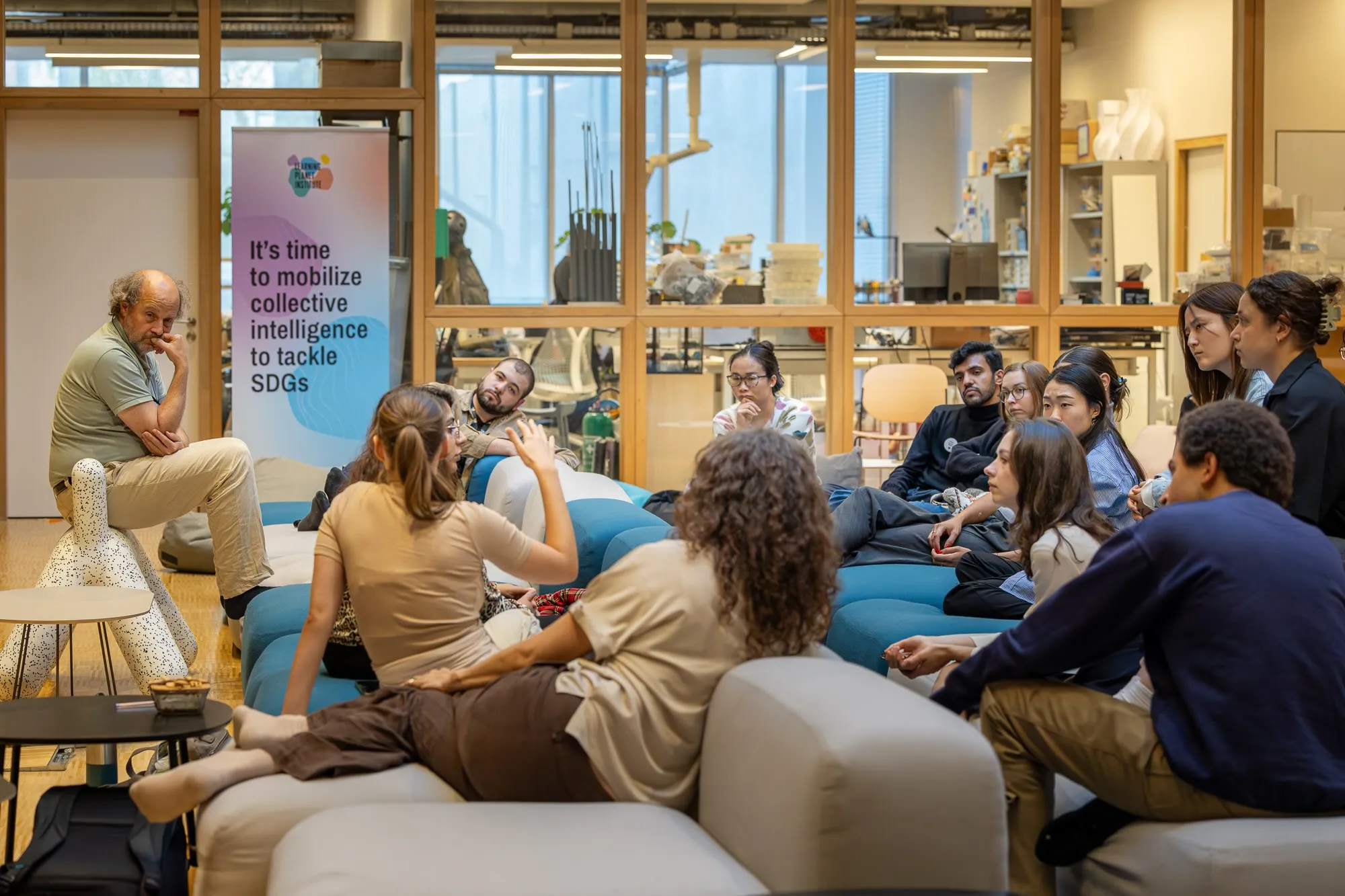
For the fourth edition of the program launched in September 2022, schoolchildren will be reusing materials from street furniture to build their projects to construct a sustainable city. This new orientation was co-created by the Learning Planet Institute and Colin Labouret. Meet us.

Why did you become a mentor? What was your role?
The Schools Challenge invites young people to take a critical look at their living and built environment.
It was this approach that immediately attracted me: linking the macroscopic objectives of sustainable development to a ‘simple’ observation by ninth-graders of their own town. In my opinion, teaching through projects, through action, through the concrete, is a lever of investment for teenagers.
Through innovation, The Schools Challenge encourages students to surpass themselves, to seek originality, and to gain confidence in their abilities and convictions.
As a mentor, I was lucky enough to accompany a group of eight students for two years in a row: their objective was to construct a problem around living well in the city, and then come up with an innovative response. My role was to accompany them in their questioning, to fuel the debate with references and sources, and to push them to surpass themselves individually and collectively!
You also co-created the 2023 program. What's new about it compared with previous editions?
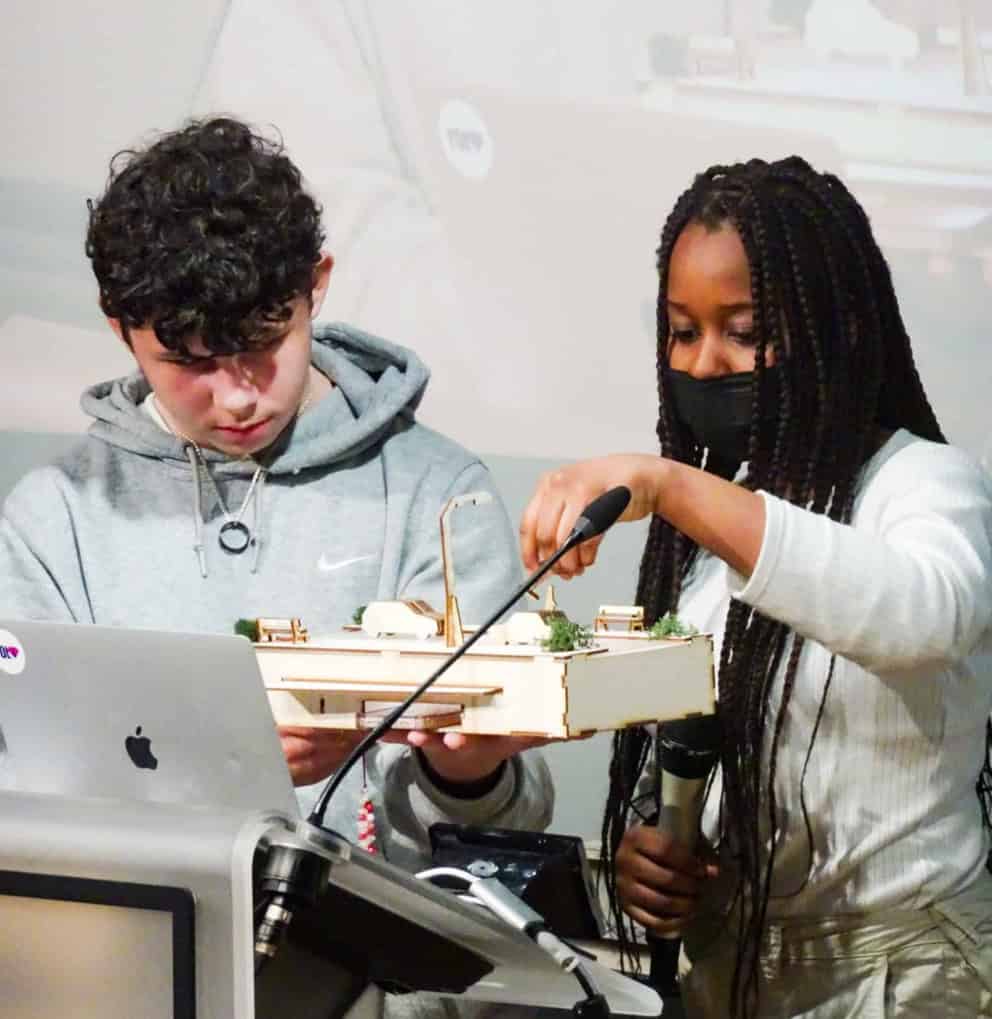
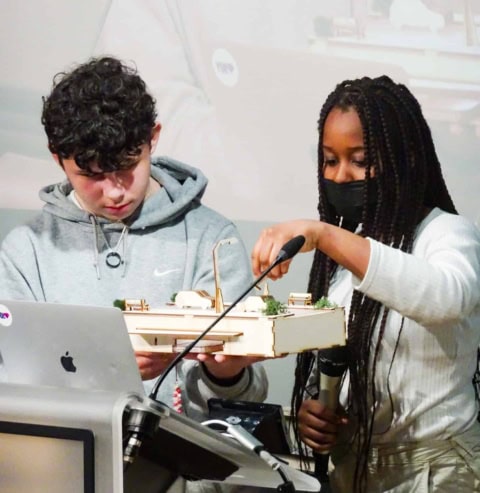
At the end of The Schools Challenge 2022, Philippa-Jane Blein and Paul Monsallier, the team Youth from Learning Planet Institute, We were keen to move the program towards a more applied approach. Together, we came up with the idea of asking the students of the 2023 edition to imagine, in groups, a piece of street furniture for the area around their schools. This would involve question the public spaces they are familiar with, and take a fresh look at them Which piece of street furniture would enable me and my fellow students to make the city their own? How does street furniture help to “better city living” ? This approach to the urban environment has been complemented by an equally concrete approach to sustainable development: students will have to design their furniture using only materials from re-use channels. And that's not all! They will produce a prototype of their creation at the MakerLab of the Learning Planet Institute.
What did you particularly enjoy about these experiences?
My greatest satisfaction in taking part in The Schools Challenge was to see the students surprise themselves. I remember one student who, throughout the year, found it extremely difficult to even speak in front of the few people in his group. At the final, having prepared well for his oral presentation, it was he who enthusiastically completed the presentation of his group's work. It was a great pleasure for me to see him discover an ease in speaking that he had previously doubted.
In my opinion, the point of The Schools Challenge is to help these young people reflect, at an age when they are beginning to become fully aware of the world and themselves. It's not a top-down transmission; on the contrary, it's a springboard we're trying to build for them.
Why do you think it's important for schoolchildren to get involved in urban and local issues through project management and science education?
The built environment often appears to be the intangible backdrop to local life. Yet it governs our social interactions and affects our well-being. Taking a critical look at this environment means questioning what seems immutable and intangible. It's vital that middle-school students are able to open up the field of possibilities. At a time in their lives when they are beginning to define themselves as citizens and players in society, young people can form their own opinions about the world around them.
By questioning the objectives of sustainable development on a planetary scale, young people are at the same time positioning themselves as active participants in a local life that needs to be thought out and rethought.

LEARN MORE
- Discover schoolchildren's projects for 2022
- Discover the film The Schools Challenge
Thanks to Colin Labouret for answering our questions!
* The Schools Challenge is a mentoring project initiated by J.P. Morgan, with the support and expertise of the Learning Planet Institute, which has already been followed by 170 students, since 2019.
** Iqbal Masih, Saint-Denis and Miriam Makeba, Aubervilliers