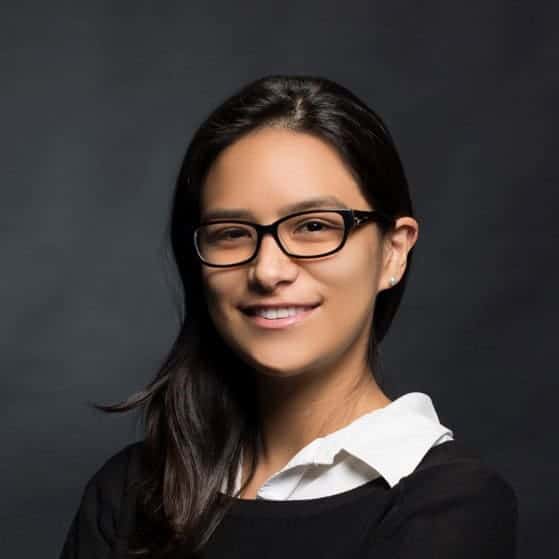
Edna Pezard is an architect-urban planner and research engineer based in France, passionate about creating safe, inclusive and humane public spaces. She is currently developing a new project with the Challenge Institute's U Lab program.
After a master's degree in urban affairs in Mexico (2011-2013), she began a doctoral thesis at Université Paris Cité in 2017. Her approach is resolutely interdisciplinary, and she often takes her research out of the laboratory. In 2019, she founded the think tank City Cité Ciudad with which she carries out her projects. In the course of her work, she has collaborated with municipalities, NGOs, researchers and universities, always with the same objective in mind: to improve safety in public spaces for vulnerable populations (women, children, the elderly, etc.) and - in her own words - “to be an agent of positive change in cities around the world”.
Edna is deeply committed and determined to make a difference through research and experience. With the help of the U Lab, she is currently developing a new project: an educational course based on a series of podcasts.
We met her.
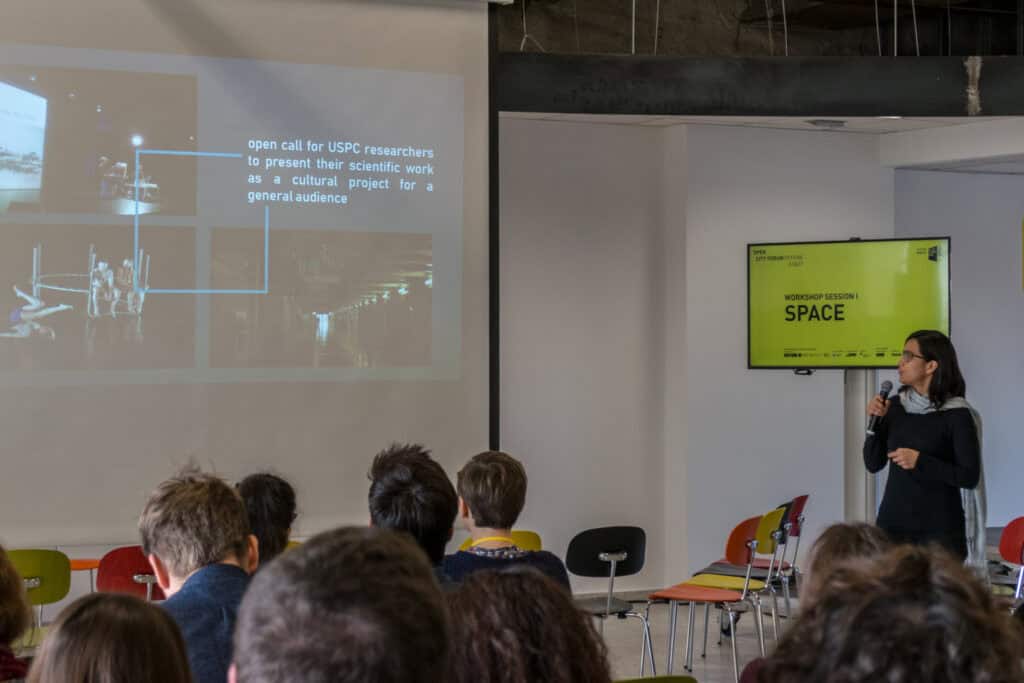
Why have you chosen to devote your research to a better understanding of the relationship between public spaces and feelings of insecurity?
I grew up in Mexico, near the United States. At the time when I had just obtained my Master's degree, the country had become very, very violent due to various problems linked to organized crime and the so-called “war on drugs“In the meantime, the "security" of the environment in which we moved and lived became a daily concern. Gradually, the safety and security of the environment in which we could move and live became everyday issues to be taken into account.
After graduating, and like many young urban planners and architects, I was keen to make a difference and wanted to make public spaces more sustainable. But in all my early projects, one subject kept coming up, both in my professional and personal life, tainting all other issues: the problem of safety. It wasn't a subject I was looking for, but it was constant. So I dove in!
She first proposed a research project on the effectiveness - or lack of it - of different measures to make public spaces safer. But she soon realized that crime rates and people's reactions didn't always tell the same story.
When it comes to the notion of safety and how to make cities safer, everyone has an opinion. Safety means many things to many people, and this meaning fluctuates according to experience, social status, geography, etc. Moreover, the feeling of insecurity and the fear of crime are not the same thing. Feelings of insecurity can be triggered not only by crime - and crime, for example “white collar” crime, can occur and you can live feeling perfectly safe. Graffiti, for example, can make someone realize that they may not be in a safe area.
Not all crimes are violent, and not all violence is treated as a crime. For example, in a country where street harassment is considered a crime by the courts, if a person - let's say a woman, as is often the case - is verbally harassed but the harasser leaves, there has been violence but the crime is not necessarily reported. Yet violence has a real impact on daily life. These incidents may not be treated as crimes, but they affect the way people move around in the public space, they bring about a change in routine.
Safety is a matter of daily life, especially for vulnerable and marginalized populations. These are the groups who are first and most affected by violence - not “crime”, but “violence”. Unfortunately, these populations are also the least heard when it comes to better understanding problems and finding solutions.
I once did some fieldwork that led me to meet various groups working to improve safety in their neighborhoods. These groups were led by men, but there were mostly women on the panel. And the women used very gender-neutral ways of speaking, but generally gave priority to a male perspective. These groups constantly talked about theft and how to protect one's car or possessions, but never about the fear of being harassed or assaulted. This is what the women did after the group meeting, getting together and talking about their own experiences. At the meeting, no one asked them directly what their problems were.
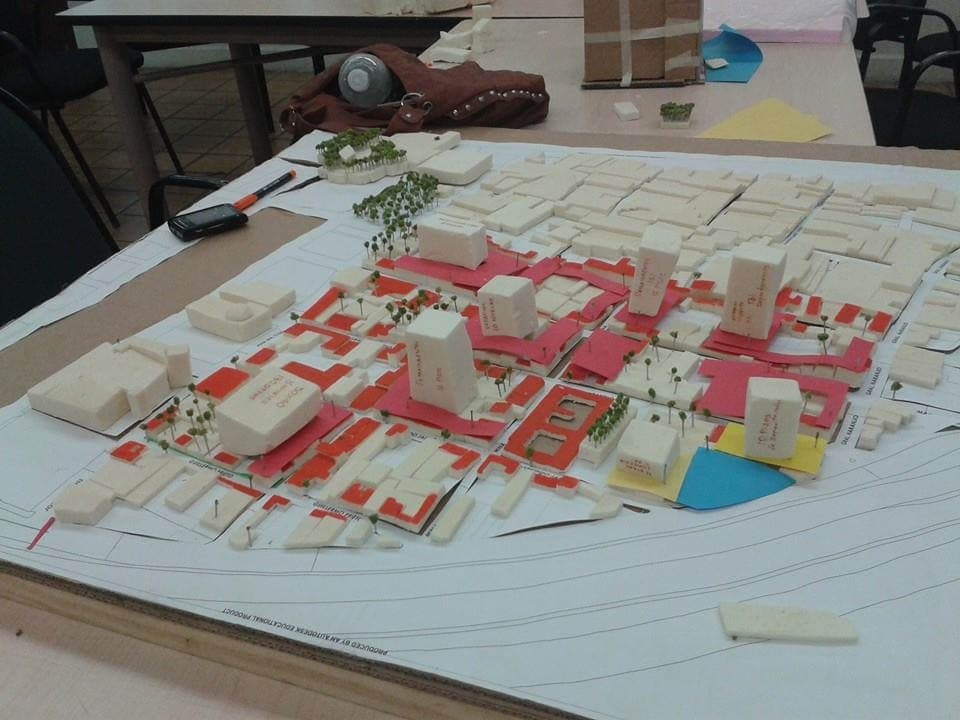
You originally studied urban planning and architecture, but you also use sociological concepts in your work. How did you come to realize that you needed to broaden your field of research and action and use an interdisciplinary approach?
As an architect, I learned to create spaces, to be creative and to use space as something you can manipulate. I think that's changed a bit now, but back when I was studying urban affairs, we weren't well informed about the social and political issues related to architecture. As far as I'm concerned, I usually explain the evolution of my point of view by saying that I started out as an architect interested in spaces and buildings. Then I became interested in groups of buildings in cities. Then, as my doctorate and professional experience progressed, I became increasingly interested in the social aspect, which is now the intangible element playing a protagonist role in my work.
I combine my instincts as an architect, which lead me to find solutions based on space and materials, with more subtle tools such as anthropology, sociology and gender studies.
In my field, we tend to insist on spatial solutions, but this is not always the right solution. Making a space more beautiful or more practical doesn't necessarily improve the feeling of safety or safety itself.
It's very, very seductive to claim that you can solve safety problems in a public space by making it more welcoming with a paint job or strategically placed benches. But perhaps the problem is better tackled through social action, by approaching people and creating links between authorities and residents. Very often, solutions lack the social element that takes into account inequality and intersectionality.
What is intersectionality?
L'intersectionality is a framework that recognizes that individuals may experience and understand oppression differently, depending on factors such as their race, gender identity, sexual orientation, socio-economic status and other aspects of their identity, which operate simultaneously, and that these factors cannot be understood or addressed independently of one another.
It aims to create a fairer society by focusing on the experience of the most marginalized.
Edna Pezard
The notion of intersectionality is essential. The problem of safety and security becomes even more complex when we consider the different identities that each individual carries within him or herself. We need to consider all these identities at once to better understand how we can be advantaged or disadvantaged in relation to the power structures at play in society. This is particularly true for women. That's why intersectional feminism is so important.
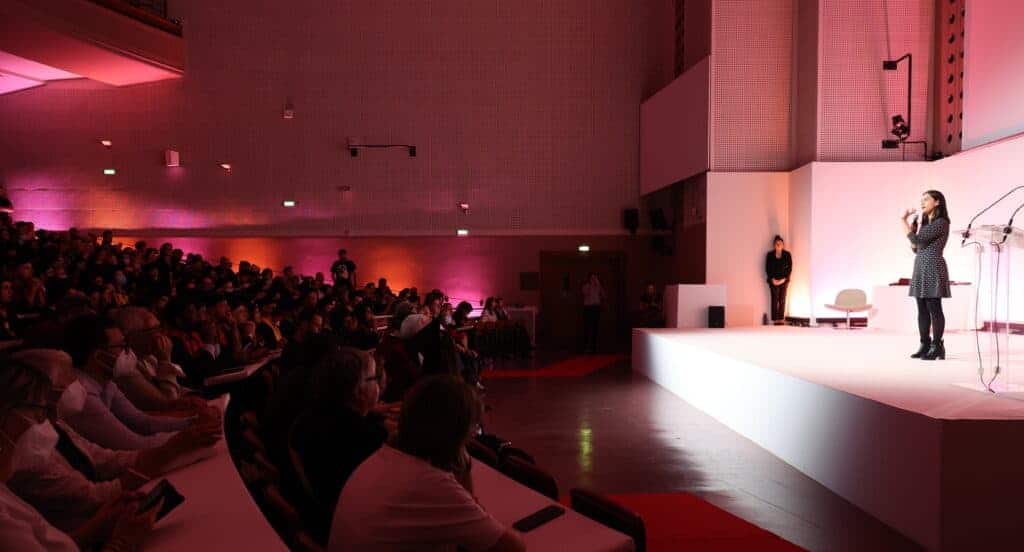
You mentioned that your research involved going out into the field and meeting people. Do you often use participatory methods?
It's absolutely essential in my process to include the people I work with and for. I use various methods such as exploratory walks, participatory mapping, photovoice, mind maps, etc. I work for the users who will benefit or suffer the consequences of the solutions I propose. I work for the users who will benefit or suffer the consequences of the solutions I propose. I believe that participation is a key element in making cities safer and more inclusive. But you have to be smart about how you apply these participatory methods.
To return to the notion of intersectionality, it's essential to understand who we're talking to, who is speaking and who isn't.
Surveys are a very common tool for assessing fear of crime and feelings of insecurity. But not everyone feels empowered to answer a survey; people usually have very nuanced answers to what seems like a very simple question. And this concerns their identity, or the different identities combined in a single person.
I generally use guided or semi-guided interviews rather than surveys, because we can go further in understanding the problem and its origins from the point of view of the various stakeholders. I prefer qualitative tools to quantitative ones. However, you can't carry out in-depth interviews with 505,000 inhabitants; that's where you have to be careful how you approach these methods.
For example, you need people to trust you, which is complicated because trust requires vulnerability, and this is particularly difficult with populations that are already vulnerable. That's why I generally advise decision-makers to rely on local associations and existing groups, no matter how small. They are the intermediaries who can help you to be trustworthy when conducting qualitative studies.
Who did you work with?
I've worked with a wide range of actors, from the average citizen who lives in a neighborhood they'd like to improve, to municipal authorities, for example in an EU-funded project to implement entire cities and tackle the problem over the long term. In the meantime, I've worked with associations, universities, other professionals in the fields of research, architecture, urban planning, young people, artists, photographers and so on.
You're currently working on new projects with the Institut des Défis, as part of their U Lab program, which incubates projects at the Learning Planet Institute. This program aims to promote the transformation of the university through teacher-researchers and researchers producing high-quality innovations. How did you hear about U Lab?
A year ago, I received an e-mail from the university informing me that a team - the Institut des Défis - was looking to support scientists in promoting their work. I was immediately interested and contacted them. At the time, they didn't have many social science projects, so I think our collaboration is mutually beneficial!
Which project did you first contact the European laboratory for?
The first thing we worked on was a project I'd already concocted and worked on: how to make my knowledge - drawn from my previous experiences - accessible to decision-makers so that they can work to make public spaces safer, more inclusive and more humane.
We have created the“SHI toolbox”(Safe, Humane, and Inclusive). We have developed a prototype toolbox for those professionals who need to work on this subject (how to make a public space safe) but who are not fully equipped to understand the complexity of the problem and/or to develop realistic solutions. This toolbox will, of course, evolve and change as it is used, based on users' experiences. This project is still underway, and we have already started contacting institutions and professionals to tell them about the concept and see if they are interested.
You've also developed another project within the U Lab, which you're currently actively working on. Can you tell us more about this new project?
Yes, we're working on a scientific mediation podcast! It's all about the same subject: how can we think about safety and security in a much more inclusive and humane way? We'll be exploring concepts I've been working with, through my own ideas but also those of other professionals.
What is a safe city, what is a safe public space? What is a public space? What does “safety” mean in a city, and for whom? What is violence and what is crime? How fear of crime and feelings of insecurity are often confused. Who is excluded from these conversations about “safety”? What happens when we open up the dialogue to vulnerable populations?
For example, I'd like to discuss how spatial transformations aimed at making public spaces safer don't necessarily mean that they make public spaces more inclusive or enjoyable. How does an LGBTQ+ or racialized person feel in a public space?
The idea is to have didactic material for each episode so that people also have visual summaries and examples of how the concepts are interconnected. The episodes - a dozen of around 30 minutes - will familiarize listeners with the concepts and illustrate them in our discussion of successful and unsuccessful experiments.
What's next?
I think there's a lot to be gained by combining research and society. I think a lot of the real problems people face could be solved with the input of researchers; it's a way of discovering new angles and analyses on everyday problems. I'd like to continue working with people who share this spirit of taking research out of the laboratory and into the street.
I'd like to continue my work with my think tank City-Cité-Ciudad - founded in 2019 - to create and share ideas and continue to produce impactful research.
Find out more:
- Edna Pezard : https://www.ednapezard.com/
- The City Cité Ciudad think tank : https://cityciteciudad.com/fr/accueil/
- Institut des Défis' U LAB project
The U Lab call for projects aims to promote the transformation of the university through teacher-researchers and researchers producing high-quality innovations in line with the challenges of our time.
Through the U Lab program, the Institut des Défis (IDD) supports Université Paris Cité's teacher-researchers and PhD students who wish to innovate or develop innovations in the field of science and society, and in particular in interactions between the university and the city.
At the Learning Planet Institute, the U Lab incubates projects aimed at Université Paris Cité students, while supporting Université Paris Cité lecturers and PhD students who wish to innovate or develop innovations. The incubation period lasts 6 months and is punctuated by meetings and workshops.
Contact: alexandra.laurent@learningplanetinstitute.org
- The Challenge Institute team : https://www.learningplanetinstitute.org/linstitut-des-defis/
For the past two years, the Institut des Défis (IDD), co-founded by the Learning Planet Institute and Université Paris Cité, has been transforming the university in line with the Sustainable Development Goals (SDGs) set by the UN.
This publication is part of the UNESCO Chair in the Science of Learning, established between UNESCO and Université Paris Cité, in partnership with the Learning Planet Institute.
The ideas and opinions expressed in this publication are those of the authors. They do not necessarily represent the views of UNESCO and do not commit the Organization.