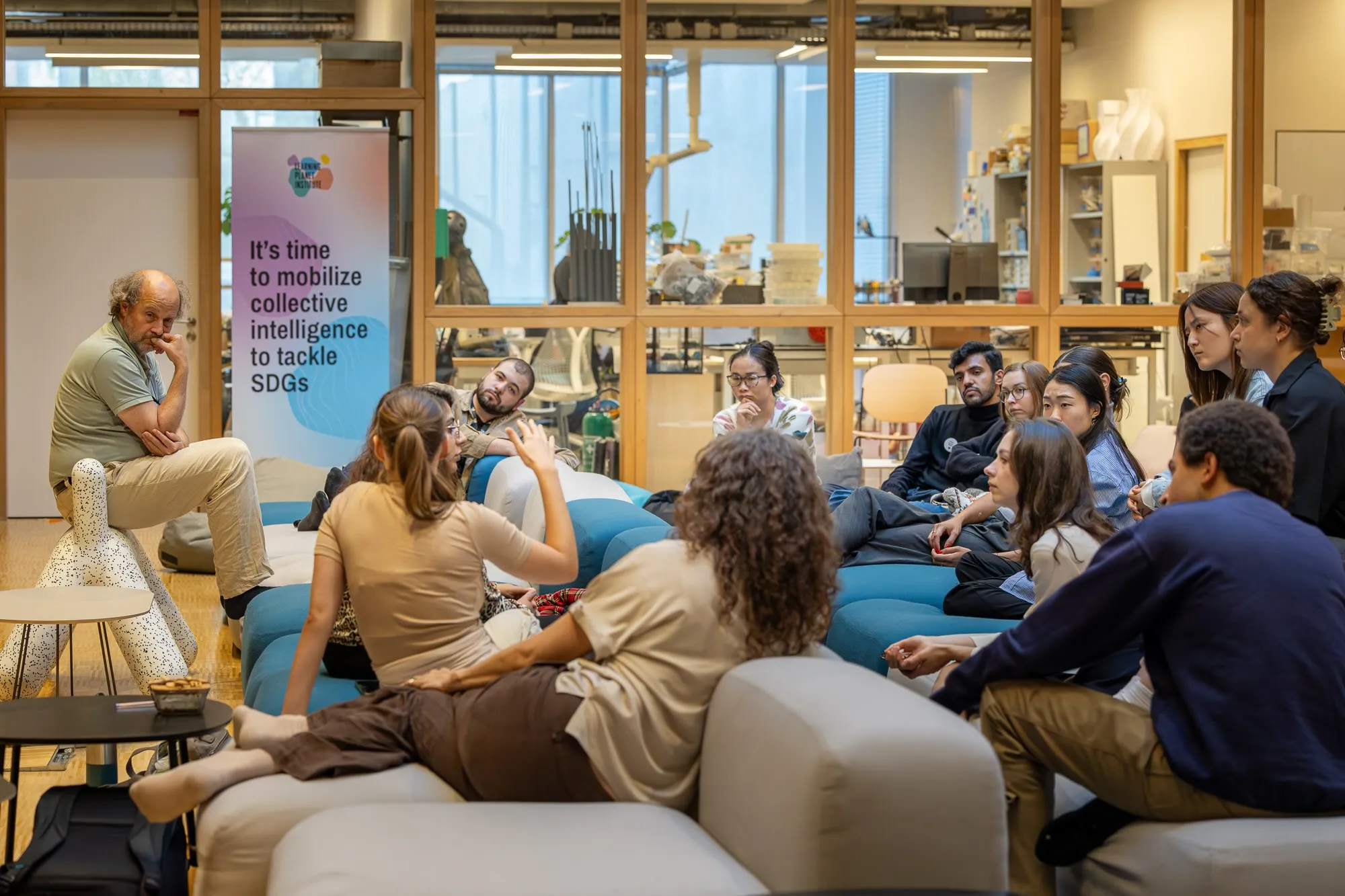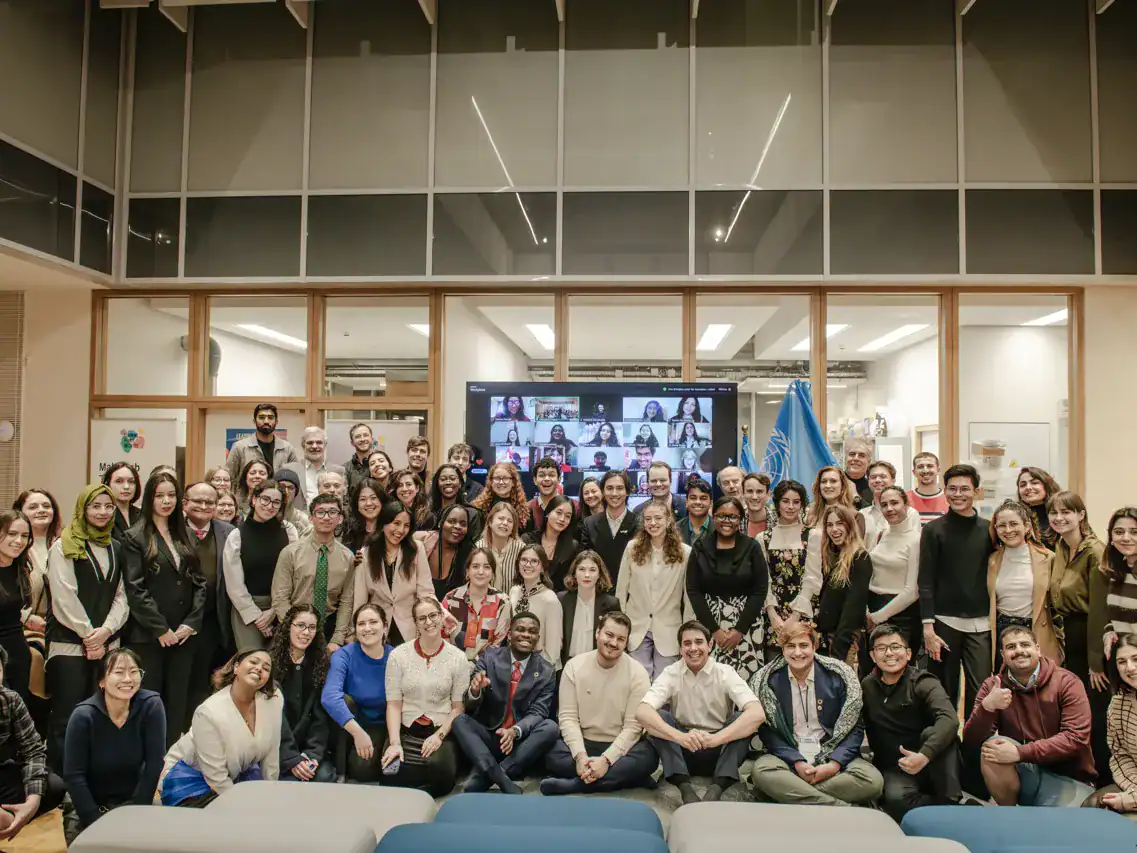
How can we design learning environments that enable us to innovate differently? Since time immemorial Learning Planet Institute experiments and shares new ways of learning and cooperating to meet the planet's needs. On the occasion of the «Learning Morning »This year's event, organized on our campus by the Institute, highlighted the ingredients that enable us to fulfill our mission.
«We are well equipped here: we have the youth represented by our 300 students, and the research that underpins our activities with our new research unit«.« Learning Transitions », digital platforms and a MakerLab that enable us to create and share our methods and content.» - Rita Sinaceur, Consulting Director, Learning Planet Institute
Visit partner organisations are also part of the equation, which is why these «Learning Mornings» have been created: building community, co-constructing and reinventing ways of doing and learning to cope with transitions. This second edition brought together a wide range of players around the theme of learning places, including the Apprentis d'Auteuil, CNRS, Stand Up For Your Dreams, Vinci and the Fabrique Spinoza.

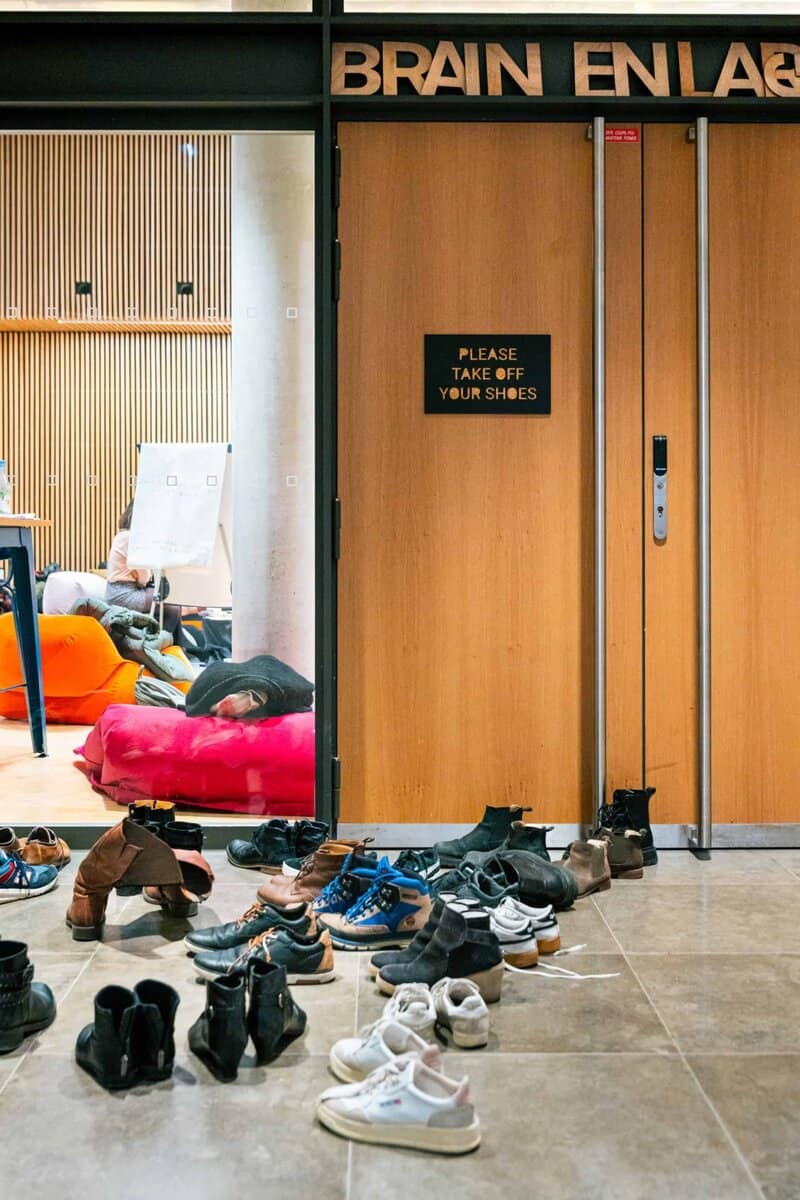
The link between space and innovation has long been of interest. But the organization, layout and perception of spaces change a great deal, as does our relationship with the body over time and space.. Olivier Irrmann, professor of innovation management and codesign at Junia (engineering school of the Catholic University of Lille), took the example of shoes, which the 40 participants in the event left at the entrance to the Learning Center: «Here, taking off your shoes is unusual and induces a change in posture. Whereas in Finland and Sweden it goes without saying that, culturally, shoes are not worn indoors.»
«The equation that organizations are trying to solve is: what is a workspace that allows you to innovate differently, while being efficient and learning?» - Olivier Irrmann, professor of innovation management and codesign at Junia
LEARNING SPACES, FROM THEORY TO PRACTICE
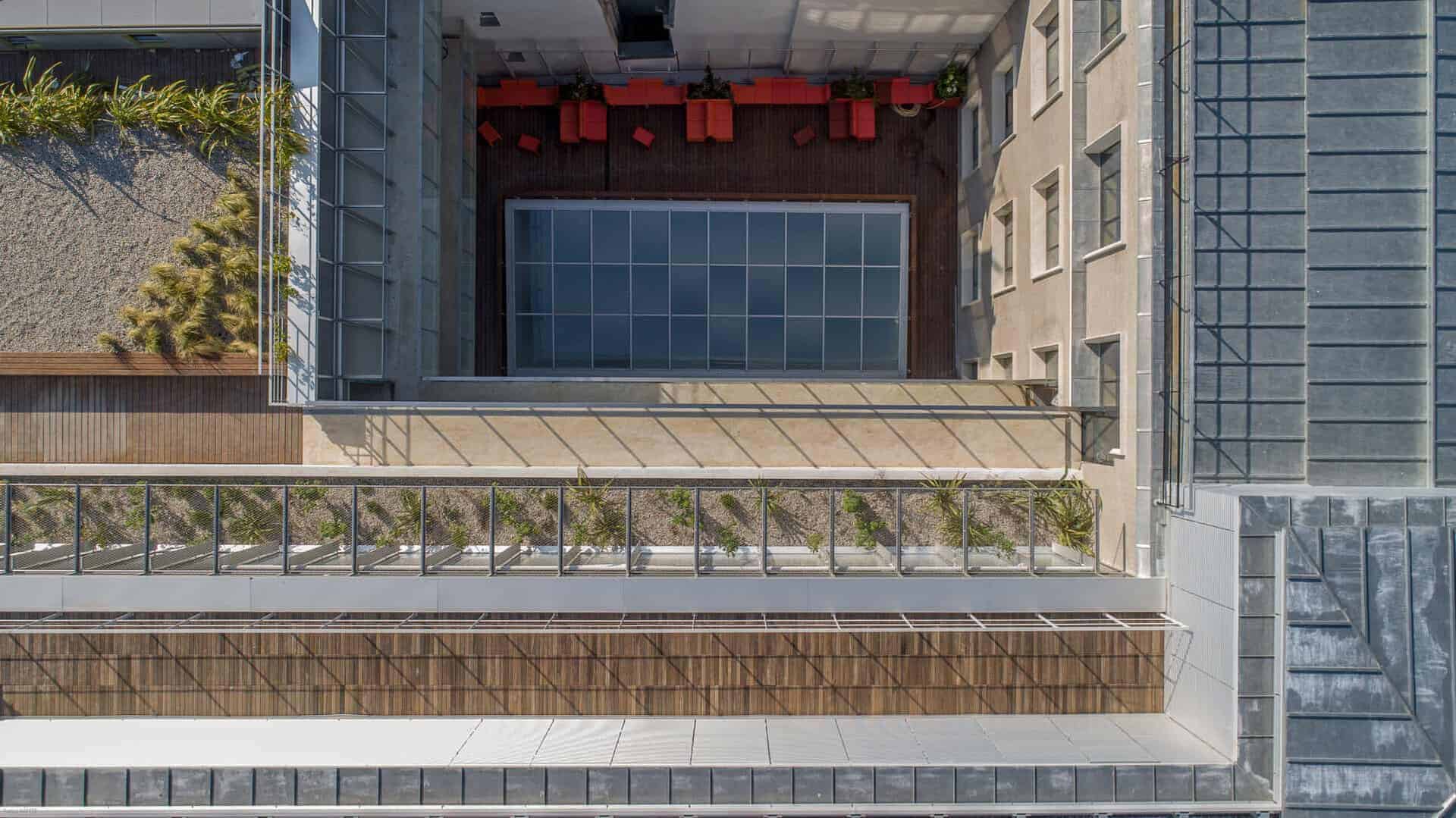
In this article, you will find the theoretical underpinnings of what needs to be taken into account in the innovative workspace design These include not only the site and its facilities, but also the dynamics of the community that will occupy it, and the activities that will take place there.
Once we've illustrated these criteria, we'll look at how they can be used in the field, particularly when a company wants to (re)design its workspaces. Among the lessons learned: don't be afraid to change plans to meet user needs, and anticipate future requirements for space evolution. In addition to the Learning Center and the Amphitheatre, where the presentations took place, the most motivated participants were able to take part in an in-depth guided tour of our campus to illustrate all that was shared with them during this event.« Learning Morning ».
THE NEXT «LEARNING MORNING»: SUSTAINABILITY: HOW CAN WE MOVE TOWARDS A VIRTUOUS ECONOMIC MODEL?
All those interested in these subjects are invited to meet on thursday, january 18, for the next Learning Morning.
ABOUT LEARNING MORNINGS »
Visit Learning Planet Institute, We are convinced that solutions to current and future challenges lie in the emergence of open, collaborative communities of practice. Every third Thursday of the month, the « Learning Mornings »This is a time to build community and exchange ideas with peers and researchers on the challenges of transitions and how we can prepare for them. A time to build community and exchange ideas with peers and researchers on the challenges of transitions and how we can prepare for them.
ABOUT OUR BUSINESS « TRANSFORMING ORGANIZATIONS »
The Organizational transformation helps individuals, organizations and ecosystems to develop their capacity for action and adaptation in the face of current and future transitions.
How?
- We you let's form understanding the issues and the methods for dealing with them.
- We you for more information in your transformation to move towards more learning.
- Finally, we are working with you to, The aim of this collaborative approach is to bring together fieldwork and research to identify the best practices for meeting the challenges of the 21st century. your issues in today's complex environment.
Our convictions guide the way we work and collaborate. Learning through research, collective intelligence and interdisciplinarity are the three pillars that structure our approach. These principles of action stem from our history, as well as from our desire to participate in the creation of a society where everyone takes care of themselves, others and the planet.
LEARN MORE
Want to keep up with our news? Subscribe to our newsletter !
Want to check out our upcoming events? Take a look at our calendar !