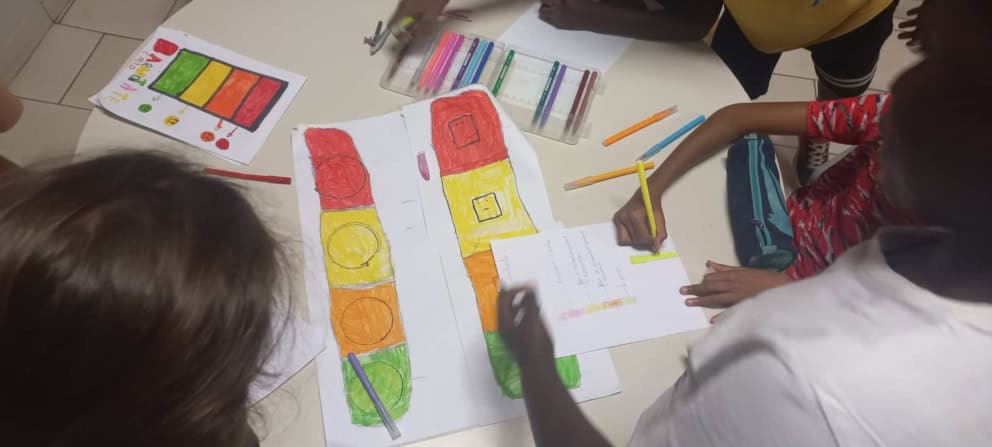
The device Bâtisseurs de Possibles®, adapted from Design for Change to the French school context, today federates a network of committed teachers, teaching resources and tools, and support (training, follow-up, etc.).
As registration for the program reopens for the 2024-2025 school year, teachers involved in the Bâtisseurs de Possibles adventure have agreed to talk about their experience(s) with this educational method.
Anne-Lore Greter-Traoré is a fourth-grade teacher at lycée français Jean Mermoz, in Dakar, Senegal. Convinced of the benefits of project-based learning, it was only natural that Anne-Lore and her class should take up the Bâtisseurs de Possibles method and its 4 stages: identifying a problem, imagining a solution, carrying it out and sharing the experience. Three years after discovering the program, she already has more than six projects under her belt! Here she shares her experience, which is sure to inspire many others.
Hello Anne-Lore Greter-Traoré, and thank you for agreeing to take part in this interview - by video, to cover the distance between Paris and Dakar. Can you introduce yourself in a few words?
Anne-Lore Greter Traoré, I'm a teacher in Dakar, at the Lycée Français Jean Mermoz, which is part of the AEFE (Agency for French teaching abroad).
I passed my entrance exam in 2000 and have been in the field ever since. I was born in Alsace. I've taught French as a Foreign Language (FLE) in Germany, in the Vosges, in Alsace, in eastern France, and I've taught all levels - from pre-school to SEGPA classes - in priority education zones, in different structures, with all types of public. It was very, very cool, I loved it, and it was very instructive to see all this diversity in teaching!
Then, as my husband is Senegalese, we planned to move to Senegal. In 2010, I had the opportunity to join the Lycée Jean Mermoz in Dakar, and I've been teaching there ever since.
Can you tell me more about your class and the school where you teach?
I have a CM1 class. We're in a great establishment that responds to our requests to adapt our classrooms by allowing us to innovate in the layout of space and furniture. For example, here we are in a semi-flexible classroom [she points to the room behind her, her classroom, divided into several islands]. I'm also going to have some new furniture: instead of the tables and chairs you see behind me, there will be other types of furniture like cushions and balloons.
The approach is one in which students learn at their own pace. The class has a different rhythm: whole weeks are set aside for certain subjects and themes. This week, it's science week.
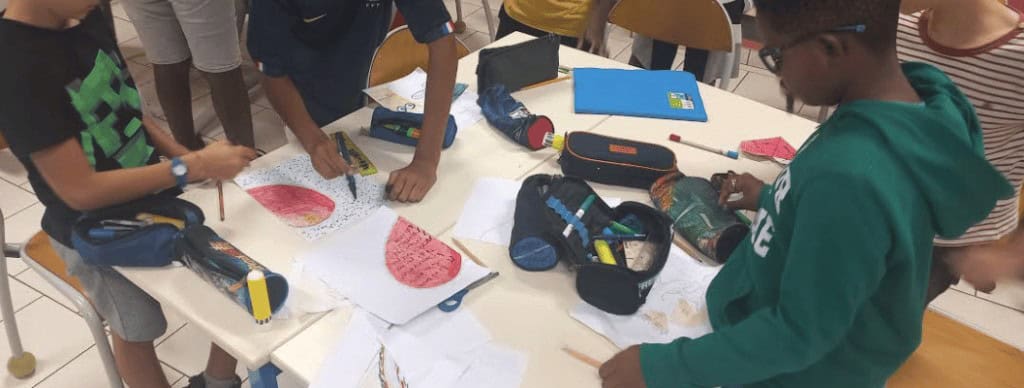
Your school has been awarded the “E3D” label. What does it mean and what does it imply?
An establishment E3D is a « in the sustainable development process (E3D), which involves the entire educational community, in close collaboration with local authorities, in a collective dynamic driven by the school or establishment project. »
As such a large establishment - with 700 primary school pupils! - we have an impact and a responsibility. We are a handful of volunteer teachers - E3D referents - who are in charge of pooling the actions developed in our classes around the theme of sustainable development.
We have committees on health, citizenship and sustainable development. Each committee includes parents, members of the school administration and «eco-delegates» - high school and middle school students.
At the moment, we're working on waste sorting and, further upstream, waste reduction. We have a number of projects within the plant. This dynamic resonates with the Bâtisseurs de Possibles (Builders of Possibilities) program, which is based on the identification of challenges linked to the environment. Sustainable development goals defined by the United Nations.
How long have you been running Bâtisseurs de Possibles projects with your students?
3 years ago, a colleague ran her class using the Bâtisseurs method. The class ran projects by division: the artistic division, the solidarity division and so on. And I've seen some very fine projects come out of this class. So I asked her what she was using as a basis, and we started talking about the Bâtisseurs de Possibles approach.
I've been running "Bâtisseurs de Possibles" (Builders of Possibilities) projects in my classroom for the past 2 years, along with a few of my school colleagues. Last year, my CM1 class and another CM2 class identified common issues.
As we exchanged ideas, we - the teachers - realized that the students didn't need to choose just one axis to find solutions. So we reorganized the class groups, and they kept the themes they wanted to work on. We simply divided the groups - 2 themes each - over a common time dedicated to Builder projects.
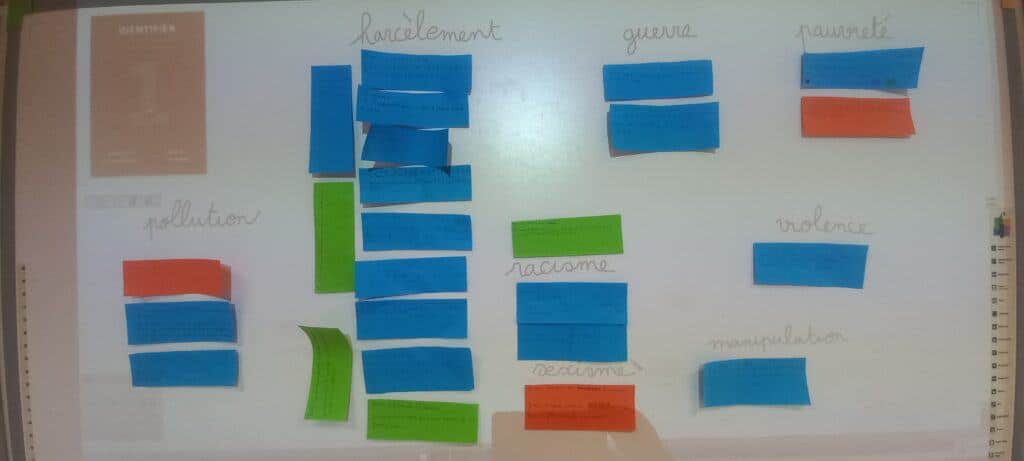
Among the issues identified during the Snowball stage - an exercise enabling students to vote for the issues that concern them most - were: gender equality, food waste in canteens, poverty among street children, and animal abuse.
You're a large school, and a lot of projects seem to run in parallel. How do you exchange ideas between teachers and classes?
At the end of last year, on July 4, 2023, Philippa-Jane Blein - Head of the Builders of Possibilities program at the Learning Planet Institute - organized an online meeting between volunteer classes who had carried out one or more projects over the year. It was an opportunity for me to invite my colleagues to come and see the presentation, and to show different projects in other schools and at other levels.
Philippa-Jane also offered us a training session, open to all colleagues, to explain the steps of the method and show what it's all about.
But I can see that the best example is to show, to see the effects on the class, how the pupils blossom. Last year, there were 3 classes using the Bâtisseurs method, this year there are 9: 3 in CP, 1 in CE2, 1 in CM1 and 4 in CM2. The seeds have been sown!
For the moment, the classes involved are all primary school classes. But I know that the steps in the method can be adapted to run projects with teenagers - so I've spoken to the CPEs about it. It would make a nice continuity through the cycles.
How are the Bâtisseurs projects different from other projects you've had the opportunity to carry out in the classroom?
Bâtisseurs projects are not run by the teacher, but by the class. They are built little by little, with and by the students. That's what's really different. I love running projects, and we have lots of opportunities to set up projects with the AEFE network - but I always save room for Bâtisseurs.
It's like letting go. As a teacher, we don't know which SDO - we don't know which one. United Nations Sustainable Development Goals - We don't necessarily know which issues affect the children most, or how they'd like to change the world. And every year, we have a new class group, and every year we go in a new direction.
Is it easy for the teacher to let go of the classroom? What rhythm does it impose?
At the start, with the first project, it wasn't easy to get going because I was used to leading the class! As the projects progressed, it became easier and easier. When you let the children think and create, they come up with ideas and prototypes that we wouldn't even have thought of!
For example, this year, my students chose to work on school bullying. The first phase of defining the problem took longer, as the notion of harassment was not clear to everyone. So we brought in mediators from secondary schools to clarify the concepts. The students understood that we weren't talking about a one-off incident, but rather a phenomenon that takes place over time, is repeated and has consequences. Now they're using the term advisedly. What I still appreciate here is that I was able to bring in outsiders, so the explanations didn't just come from me.
And yes: the subject is «big», it's heavy. We went round in circles for a while, groped our way around, and took a few precautions. But it's the process that's important, not the result. It's about thinking things through, getting into a dead end, realizing it, and coming back to find a new solution. It takes time, but it's the group's time, and it's a great way of learning to think, listen and discuss.
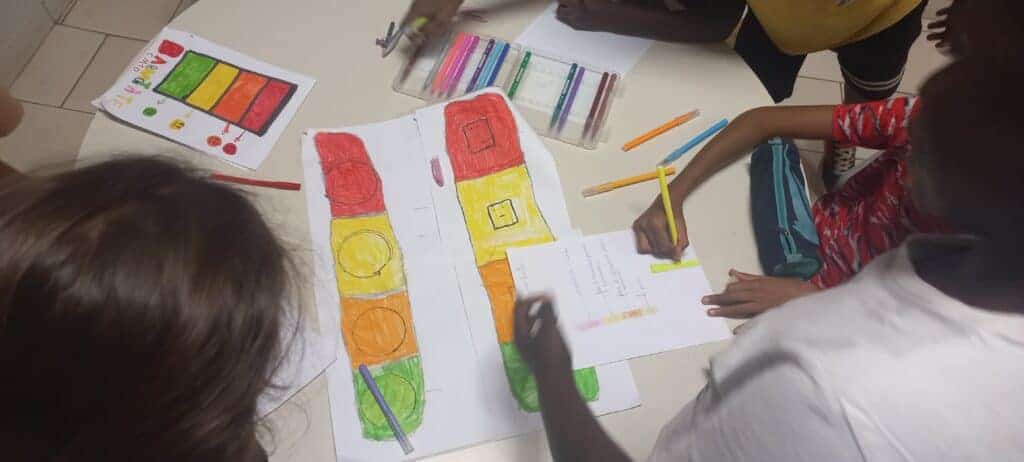
In this way, students reinvest the things we've done in class. For example, the school's teachers were trained in relational communication. We then built a sequence and ran specific workshops in class. This was very useful in helping them understand and manage their emotional overload. And they were able to re-engage with their own perceptions in the Bâtisseurs project, by creating their own tools.
And once again, the pace varies from group to group. Last year, we completed 5 Builder projects from start to finish. This year, it's June, and we're struggling. The students have only just come up with the solution they want to develop - an awareness-raising exhibition and a survey to assess student well-being in the classroom. In a month's time, it's the summer vacations, so we'll have to wait and see!
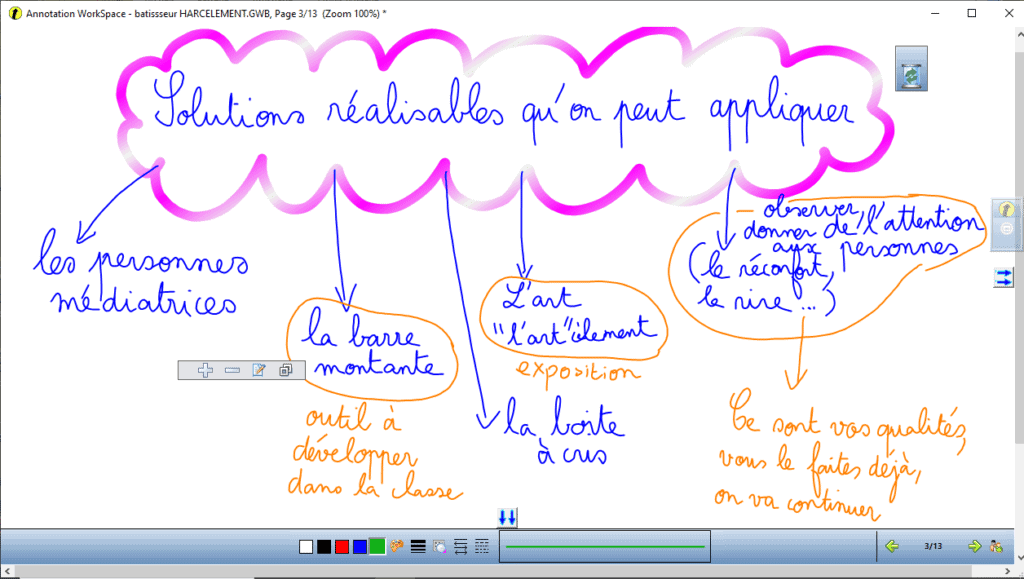
[editor's note: since this interview, Anne-Lore's class has been able to present their project to other classes in the Bâtisseurs network - read more in this article].
Do classes and projects communicate with each other?
Last year, we mixed 2 classes from the outset, as soon as we identified the issues. This year, each teacher carried out the Bâtisseurs projects with his or her own class. This doesn't mean that the dynamic is any less important - quite the contrary! There's a real bond between students - across classes - who are committed to the Bâtisseurs approach.
One of them realized that one of the projects needed plastic bottles, and we all started putting them aside. We did the same with non-biodegradable waste... Others came to us to ask for help in cleaning up the yard. Even through the Bâtisseurs de Possibles online meeting in June 2023 My students have seen and heard other students who have had a similar experience, who have had other ideas they hadn't thought of, and it's made an impression on them!
It's a lot of bonding going on, not only for the children, but also for the teachers! Sometimes we find ourselves at an impasse and don't know how to get the group moving again. Talking and communicating helps us to think things through and to feel supported, heard and accompanied. We're lucky enough to be able to do this between teachers, but we feel that it's there at Learning Planet Institute level too. The Bâtisseurs de Possibles teaching team supports us, listens to us and can put us in touch with other projects on the same themes, for example.
We're not alone. This year, we were able to exchange ideas with other classes who had worked on the issue of harassment, and who offered to test our prototypes. There are certain types of meetings that «weigh us down», that are sometimes fruitless, after which we see the full extent of the tasks that remain to be carried out... After Bâtisseurs meetings, it's not that, it's the opposite: you feel light, your heart is full of beautiful things from all over the world, and that's very precious.
Is it difficult to run a Bâtisseurs project?
The difficulty is more «administrative-logistical» than in the classroom, in my opinion. Not knowing what the students are going to choose as a theme, or what solutions to implement, it's difficult to anticipate a budget for the coming year. This year, the team and I have decided to set up a joint educational project for the participating classes, Bâtisseurs de Possibles, for 2024/2025, with a budget that will allow us to dip into it if necessary.
In our case - a French lycée abroad - there's also the difficulty of two coexisting systems that don't always understand each other. It's this lack of understanding that can be particularly time-consuming for the teacher when it comes to putting solutions into practice, which can be fraught with difficulties. But, again in our own case at Lycée Jean Mermoz in Dakar, we know we can ask for things. We won't necessarily get them from one year to the next, depending on the project, but we are listened to. The support of the management is always a huge plus when you're running projects in class.
But in the end, all the effort is worth it when you see the enthusiasm of the children. If you're not sure, I can only advise you to take the plunge!
Letting go is a great adventure!
GET YOUR CLASS INVOLVED IN A "BUILDERS OF POSSIBILITIES" PROJECT
Would you like to set up impact projects in your classroom? Your students are asking a lot of questions: how can we work better in our classroom? Why do people live on the streets? Would you like to empower your students to take action on the world around them?
Join the Builders of Possibilities program for the 2024- 2025 school year!
The Bâtisseurs de Possibles® system, adapted from Design for Change to the French school context, today federates a network of committed teachers, teaching resources and tools, and support (training, follow-up, etc.).
Whether you want to discover the process step by step or launch a project with your students, the Bâtisseurs de Possibles network is there to help you!
Beyond the benefits for student skills such as cooperation, empathy, speaking up and creativity, the fact of making students actors in their own lives is a key factor in the success of the project. reduces eco-anxiety.
Read more testimonials:
Béatrice Poignonec - CE2 class
Ramona Coupel-Dulgheru - CP and CM2 classes
Virtual meeting between participating classes 2024
This publication is part of the UNESCO Chair in Learning Sciences«, established between UNESCO and Université Paris Cité, in partnership with the Learning Planet Institute. The ideas and opinions expressed in this publication are those of the authors. They do not necessarily represent the views of UNESCO and do not commit the Organization.