Biography
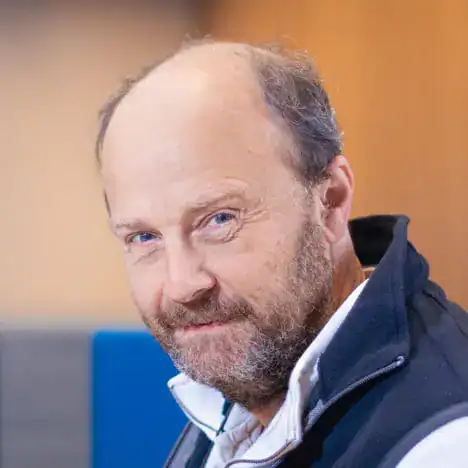
François Taddei, co-founder and president of the Learning Planet Institute, is an internationally renowned researcher.
Convinced that the future of learning must be co-constructed with learners, he explores educational transitions and “planetizenship” — learning to care for oneself, others and the planet.
He advocates large-scale collaboration to co-build — with all stakeholders, from young people to UNESCO and the United Nations University (UNU) — a Learning Planet Academy, powered by technology and grounded in interdisciplinary sciences.
His goal is not to train the best students in in the world, but the best students for for the world — by strengthening their agency and their ability to care for global commons and to become “the change they wish to see in the world.”
From CRI to Learning Planet Institute
Passionate about youth education, François Taddei co-founded the Centre de Recherches Interdisciplinaires (CRI) in Paris in 2006. Its mission was to train the next generation of scientists working at the interface of life sciences, learning sciences and digital technologies. In 2021, CRI became the Learning Planet Institute.
- François Taddei is founder and president of the Learning Planet Institute (formerly the Centre for Research and Interdisciplinarity - CRI).
- An internationally renowned researcher in evolutionary systems biology, he now devotes his time to the sciences of learning and teaching.
- He promotes large-scale collaboration — notably with UNESCO and the United Nations University — to build a learning planet and foster learning communities working together to develop sustainable solutions in Education and Health, while advancing the Sustainable Development Goals (SDGs).
External collaborations
- In 2020, François Taddei spearheaded the creation of the Institut des Défis (CRI/Learning Planet Institute – Université Paris Cité), which prototypes a new model of a learning university designed to address today’s and tomorrow’s global challenges. He believes that by fostering diversity, trust, exploration, co-creation and collective intelligence at multiple scales, universities can catalyse the emergence of solutions to personal, collective and global challenges identified by students.
- Alongside the Learning Planet Institute, François Taddei also runs the Institut Des Défis.
- François Taddei has held research chairs funded by Orange and Axa, , as well as foundations such as the Fondation Bettencourt Schueller. Since 2014, he has served as co-director of the UNESCO Chair “Learning Sciences”, at Université Paris Cité, promoting integrated research, training, information and documentation activities in education sciences, research and educational foresight.
UNESCO Chair in "Learning Sciences“
Education & Academic Training
After graduating in general sciences (specialising in physics and biology) from École Polytechnique, François Taddei became a senior civil servant at the Ministry of Agriculture before completing a PhD in genetics under Miroslav Radman focusing on the molecular causes and evolutionary consequences of mutation rate changes.
Following a postdoctoral fellowship with John Maynard Smith, where he modelled mutation rate evolution, his research team studied the evolution and molecular mechanisms of cooperation, genetic changes, gene expression errors, pathogenicity, antibiotic resistance and ageing in E. coli. He was the first to study ageing in this model organism, revealing these processes using microfluidics and systems biology approaches. His work has led to numerous publications in leading scientific journals and several awards. Academic milestones:
- 1999: Habilitation to direct research, University of Paris XI. Maintaining genome integrity and expression, medical and evolutionary implications.
- 1991-1995: PhD in genetics, Université Paris XI: Environment and control of genetic variability in E. coli. Obtained with highest distinction.
- 1990 - 1991: Advanced Diploma in Cellular & Molecular Genetics, Universités Paris VI et XI, Professeurs P. Slonimski et JL. Rossignol. Obtained with highest distinction.
- 1989 - 1991: École Nationale du Génie Rural et des Eaux et Forêts (ENGREF).
- 1986-1989: École Polytechnique, specializing in physics and biology.
- 1984 -1986: Lycée Louis Le Grand: equivalent to the first two years of university. Preparatory years for the Grandes Écoles, mathematics/physics.
- 1983-1984: Lycée Frédéric Mistral: Baccalauréat série C (Maths/Physics). Obtained with honors.
Awards
- 2020: Eureka North Shore Award for the promotion of science education.
- 2020: Docteur Honoris Causa, UC Louvain.
- 2018: Chevalier de l'ordre des Arts et des Lettres.
- 2017: Mongolfier Prize for Entrepreneurship in Education.
- 2013: Chevalier de l'Ordre des Palmes Académiques.
- 2010: Ashoka Fellow.
- 2006: Human Frontier Science Program (HFSP) Prize.
- 2005: European Young Researcher Award (EURYI).
- 2004: Liliane Bettencourt Prize for Life Sciences.
- 2003 : Inserm Prize for Fundamental Research.
Scientific activities & Teaching
- Since 2020: Institut des Défis, Université Paris Cité.
- Since 2014: UNESCO Chair in Learning Sciences with Université Paris Cité.
- 2012 - 2019: IDEFI Programme (French government education innovation initiative)
- 2011: Creation of the “Frontières du Vivant» bachelor's degree, the first French bachelor's degree program to enable students to train through research.
- 2007: Founder and director of the interdisciplinary doctoral school "Frontières du Vivant" (FdV) at the Universities of Paris Diderot & Paris Descartes, dedicated to enabling brilliant students to explore new frontiers at the interface between disciplines.
- 2006: Founder of the "Paris-Montagne" science festival at the École Normale Supérieure and the "Science ac’" outreach program, which has provided laboratory training for over 1,000 high school students from disadvantaged backgrounds.
- 2005: Founder of the Center for Research and Interdisciplinarity (Faculty of Medicine, Paris Descartes).
- 2004 - 2007: Head of the interdisciplinary Master's program "Approches interdisciplinaires des sciences de la vie" (AIV), Ecole Normale Supérieure, Paris Diderot and Paris Descartes Universities.
- 2000 - 2019: Ecole de Médecine Paris 5, INSERM U571 Causes and consequences of genetic and phenotypic variability, head of the Biology of evolutionary systems team.
- 1991 - 1999: Institute J.Monod, Paris, Mutagenesis Laboratory Molecular and evolutionary mechanisms controlling genetic variability.
- 1996 - 1997: Post-doct in J. Maynard Smith's laboratory (UK) and PH Gouyon (France) on the evolution of the mutation rate.
Publications
Research & Education
Co-author of major reports for the French government, OECD, EU and UNESCO, including:
- 2021 : Rethinking our futures together-A new social contract for education, Report of the UNESCO International Commission on the Future of Education.
- 2021: Adopting a culture of lifelong learning: learning to learn collectively: lifelong learning to take care of ourselves, others and the planet, UNESCO Institute for Lifelong Learning.
- 2018: A plan to co-construct a learning society (for the attention of the French Minister of Labor, the Minister of National Education and the Minister of Higher Education, Research and Innovation).
- 2017: Towards a learning society (for the attention of the French Minister of Education, Higher Education and Research).
- 2015 : Report on the national strategy (addressed to the French Ministries of Research and Higher Education).
- 2009: Training collaborative and creative knowledge builders A major challenge for 21st century education (OECD report).
- 2007 : Training the next generation of interdisciplinary European scientists (with Ariel Lindner).
- 2006: Science Academie: Igniting scientific passions and fostering a new social bond.
Literature
- 2022 : Author of the book Et Si Nous?, published by Calmann-Lévy.
- 2018 : Book author Learning in the 21st century, published by Calmann-Lévy.