In these uncertain times, it's customary to look to the great pandemics of the past for lessons to be learned. Many researchers have examined the actions of the past in order to draw up frameworks for a way out of the crisis. It's easy to think of the biological ins and outs of the epidemic we're experiencing, but we run the risk of overlooking its philosophical repercussions. Our fundamental principles have been profoundly shaken by this crisis. In a public space shaken by the epidemic, an enlightened look is needed.
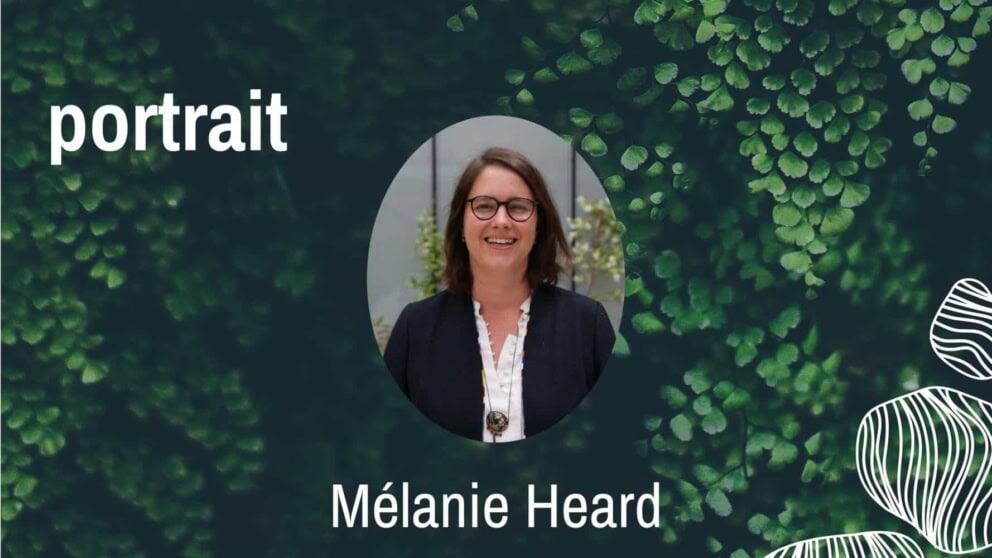
Mélanie Heard is a researcher whose expertise enables her to answer all those essential questions we are obliged to answer today, specifically, those that pit the common good against our individual freedoms. She defines these dilemmas as follows: “a situation of two equivalences under conflict which must be satisfied”.
We've never faced so many dilemmas, and these are Melanie Heard's specialty.
A philosopher specializing in public health policy issues, the researcher wrote her thesis on individual rights during the emergence of the AIDS epidemic, and worked in Marisol Touraine's cabinet on issues of health democracy.
Recently, she was appointed to the Conseil d'orientation de la stratégie vaccinale, which reports to the Minister of Solidarity and Health and is chaired by Professor Alain Fischer : “My role is to support the government on issues of vaccine strategy and communication.”
We are fortunate to have Mélanie Heard as one of our teachers. master AIRE of the University of Paris, at the CRI. She teaches students Critical Thinking in the Learning Sciences.
TEACHING CRITICAL THINKING IN TURBULENT TIMES
“The course has two objectives. Firstly, a competence objective: to show that critical thinking is a skill and that it can be transmitted. Secondly, to talk about educational policies. To do this, we analyze controversies over educational policies, such as the teaching of social skills. It's a real pleasure for me to do this course.”
A course that has taken on a special dimension in the current pandemic period. “The students come from very different backgrounds and horizons. Everyone faces different anxieties depending on their country and family, everyone comes together for the duration of the course, and it's very moving.”
The pandemic allows them to address public health dilemmas, debates enriched by “their backgrounds, their visions, their experiences. For example, we worked on the subject of schools: “Is closing schools a dilemma or not?” It was really interesting.”
Mélanie Heard points out that what she really appreciates about CRI “is the freedom we have in the way we teach. Students respond very favorably to this form of teaching, they're motivated, they follow us.”
While teaching at CRI, she applied for a position as a “short term fellow” within the research collaboratory : “I wanted to take an interest in the subject of education and schools, and to resume research on educational policies. That's how I got in touch with CRI. It turned out that health issues were of great interest to the CRI, particularly in its relations with citizens.”
His research topic was selected by the Scientific Advisory Board. For 6 months, the CRI, in its capacity as a Centre de Recherches Interdisciplinaires (Interdisciplinary Research Center), will host his work, which explores how citizens can better participate in the decision-making process for health policies, with a particular focus on vaccination campaigns.
INTERDISCIPLINARY RESEARCH TO GUIDE PUBLIC POLICY
Mélanie Heard's areas of expertise are Philosophy, Political Science and Public Health. The combination of these fields of research has its origins in two of the researcher's passions, philosophy and ...music. “It was when I organized free concerts as part of the fight against AIDS that I noticed the very philosophical concern between sacrificing individual freedoms and setting up a binding system for the common good of all. We can illustrate this dilemma with the debate that took place in the 90s on the introduction of compulsory declaration of HIV.”It's a real wake-up call: “I saw that with philo-political concepts, I could make philosophy that shed light on issues in the field. It's a quasi-Socratic approach, which involves going out into the field and confronting people with their own dilemmas.”
She therefore chose to take an interest in public health and did her thesis with the Institut d'Etudes Politiques, financed by the’Agence Nationale de la Recherche sur le SIDA et les hépatites (French National Agency for AIDS and Hepatitis Research) (ANRS): “A new paradigm in public health: individual rights and HIV/AIDS, 25 years of public action in France.”Her work is deeply rooted in the fight against AIDS, alongside patients and caregivers.“to explore the reasoning behind political decisions.”A research topic that is particularly relevant in these times: “What differed with the coronavirus in terms of pandemic management was that, initially, there were no public coercive measures.”
CITIZEN AND PARTICIPATORY HEALTH SCIENCES
After her thesis, Mélanie Heard is “became a health policy administrator, and worked at the Haute Autorité de Santé and Agence Ile de France and in Marisol Touraine's cabinet, [Minister of Social Affairs and Health]., as advisor and on relations with health democracy associations. Health democracy is an approach that aims to involve all healthcare stakeholders in the decision-making process for public healthcare policies..”
An interdisciplinary subject that we'll find again in her research topic at CRI, the place of the citizen in public health policies, as well as participatory and citizen sciences.
Melanie Heard describes the participatory sciences in health: “Citizens are informed in a balanced way* about a dilemma and asked to map out a way out. They are called upon for their experience, which constitutes expertise, but this requires them to be scientifically informed, which implies an exchange with experts. You can't separate the expert from the citizen. On the other hand, in the case of citizen science, it's the citizens who produce data in quantities that scientists can't claim to have. I find that, in France, citizen science is very much represented as a field of research science. There's very little talk of what citizen science can contribute to politics. I'm trying to develop this subject with Terra Nova, where I run the Health department.”
Mélanie Heard is always questioning and challenging us on the dilemmas raised by Covid19, and one of her latest writings raises the question of the TousAntiCovid application, its necessity, its implementation, and in particular How can the voluntary adherence of individuals to the “tracking”What assumptions do we need to make in order for it to be effective? What impact is digital data processing likely to have on people's ability to adopt the required behaviors? And what lessons can we expect to learn, in a health emergency situation, from the production of real-time information, for both individuals and the authorities?
“What interests me today are all the public health dilemmas (notably the question of whether or not to close schools). The decision-maker remains dependent on scientific expertise.”
Interdisciplinarity, participatory and citizen science are all milestones that we need to know how to use to overcome the crises of our time.
___________________________________________________________________________________
* Provide complete, comprehensive and unbiased information