To read the report, please click here - available in English and French.
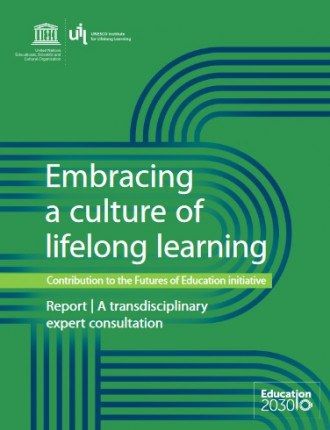
Adopting a culture of lifelong learning, the UIL's contribution to UNESCO's International Commission on the Future of Education, argues that creating a global culture of lifelong learning will be essential to meeting the challenges facing humanity, from the climate crisis to technological and demographic change, not forgetting those posed by the COVID-19 pandemic and the inequalities it has exacerbated.
Drawing on the contributions of 12 eminent experts from different disciplines and countries, the report reflects on the potential contribution of lifelong learning to both the transformation of the field of education and the creation of a more sustainable, healthy and inclusive future, and presents a compelling vision of lifelong learning and the values and principles that should underpin it. It calls on the international community to consider education as a public and private value, and to recognize lifelong learning as a new human right.
The report describes the main features of the 'enabling environment” needed to make lifelong learning the guiding principle of education policy, and to offer people opportunities to learn throughout their lives, whatever their background or context. It analyzes the main problems currently hampering lifelong learning, and describes what needs to be done to turn them into opportunities. Looking to the future, the report presents ten key messages, all essential to creating a culture of lifelong learning:
- Recognizing the holistic nature of lifelong learning
- Promoting transdisciplinary research and cross-sector collaboration for lifelong learning
- Putting vulnerable groups at the heart of the lifelong learning agenda
- Making lifelong learning a common good
- Ensuring wider and fairer access to learning technologies
- Transforming schools and universities into lifelong learning institutions
- Recognize and promote the collective dimension of learning
- Encourage and support local lifelong learning initiatives, including learning cities.
- Reorganizing and revitalizing workplace learning
- Recognizing lifelong learning as a human right
The report also proposes specific action points to realize this vision, and suggests selected policy measures.