
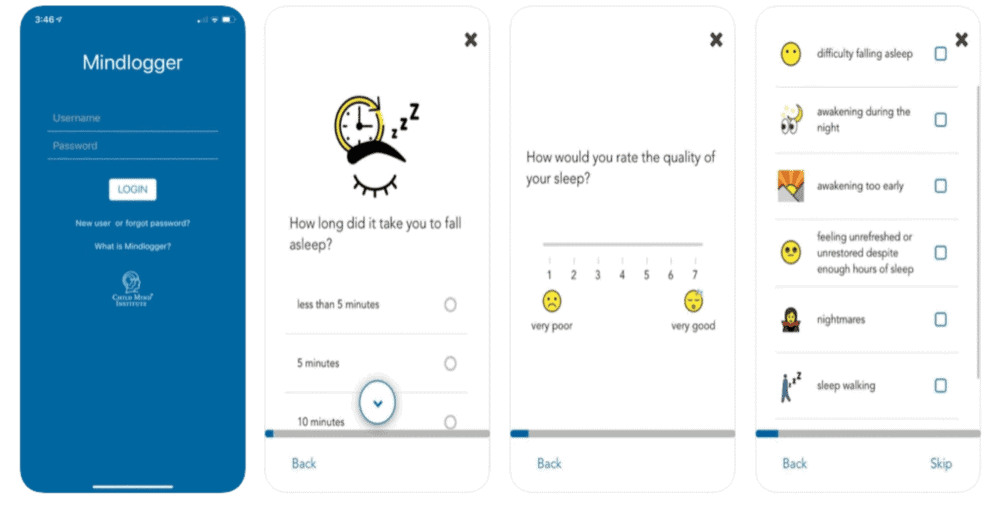
“Remote digital psychiatry for mobile mental health assessment and therapy: MindLogger Platform Development Study”, written by CRI researchers and colleagues, has just been published in the Journal of Medical Internet Research.
Over the past few years, CRI researchers Anirudh Krishnakumar, Kseniia Konishcheva and Ariel Lindner have worked with a distinguished, interdisciplinary group of clinicians, scientists and developers at the Child Mind Institute in New York to create the MindLogger data collection platform and application.(mindlogger.org).
MindLogger enables citizens, researchers and communities to create their own customized mobile applications (iOS and Android) for projects in any discipline. It requires no prior programming or design experience. Anyone can create and administer digital assessments and new activities on any subject, such as surveys, quizzes, journals or cognitive tasks. Users can collect a variety of data (survey lists and tables, scrollbars, audio, images, videos, etc.) in real time and from natural environments. MindLogger also offers several language versions, the ability to define notifications/reminders and to create questions with conditional logic.
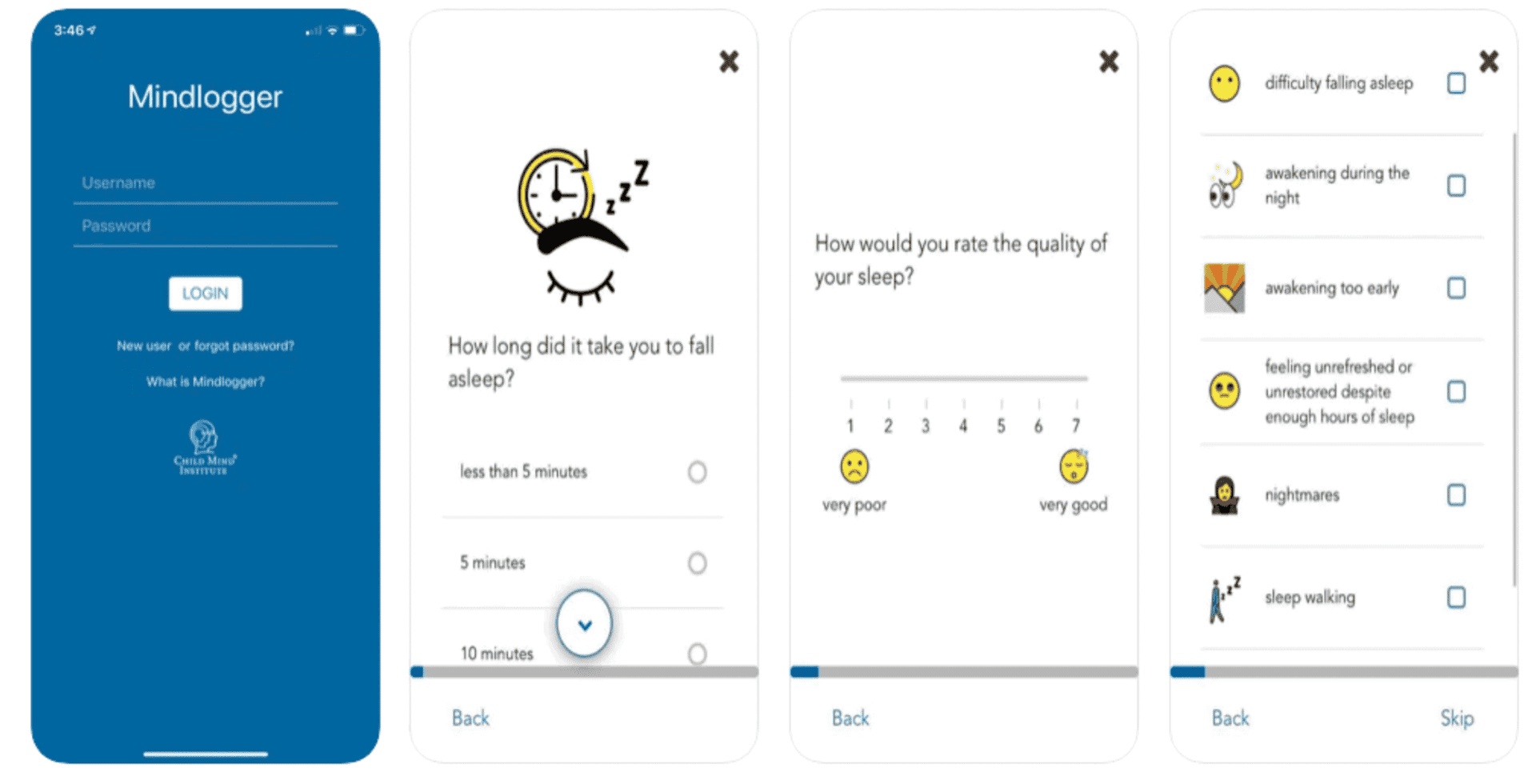
Earlier this month, the first publication on MindLogger appeared in the Journal of Medical Internet Research. The researchers compared MindLogger to hundreds of similar products and found that only 10 met our key requirements: 4 that support end-to-end encryption, 2 that allow restricted access to individual user data, 1 that provides open source software, and none that met all three. They also demonstrated the flexibility and applicability of the MindLogger platform by deploying it in a large-scale longitudinal mobile mental health study and creating a variety of other mental health-related applets.
Current efforts include transforming MindLogger into a Citizen Science Logger for use across disciplines, user scenarios and the UN's Sustainable Development Goals (with ETH Library Lab and the Citizen Science Center in Zurich),
Our researchers invite everyone to try out the platform and look forward to exploring the possibilities of collaboration together!
The full text of the publication is available here : https://www.jmir.org/2021/11/e22369/