Article written by François Taddei, first published in The Conversation.
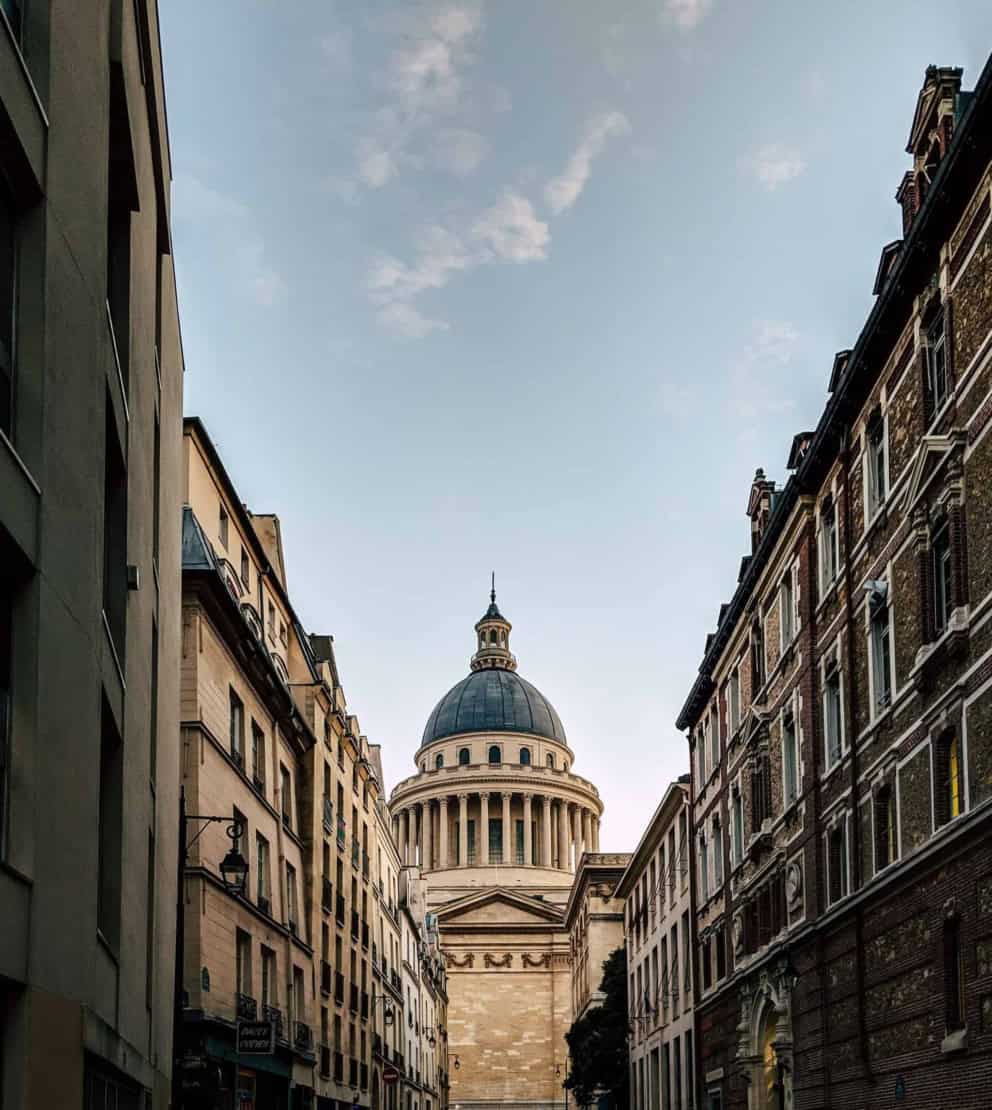
«To great men, the grateful fatherland». The Panthéon's memorial address - which, in its conciseness, excludes women twice - seems increasingly anachronistic. A temple dedicated to the gods in ancient Greece, the secular French Panthéon, since the French Revolution, has brought together, in celebration of the gods, the great men and women of our time. people who have distinguished themselves in a particular field or whose lives have been exemplary.
As the philosopher Hegel said, and as we are reminded France Culture, Historical individuals are those who first said what men want«. Highlighting them nourishes national pride and collective memory, or rather the duty of collective memory.
Who selects these characters? The choice, a matter of struggle, depends on the political mood of the moment and is made at the Élysée Palace. As historian Patrick Garcia notes, The growing importance of ritual is one of the effects of presidentialization, in other words, the Pantheon is one of the gestures that make the president« since the Fifth century.e Republic. He decides alone, which does not prevent him from occasionally being sensitive to the demands of society.
The transfer of Joséphine Baker to the Pantheon on November 30, 2021 bears witness to this open-minded approach. She will be the sixth woman to be enshrined in the Pantheon (the first, Marie Curie, only entered in 1995), alongside 70 men - most of them soldiers, scientists and writers - not counting the wives, husbands or fathers who accompany a handful of them. Artist, resistance fighter and campaigner against racism and for children's rights, Franco-American Josephine Baker epitomizes the the battle for tolerance and emancipation for all.
Paying tribute to our personal heroes and heroines
Republican mythology, once Napoleonic, and its instituted rituals are evolving, albeit timidly. But it's important to talk about the heroes and heroines who touch us. Common parlance has popularized the expression «in my personal pantheon», which embodies the people who have marked us, our tastes and preferences. The characters we admire, who inspire us, are not necessarily dead - on the contrary.
Although they don't always meet with consensus, they invite us to dialogue and exchange, create links and help us to build a society. With them, the pantheon principle retains all its meaning, but becomes more concrete. More democratic?
Many people around the world are committed to others and to the common good, performing acts of extraordinary generosity, without expecting glory or honors; that's not what drives them. One of the best-known examples is that of «Righteous Among the Nations», a distinction created in 1953 by Israel to honor those «who endangered their lives to save Jews» during the Second World War.
As Nicolas Winton explained, nicknamed the «British Schindler», who saved almost 700 children, most of them Jewish, on the eve of the Nazi invasion of Czechoslovakia, «there are all sorts of things you don't talk about, even to your family. In fact, everything that had happened before the war no longer seemed important in terms of the war itself».
There are other Nicolas Wintons today, and their aim is not to be recognized. Martin Maindiaux runs the NGO Enfants du Mékong in Cambodia, which has saved hundreds of children from the misery of disease and landmines. Dominique Pace created Biblionef in 1992, after meeting children living in insalubrious housing estates or isolated in jungle camps. The association distributes hundreds of thousands of new books free of charge in over 90 countries worldwide.
For the past 30 years, Sister Ventura has dedicated her life to helping the pygmy populations, who are increasingly deprived in the face of growing urbanization. Projet Imagine«, an NGO founded in 2010 by journalist Frédérique Bedos to «create a movement of citizen involvement in favor of a more inclusive and sustainable society», helps to publicize these initiatives.
Inspiration for action
And what can we say about the dozens of young men and women on every continent who are committed to fighting the proliferation of weapons, preserving the planet or combating violence against women and minorities? Some of these young people were recently featured in the documentary Bigger than us by Flore Vasseur is a source of inspiration for a generation that is rightly concerned about the future of the planet.
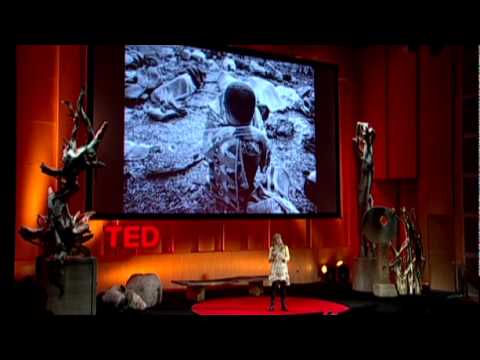
On the film's website, Thousands of classes are taking up these themes because, inspired by these committed young people, teachers and students are realizing that together they can do much more to build tomorrow. Not everyone is capable of changing their country's constitution before the age of 18, as Memory did to defend the rights of young women. But, as the TED As shown below, everyone can contribute to creating a movement and inventing tomorrow's world by joining such pioneers.
Discovering or rediscovering these humble actors, who perform or have performed extraordinary deeds, is a way of reaffirming and expressing our humanity, in the face of the declinists who flourish. That's why we need new pantheons, in addition to, but also outside, institutional frameworks. Living« pantheons that each and every one of us can create, share and make known, in the field that is closest to our hearts.
Democratizing pantheons also means acknowledging that no life is «perfect», and that any human work - be it artistic, militant or intellectual - can be questioned, contradicted and serenely debated, as in a scientific controversy, far from being sacralized.
Building shared narratives
If we know how to honor those who have contributed to our genetic heritage since the earliest burials, we could better celebrate those who contribute to our intellectual heritage and commitments. These giants whose shoulders we can climb to see further ahead. We can do it alone, in the privacy of our own choosing. But we can also decide to do it together at opportune moments and in dedicated places. Places and times when we can gather around symbols of our common belonging. Religions, sport and the nation have all created pantheons and moments dedicated to shared memory.
The United Nations has already created dozens of «world days» on themes that concern us all. The best-known is undoubtedly March 8, International Women's Day, renamed International Women's Rights Day in France. But there are many others - nearly 200 - that are supposed to bring us together. Children's Rights Day on November 20 has just been celebrated. There's even an International Day of Happiness, on March 20, where we can honor those who make us happy.
What's still missing is some form of joint celebration on these days. Each of these days could be an opportunity to enrich our personal and collective pantheons, to celebrate those people who have helped us to dream bigger, to dare to think that we can also contribute to inventing tomorrow.
To enable young people to project themselves into collective utopias, to connect those with similar ambitions, emotions and even dreams, to develop their collective actions in favor of the common good, it is important to draw on the political force of recognition which, as the philosopher Axel Honneth writes, is at the foundation of social relationships, from childhood onwards.
What if we wrote the motto of a open Panthéon where everyone could celebrate the people who inspired them. What would be your choice?
- To those who have transcended borders, the grateful citizens of the world?
- To great minds, humanity grateful?
- To collective intelligence, the grateful planet?
In line with the idea of openness and collective intelligence of this site (still in the prototyping phase) where everyone can create their own pantheon, and which by definition will be all the richer for everyone's contribution.’don't hesitate to vote and propose other currencies you feel would be more appropriate.
François Taddéi's next book, «What if we? How can we meet the challenges of the XXIᵉ century together?» will be published by Calmann-Lévy in January 2022.
François Taddei, Inserm Researcher, Director, Center for Interdisciplinary Research (CRI)
This article is republished from The Conversation under Creative Commons license. Read the’original article.