
The Licence Frontières du Vivant - Université Paris Cité - is aimed at students with a passion for science in general, and the life sciences in particular, the world of research and the role of science in society.
Applications are open until June 15, 2022 here. This year, the Frontiers of Life Sciences license is only accepting applications for the L2 (second year) and L3 (third year) levels.
The FdV degree is based on a common core of mathematics, physics, chemistry, computer science and biology. Students are exposed to life sciences in all their facets, but these core areas are complemented by additional courses in philosophy, history of science, teaching, ethics, entrepreneurship and engineering, as well as interdisciplinary modules to develop cross-disciplinary skills. What's more, thanks to optional courses and internships, students can tailor their training to what they want to achieve after graduation.
Active teaching
The program is designed to help students actors of their learning through project-based learning (learning by doing) and hands-on experience (internships, clubs, associations). Students benefit from a high degree of autonomy in their ability to learn, adapt, communicate and work as part of a team: a guarantee of success in their future studies and/or professional activities.
Interdisciplinarity and learning through research
Practical work is an important part of the program and mainly takes the form of interdisciplinary experimental projects. Focusing on an open-ended question, and the production and use of new data, projects should be an opportunity to explore rather than reproduce expected results. At the end of each semester, students take part in interdisciplinary project weeks and develop practical solutions that contribute to achieving the United Nations' Sustainable Development Goals.
Regular pedagogical monitoring and assessment
Students - 30 per class - benefit from a follow-up by the FdV bachelor coordination team, enabling them to reflect on their progress, further studies and career plans.
The various evaluation modes are designed to empowering students, This is particularly true of practices such as’self-assessment and peer review. Teachers are committed to providing each student with regular, constructive feedback on their progress.
An adaptive program
Students entering the program in L2 (2nd year) have the option of a 4 to 8-week work placement. The following year, students are encouraged to take part in an exchange semester at a partner institution (L3 semester 1) and an internship (L3 semester 3).
For students entering the program in L3 (3rd year), The first semester of L3 focuses on quantitative biology, with courses in biophysics, biochemistry, ecology, neurobiology, citizen science and more. The second semester is devoted to a research project aimed at addressing one or more of the SDGs through the life sciences.
The Bachelor FdV is housed at the Learning Planet Institute
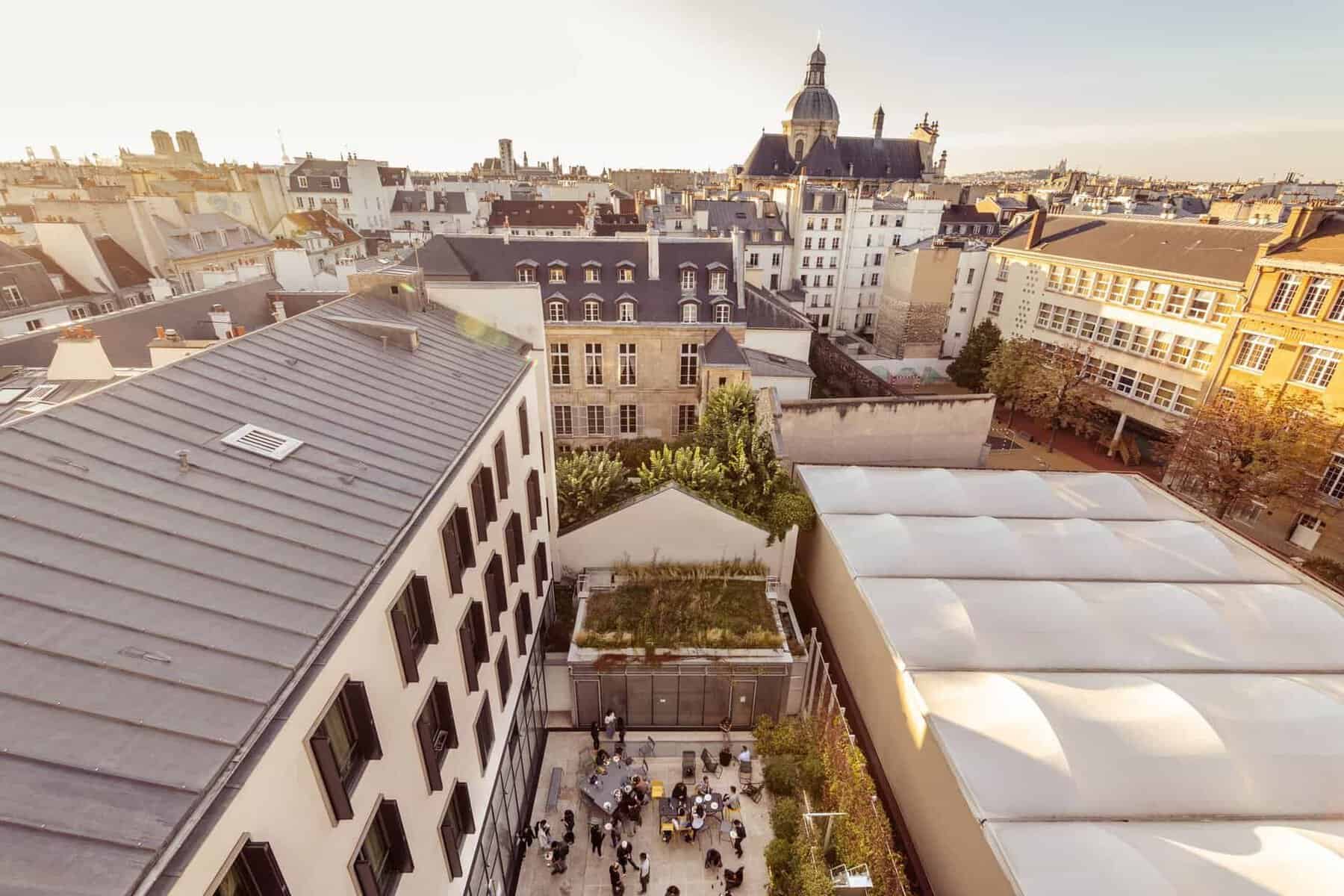
The Learning Planet Institute campus is located in the heart of Paris' Marais district. Students benefit from a dynamic ecosystem rich in seminars, research groups, global research and education initiatives, club activities, and 150 square meters of student lab space.
The Licence Frontières du Vivant is a diploma of Université Paris Cité.