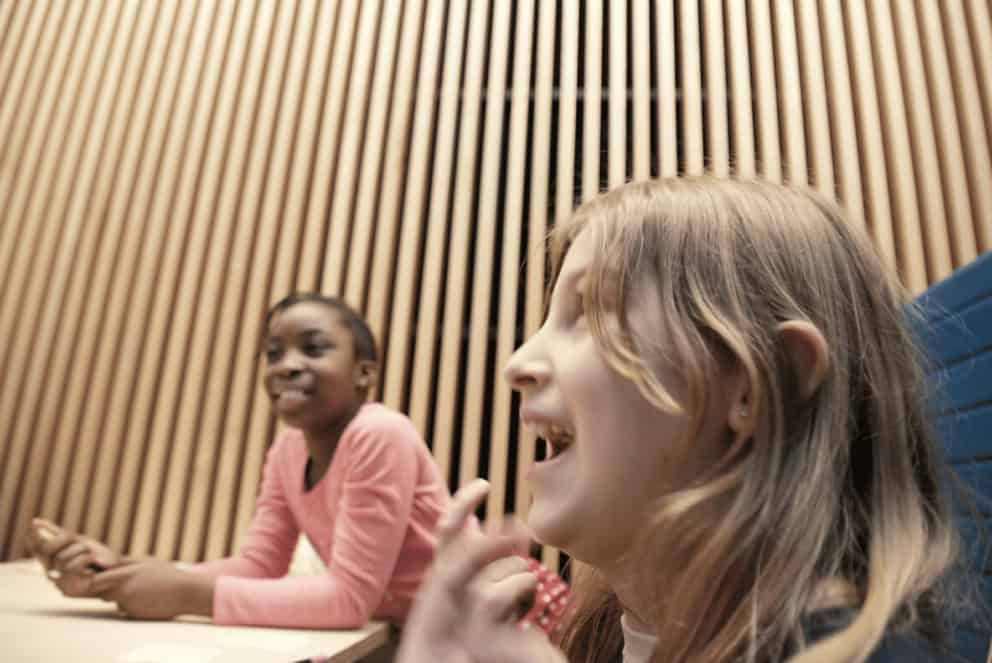
The device Bâtisseurs de Possibles®, adapted from Design for Change to the French school context, today federates a network of committed teachers, teaching resources and tools, and support (training, follow-up, etc.).
As registration for the program reopens for the 2024-2025 school year, teachers involved in the Bâtisseurs de Possibles adventure have agreed to talk about their experience(s) with this educational method.
Béatrice Poignonec is a hard-working teacher. A school teacher and master trainer, Béatrice has been involved at all levels of training within the French education system. Today, she teaches CE2 at the’école Leclerc in Croissy-sur-Seine and always has a foot in the door when it comes to discussions on pedagogical innovations. Challenging her teaching habits, changing her posture in the classroom, letting go of the group: Béatrice has seized on the Bâtisseurs de Possibles method and intends to share her experience with all her (future) colleagues.
Hello Béatrice Poignonec, thank you for agreeing to this interview. (editor's note: the interview took place on June 5, before the end of the Bâtisseurs 2023-2024 project). First of all, could you introduce yourself and your school?
My name is Béatrice Poignonec, I'm a school teacher and I currently teach CE2 at école Leclerc. Until last year, I was also a master trainer, but I decided to stop this activity to devote myself to my classroom and projects with my pupils.
I've also worked as a pedagogical advisor for teaching teams, particularly in the field of text study. I've worked with school teachers and trainee teachers, and I've made a few presentations to the inspectorate. In particular, I spoke about the Bâtisseurs de Possibles (Builders of Possibilities) project with Katarina Kordukolava, and how to expand it, especially in REP and REP+ schools.
I always discuss these issues with the school's entire pedagogical team, with the Café pédagogique and the Cnesco (Centre national d'étude des systèmes scolaires) who had contacted our director about one of our Bâtisseurs [editor's note: the B.A.R. à Bonheur discussed belowIt's an important part of my job as a teacher.
For as long as I've known about it, I've been keen to introduce the Bâtisseurs de Possibles method and the wonderful projects I've had with students to my colleagues and future colleagues still in training. In fact, I believe that this type of approach should be an integral part of teacher training today.
How long have you known about the Bâtisseurs method?
I discovered the approach in the summer of 2015 and embarked with my class over the 2015-2016 school year on 2 projects, a short one (over five weeks) and a long one (over nine months). I was very well supported by the Bâtisseurs de Possibles team - led at the time in France by Synlab - and the short project - «What needs to change in the classroom to learn better?» - was even presented in Beijing (China), at a celebration Design for Change [ndlr: Bâtisseurs de Possibles is the French adaptation of the international Design for Change movement, a global initiative in which children are actors of change for a sustainable world.]. Students of all ages from all over the world shared their projects. It was fantastic!
What do you appreciate about the Bâtisseurs de Possibles approach? Why do you recommend it to your colleagues, especially young teachers?
Today, teachers are asked to practice differently, to vary their postures. That's all very well, but it's also very complicated to do! The principle of the Bâtisseurs de Possibles method is precisely to reverse the roles, to upset the dynamic between the class and the teacher. It requires the teacher to let go. This method allows us to take a real step forward in our learning practices.
If I hadn't had the support of the Bâtisseurs approach and team, I don't think I would have been able to change my teaching practices to such an extent. It's all very well to want to become a facilitator in order to support and « only »I find it very complicated to guide students without Possibility Builders.
This approach allows teachers - and students alike - to take a breath from the school system. It's about letting students do things, expressing themselves and daring to come up with crazy ideas! I remember describing to my inspector at the time: « I'm now on quicksand. It's unstable and wonderful at the same time! ». By allowing students to pursue their own reasoning and ideas to their logical conclusion, the Bâtisseurs method forces us - the teachers - to redouble our vigilance in dealing with the class.
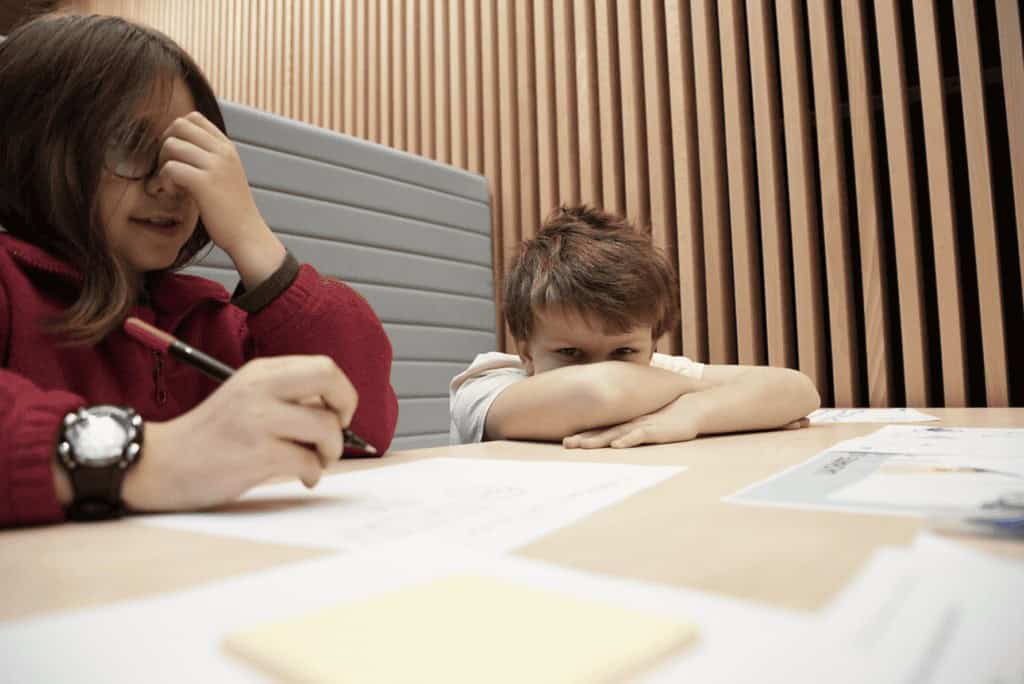
Of course, this may scare some people. It's about questioning and overturning habits. With the Bâtisseurs approach, students change their learning habits, and it shows. It soon becomes inevitable that the teacher's practices will change too, and it's really the whole group that makes this evolution possible, this little pedagogical revolution. And I think it's beautiful. It may be a hard step to take, but it's worth it.
At the Learning Planet Institute, which runs the Bâtisseurs de Possibles project, we are convinced of the importance of crossing disciplines, of the need to open up to other fields in order to cross-fertilize skills and change our habits. How do you see this in the Bâtisseurs de Possibles approach?
Possibility Builder projects often require us to get out of the classroom, or to bring the outside world into the classroom. It's a richness we need to work on! Whether it's parents who come to help us - as part of a co-educational approach encouraged by the French Ministry of Education - or the professionals we call on: we need others to see our projects through.
I'm thinking in particular of the implementation of the solutions proposed by the groups I accompanied. We were regularly supported by parents, municipal services (technical services, gardeners and landscapers, etc.), and members of associations such as France Terre d'Asile.
It's a way of showcasing professions, but above all it adds another dimension to school and classroom learning. It gives meaning to the work and effort that students put in; they see that their projects have a real resonance in real life. And I think that, more and more, students need to feel that they can make a difference. That's how they can build tomorrow's society.
Have you had any feedback from people outside the project or even the school who are interested in the Bâtisseurs method?
For example, the mayor of our commune has always supported «Bâtisseurs» projects that went beyond the classroom and the school. In particular, he supported the installation of "citizen gesture" panels created by pupils along the Seine. The same goes for the posters on harassment: the commune invested in printing the posters so that they could be distributed.
In 2015, a school parent followed the project from start to finish, over a year, and produced a beautiful dossier-album! I'll treasure it for the rest of my life. The professionals and parents who spoke in class were also touched by the project.
Coming back to the Bâtisseurs projects you've been working on so far, can you tell me about some of them?
Two years ago, as part of the Bâtisseurs project, the students created the «B.A.R. à Bonheur»: B for Happiness, A for Friendship and R for Repair. The B.A.R. à Bonheur was a response to an issue of well-being at school that the students had identified in the early stages of the project.
Since then, the school's students have taken up the initiative. An adult is on hand to keep the schedule and make sure everything runs smoothly, but the themes and workshops are entirely composed by the students! The B.A.R. à Bonheur opens its doors during the morning recess and in the afternoon, and is very active: discussions, debates, presentations - which the students call «conferences» - creative activities, yoga, meditation, and so on.
Read also Café pédagogique article on B.A.R. à Bonheur
This project is entirely transferable to other schools and places of learning, and that's a great strength. The B.A.R. à Bonheur was presented to the Académie de Versailles and was selected by the jury to be promoted on an academic scale along with seven other innovative projects. The Cnesco has also seized on the opportunity to bring this Bâtisseurs project to the forefront of exchanges of practice at European level and beyond.
I say it again and again to the children: it's thanks to them, to their work, that this project now goes beyond the borders of their school and their country. It's fantastic!
This year, your CE2 class has embarked on a new project. Can you tell us about it?
The issue chosen by the students this year is «How to deal with strong emotions». Not an easy subject (really). To tell you the truth, this is the first year that it's been complicated for the group to get to the end of the project. But it's interesting!
A huge number of ideas emerged, and the medium was still under discussion. In the end, a book of solutions was envisaged. A book of «words against evils», a book to help us deal with the evils and wounds we receive. How to (re)act non-violently? How to respond to violent words?
The children listed a series of verbal abuses, some of which they had already experienced. And we tried to turn these violent words around to «positivize» the harm received. For example, when criticized for their size: «You're so small», the response might be «At least I can squeeze in everywhere».
In addition to the self-defense tools provided by the book, the class is currently planning to liven up the book with a small envelope containing origami hearts and sweet nothings, so that anyone can come and help themselves to immediate comfort, a band-aid for the heart.
This year's topic is particularly dense. Some students have said to me, «But when people say words back to me, will I have the strength to say them back? Of course, I don't have the answer, but this reflection is profound and shows how much this issue affects them.
A number of teacher testimonials echo this difficulty, in some years, in seeing a project through to the end. It depends on the group, the issue chosen and many other factors. But none of them mentioned any regrets about having embarked on the adventure. What about you?
No, in fact, there are no regrets! Even if you don't see the project through to the end, you're committed and the class has made progress. You have to see the hard work, the efforts of the children who put in the effort, who commit themselves to an action, to working together. For several months, they're actively exchanging ideas, and that's a beautiful thing.
And in the end, that's what we're aiming for too: inviting young children to work together, to listen to each other. I'm always amazed at what this Bâtisseurs approach brings to everyday classroom life; I've heard my pupils bounce ideas off others, which they'd listened to and integrated into their own thinking! It's invaluable, because that's how their thinking and that of the group goes further.
The first stages of the method are the most important in my opinion; it doesn't matter if we spend more time on them, sometimes to the detriment of the last stages. This is where students learn to listen to each other, to work in groups and to question. And that's what tomorrow's society needs; that's what school is all about.
GET YOUR CLASS INVOLVED IN A "BUILDERS OF POSSIBILITIES" PROJECT
Would you like to set up impact projects in your classroom? Your students are asking a lot of questions: how can we work better in our classroom? Why do people live on the streets? Would you like to empower your students to take action on the world around them?
Join the Builders of Possibilities program for the 2024- 2025 school year!
The Bâtisseurs de Possibles® system, adapted from Design for Change to the French school context, today federates a network of committed teachers, teaching resources and tools, and support (training, follow-up, etc.).
Whether you want to discover the process step by step or launch a project with your students, the Bâtisseurs de Possibles network is there to help you!
Beyond the benefits for student skills such as cooperation, empathy, speaking up and creativity, the fact of making students actors in their own lives is a key factor in the success of the project. reduces eco-anxiety.
«This »Bâtisseurs de Possibles" (Builders of Possibilities) approach is really something to be spread around: it reveals the child, and helps them learn to see the value of sharing, of working together, of sharing ideas, of believing in a better world!, Béatrice Poignonec, teacher
Read more testimonials:
Anne-Lore Greter-Traoré - CM1 class
Ramona Coupel-Dulgheru - CP and CM2 classes
Virtual meeting between participating classes 2024
This publication is part of the UNESCO Chair in Learning Sciences«, established between UNESCO and Université Paris Cité, in partnership with the Learning Planet Institute. The ideas and opinions expressed in this publication are those of the authors. They do not necessarily represent the views of UNESCO and do not commit the Organization.