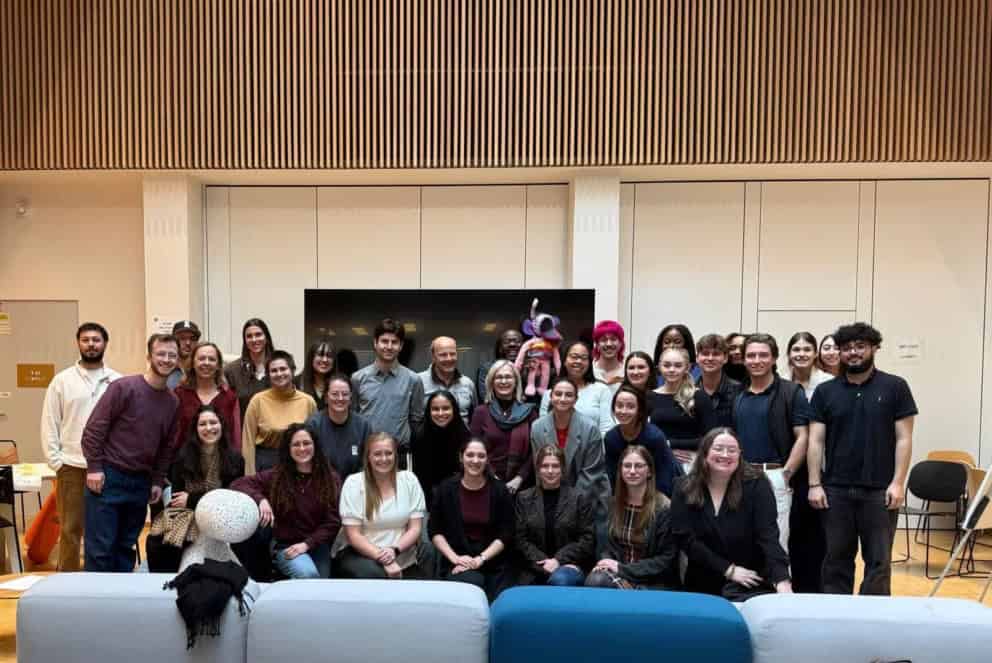
On March 14, we had the opportunity to take a break from the present and enter a space where the future seemed a little more tangible. This opportunity arose during a full-day learning laboratory of the future organized by the Institut de la Planète Educative and led by the UNESCO Future Literacy Laboratory and the UNESCO-MOST BRIDGES Coalition on the theme of “learning global citizenship and anticipatory governance”
The session brought together students from the’Arizona State University (ASU) and LPI in a dynamic, hands-on environment designed to challenge the way we think about the future. Through open discussions, collaborative exercises and collective thinking, we challenged assumptions, shared insights and explored new ways of approaching the future, not just as individuals, but as a connected global community.
What is Futures Literacy Labs?
Themastering the future is about understanding how we think about the future and how this influences the choices we make today. It helps people become aware of the origins of their ideas about the future, and opens the way to new ways of thinking and acting.
In the prospective analysis laboratories, In this way, participants learn by doing, working together to explore different futures and reflect on how these ideas can influence better decisions in the present. (Adapted from’UNESCO, Futures Literacy)
Global citizenship and governance
Global citizenship is the idea that we share responsibility not only within our nations, but worldwide and across generations. It encourages global cooperation to protect shared resources, such as the environment, and recognizes our role in passing on a healthy planet and cultural heritage to future generations. (Adapted from Thompson, 2001, Governing for the Environment)
This vision paved the way for the Future Learning Laboratory, based on the youth consultation organized at LPI in September, before the UN summit on the future. During the session, participants were invited to consider some of the most pressing issues of our time:
- How can we foster collaboration between the various stakeholders involved in global decision-making?
- How can we learn to collaborate between people, places, technologies and ecosystems?
- What does it mean to make decisions that benefit the planet?
These questions served as an anchor for the day's reflections, and opened up a space for imagining what global citizenship might look like in practice.
Sensing and shaping the future
To kick off the day, participants shared their personal reflections on their emotional relationship with the future. Responses ranged from fear to excitement in the face of uncertainty, via the’hope, It's the confidence that something good will come out of this. Some have spoken of a link deep with their ancestral past, recognizing the wisdom passed down from generation to generation. Others described a mixture of’uncertainty and joy as we approach key life transitions, such as graduation, a fresh start and the hope of doing meaningful work.
This emotional anchoring set the tone for the next step: exploring what comes after. Using a systems approach, participants worked together to identify trends and “probable futures” across multiple dimensions - socio-cultural, cultural, social and political., technological, economic, environmental, political and ethical issues. Rather than accepting these trajectories as fixed, the group used them as a starting point for imagining the future. desired futures and consider how we might begin to shape them - together, with awareness, intention and care.
Participants also discussed how to current governance models often focus more on the personalities of decision-makers than on a long-term vision. The laboratory has introduced the concept of “governance for the futurean anticipatory approach that goes beyond reacting to the crisis and integrates forward-looking thinking into policy and planning.
A chance encounter: Meeting Dr Nsah Mala
One of the highlights of the day was the meeting with Nsah Mala, Doctor of Philosophy,award-winning bilingual poet, writer, educator and practitioner of the future. His work bridges literature, environmental humanities and anticipatory governance, with a particular focus on sustainability, climate justice and intergenerational responsibility. He currently chairs the Kingdom of Mbessa Native Commission for future generations and sustainability in Cameroon.
Mala holds a PhD from the University of Aarhus, where his award-winning research has focused on how literature - poems, plays and novels - can inspire environmental action and resilience in the Congo Basin. Her work is a powerful reminder that storytelling and the arts can drive meaningful change.
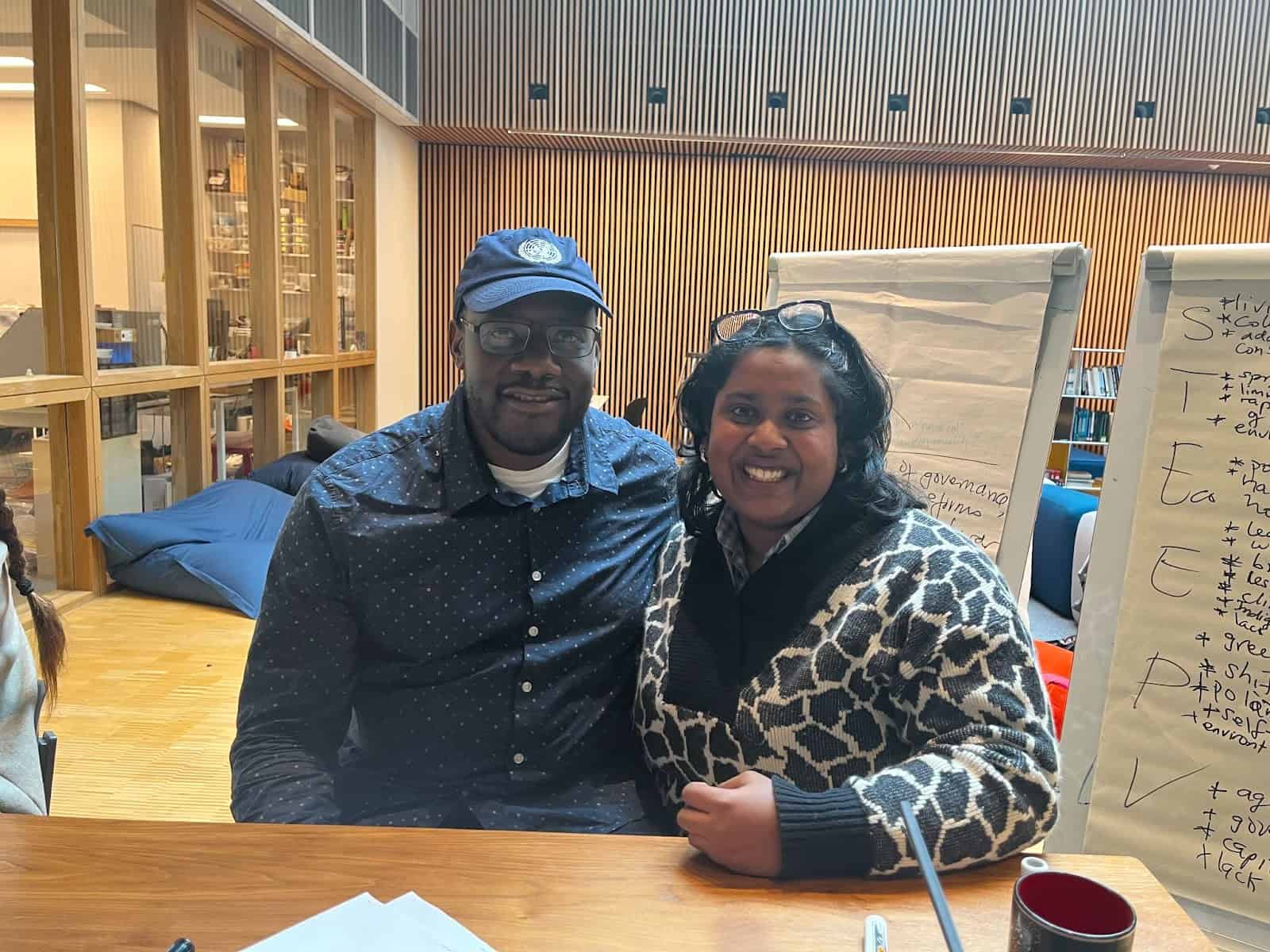
Looking to the future
In the final reflections, participants were reminded of how this laboratory is linked to wider global processes. In particular, the results of the session will contribute to the follow-up report by the Commission for Future Generations and aligned with the priorities of the Pact for future generations launched at the UN Summit for the Future in September 2024. These links offer a concrete way for the Lab's ideas to feed into ongoing global efforts in intergenerational justice and anticipatory governance.
To co-create meaningful futures, we must first develop our ability to imagine them. Strengthening our long-term vision fosters a deeper sense of action and helps us make more intentional choices today. This means becoming aware of the assumptions we make, and being ready to move beyond them. Only then can we truly begin to shape together the future we want to live in.