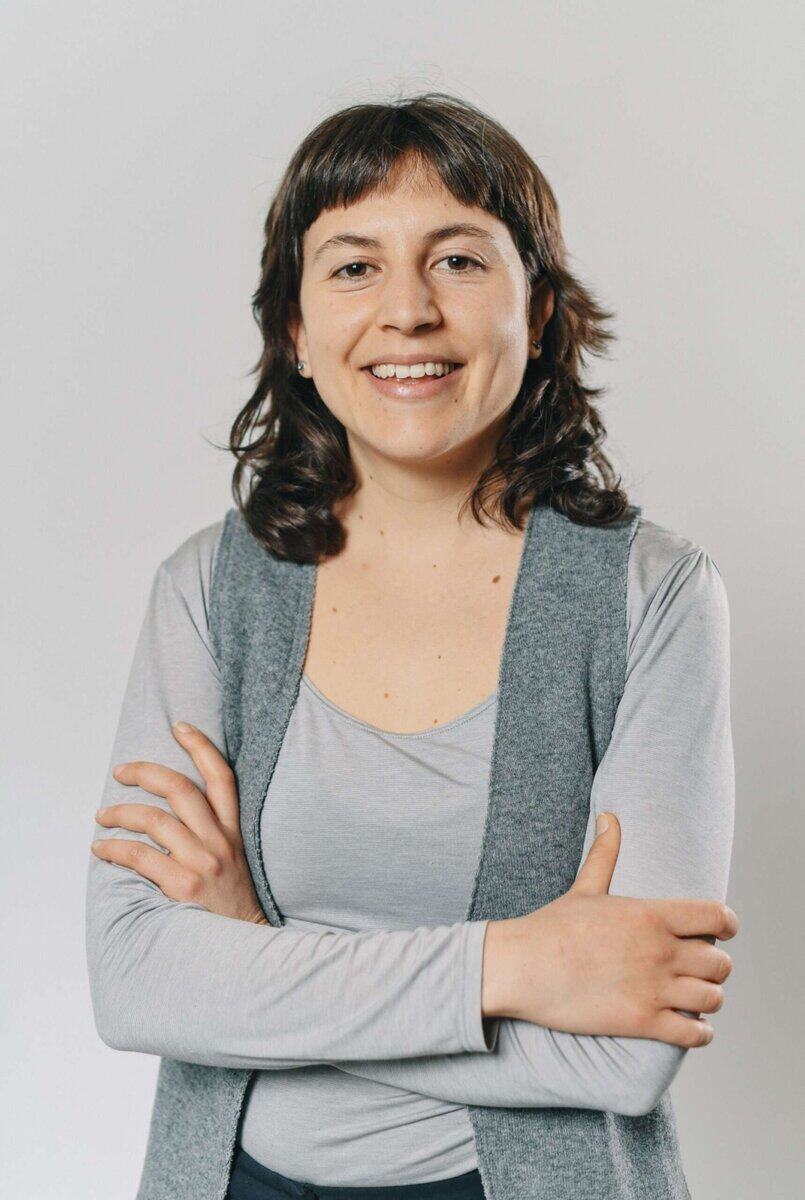
«I consider myself privileged, I've always had the chance to work on something that matches my interests. And in the world of science, that's pretty rare.» The tone is set. On the occasion of International Day of Women and Girls in Science and while research grants for women remain much lower than those for men, Cléa Montanari, who works in the world of participatory science, shares her views and experiences with us. A warm exchange in a café on the banks of the Seine.
Cléa Montanari has been on the move all her life. She is a third culture kid (« child of the third culture») who grew up most of her life outside her native countries. Franco-Italian, Cléa studied for her bachelor's degree at Concordia University in Canada. «I chose biology because that's what interested me in high school. It wasn't so much the working environment in a laboratory that appealed to me, but the subject. At the same time, I was studying sustainability (Sustainability Studies). »
During its first years of study, Cléa's research project focused on ecosystem services (Ecosystem Services), i.e. the benefits that ecosystems provide to human beings, either directly or indirectly (for example, provisioning services (resources provided by nature - such as drinking water, food, etc.)). Cléa then asks what humans can do to ensure that nature benefits from their activities in return. «I was very interested in this subject and really wanted to explore it. I did a lot of research, and kept coming across publications by Rudolf de Groot. It was thanks to these readings that I decided to study environmental policy. (Environmental Policy) master's degree at Wageningen University & Research in the Netherlands.»
Cléa specializes in sustainable development diplomacy (Sustainable Development Diplomacy). «What interested me in my studies, and what continues to fascinate me, is the human-nature relationship and participatory science. (Citizen Science) ». During her gap year, Cléa met Muki Haklay, Professor of Geographic Information Science (Geographical Information Science) at UCL in the UK, now her manager. She came across him by chance on the Future Earth, in a working group on the role of participatory science in achieving sustainable development objectives (Sustainable Development Goals, SDGs). «It was really exciting for me because, as a student, I was collaborating with well-established researchers.·es. I was even lucky enough to co-write the paper Agenda 2030’s, “Leave no one behind”, in citizen science?. That's how I entered the world of participatory science.»
But what exactly are participatory sciences, or sciences citoyennes? According to Cléa, the term «sciences participatives» is more commonly used in France, while «sciences citoyennes» has a more militant connotation. The use of « Citizen science »is the term used at European level.
« I like to use examples to explain what participatory science is (...)», smiles the young woman. «(...) If researchers·to collect data on the migrations of certain birds in order to better understand them, they can draw on the expertise of citizens.·people like you and me who are passionate·The researchers can then use their smartphones to fill in data as they watch the birds. This enables researchers·ses to collect data to continue their work. There's a real idea of collaboration between scientists and civil society. In participatory science, the individual is both subject·te and participant·e, or simply a participant.»
For her final Master's thesis, Cléa is trying to understand how articles written by environmental organizations can have an impact on the way readers·rices consider their own relationship with nature and their food citizenship (Food citizenship). Food citizenship explores the idea that we are not just consumers·at the end of the food chain.·es throughout the food system.
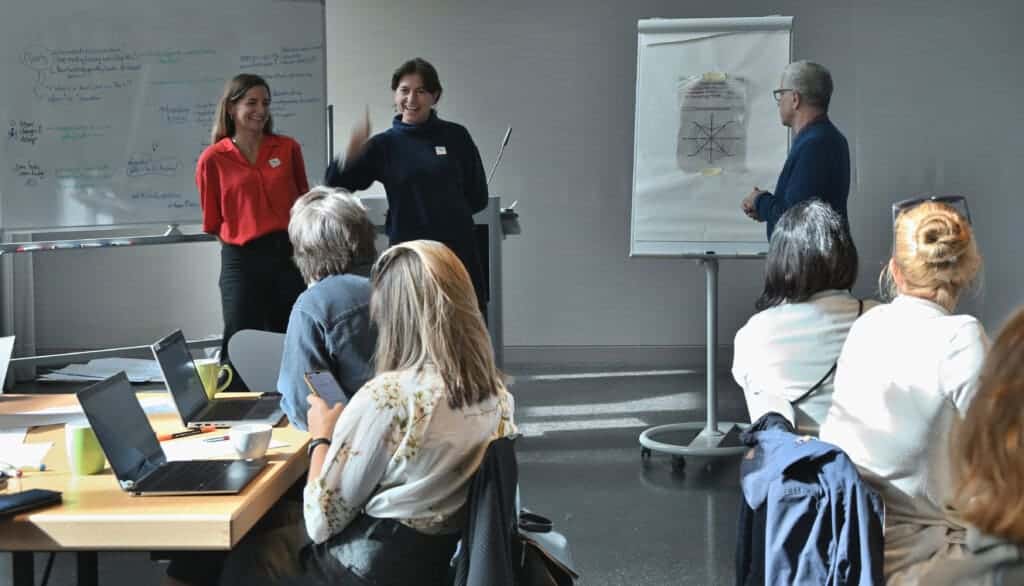
At the end of her studies, Cléa applied to become a project manager with the European programme European Citizen Science (European participatory science). She has now been working on the project for over two years, alongside project manager Muki Haklay. « European Citizen Science aims to grow and strengthen participatory science in Europe. It brings together s twenty-seven EU countries, as well as the UK, and twenty-one partner organizations, including Université Paris Cité and the Learning Planet Institute. Here in Paris, we're working specifically on the development of a European participatory science academy. We're improving a digital platform, working on a business plan and mobilizing networks of trainers.·rices and educators·The academy will be based in Berlin and will offer both physical and online training courses for researchers, engineers, engineers and other professionals.·ses, museums, universities, research libraries or public libraries.» The four-year project is scheduled for completion in late 2026.
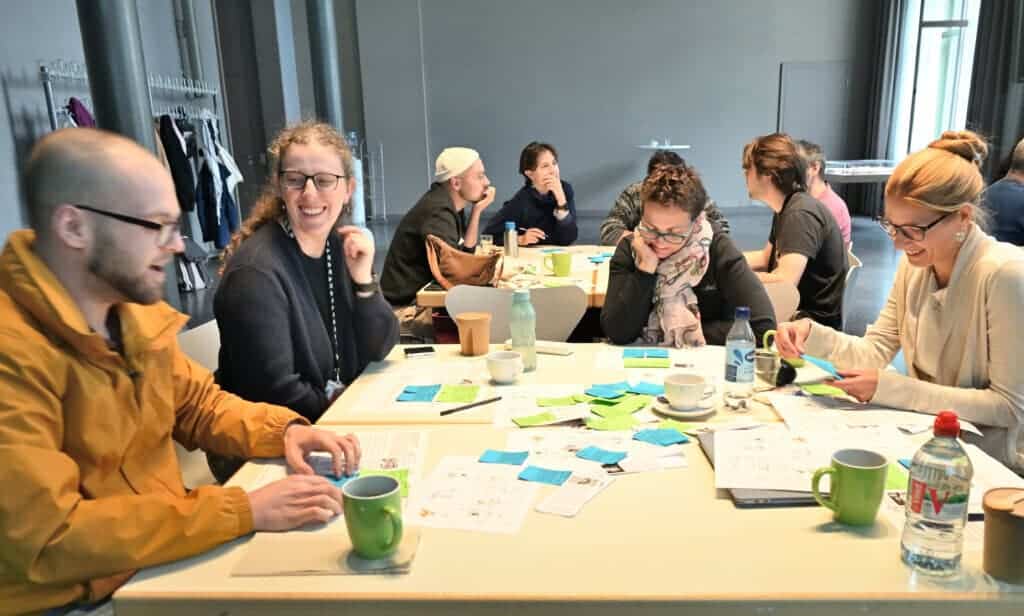
The construction of this academy is one of the initiatives in citizen science supported by the Learning Planet Institute convinced, for nearly fifteen years now, that citizens·nes have a major role to play in meeting the challenges of a sustainable future. In all, three major European projects have been supported by the Institute, which recently created Learning Transitions research unit (UR LT) with CY Cergy Paris Université. The aim of this department is to develop tools, theories and scientific methods for systemic approaches to planetary transitions, drawing on interdisciplinarity, artificial intelligence, collective intelligence and - of course - participatory science.
Cléa considers herself fortunate to work in the research field, and is aware of the privilege of being a woman in the world of participatory science. «I don't know if I've ever wondered about my own place as a woman in science. I consider myself privileged, I've always had the chance to work on things that correspond to my interests. In the world of science, that's pretty rare, she admits. «It's important to note that women are much more involved in the participatory science community than in many other areas, such as STEM »(science, technology, engineering and mathematics - according to the UN, women account for only 40% of graduates·and 28% computer science graduates·es in engineering). According to Cléa, this attraction is probably due to the research method: more personal and relational, more collaborative too. When asked what she thinks about the place of girls and women in science, Cléa replies: «This question simply shouldn't exist. What we can question, on the other hand, is the way we do science and the way the institution itself needs to change.»
Learn more
Find out more about the project European Citizen Science
Find out more about’Research Unit Learning Transitions
See more portraits of members of our community
A portrait by Marie Ollivier
Thanks to Cléa Montanari for answering our questions