Shapes-16

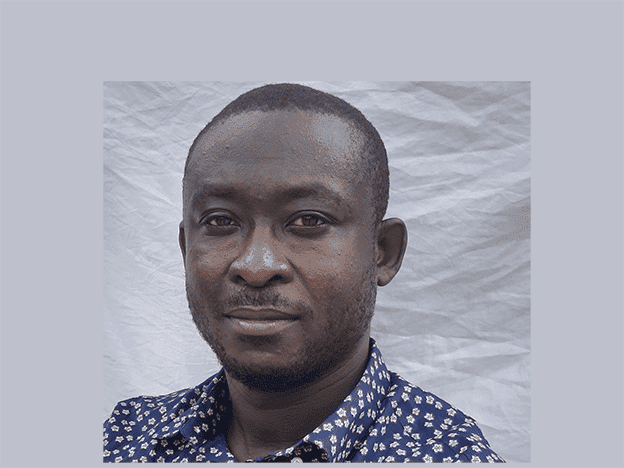
[COMMUNITY] Portrait of researcher Edward Owusu Kwarteng

  • Community
  • Education
  • R&D


EXPLORE AND BUILD YOUR OWN PATH


Edward Owusu Kwarteng is a stem cell researcher and vaccinologist. After studying in Ghana, he arrived at Learning Planet Institute (formerly CRI) in 2010 for the Master of Science (MSc.) in Interdisciplinary Approaches to Life. The institution gave him a taste for research and travel, and the desire to pursue his thesis research. He is very grateful.


Edward is Ghanaian. He spent his schooling in his native country, and went on to earn a Bachelor of Science (Bachelor of Science, (BSc.) in advanced mathematics at Laboratory Technology. Interested in how to identify diseases and combat their spread, he interned at hospital diagnostic centers.

When it came to choosing his Master's degree, Edward did some research on the Internet and came across the Learning Planet Institute* (CRI at the time). The program description matched his expectations perfectly. «This is what I want, this is where I want to be».» he says to himself, as if it were obvious. «In Ghana, nobody knew about CRI ». Edward interviewed with Ariel Lindner, CRI co-founder and Director of Research, and was accepted into the Interdisciplinary Approaches to Life master's program in 2010.

Enthusiastically, Edward left Ghana for Paris.« It was my first time traveling outside my country! It was quite stressful and difficult. I didn't know how to take the metro, the bus, I couldn't find accommodation... ». Yet Edward soon finds himself in a warm and welcoming environment.

Everyone was lovely, and the group was very close-knit. There were lots of international students. The French students showed us around the city and gave us advice. I felt right at home.  

The first exams are also a source of stress. « It was very interesting and very intense at the same time. But Edward gets them all with flying colors. He is nourished by the different backgrounds and experiences of his fellow students. Some come from Indonesia, Brazil or France, some study the ocean floor, others are now university professors in physics...

Everyone was starting from scratch. We were moving forward together.» For Edward, group presentations provide structure. « You always have a lot to learn from your colleagues. The way we shared our ideas was very special. No one was wrong, everyone was respectful and respected. It was quite unique.

In Master 1, Edward did an internship at the Institut Gustave Roussy on reactive species, in particular how they reproduce. «It was the beginning of research. I had no idea how to do it».», Edward laughs. « I learned everything on the job. It was very stimulating. ». The research experiences shared by doctoral students had already motivated Edward. Interdisciplinary Fridays« (Interdisciplinary Fridays) »This was a memorable experience for Edward, who came away inspired every week. It was a memorable experience for Edward, who came away inspired by the presentations every week. « We had the chance to talk to each other informally over a drink. It was very, very rich. There was never a dull moment, because there was always something new to discover. It was also a great way to make new friends!» says Edward, whose smile never leaves him.

In his Master 2 year, Edward did an internship at the Institut Curie on the causes of cell migration. At the same time, he was part of the «Paris Bettencourt» team at the International Genetically Engineered Machine competition (iGEM), an international synthetic biology competition held every year in Boston. « We launched our own research with our ideas, our bibliography... We formalized our experiences ourselves. It was very stimulating. »Taking part in this competition also gives Edward the opportunity to travel to Amsterdam and Boston. It gives him a taste for travel. « We presented our project as a poster in Boston and ended up as one of the 16 iGEM finalists.»

Edward also did a research internship at the Centre de Recherche des Cordeliers, then at the Assistance Publique - Hôpitaux de Paris (APHP) before leaving for Montreal and embarking on a PhD at the French National Institute for Scientific Research (INRS).

I more or less decided on my thesis project on my own. It came from the CRI. After CRI, I never stopped thinking like a CRI person! , he laughs.

During his thesis, he discovered a hitherto unknown mechanism showing that attrition of blood stem cells is partly responsible for immunosuppression in chronic infections such as HIV/AIDS. This reinforces the hypothesis that stem cells can be targeted to find a cure for chronic infections. Today, Edward is a post-doctoral fellow at Children's Medical Center Research Institute of Dallas, in the United States, where he studies the metabolic regulators of disease severity in aging.

CRI has done a lot for me. I owe the success of my career to CRI. I didn't know how to do research. I was able to explore my own path.» explains an enthusiastic Edward. « If you're really interested, you have everything you need (interactions, setting, materials) to become who you want to be. I didn't know anything like it. CRI is full of independent thinkers and good minds. I'd love to go back. »he concludes with a touch of nostalgia.

* The CRI will become the Learning Planet Institute in December 2021.
Find out all about its transformation : https://news.cri-paris.org/news/le-cri-se-transforme-et-devient-le-learning-planet-institute/


An article by Marie Ollivier

Shapes-10

Our latest news

Subscribe to the newsletter

Every quarter, we invite you to discover our latest news and the diversity of people and projects that make up the Learning Planet Institute!