Meghene, Renée and Henri Michel have just passed their baccalaureate in Port-Gentil, Gabon. Next year, they will take off to study in France: in Clermont-Ferrand, Bordeaux and Paris. Three years ago, they were marked by a singular adventure: the Savanturiers project carried out in 3rd grade with their Life and Earth Sciences (S.V.T) teacher, Cédric Pignel. Their research into medicinal plants helped them grow and mature, each in their own way. Interview.
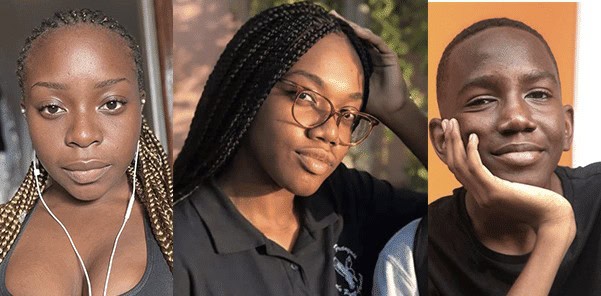
Meghene, Renée and Henri Michel have just finished their final year of high school in Port-Gentil, Gabon, each having passed their baccalauréat with flying colors. They will be studying in France: for Meghene, it will be Clermont-Ferrand, with a view to becoming a data engineer; for Renée, Bordeaux, to study for a degree in life sciences with a view to becoming a veterinary surgeon; and for Henri Michel, Paris, to study design, as he is passionate about drawing, particularly comic strips. What unites these three young people is the experience they had together in 3rd grade at Collège Victor Hugo: as part of the Savanturiers program, they carried out research on medicinal plants with Cédric Pignel, their S.V.T. teacher. At the start of the school year, they took a school trip to Gavilo, a few hours from Port-Gentil. The trip left a deep impression on all three of them: « You don't realize how close you are to trees, meadows and wild animals, and how lucky you are to have them.. says Henri Michel. «We really learned a lot on this trip, says Meghene, who adds « I'd never been to a park like this, even though we could all go with our parents! It's an hour's drive from the city! Why don't we do this all the time?. A unifying trip for the students, rich in discovery and learning. In Gavilo, they meet forest rangers and traditional healers who teach them about the flora and fauna. «I really realized during the trip that Gabon was a beautiful country, and that there was a lot to do».», explains Renée.
The students make careful observations, which enable them to decide, with Mr. Pignel, on their research topic for the year. « At first, we were looking for new species of ants because there were so many of them, but it wasn't obvious. We've also considered studying gorillas, panthers and snakes, for example, but they're more difficult to study in the classroom...!. In the end, they opted for the medicinal plants of Gabon's forests, and not by chance, since they are deeply rooted in the culture and daily life of the generations that preceded them.
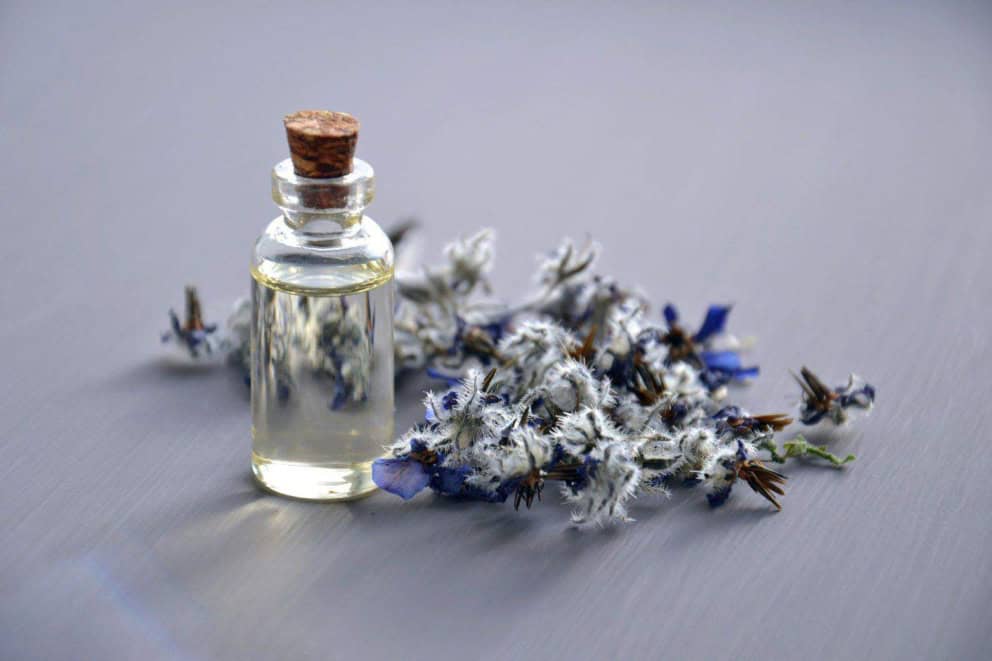
«We chose medicinal plants because there aren't always any medicines available in Gabon, so our grannies - at least my granny's - use plants a lot: she says «this is for the liver, this is for the heart and so on. Grannies have always treated people like that», explains Meghene.
Renée's uncle is also an enthusiast and connoisseur of medicinal plants, and Henri Michel's aunt has a large garden dedicated entirely to these plants. «Medicinal plants are really rooted in our parents» generation".», says Henri Michel. As for Renée, she already knew about plants thanks to her uncle, who had taught her about their virtues, such as those derived from iboga, which contains many nutrients. He even gave her some plants to bring to class, just as Meghene brought some from her grandmother. A real experience of transmission and sharing between generations. « On the cultural side, there's a big gap. Our generation doesn't know much about these plants, even though they're a major part of our culture! »continues Renée. With this project, the children are engaged in a double exploration: a scientific exploration of plants and their medicinal virtues, but also of their history, the culture of their parents, grandparents and ancestors.
With Mr. Pignel, in class, they discover the rigor and scientific approach: each group has a plant to work on. Pupils look up the scientific names from the plant photos they have taken, particularly in Gavilo. Two scientific experts also visit them at school during their research year, to make microscopic observations and study the plants and their benefits with them. « We've really gone far in our scientific exploration, explains Henri Michel, who didn't believe in the virtues of these plants at all. «I was very afraid of the placebo effect. I really wanted to dissociate the medicinal virtues of these plants from the spirituality that surrounds them. ». Thanks to the scientific approach, Henri Michel admits that he has discovered that these plants can be useful and effective, sometimes even more so than medicines. «The plant we were working on, for example, treats fevers, coughs, flu and constipation. Obviously,« explains Renée, "as with medicines, there are doses to be respected, and the uses can be different: sometimes you have to boil the plants, sometimes apply their oil, sometimes drink herbal teas, or chew them...".« Thanks to this project, we have discovered some very good alternatives to drugs.», says Renée. Meghene explains that it helped her to experiment and do research, Henri Michel developed his scientific rigor and his analysis of different phenomena, and Renée sharpened her critical mind and deepened her interest - already present - in science. All three claim that this adventure awakened their curiosity. « Les Savanturiers also helps with group work and independence »says Meghene. Renée also insists on the responsibility of such a project in 3rd grade. And it turns out that our three students had a mission of the utmost importance: to present their year's project at the Savanturiers Congress, on behalf of all their classmates. « It was a great moment to put everything down on paper together in preparation for the presentation. We recounted our travel anecdotes, but also, and above all, the observations we'd made, begins Henri Michel. Together with Renée and Meghene, they presented the results of their work via videoconference to classes from CM2, 6ème, 5ème and so on. «We really felt like scientists, the kids were asking lots of questions, they were really interested. The interaction was great.» A congress that marks the high point of their year, gives them a sense of responsibility, and real self-confidence. « I was already comfortable speaking, but this time I felt really good, in my element, because I knew what I was talking about, we'd been working on the subject all year». Meghene, Renée and Henri Michel, enthusiastic and passionate about their project, would have liked to pursue their research topic further, and why not in high school? «With age and more rigor, we would have had even more expertise, says Renée. «We would have found out more», says Meghene.
In talking with them, however, we realize with a certain admiration that they have already gone far in their research. «In my circle, they were quite impressed by our research».», says Meghene. Renée's parents were delighted: « At last, you've learned something about Gabon! ». Renée, Meghene and Henri Michel deplore the lack of reference to Gabonese culture in their teaching. For Henri Michel, it's undeniable that the project triggered a new topic of conversation with his parents. He boiled plants, showed them and discussed their virtues with them. « My parents were impressed and happy to talk about it with us. »he says.
« My parents, they knew everything and they supported us all the way, agrees Meghene. «Sometimes, my mother would ask me, «Which plant was it that cured this disease again?» and I'd say, «You can take that plant there.» I think it was guava flower. The young woman also exchanged a lot with her grandmother: « I explained the fruits of our research, what we'd found. Some plants cured, others did not. Some cured cancer, others cured the heart. ».
In addition to conversations with her family, and her uncle in particular, the project was a real turning point for Renée, for two reasons. Firstly, she became even more interested in science, in biology, and this determined her choice of direction: «I'd already been interested in wildlife before, but I didn't think I wanted to work on it to such an extent. The trip and the scientific observations reinforced this desire.». But above all it changed his relationship with the country: «I didn't want to come back to Gabon after my studies, I didn't see the point. This project has shown me the richness of my country, its fauna and flora, and now I know that I want to work in the reserves to preserve Gabon's animals.»
By the way, at the end of the notes Meghene took on their trip, it says that Gavilo means «return to the source»...
-
An article by Marie OLLIVIER