MAKING SCIENTIFIC MEDIATION ITS DNA
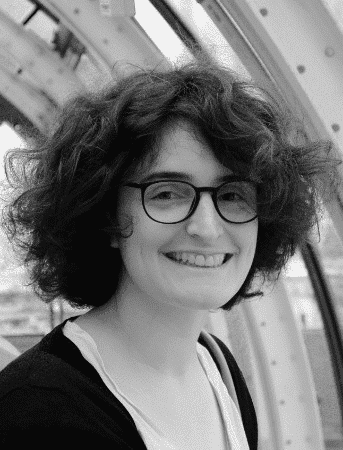
Élodie Dandelot holds a doctorate in genetics and is in charge of the Education and Science and Society programs at Imagine Institute. During her fourth year of doctoral studies, she worked with a class of CP-CE1 students in Paris as part of the Savanturiers program. Thanks to this experience, Élodie learned to talk about science, not to her fellow researchers, but to six-year-olds. A mission of mediation and popularization that motivates her and marks her career. Meet Élodie.
Élodie Dandelot comes from the South-West, not far from Bordeaux. When she was a child, she wanted to be a doctor or an archaeologist, and naturally gravitated towards the health sector, with a latent question: «What's in it for me?« Why do people go to the moon when we can't cure certain diseases? ». At the time, in the 1990s, the popularization of research was still rare. After her baccalauréat, Élodie studied biology in Bordeaux. She now knew: she would study human genetics, or nothing. « I was amazed. With just four letters, you can have all the living creatures on earth - it's fantastic! ». After having tried - without much hope - to get into Jussieu, she was accepted with flying colors and joined the faculty. Élodie did her Master's internship at the Institut Imagine (Institute for Genetic Diseases based on the campus of the Necker hospital, in the 15th arrondissement of Paris) and went on to do her thesis. Her research focuses on understanding the mechanisms of genetic information instability involved in Myotonic Dystrophy type 1 (DM1, Steinert's disease). Élodie designs, implements and interprets scientific protocols: she has even developed a technique that drastically reduces the cost and time required for a protocol, making it more accessible to the scientific community.
I learned something thanks to the critical spirit of these children who didn't believe me, but only believed the experience: the job was done.
During her fourth year of doctoral studies, she joined the Savanturiers program at the CRI (now the Learning Planet Institute). She organizes workshops in a CP-CE1 class in the 18th arrondissement of Paris. « Me, a PhD student... I said to myself: what am I going to do with first graders? Some couldn't read, some couldn't write, some couldn't speak French...».». It was a real challenge for Élodie, but one she gladly took up. The researcher carried out some very simple experiments with them, and some very messy ones too (the teacher still remembers them). The students analyzed taste and color, used chromatography to distinguish different components, and carried out experiments on the fats present in food. « One day, one of the class clowns got angry with me. I swore that apples didn't contain any fat. He said «I don't believe you, look»: the apple, rubbed against a piece of paper, did indeed leave a trace of grease, just like on the paper wrappers of Viennese pastries. Thanks to this child, I understood that it was the wax applied to apples to make them shine in supermarkets that was showing through in this greasy stain.. » Élodie and the children checked with a negative control: water, which, of course, showed no trace of fat. « I learned something thanks to the critical spirit of these children who didn't believe me, but only believed the experience: the job was done.»
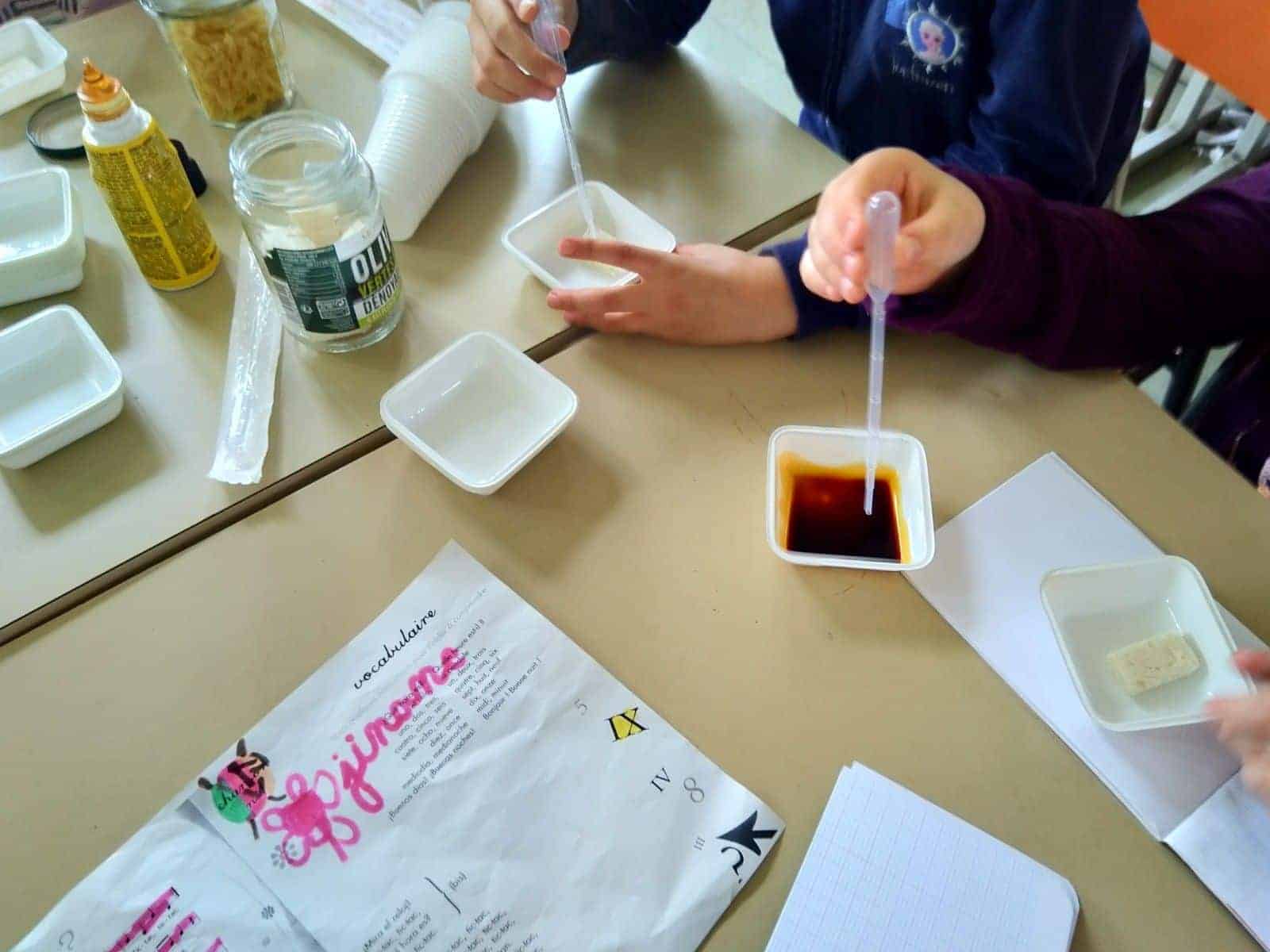
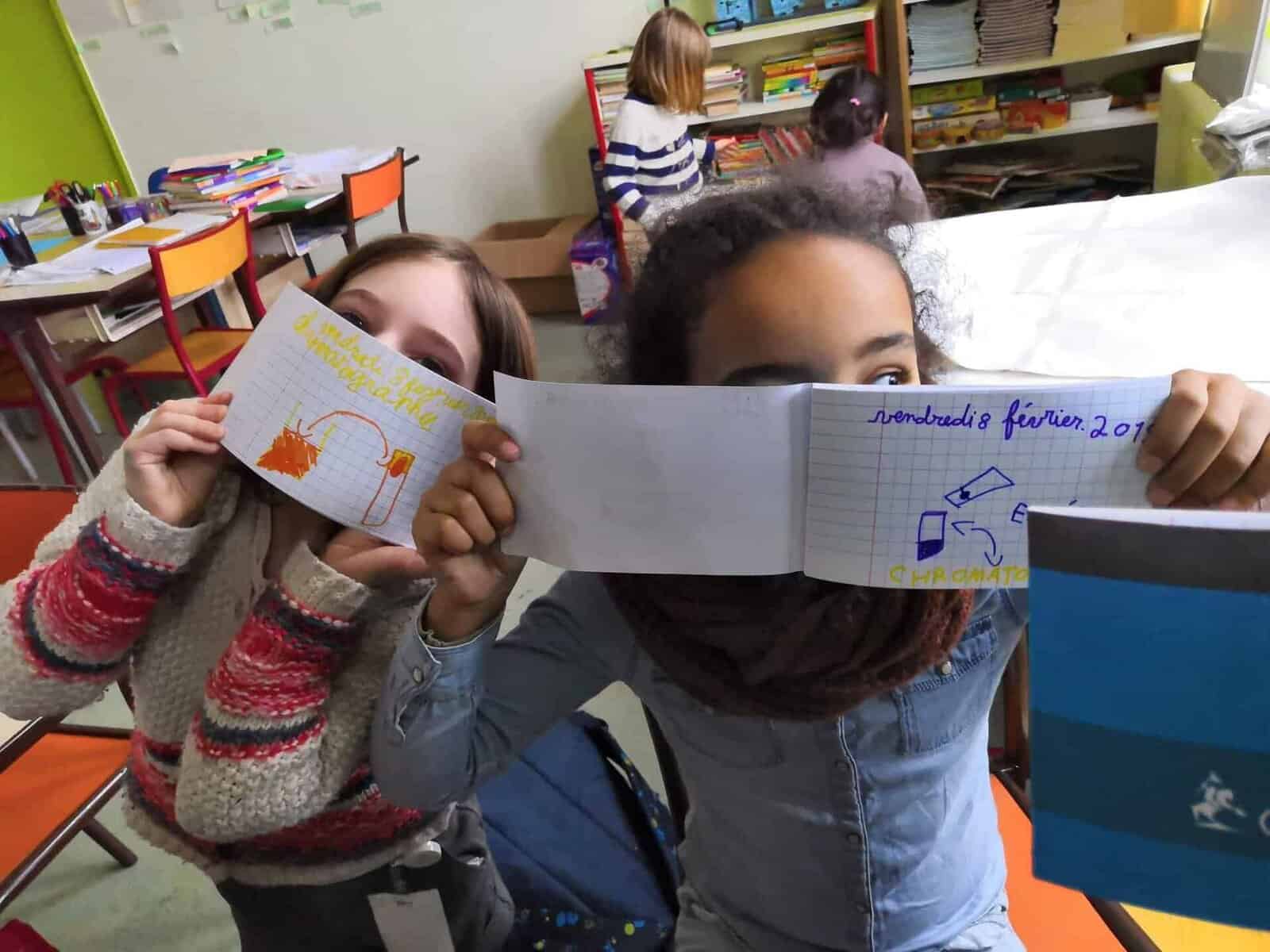
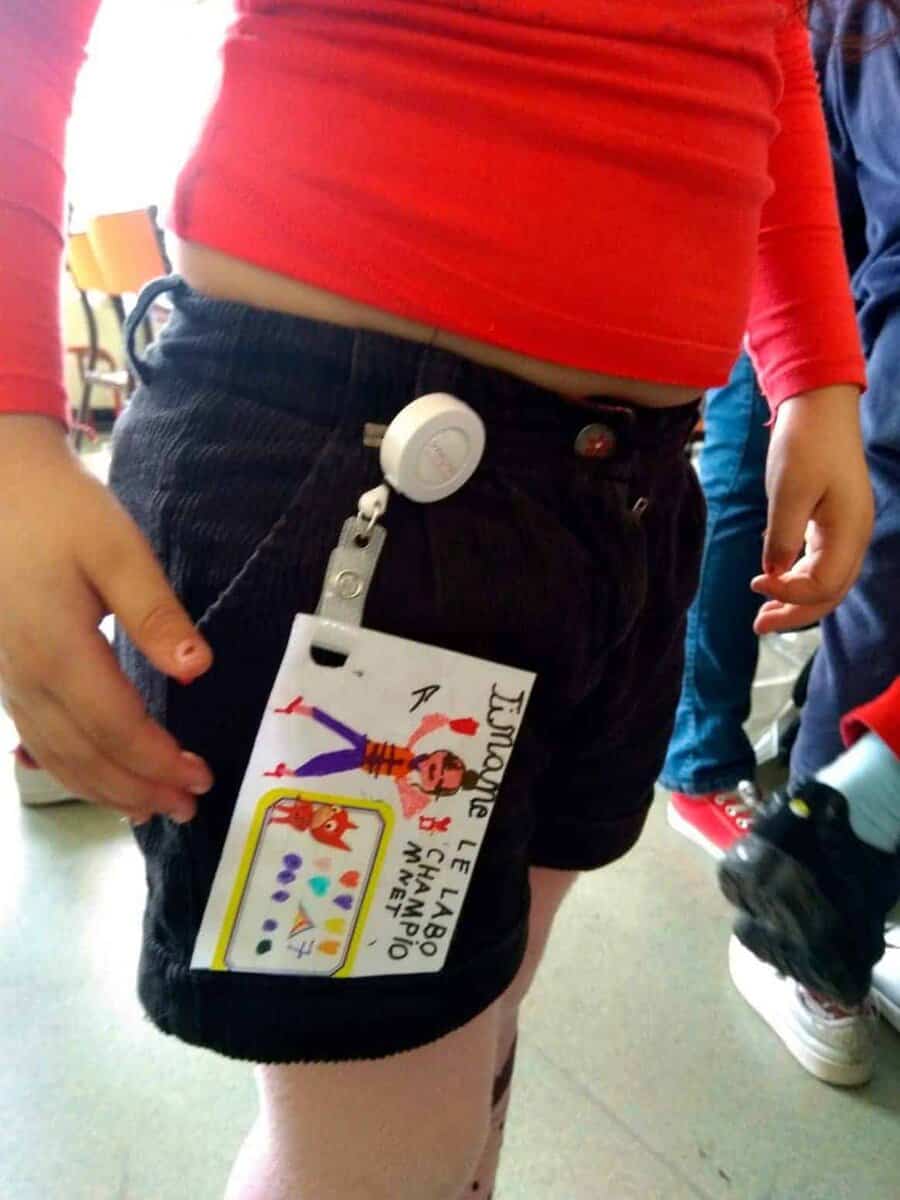
The students themselves obviously learned a lot. Élodie had brought along an old microscope, in which they were able to observe their cells: they had first scraped the inside of their cheeks. In particular, Élodie remembers one little girl who was astonished to realize that her body was made up of a multitude of cells: « At six years old, we're not yet aware that the human body is a collection of things; we think of it as a unit. Thanks to this machine, she not only saw things that the naked eye can't see, but also understood that matter is made up of multitudes of little things. »The children not only learned the scientific approach («they were never in the description»)», explains Élodie, still in practice) and, thanks to this approach, have developed knowledge on their own. The scientist didn't hesitate to bring in pipettes and other unusual objects from the laboratory, to show them what research and science are all about, and to get them to test them. The children even took a video tour of the laboratory with Élodie. « Some people have said to me, «It's not a job, no, it's fun...». That says a lot about the image they have of work!, she quips.
As scientists, we're not taught to say we don't know.
At the conference WISE on education, in which she took part, Élodie didn't hesitate to talk about the project. She then continued her work as a mediator and science popularizer with other audiences. In 2020, she carried out a mediation mission for the general public at the Palais de la Découverte. « At peer conferences, we speak our own language. It's very easy, very conventional. We know what's going to happen. On the other hand, you don't really know how a 6-year-old is going to react... It's the same thing with the general public. »At the beginning of the pandemic, people were asking her medical questions at the Palais de la Découverte. She knew how to answer some of them, others less so. « On the whole, as scientists, we're not taught to say we don't know. We try to contextualize, to find food for thought in related experiments and publications... Just saying «we don't know" is not enough. »It's very difficult to conceive, both for oneself and for the public. ». An idea that Élodie defends: she explains that it's sometimes easier to admit that we don't have all the answers, in short, to show humility. Even if scientists can and must enlighten people on certain questions. This is also the challenge of scientific mediation, according to Élodie: managing an audience, a level of discourse: « You never know who you're up against. In mediation, there's certainly an element of innate predisposition, but that's not all. There's also a learning curve, and you need a minimum of training to be able to address different audiences. ».
Today, Élodie is in charge of the Institut Imagine's Science and Society Education programs, continuing her career as a mediator. The Institute's mission is to open up to the general public and play a real role in society. « Researchers are keen to share, patient associations want to exchange ideas, and we also welcome schoolchildren. »Élodie concludes that she is now involved in a different kind of mediation, working with Imagine doctoral students to promote the Institute's experiments to school classes, and creating a lively atmosphere in the neighborhood around genetic diseases... « The aim is to inspire people to take up science, and demystify what goes on in laboratories. »You can't say that transmission and mediation aren't part of Élodie's DNA!
A portrait of Marie OLLIVIER