MIXING DISCIPLINES, ANALYZING SOCIAL PHENOMENA
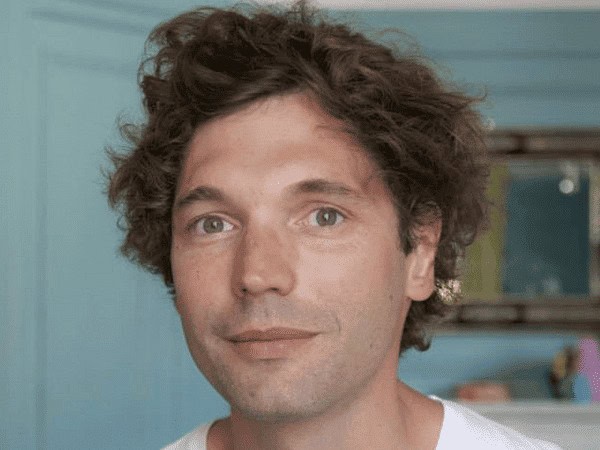
Jean-Philippe Cointet is an associate professor at Sciences Po. He devises methods for modeling digital traces in order to map public space and its dynamics. He was one of the first graduates of the master's program AIRE-LiSc (Life Sciences) at Learning Planet Institute (formerly CRI). Meet us.
Jean-Philippe Cointet is an engineer and researcher. He holds a PhD in complex systems and was trained at the École Polytechnique. Today, he is an associate professor at Sciences Po, and affiliated with the INCITE from Columbia University in the United States, he defended his habilitation in social sciences at the’École Normale Supérieure (ENS) in 2017.
To omit the Learning Planet Institute would be to overlook an element of Jean-Philippe's brilliant career path, as he was part of the very first class of the AIV (Approches Interdisciplinaires du Vivant) master's program. «We had a weekly meeting, and student presentations all year round.», says Jean-Philippe. «Everything was improvised. We were in a corridor in the ENS canteen!, he smiles. However, this does not detract from the quality of the teaching and the experiments carried out by the highly autonomous students. «We were told: »Make your own route, you'll manage'. The master's program, which is devoid of lectures, emphasizes critical and entrepreneurial thinking. «We could choose any lab, any article to work on. Scientific articles were scrutinized: the students deconstructed the protocol to find and remedy any flaws. «We were also doing the same thing on a book scale.
In this program of around twenty people, Jean-Philippe is impressed by the overall level. «All my classmates were very bright: biologists, mathematicians, physicists, some from the ENS, some in their theses, others from abroad...».» said the only student from Polytechnique. «We were a nice, fun group, adds Jean-Philippe, referring to both his classmates and teachers. «On the teaching team, we had a funny physicist, Stéphane Douady, who talked to us about the physics of grains of sand and the morphogenesis of cabbages, Pierre Sonigo, a doctor in biology and medicine, who told us about epigenetics, and the founders of the CRI. Ariel Lindner and François Taddei, whose background was very similar to mine».
Jean-Philippe goes to see François Taddei to talk about his thesis project, and to explain how much he needs to mature it.
«Generally speaking, there was a real generosity towards young people within the master's program. It wasn't «you young people don't know anything», it was quite the opposite! People were interested in the pedagogical experience in the strongest sense of the word.»
Jean-Philippe is taking advantage of his three Master's internships to explore different environments: the first in network computing, the second in neuroscience (in experimental psychology) and the third, in social network modeling, in the CRÉA (Centre de recherche en épistémologie appliquée de l'École Polytechnique). «I learned my scales at CRÉA, and I've become acculturated to it. It's a long-distance job, explains the researcher.
Jean-Philippe Cointet is doing his thesis at the École Polytechnique's CRÉA, in conjunction with the Institut des Systèmes Complexes.
«The majority were physicists and mathematicians, who wanted to acquire additional training through research. Jean-Philippe is already familiar with the world of research, and is particularly stimulated by CRÉA: «It's an incredible laboratory. A club of philosophers, mathematicians, researchers and nerds, closely linked to the history of cognitive science». With Paul Bourgine and Pierre-Benoit Joly as his thesis supervisors, Jean-Philippe combines network science with the controversial subjects that were shaking up the world of agriculture at the time, such as GMOs (genetically modified organisms) and nanotechnologies. He analyzes political blogs («the Twitter of the time, it's 2004 and therefore far from Cambridge Analytica!»), and automatic language processing. He uses this mapping of textual traces as a methodology for investigation in the social sciences.
INRAE offers him a position as a research engineer at INRA-SenS (now INRA-SenS). LISIS), giving him considerable freedom to develop innovative computational social science methods. «It answers real social science questions ». For example, Jean-Philippe studies topical issues and social and political phenomena, enabling him to analyze more global socio-political dynamics.
«The most interesting are networks and blogs. We work on social phenomena, starting with the way individuals communicate, the text behind it, the acts of enunciation.», he explains.
In Jean-Philippe's work, there is a co-evolution of interaction structures between individuals and interactions between individuals themselves. «Even if we're behind a computer, we interact with people.»
Together with sociologists and other modelers, Jean-Philippe Cointet has developed the CorTexT. «It's a platform that uses artificial intelligence to analyze social science texts. We got social science computer scientists to work together, as well as anthropologists and sociologists. It was great to see how knowledge and skills crossed and complemented each other.» Today, the data collection platform boasts some 5,000 users. It is thus possible to start from a corpus of tweets and extract texts for sentiment analysis.
«For example, we studied the communes of the Nord-Pas-de-Calais region, extracting comments made by people about their mayor. This enabled us to characterize modes of participation, and to see the themes more or less present at the scale of the agglomerations.»
Today, Jean-Philippe's areas of research are numerous: social network analysis (such as Facebook or Twitter), scientometrics (the dynamics of knowledge production based on data as produced by science (such as data feedback in oncology)), mapping of political processes (political discourse, international negotiations, which he does in particular with his students at the Paris School of International Affairs (PSIA)).
Now a teacher in his own right, Jean-Philippe will remember his AIV master's degree for the strong principles of horizontality and practice through research, which he deploys with his students. «This experience was very structuring for me».», he concludes.
A portrait of Marie OLLIVIER