Shapes-16

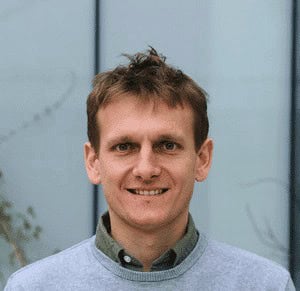
[COMMUNITY] Portrait of Jonathan Grizou, A.I. doctor and teacher

  • Community
  • Education
  • R&D


REINVENTING LEARNING, STIMULATING CREATIVITY


Jonathan Grizou has a PhD in artificial intelligence. With a great curiosity and passion for education, he developed a reverse engineering project at the CRI*, to make his thesis accessible to all, by designing an interactive safe that had to be opened using a code. New ways of transmitting, interdisciplinarity, open-source: CRI's vision could only resonate with Jonathan's personality.


“There is great progress to be made in language learning. The aim is to communicate, not to write without making mistakes.”

Jonathan has lived with this frustration since he was a child. «I was lucky enough to be able to understand quickly, and the teachers didn't dare tell us when they didn't understand.» These childish reflections gave rise to an original teaching posture. In Jonathan's first class at CRI*, he asks a student to teach him a song on guitar. « The aim was to release the tension. The idea that the teacher knows everything is too widespread. It's just not true! »

But let's go back in time, before Jonathan's arrival at CRI. As a young boy, he was curious about everything and passionate about technology. His curiosity prompted him to write a thesis in artificial intelligence at the University of Bordeaux on curiosity in children, and more precisely on how robots can be used to study this curiosity. Jonathan's thesis wins the Le Monde university research. Passionate about his work, he takes part in international conferences and launches scientific collaborations with universities in the USA, Spain and Germany.

After completing his thesis, Jonathan explored a whole new world, while remaining in the robotics field. From research, he moved into the startup environment with three researcher friends with whom he co-founded a company. In summer 2018, two projects emerge: Pollen Robotics, open-source robots specializing in manipulation and interaction with objects, and Luos, an open-source decentralized communication system for robotics.

Culturally, it was an interesting experience. With the co-founders, we knew our strengths and how we complemented each other, but the world of start-ups is really different from that of day-to-day research!”

These two companies continue to operate, but in 2019 Jonathan decides to leave this world to join the CRI, which he heard about from his thesis supervisor Pierre-Yves Oudeyer. Jonathan was seduced by the atmosphere: «The approach at CRI was less traditional, more mixed, with more interdisciplinarity. What I really liked was that in the same place, there were teachers, researchers and students.». He began with a project proposal at the crossroads of artificial intelligence and biology, before changing and finding what really makes him tick. «What frustrated me was that I couldn't really explain my work, bring my thesis to people.» Jonathan then conceived an interactive project to explain his artificial intelligence thesis to as many people as possible. He says to himself: « Finally, this way of interacting can be simplified to two buttons.» Jonathan builds a transparent safe MakerLab of the CRI, with a code that is difficult to access.

“Those months of design were very intense for me, it was a great challenge, I learned how to do web at CRI.”

@JonathanGrizou

Jonathan sets up his safe on the CRI premises, and challenges the students to find the code to open the safe, which contains chocolates, without any outside help! Over the next few days, Jonathan sits back and observes the students' interactions and reflections. «There were four levels of difficulty. The first one was solved within the day by a 16-year-old girl!» A defining moment for Jonathan. «Seeing this girl so happy to have found the code, and her mom with her, was great!. The researcher also notes that the youngest are the most gifted in this exercise: «.« They have fewer preconceived ideas, fewer prejudices. »

Thanks to this game-based experience, many students are learning how self-calibration interfaces work, as well as machine learning concepts. «All the students played the game, despite their exams».», says a delighted Jonathan, for whom the CRI philosophy is particularly resonant. « When I was younger, I felt that school was something I had to do, not something I was curious about. At CRI, the community encourages learning by doing.» Jonathan also gave a introductory robotics course master's program at CRI. As part of the evaluation process, the teacher organized conversations with the students, giving them constructive feedback on their understanding of the concepts covered.

Today, Jonathan continues his teaching work at the University of Glasgow, Scotland. «They took my background into account, even if the setting is more traditional than at the CRI».». He teaches an interdisciplinary course to students at Glasgow University in Singapore. Jonathan covers design, computer science and mechatronics. « The good thing is that we ask them to be creative, to build physical prototypes as a team. ». Today, students are building syringe cleaning equipment for hospitals, but Jonathan would like to get them working on education. The students would make public creations, which would contribute to the design of educational resources for schools, parents, students... An idea in line with his thesis, and his project at the CRI.

Jonathan feels good and true in his current role. It runs projects, He's in touch with people and makes sure that everyone can understand his work, and that of his students, and that it's useful to everyone. Today, he's convinced that all projects should be available on the web, by open-source.

“When you're hyper-specialized, you don't realize that only 200 people in the world are interested in the same subjects. Trying to understand what people need, and stimulating their creativity by getting them to interact, that's what I really love..”

Speaking of creativity, Jonathan's safe was featured in two art exhibitions: at the Nuit Blanche in Paris, and at the Ming Contemporary Art Museum in Shanghai.

YouTube video

* The CRI will become the Learning Planet Institute in December 2021.
Find out all about its transformation : https://news.cri-paris.org/news/le-cri-se-transforme-et-devient-le-learning-planet-institute/
-

A portrait of Marie OLLIVIER

Shapes-10

Our latest news

Subscribe to the newsletter

Every quarter, we invite you to discover our latest news and the diversity of people and projects that make up the Learning Planet Institute!