TAKING SCIENCE TO ITS ROOTS, MAKING IT ACCESSIBLE TO ALL
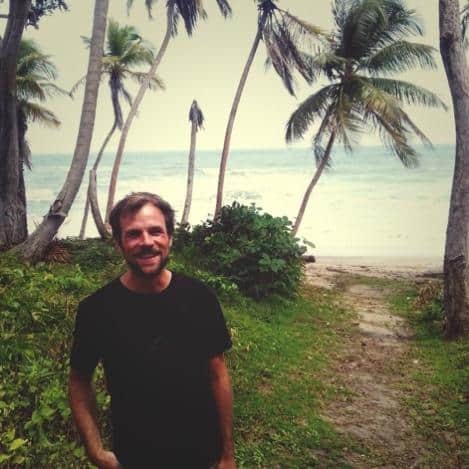
From an early age, Kévin Candelier was drawn to the natural world around him, especially trees. An average student, he did the minimum to pass to the next class, but discovered learning through practice and experimentation by preparing for a STI civil engineering baccalaureate, where he developed a taste for engineering. « I've always found it fascinating to go from a seed to a plant, a bridge or a building. »he explains. After a preparatory class that taught him a lot about himself and his ability to work, Kévin entered the École Nationale Supérieure des Technologies et Industries du Bois (ENSTIB) in Épinal.
“As an engineering student, I fell in love with tropical countries and trees.» (notably during an awareness-raising course on deforestation in Ghana). « I've come to realize that wood and other woody biomasses represent very important resources that can meet many local and societal needs around the world. (materials, energy, medicinal substances, etc.). »
These are the main areas of research, expertise and teaching/training for Kévin, who did his doctorate in a wood materials research laboratory (LERMaB, Université de Lorraine, Nancy), focusing on processes for thermally modifying local woods to improve their fungal resistance and hydrophobicity, for use in materials.
According to Kévin, his job has three strong points: being at the heart of nature and understanding his environment, being able to travel to meet other cultures and ways of life, and doing his job «like a game», like children's books. Search and find. This is how the researcher presented his activity to the Creil classes he was accompanying this year as a scientific mentor for the Savanturiers program. When he received an e-mail from CIRAD, it was an obvious choice for Kévin. The Savanturiers approach was totally in line with his own, and he is now involved as a member of the steering committee and teaching team of the master's degree in wood science from the University of Montpellier, which will open its doors for the first time in September.
« Active, project-based learning, situational and problem-solving teaching, and active student participation are all common features (...) Students in both first and second grade can play an active role in their own learning. »
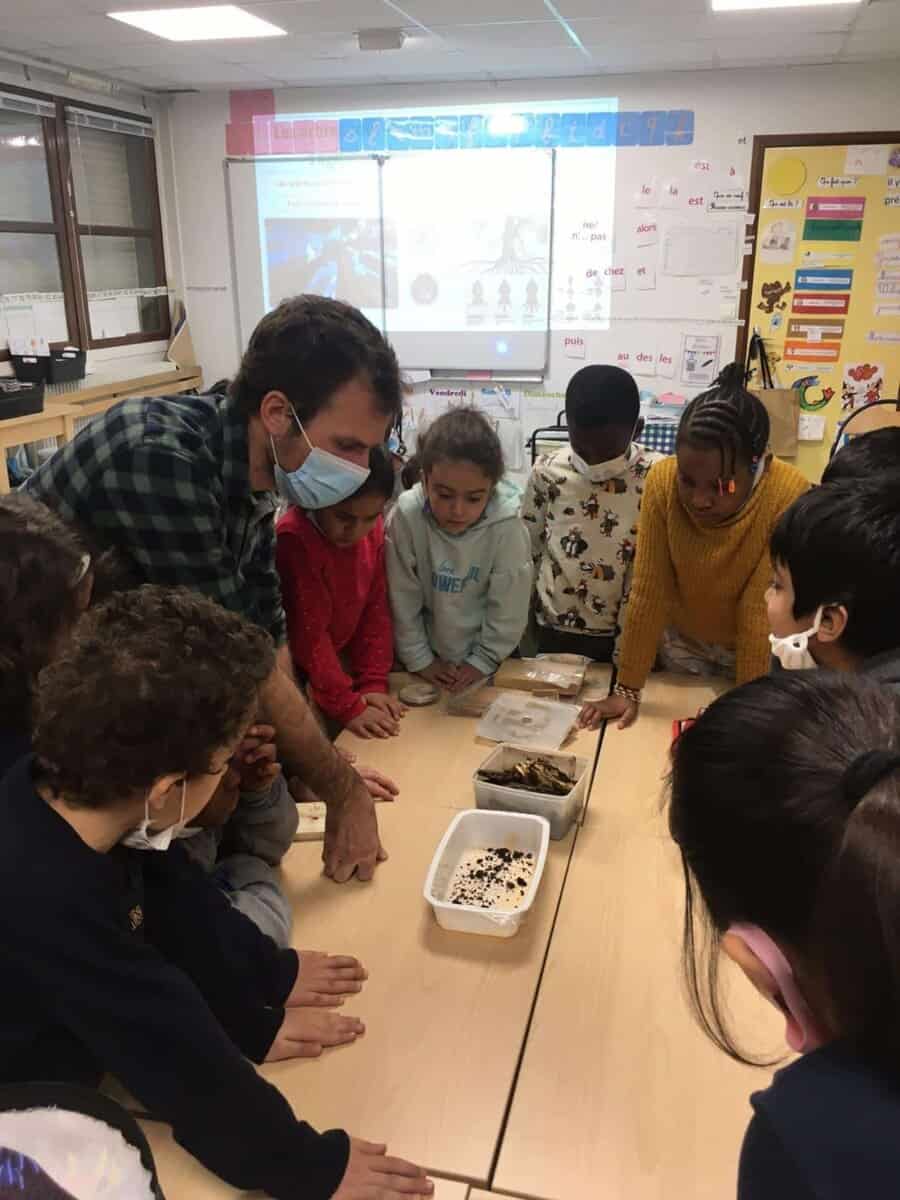
In his first year as a mentor, Kévin accompanied six classes in Creil's REP school. The CM1 and CM2 worked on the sensitivity of trees, and their communication with other species. The CP and CE1 classes focused on tree growth, based on observations of sap and resin. Kévin was particularly impressed by the very pertinent hypotheses formulated by the pupils - notably on the uses of sap and resin (including honey, glue and sugar).
« All they mentioned were the uses to which it could be put. It was amazing. ».
With the younger children, Kévin worked on a growth curve to show the link between the growth of a tree and their own growth as children. Beyond the virtual exchanges, the researcher had the chance to visit the classes he worked with on two occasions: to introduce himself and meet the children - the most memorable moment for Kévin - and then to discuss with them, develop research questions, and try out planting at the school.
«At the end of their project, the students from CP-CE1 and their teachers planted their little walnut trees in the courtyard. Apparently, some of the students reproduced these experiments at home afterwards! »Kévin is delighted. This adoption of the scientific approach and the practice of science is vital for him.
« We used to learn about knowledge and the history of science (with Curie, de Vinci, Einstein). It was interesting for general culture, but there was little practical interest. CRI's proposals for research and learning through science are relevant to today's world. The students are motivated, passionate and see the interest and impact of their work.»
According to Kévin, working in groups, sharing experiences with friends and family, and communicating their results gives students real self-confidence. Through their research process, they find themselves connected to the world around them. « At that age, they need to touch and be immersed in what they're studying. I wish I could have done practical work like that when I was their age! ».
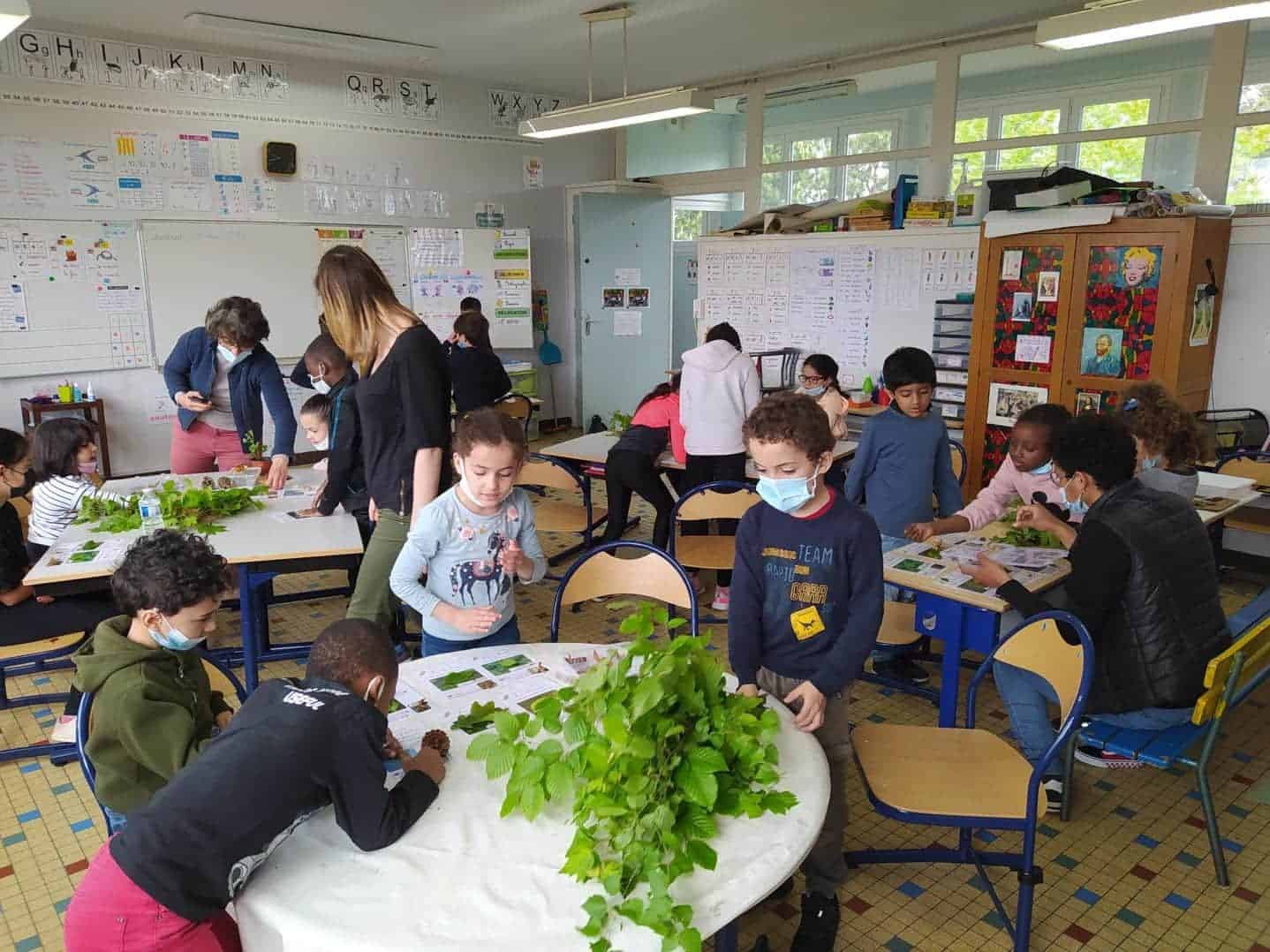
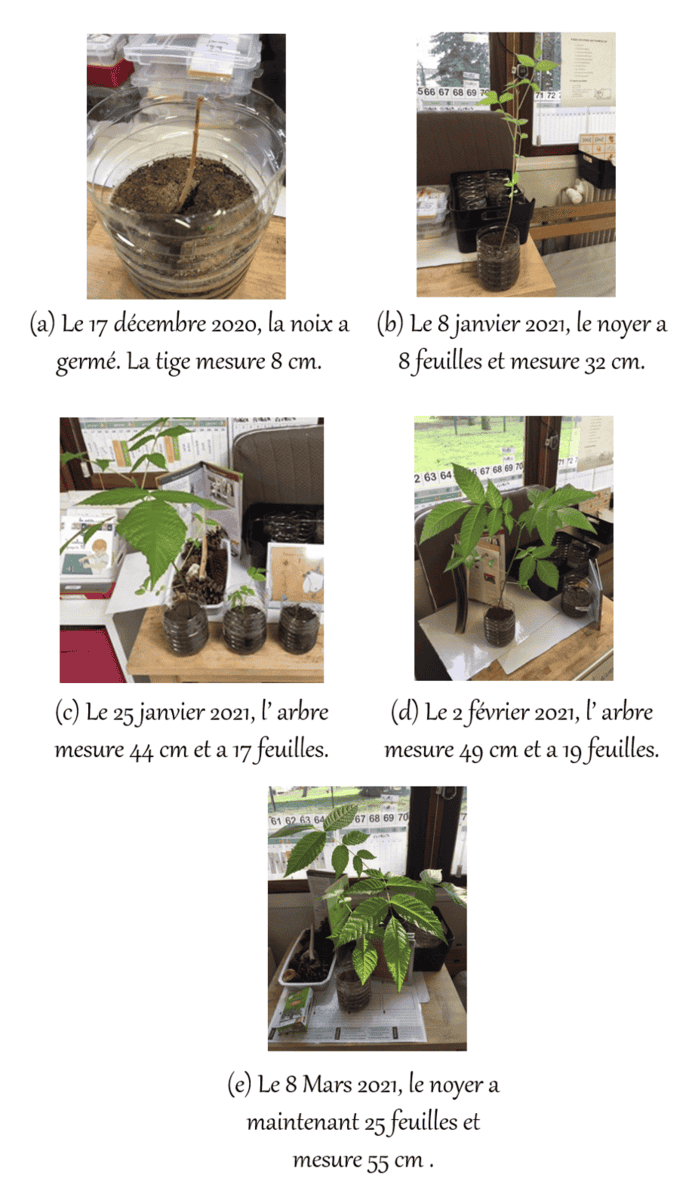
As the experiments progress, the image of the mad scientist in his cellar is toned down in favor of a more accessible science. Kévin is very sensitive to this issue: it's a mission that's very close to his heart, as he uses a variety of means to bring science to the general public. Kévin, Ange Ansour and the teachers from the Creil classes have written a scientific article that will be published in the magazine Tropical Woods and Forests this year. The idea is to show the value of teaching science at school, and Kévin is an excellent spokesman for this:
“Changing our behavior towards the environment, and resolving to adopt new lifestyles, can only be achieved through educating our young people. They're the ones who are going to change things.»
A portrait of Marie OLLIVIER