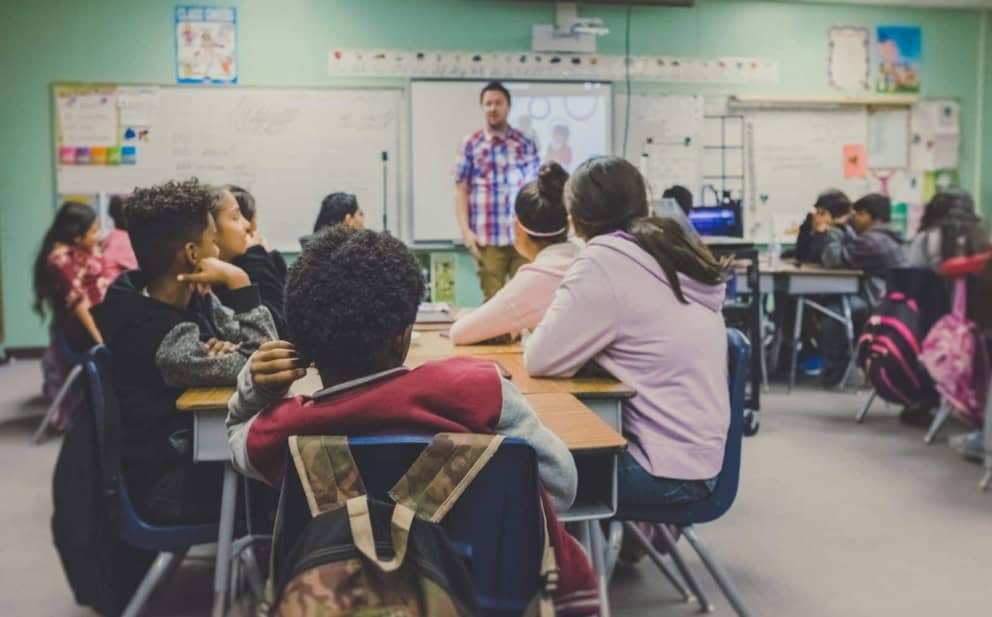
Every day, teachers try out new experiments and observe their impact on learning. Could their experiments earn them the status of researchers? According to Ignacio Atal, “Millions of teachers learn how to teach every day by experimenting and guessing “what works” and “what doesn't”. In this sense, every classroom could be considered a living research laboratory contributing to the sciences of teaching and learning”. After a doctorate in epidemiology and public health, this former engineer came to CRI with a desire to focus his research on education. “During my doctoral studies, what interested me was: how do you know if something works or not in medicine? Whether it's a treatment, a surgical procedure, a psychological intervention... How do you know “what works” and “what doesn't”? I then wanted to study the same question in the field of education. I came to the IRC to make this transition, as few places would have understood the value of my course.”
As a long-term fellow, he now works with research engineer Nathanael Jeune and two interns. In collaboration with Pascal Haag of the EHEES/Labschool network, the team has created a series of workshops to support teachers throughout the year in conducting and structuring their “pedagogical research”. During these workshops, which last between 2 and 3 hours, teachers are invited to explain their context and objectives. Some of them aim to make their students more independent, for example, while others have objectives linked to development, well-being and self-confidence. Thematic groups are then created around a research question. These may include :“What tools could be integrated into the classroom to develop student autonomy?” or “What teaching methods should be used to develop self-confidence? In connection with these questions, teachers are encouraged to take note of what they find interesting, and to draw lessons for future action plans. Between workshops, they share interesting resources, observations and reflections, in collaborative online documents, by e-mail, through groups Whatsapp, For the time being, the project is focusing on around 50 nursery and elementary school teachers. Step by step, participants are invited to acquire a scientific posture regarding their daily teaching experiences. “Coming from the world of medicine, I realized that medicine has suffered from the fact that we don't publish research when the results are negative”, adds Ignacio. “When we want to know whether a drug is effective or not, we usually take into account previous research done on that drug. However, we have a huge bias if the research hasn't been published. The approach of a researcher sharing his or her scientific progress in a collaborative setting attempts to limit this bias. The idea is therefore to document this approach for teachers.