Faced with the upheavals of our times - artificial intelligence, multiple crises, changes in the workplace - how can we train the citizens of tomorrow? At the Learning Planet Institute, and as part of the UNESCO Chair in the Science of Learning, Raphael Costambeys-Kempczynski and his team are experimenting with new pedagogical approaches to build a «learning society». Meet the Director of Education.
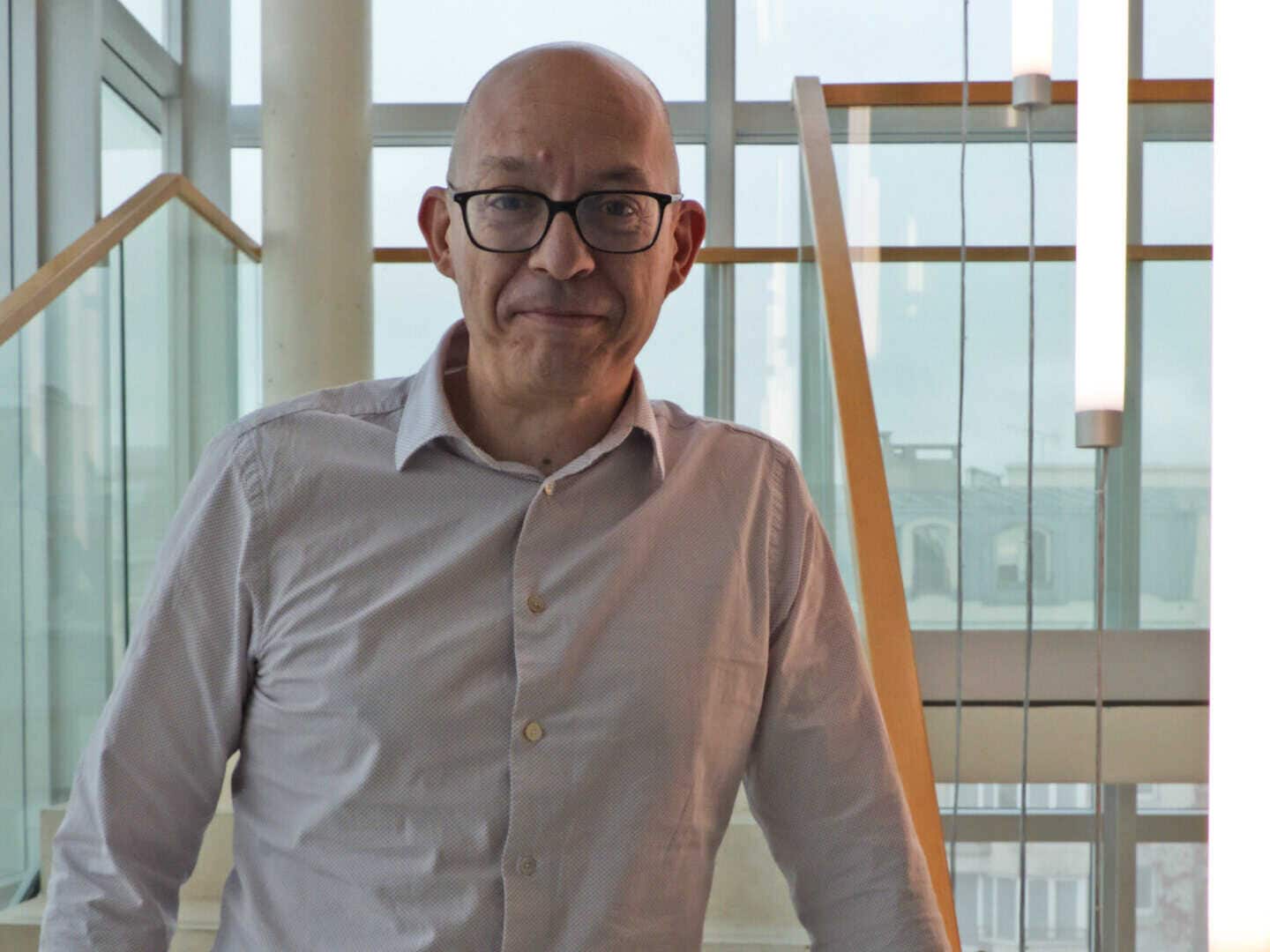
Raphael Costambeys-Kempczynski is Director of Education at the Learning Planet Institute. In the course of his career, he has developed an interest in the student experience, notably at Heriot-Watt University in Edinburgh.
In the wake of the pandemic, he took a leave of absence from research after several years at the Université Sorbonne Nouvelle, where he held a number of positions - including Vice-President and Director Delegate for Student Experience of the Sorbonne Paris Cité group. As part of his work, he is in charge of the ARC research project: Agency, Resilience, Co-Construction, studying the logics of agentivity, resilience and co-construction. capacity-building. «We have moved from an information society to a knowledge society. We then became aware of the dynamics between information and knowledge, not only in terms of acquiring knowledge, but also of developing know-how and interpersonal skills. From now on, the knowledge-skills dynamic is the challenge of the 21st century: how can we mobilize skills acquired in a logic of encapacitation to give rise to brand-new knowledge?»
As part of this research, Raphael Costambeys-Kempczynski was invited by François Taddei to join the Learning Planet Institute for six months, before becoming Director of Education in September 2022. «Today, we are all working on questions of transitions in pedagogical innovation, he explains.
Rethinking learning in a time of transitions
The pedagogical/educational pathways developed by the Institute engage people of all ages in a lifelong learning process (in and out of school, in higher education and continuing education). The programs and pedagogical practices offered - whether individual or collective - enable people to learn differently, so that they can all play their part in building a learning society.
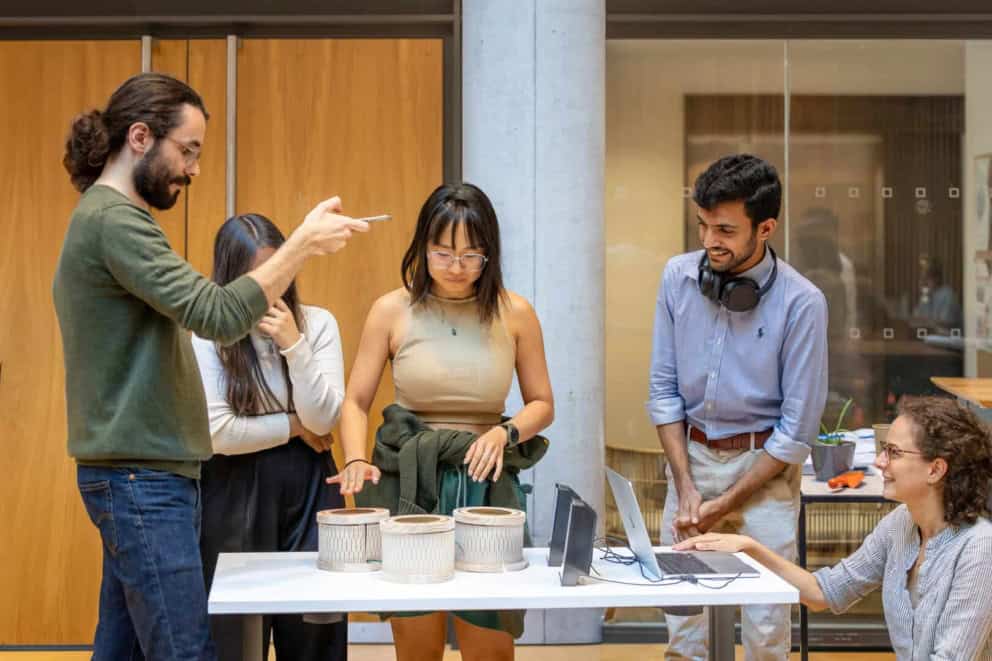
«We also have a student life service to support international students arriving in France. We also have the MakerLab, a place where we try to find frugal solutions to societal issues, with a specialization on accessibility issues. We also have a studio that offers different types of filming, including an educational podcast activity that we launched a year ago.».
Innovative programs and teaching models
Before working at the Learning Planet Institute, Raphael Costambeys-Kempczynski experimented with a number of pedagogical innovations in universities in different contexts and countries. «Here at the Institute, we have the intimacy we need to move forward. The usual difficulty is linked to the size of the cohorts. It's never easy to innovate or experiment when you have the dual mission of leading all students to a degree and to professional life in a context of mass education».
«At Learning Planet Institute, we are fortunate in our ability to innovate by combining various constructivist pedagogies - project-based pedagogy, research-based pedagogy, critical learning, creative learning - not on the scale of a single course, as many universities do, but on the scale of an entire training model, in a very different form from the usual models.»
The UNESCO Chair: essential work in the face of global learning challenges
Since 2014, the UNESCO Chair for International Teaching and Research in Learning Sciences«, supported by’Université Paris Cité and the Institut, offers international visibility. This Chair combines research, education and technology to help teachers, researchers, teams and groups of players build a learning society for a more sustainable world. «This Chair brings together international thinkers on issues that go far beyond didactics or educational sciences. In English, «learning sciences» means both sciences of learning and learning sciences, and the two go hand in hand, explains Raphael Costambeys-Kempczynski.
« UNESCO has carried out work on educational issues, and shows that despite the presence of 140 to 150 million primary and secondary school teachers worldwide, there is still a shortfall of 50 million. The level of attrition is such that every year, more teachers are lost than gained. This deserves serious attention. The reasons are different depending on where you are on the planet, but the symptom is the same. Added to these profound questions are the arrival of generative artificial intelligence, employability, the intergenerational divide... In short, it's difficult to define what tomorrow will be made of, but what we do know is that young people will inherit all this. Collaboration with them is therefore a necessity.»
For Raphael Costambeys-Kempczynski, it's enough to look through the prism of the sciences of learning to weave the thread of the three themes (research, pedagogy, technology) it addresses: «Our pedagogical activities are often research projects, sometimes involving participatory action research by young people. YPAR-Youth Participatory Action Research. And all this work is enhanced by technology. We're not denying the importance of yesterday's digital technology or today's AI. It's inescapable.»
International conferences on the major issues of the day
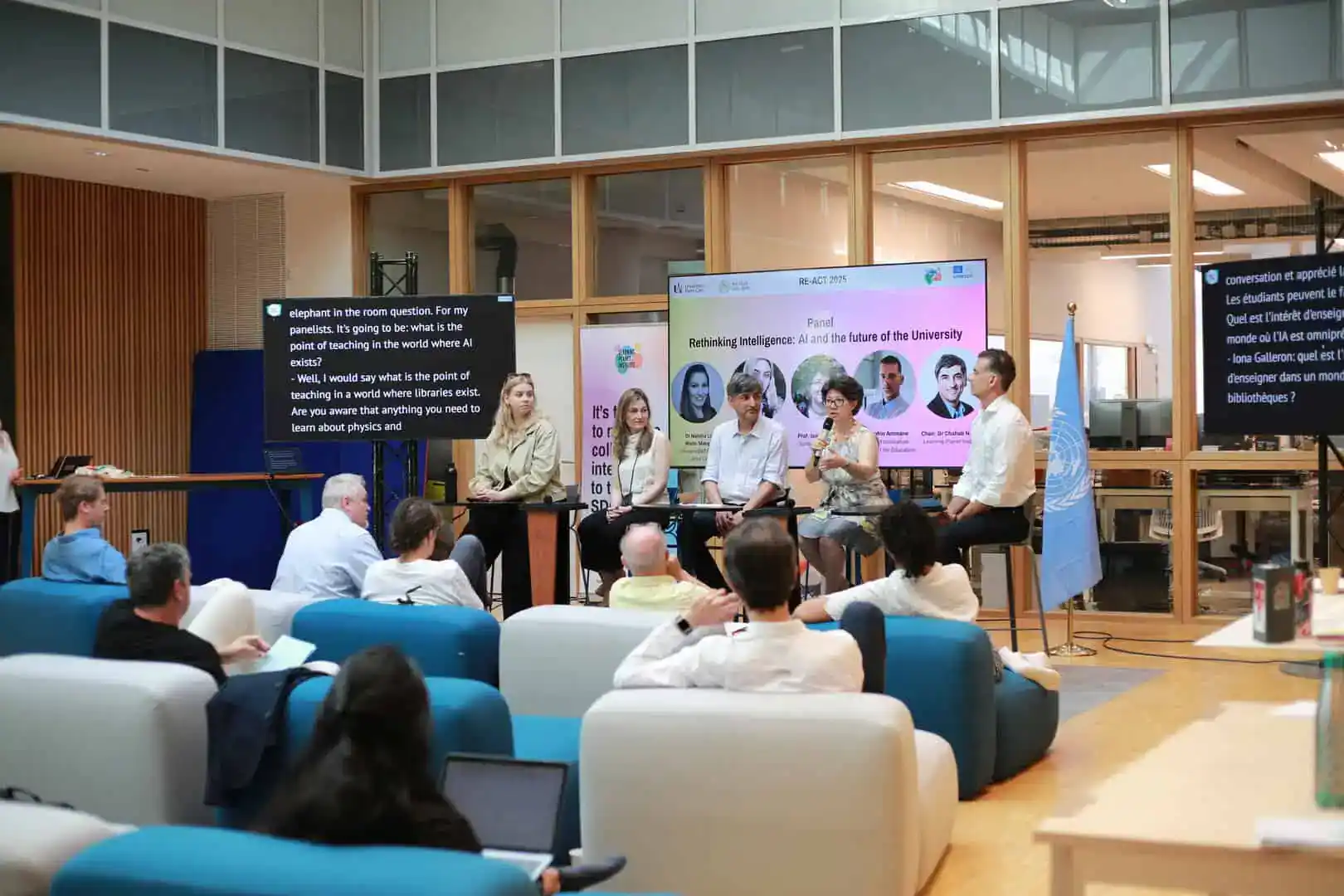
The 2024-2025 academic year was marked by a series of conferences on the following topics skills and professions of the future in November 2024, to tackle head-on the issue of displacement and job losses. In January 2025, we talked about peace at a time when there have never been so many armed conflicts in the world (« training the next generation of young Peace Builders »).
Supported by’Challenge Institute, the last conference in this cycle, RE-ACT 2025: Reimagining Education in the Age of Crises and Transitions, was held last June, and provided an opportunity for a forward-looking exercise from an institutional point of view, to imagine how universities can reinvent themselves to avoid becoming obsolete. «This symposium enabled a genuine co-construction of intergenerational solutions between decision-makers, universities, students and socio-economic players to imagine how to renew higher education structures and educational programs.», concludes Raphael.
Learn more
The Institute's educational programs
Company, foundation, university : become a patron of one of our committed projects.
An article written by Marie Ollivier
Thanks to Raphael Costambeys-Kempczynski for answering our questions.