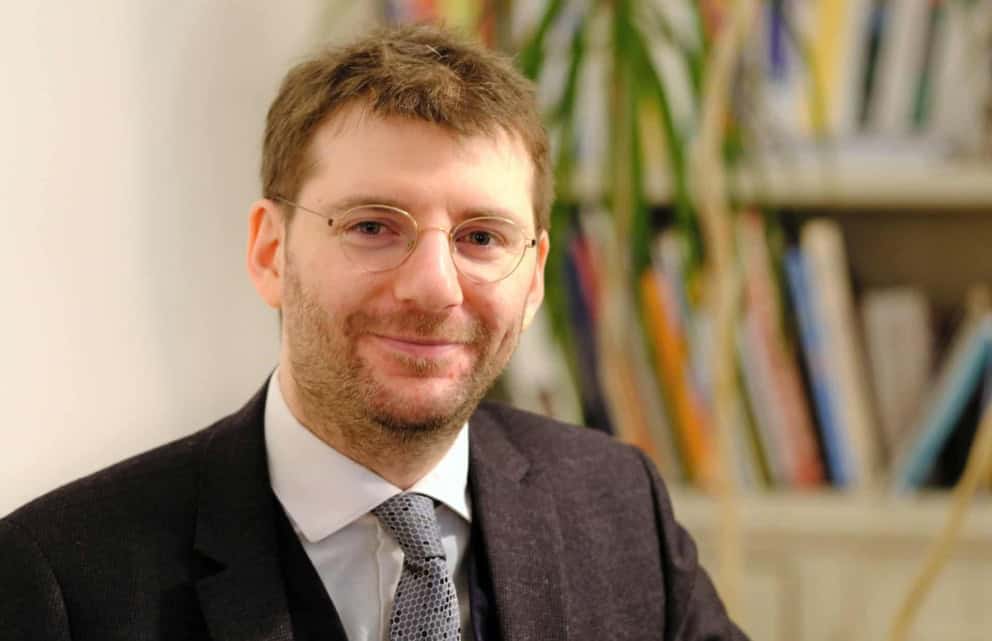
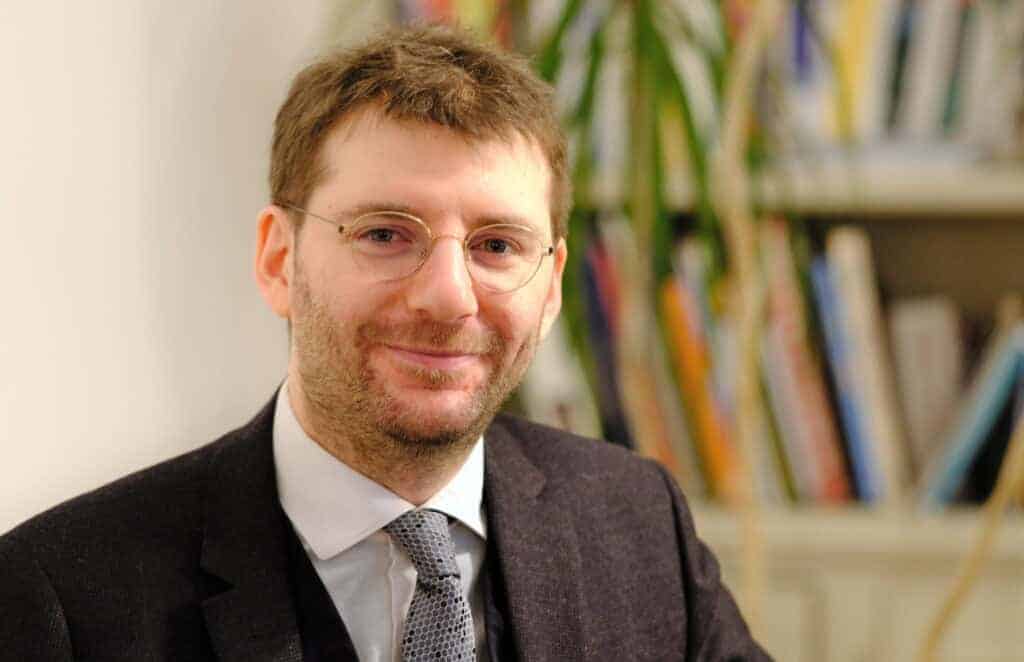
Élie Rotenberg is 34 years old. Born at the Cochin hospital, he was destined to return there later to do his Master's degree in the early days of the Learning PIanet Institute. Curious about everything, Élie went on to complete his thesis, while leading a busy parallel life. Meet Élie.
It's a chilly January morning on the terrace of the Learning Planet Institute. A dry, sunny and invigorating cold. This is where we meet up with Élie Rotenberg, and he starts telling me his story, or rather his lives, with coffee in hand. «I was born on September 4, 1988 at the Port-Royal maternity hospital in Cochin. I grew up in Paris in a family of four children, my parents were doctors. By the end of the 90s, little Élie had already developed a passion for computer science - an unusual interest at the time - as well as maths. He passed his baccalaureate in 2005 at the Lycée Louis Le Grand, before going on to study mathematics at the Lycée Charlemagne. «I was admitted to the École normale supérieure (ENS) in Lyon, where the computer science department was very interesting. I took the classic math and computer science course.»
Back in Paris for his Master's degree, Élie completed his first year at Master Parisien de Recherche en Informatique (MPRI), a joint program of Université Paris Cité, École normale supérieure de la rue d'Ulm, École normale supérieure de Paris-Saclay (ENS Paris Saclay) and Institut Polytechnique de Paris.
At the time, my favorite subjects were in the field of complex systems. I studied and analyzed systems such as ant colonies, bacterial colonies, (non-virtual) social networks, the dynamics of rumor propagation and epidemics.
Élie worked there under the supervision of a researcher at Paris 6, Matthieu Latapy, who, given his all-round, transdisciplinary profile, steered him towards the Centre de Recherches Interdisciplinaires (CRI, now the Learning Planet Institute).
I met François Taddei and Ariel Lindner, the co-founders of the CRI, now the Learning Planet Institute, in 2008-2009. They had a practice room and two offices in the corridors of the Hôpital Cochin..
Élie is now in his second year of the Master's program at the Learning Planet Institute. «We didn't have traditional lecture courses. The year was divided into three periods, with three three-month internships during the year. We met at the Learning Planet Institute over three weeks. Our Master's degree, Interdisciplinary Approaches to Life (Life Sciences Master) was very biology-oriented.» Élie is one of the only computer scientists in the class, which includes an experienced doctor and many biology students. «The profiles were varied and people came from different backgrounds. It was a lot of fun.»
Élie's first internship was with François Taddei, President of the Learning Planet Institute, and he also worked with Dule Misevic, Director of Scientific Affairs. At the crossroads of biology and computer science, he works on modeling evolution, and in particular the emergence of cooperative behaviors in bacteria.
Then he'll do his second internship with Jean-Philippe Cointet, alumni and professor of the Learning Planet Institute, at Complex Systems Institute (ISC-PIF), to understand the propagation of information in blogging systems. «I learned a lot during my Master's year, and these internships were very enriching, comments Élie, who was able to explore different fields. He went on to work with Tommaso Venturini at Sciences Po's Medialab, before joining Matthieu Latapy on an internship to look at large-scale networks, and in particular Internet networks. «It's been prolific, we've had some really good results quickly, it's been exciting.»
Élie then decided to continue with his thesis, again with Matthieu Latapy, at Paris 6. The subject: “A new approach for reliable estimation of Internet topology properties”.
The Internet is made up of computers connected by cables. To send messages from one computer to another, you pass through 15 computers (routers). There's no map. The Internet is built with computers and cables. In the end, it's a network of two billion computers connected to the Internet, which magically manage to send each other messages with very low latency. Only, sometimes it works, sometimes it doesn't. I was trying to understand why, thanks in part to graph theory.
«That was my official life.» says Elijah. That's because he led a busy parallel life. As a senior in high school, Élie played World of Warcraft, a role-playing video game, the first MMORPG (massively multiplayer online role-playing game), which has made its mark on the general public. «When I say I played, I really played a lot. I used to spend my nights there and I was a competitive player, a so-called «hardcore» player. Every night, 25-30 players would get together to go out and kill bosses. (particularly strong enemies, ed. note). » The game was complex, difficult and interesting, and that pleased Elijah.
«When I entered the ENS after preparatory school, I didn't feel I had much to do. We didn't have to go to classes, we were pretty much freewheeling, and I was able to concentrate on the game. I spent over ten hours on it every day, and I continued to play during my Master's internship before the thesis.»
Élie became very well known in the industry. «I found myself managing one of the best guilds in the world. (group of players, a kind of team, editor's note) French, to the point of sometimes being recognized by other players in the street».» he laughs.
It was then that he met Cédric Page, a 30-year-old math teacher, a competitive chess and sports player, but also a World of Warcraft fan: he was the head of Millenium, the first French guild. «Cédric was the first to realize that there was a real stake, a real craze around the game. He had a site for his guild, Millenium, and we decided to join forces to transform it into a site for the whole community, explains Élie. The idea behind the website was to create a series of aids and game guides to help you get the most out of World of Warcraft. We're in 2009, and the site is doing well. Cédric and Élie then decided to extend the site to other video games such as Counter Strike and League of Legends, and created Millenium TV, one of the very first Web TVs.
For Élie, who is continuing his thesis, it's time to support it. «I was very busy between international conferences as part of my research and the growth of our company. I didn't have much time left to play World of Warcraft!» Élie defends his thesis in 4ème year, Cédric took a leave of absence from the French Ministry of Education, and they moved into large offices in Marseille before taking on more than 30 employees. It was a baptism of fire for the two founders. «We'd never done entrepreneurship before, so we learned everything about running a business, from human resources to development strategy.» Significant growth potential, but aimed at a niche market·go to·s hardcore.
«If we wanted to continue to grow, we had to change our ambitions, so that we could appeal to everyone».», explains Élie.
The two co-founders then met members of the Webedia, Webedia Gaming, which includes Millenium and Jeuxvideo.com, and will employ between 200 and 250 people. Élie is Technical Director. «Once again, I learned a lot. I managed the team of web developers, but also the strategy and the business model.»
Élie discussed acquisitions and even set up a small R&D (research and development) team in 2015. «We did this for four years with Cédric. Our duo has worked well together. We're friends and we've worked well together. Our skills are very different and complementary. He's very strong in management, finance and sales. I'm more skilled in technology and innovation.»
After their Millenium and Webedia adventures, the striking duo have decided to continue working together in 2019, on a subject that drives them both: education. Cédric is a math teacher, while Élie was a teacher-researcher and even a teacher at a younger age. «In my second year, I set up a computer club and trained young people from preparatory classes in algorithmic programming. So I had been thinking about the pedagogical link at the time.»
Millenium also had a pedagogical vocation, as the site featured well-thought-out explanatory guides. « We wanted to get back into education. As a researcher, I was dissatisfied with the state of the art and wanted to do better. And Cédric, as a teacher, was dissatisfied for the children.»
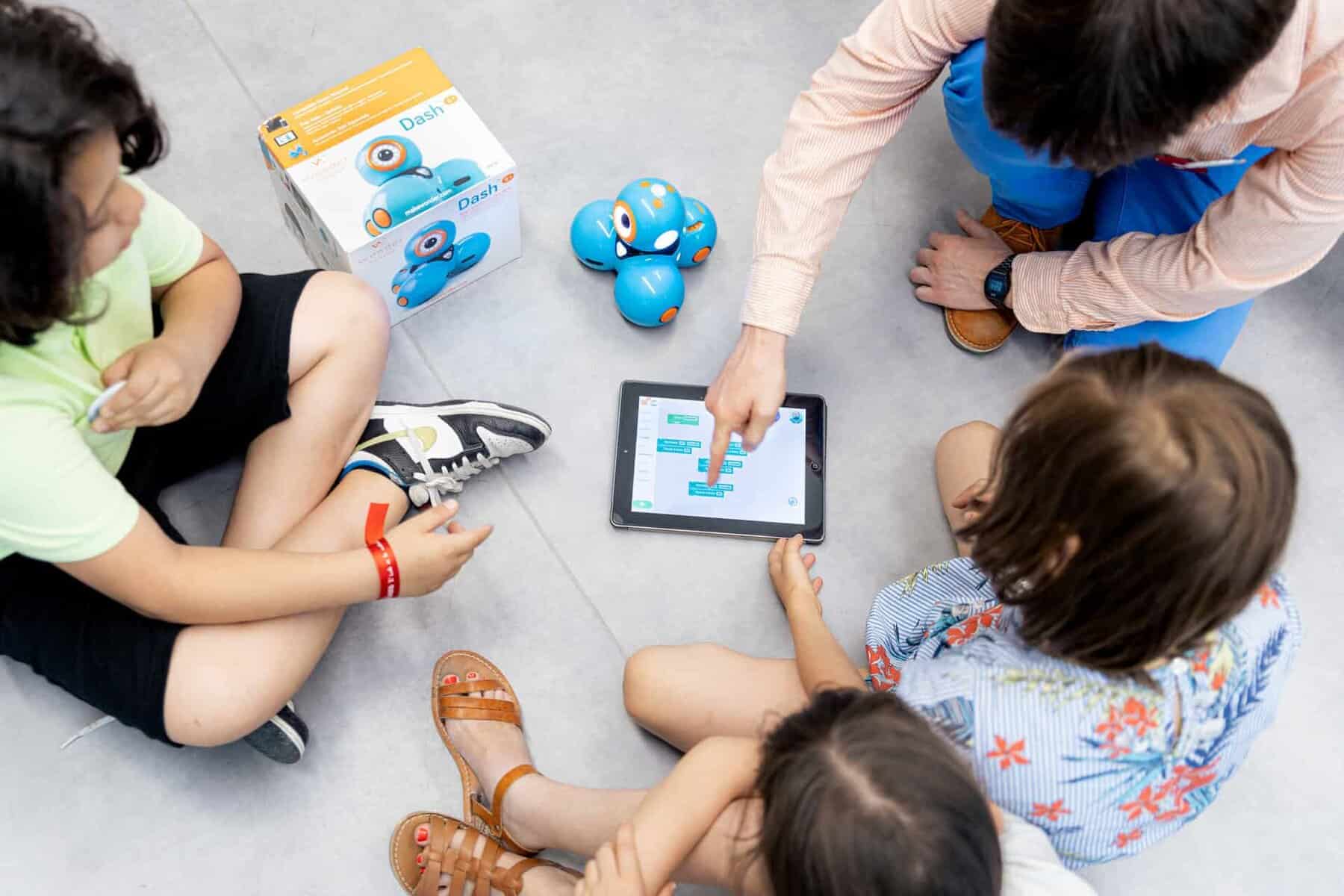
The next logical step would have been to work on digital tools. EdTech. But it wasn't long before Élie and Cédric, now allied with Naima Page, also an experienced teacher, came into contact with the players in the field (parents, teachers, researchers, psychologists, etc.) and decided to tackle the subject head-on: the trio wanted to open schools that had been completely redesigned to better meet the needs of their pupils.
The network iféa (Institut Français d'Éducation pour l'Avenir), will be launched in 2019, with a pilot school, the Émilie du Châtelet school in Clichy-la-Garenne (92), opening its doors at the start of the following school year. This is a fully bilingual school from CP to Terminale. It provides an environment in which children can flourish. «We want children to be happy to go to school. We take a diverse range of pupils. The teachers are caring and attentive, they know their students very well, while having ambitions for them in terms of performance.»
Iféa's two watchwords are high standards and benevolence. «It's a fact that students who feel good perform much better. Classes start a little later, for example, to better respect children's rhythms. We place a great deal of emphasis on science learning, which is considerably stronger than in other establishments, and we operate an active, project-based pedagogy.»
At Émilie du Châtelet, which will be starting its fourth school year in September 2023, the 170 students from CP to Terminale have at least two afternoons a week devoted to projects. As part of the Cogito Labs project, for example, students have the opportunity to take part in inspirational activities. Fab labs, where they can build objects using 3D printers.
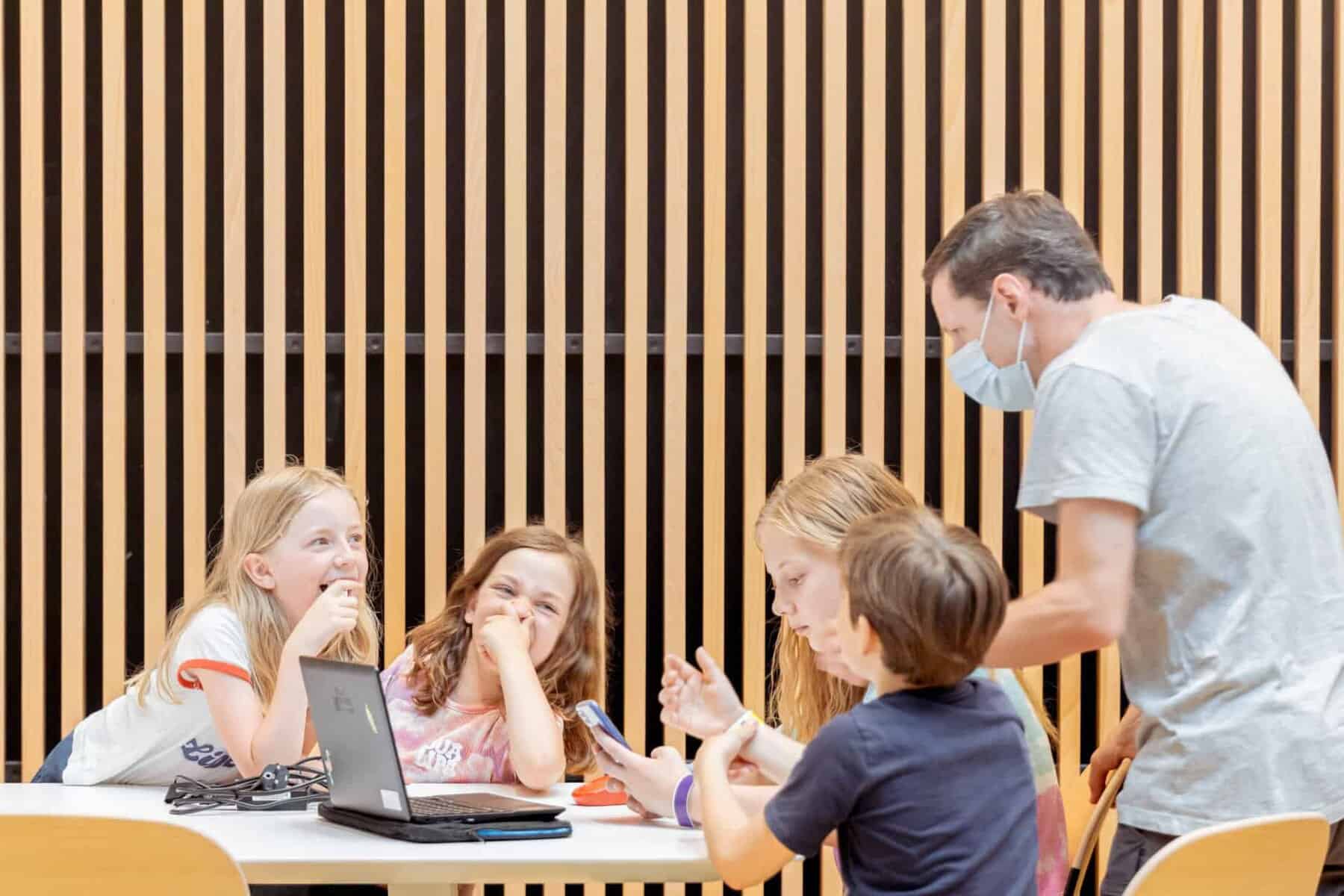
«We'd like Cogito Labs to be available in other schools, to really be part of the core curriculum as it is with us, and not just offered as extracurricular activities.» iféa's ambition is to propose a new approach to education, to show that other methods are possible. In July 2022, iféa took over the’Suger school in Vaucresson and is expanding his network. Élie is already learning a lot about school management, from acquiring a building to working with teachers and pedagogical teams, to ensuring that classrooms are suitable for learning.
And since he's always thirsty for transdisciplinarity, Élie drew on his experience at iféa, working with students and teachers, to come up with the LISA project two years ago. LISA is a program that gives teachers and families the tools to better identify and support students' specific needs and strengths. And it's no small thing: remember when Élie played World of Warcraft for 10 hours while going to class?. «Schooling was really hard for me. I was interested in a lot of things, but one minute I had 2, the next I had 18. Luckily I had a supportive family.»
Élie is therefore particularly affected by mental health issues among young people, and has been interested in them for a long time. «I spoke with Ariel at the Learning Planet Institute, who immediately agreed with the project, and we decided to dig deeper. I'm not a mental health specialist, so I went and consulted: I interviewed psychologists, professors, researchers...»
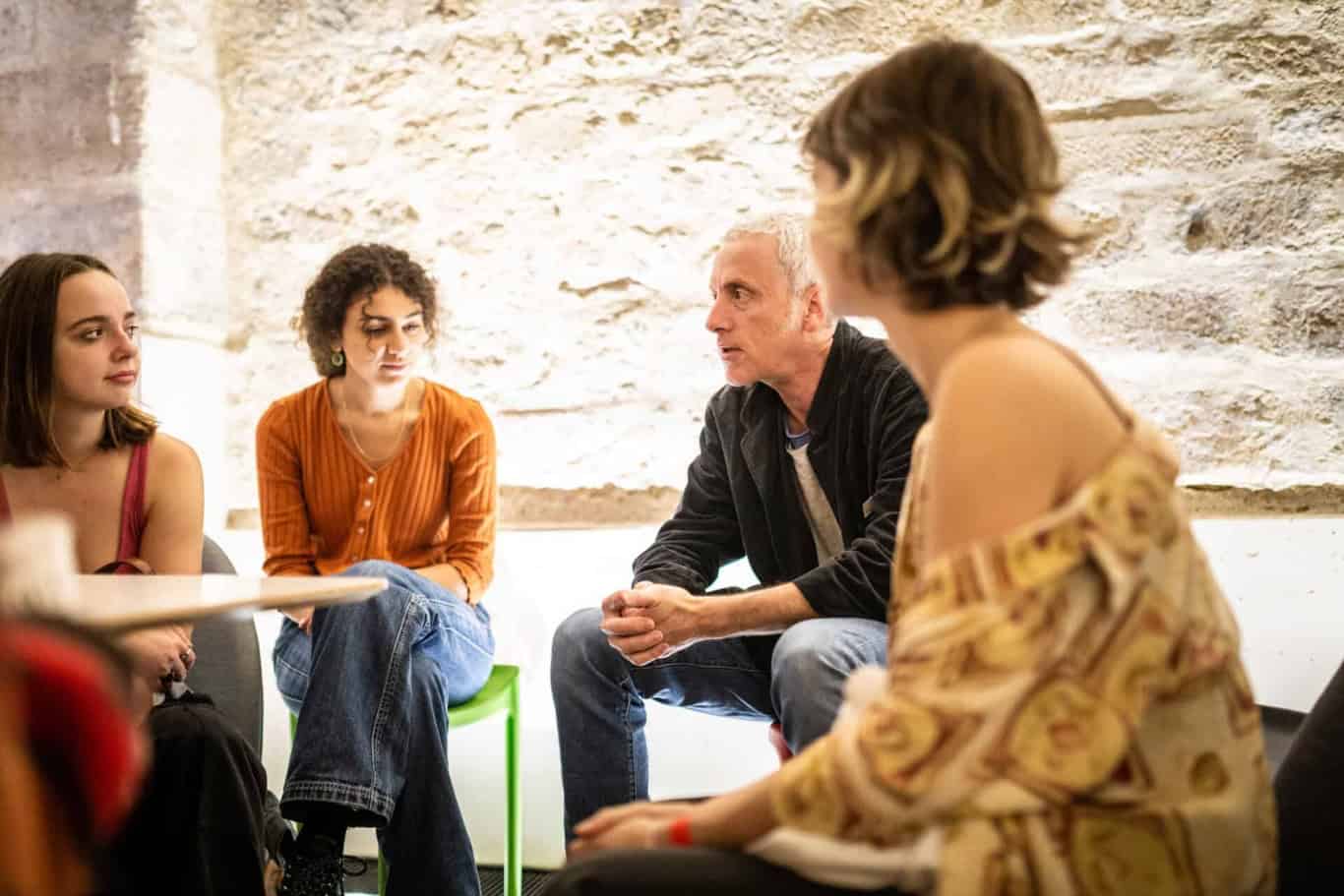
Élie comes to an interesting and alarming conclusion: in a class of around 30 pupils, there are on average around 3 to 4 children with attention deficit disorders with or without hyperactivity (ADHD), 4 to 5 with anxiety disorders, 1 to 2 with autism spectrum disorders, and 4 to 5 with learning disabilities, - knowing that many combine both. « It's amazing, exclaims Elijah. «In fact, at least one child in 4 is «atypical». Not taking this dimension into account means leaving a quarter of the class out in the cold; , and that disrupts the functioning of the class as a whole.» LISA has now reached maturity.
The platform includes a sixty-item online questionnaire designed by international experts to identify strengths and needs, but above all to be able to give practical, effective and scientifically validated advice or recommendations to teachers and families. «It's not a clinical diagnosis, but a pedagogical support tool.» The idea is for LISA to be available in both public and private schools, to reach as many young people as possible.
Between running his schools and the LISA project, Élie keeps busy. But that would be forgetting that, as an alumnus, Élie is also a member of the board of the Learning Planet Institute, or that he follows all the history podcasts that exist in France (a good dozen). Oh, and I forgot: Élie, thousand lives, continues to feed his parallel life, World of Warcraft. He doesn't play it ten hours a day, but every now and then, when he has the time!
MORE ABOUT THE LISA PROJECT
Initiated in 2020 by Ariel B. Lindner (co-founder of the Learning Planet Institute) and Elie Rotenberg (alumnus and Director of the Learning Planet Institute, and co-founder of’iféa), the Learning, Integration, Support and Awareness (LISA) is based on research conducted by the Learning Planet Institute and iféa, in collaboration with Child Mind Institute.
Read more press release “LISA France 2030: responding to the urgent need for well-being and mental health in children and adolescents”.”
MORE INFO
Discover other portraits of our community members
This publication is part of the UNESCO Chair in Learning Sciences, established between UNESCO and Université Paris Cité, in partnership with the Learning Planet Institute. Views and opinions expressed are however those of the author(s) only and do not necessarily reflect those of UNESCO. UNESCO cannot be held responsible for them.
A portrait by Marie Ollivier
Thanks to Élie Rotenberg for answering our questions!