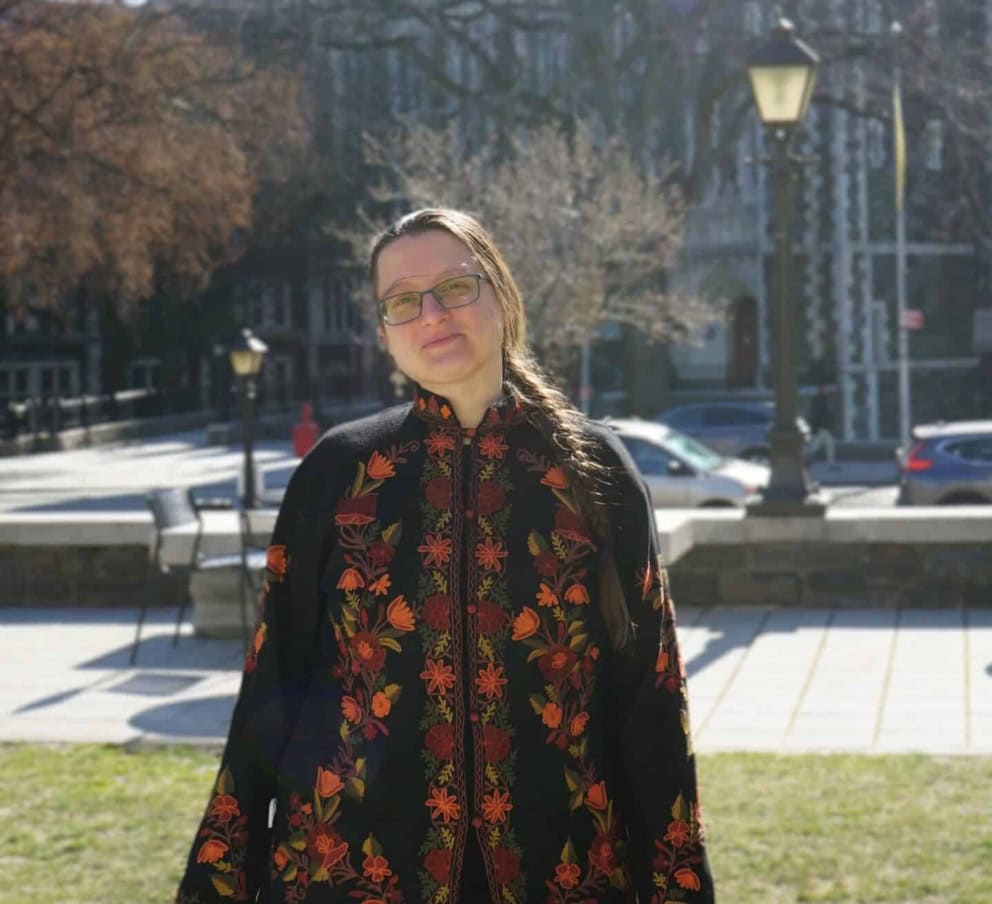
Francesca Anselmi, alumna of the FIRE Doctoral School, spent the first twenty-four years of her life in Padua, Italy. The first woman in her family to study in the sciences, she made a study trip to Paris in the 2000s. This Parisian sojourn was the starting point for a path of trust and interdisciplinarity that took her from Paris to New York. Interview.
Francesca Anselmi lives in New York with her husband and two daughters: Sylvia, 4 1/2, and Irene, 2 1/2. «We're lucky enough to live in a neighborhood of small houses with gardens. In New York, housing can be very complicated.» Francesca was born in Padua, Italy. She lived there for twenty-four years, from her birth to her university studies. «My father was an architect involved in the cooperative movement in Italy, but I was the first in my family to study science.« hard »And what's more, I was a woman.
Francesca loves Italy, a country of culture and history, but she's a little stifled. «As a bisexual person, as a woman in science, it was sometimes difficult for me.» she admits. In high school, she was lucky enough to have several inspiring teachers. «We used a project-based approach to teaching, which was very interesting.» On this occasion, Francesca, who studies science, English and French, travels to Paris for the first time with her class. «It was the first time I'd traveled on my own, like a big girl!» she exclaims.
Francesca's Parisian study trip leaves an indelible mark on her. «We were doing a project with German students at La Villette. We had to do research, and my friends and I had chosen gene therapy, a little-explored subject at the time.»
Studying at the University of Padua after high school, she chose biology and physics as part of an interdisciplinary curriculum. «I'm interested in a lot of things, so this interdisciplinarity suits me perfectly.» Studying molecular biology and hoping to go on to a PhD, a laboratory colleague told her about the Learning Planet Institute.
«I did my research and decided that this was the place for me. And since I had fallen in love with Paris and was passionate about the French language, I didn't see what could hold me back!». Francesca moved to Paris in 2008 to do her PhD in optics and neuroscience at FIRE Doctoral School at the Learning Planet Institute. «The Institut is a place that transformed me. There's no other place where there's such a concentration of talent!, Francesca is delighted. She especially remembers her fellow students, and their freedom to interact and learn from each other.
«I had an incredible community of colleagues. We learned a lot from each other.»
At first, Francesca is very serious. «I remember I was working hard, and there was an evening Wine & Cheese obligatory. I thought, «But why? I have to work, it's absurd!» And finally, I understood. It was an indispensable moment: we opened our hearts and minds, exchanged, and learned from each other.» That evening, and throughout her PhD, Francesca made friends studying philosophy, biology and ecology. «The first time we went on a seminar together, we stayed awake day and night. We had so much to share and learn from each other!»
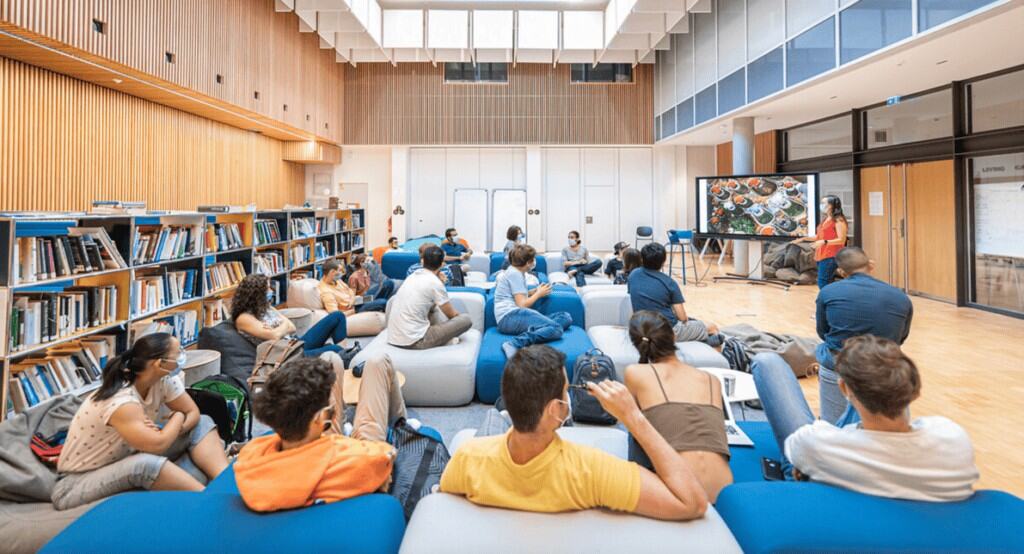
At the Institute, Francesca is in a safe place, where she feels comfortable and, above all, confident. «I've never been used to being trusted. I always did what I had to do. I was a good student, I followed a kind of « mission ». At the Learning Planet Institute, we're given an incredible space of trust. We are told: «You want to start a club? Go for it. We'll give you the budget so you can try.» They really believe in our potential for action.»
Francesca doesn't immediately realize the power of the trust she's been given. In the meantime, she feeds off her colleagues, the interdisciplinarity that suits her so well, and the speakers who come from all over the world.
Francesca's thesis is entitled « Advanced optical methods for monitoring brain activity »She builds microscopes to understand how the brain works by activating a specific group of cells, and records their activity for analysis. She defended her thesis in 2011 and found a post-doctorate position in the United States. «My idea was to come back to Paris. I love this city so much, I could see myself settling here for the long term.»
But life decides otherwise. Francesca travels to New York Cold Spring Harbor to design a new microscope. «During my postdoc, I gave lectures, went to conferences, and I loved it!». But Francesca is going through a moment of crisis as she approaches her thirtieth birthday: she's having a breakdown, and her body and mind no longer want to cooperate. «It was a very difficult time, she recalls. «I felt like I had the expectations of three generations on my shoulders.
It was then that she found the strength to ask herself how to move forward. The answer is obvious:
«I said to myself: what I love most of all is teaching. I have a deep love for teaching.
During his postdoc, he was introduced to a group of scientists with a crazy project: «They had commandeered a 1976 San Francisco city bus and were using it to bring science to the streets of New York.» For Francesca, it was love at first sight. She embraced the BioBus and gets involved very quickly. «New York is a city bursting with talent, but also very unequal. There's a lot of segregation. Some parts of the city are very wealthy, others not at all. But that doesn't mean they don't have the resources to do great things.»
When Francesca started at BioBus, she was still working in the lab on her postdoc, but the conversations she had with the young people, the interactions with their families and teachers, really clicked. «I felt at home in these exchanges, when I drove the bus, when I interacted with the young people. I decided to change careers at that point.
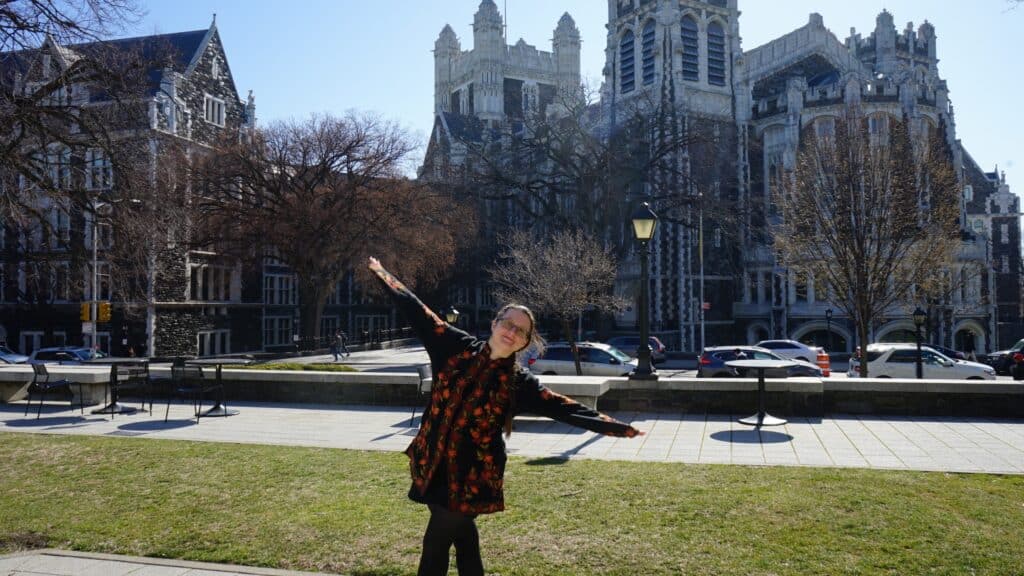
Francesca has been part of the BioBus team for seven years. «We built community labs in Harlem, we drove the bus from Denver to New York... We had some unforgettable moments.» Francesca flourishes, and the team grows. From mentor to manager («Unfortunately, we always get promoted at some point, she humbly quips) and learned how to raise funds and interact with the academic world.
«At BioBus, I was lucky enough to meet Latasha Wright, a black woman from Mississippi, my mentor. She gave me confidence and brought out the scared little girl in me.» As part of the team, she also works with young Latina women, who make her realize, in a benevolent way, what a privilege it is to be white, especially in the United States.
«It was really invaluable. I thought I understood, but I didn't. They were very patient and educational with me. I'm very grateful», she said, moved.
The interdisciplinarity and trust that so marked Francesca during her studies at the Learning Planet Institute are her spearheads: she develops programs for the various subjects, and above all tries to do her utmost to create a framework of trust for her students. «I began to realize that my time at the Institute had really had a long-term impact on me.»
During the Covid-19 epidemic, the BioBus encounters difficulties and Francesca's life changes: she becomes the mother of two little girls. It's time for a new change. «I took a program to develop my leadership skills. I thought: I'm privileged, how can I use this education, these skills to have an impact on society?».
Francesca has another mentor: Doris Cintron, Senior Associate Provost at the City College of New York City, who is part of the City University of New York, who introduces Francesca to a new project. This initiative is CiPASS (The City College Initiative to Promote Academic Success in STEM), a City College program promoting academic success in STEM (science, technology, engineering and mathematics). Its aim is to help disadvantaged young people to access higher education through science learning.
Francesca has been CiPASS Executive Director for a year now, and she's really enjoying her new role. «It's an initiative focused on inclusion. We're making sure that the university is a nurturing environment for young people's talents. We have many projects and programs to support them, and I'm very happy to be able to help them find their way and continue on their path.»
Francesca is close to the young people she accompanies, and wants to do her utmost to help them blossom. «They always impress me. I learn a little more from them every day. Some of them are setting up start-ups or NGOs at the age of 20!, she said in amazement.
A decade after her studies in Paris, Francesca can put it plainly: «If it hadn't been for my time at the Learning Planet Institute, where I felt for the first time in my life that I was completely trusted, I wouldn't have changed careers. Francesca passes on this confidence to her students:
«As an educator, you're just a facilitator. When you let go, when you make room for trust, when you allow young people to be themselves, the magic happens».», she enthuses.
Moved, she concludes: « The Institute enabled me to change direction. I didn't realize it right away. Flowering takes time, you have to be patient.» At the dawn of spring, we couldn't think of a prettier metaphor.
Find out more about the Doctoral School “Frontiers of Innovation in Research and Education” (FIRE) : FIRE Doctoral School website
This publication is part of the UNESCO Chair in the Science of Learning, established between UNESCO and Université Paris Cité, in partnership with the Learning Planet Institute.
The ideas and opinions expressed in this publication are those of the authors. They do not necessarily represent the views of UNESCO and do not commit the Organization.