
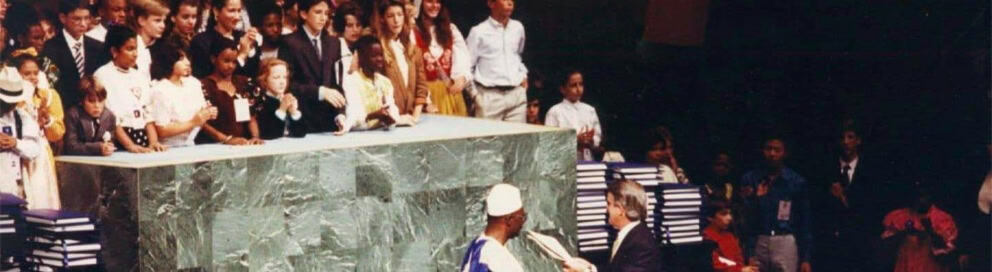
Because children are more vulnerable than adults, because they have neither the right to vote nor political or economic influence, and because the healthy development of children is crucial to the future of any society, in 1989 the world adopted the International Convention on the Rights of the Child (CRC). Since then, this fundamental treaty has been the cornerstone of all UNICEF action.
In 1989, political leaders pledged to build a world fit for children. Convention on the Rights of the Child was unanimously adopted by the United Nations General Assembly.
This is the first time in history that an international text has explicitly recognized under-18s as beings in their own right, with social, economic, civil, cultural and political rights - fundamental, obligatory and non-negotiable rights.
An unprecedented consensus With 195 states, it is the most widely ratified human rights treaty in history. Today, only the United States and Somalia are missing from the list.
Much more than just a symbolic text, this convention is legally binding. for the signatory states, which undertake to defend and guarantee the rights of all children without distinction, and to be accountable for these commitments before the United Nations. The United Nations Committee on the Rights of the Child, made up of independent experts, monitors the implementation of the Convention, by examining the reports that states undertake to publish regularly once they have ratified the treaty.
Seen on: https://www.unicef.fr/dossier/convention-internationale-des-droits-de-lenfant