A look back at the UN Education Summit and Global Futures conference with François Taddei
“Let's ensure that today's students and future generations can access the education they need, to create a more sustainable, inclusive, just and peaceful world - for everyone.” With these words’António Guterres, UN Secretary-General, opened the Summit on the Transforming education which took place last month in New York.
For four days, from September 16 to 19, the UN Summit set out to place education at the top of the global political agenda, based on the following statement : “in a context of climate crisis, rapid technological transformation, profound changes in the world of work, declining confidence in public institutions, erosion of democratic values [...], current learning systems no longer meet the needs of children, young people and learners of all ages.”
Thanks to its expertise in education, the Learning Planet Institute - represented by François Taddei, its founder and chairman, Gaëll Mainguy, Deputy Managing Director and Leonora Dowley, Partnership Project Manager - was invited to take part in the event.
On the same dates and also in New York, the Global Futures Conference 2022 (or GF22), of which the Institut is a partner, was held. Co-organized by Arizona State University and the Earth League, GF22 brings together members of the public and private sectors, scientists, young people and activists from all over the world to address the following question: “How can we make a difference?“What are the results to be achieved and the actions to be taken to accelerate the transformations needed to create a safe, just and habitable planet for all?”
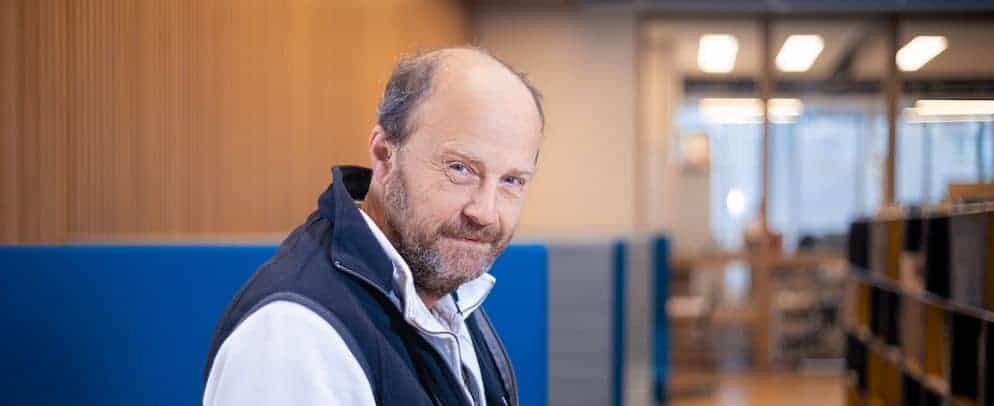
François Taddei takes a look back at these two major international events.
What was the general mood at the UN Summit?
It was a first for me to attend a’UN but, apparently, this one had a rather unique feature: it's rare for there to be so many young speakers. It was also the first time they were able to submit a written statement to the Secretary General, who was delighted to highlight their recommendations. In this way, 500,000 young people from all over the world expressed their views on their future to the highest representatives of States. This remarkable declaration was unanimously applauded!
“We affirm the need to adopt an intersectional, cross-sectoral and transversal approach, based on the principles of human rights, sustainable development, gender equality, climate justice, inclusion, equity, equality and solidarity, in all actions aimed at transforming education and its systems at local, national, regional and global levels.”
Extract from the Youth Declaration on Transforming Education
You also took part in Global Futures 2022. Did the event and discussions take on a special dimension in the wake of the UN summit?
Very few people had attended both events: only our team and students from Arizona State University, which gave us a more global view and approach.
As soon as GF 2022 opened, we were asked what we thought of the event's program. And because we'd just come from the UN Education Summit, we could say: we need to give young people a voice.
The funny thing was that, initially, education had a very minor role in the GF22 discussions. Nevertheless, everyone realized that, for all the issues raised, the proposed solutions always and invariably included education.
There was an obvious urgency in the speech of the General Secretary, was this also felt in the exchanges you had?
Yes, it was very clear. For example, the Global Future 2022 was devoted solely to emergency situations. The discussions began with a damning observation: since the establishment of the Sustainable Development Objectives in 2015, while the planet's limits are extremely fragile, all countries are behind schedule in achieving these Goals.
Everything points to an acceleration of the transformations to be achieved through education. We need to rethink education in the light of today's challenges, particularly environmental ones. It is thus becoming clear to all those involved in education that we need to “green”programs (“greening the curricula”), but also the “blue”This means reworking them with climate and ocean issues in mind. There is a general awareness that academic programs need to be co-constructed with young people. That's what we're doing at the Learning Planet Institute..
«Education transforms lives, economies and societies. But we also know that we need to transform education. Because education is in deep crisis.
—@antonioguterres at the Education Transformation Summit. https://t.co/U7AOfkQdQi pic.twitter.com/SGoiPHgq06
- United Nations (UN) (@ONU_en) September 19, 2022
What do you take away from this UN Summit? How will it influence the Learning Planet Institute's strategy and its own reflections, work and projects?
It was very interesting to see that our priorities and concerns - youth and education - are aligned with those of the’UN and the’UNESCO.
At the Summit, we found that many of the exchanges echoed the concept of Global Citizenship Education (GCED). In other words, it's about taking a global approach to our citizenship and the challenges of our time, and becoming players in an inclusive, tolerant, peaceful and sustainable world. A notion that is very close to the one we deploy at the Institut: the planetizen.
During the conference, this idea of planetizen - that of changing our paradigm and the way we look at ourselves and the planet, resonated strongly.
We're delighted to see that some of the Learning Planet Institute's ideas resonate with the audiences we've met. Some of our intuitions and discussions resonate with what young people want, and with what their representatives want to implement. This reinforces our legitimacy, and enables us to make new encounters, create synergies and collaborations.
The transformation of the Learning Planet Institute is part of this global drive to prioritize education and youth. Other partners are following the same path. What's so special about the Learning Planet Institute?
I'd say there are several elements. Firstly, our position as “middle ground” (NB: “terrain intermédiaire”): that of being both a research and training center and a promoter of social entrepreneurship. We know how to work both with institutions and with players in the field.
Secondly, unlike many programs that are not necessarily long-term, we work with young people all year round: the academic courses we offer train and equip students to take action on their local and global environment. And we'd like to continue to ensure that they co-construct these programs with us.
With the young people of “Fridays for Future”As part of our commitment to our customers, we have highlighted the importance of offering diplomas that are in tune with today's crises. This is another of our skills: we have the ability to listen to young people. Our current transformation, from CRI to the Learning Planet Institute, is part of this approach: our ambition is to place youth and education at the heart of our activities.
Last but not least, we have the capacity to carry out scientific research on these pedagogical subjects, constantly adapting our methods of transmission and our programs.
Are there any challenges specific to the French education system?
Of course, there are French peculiarities to take into account. In France, we've just had elections, and a new Minister (Pap Ndiaye), who has announced a major debate on schools, it would be commendable if young people were included in these discussions.
Another of France's challenges is vertical pedagogy. If we want to teach young people to take up challenges, we need not only courses, but also projects, experimentation and concrete means of action, which are essential in today's context.
Laelia Benoit has expressed an interest in collaborating with us. She is a child psychiatrist and research associate at the Centre de recherche en épidémiologie et santé des populations at the University of Paris.’Inserm, is conducting research on the impact of climate change on the well-being and mental health of children and adolescents at Yale University in the USA. She notes that eco-anxiety is on the rise, but that the best way to deal with it is not to deny the problem - because that is, in fact, a climate of anxiety - nor is it just to be well or better informed, but to have the power to take action: to work in a collective, to set up projects, to face problems together.
What concrete follow-up has been given to these two Summits?
Following the UN Summit, funding was announced, in particular for the countries most affected by Covid. In France, funding was released for educational innovation.
At GF 2022, researchers understood that they had to unite to raise money, and to come together to co-construct their research and create exchange platforms.
For our part, this will enable us to step up our collaboration with Global Futures, all those involved in research and education, and the young people of Fridays for future. It will also be an opportunity to strengthen our ties with Arizona State University, with whom we would like to build various research and teaching programs.
Finally, I'd like to announce that many of the participants in these two summits have been invited to our LearningPlanet Festival*, from January 24 to 28.
* A event which will celebrate hundreds of initiatives and actors of change around the world through debates, screenings, forums, workshops, hackathons and much more, created by the Institute and its hundreds of partners worldwide. It's an opportunity to question new learning practices, digital technologies and spaces, climate education, the role of art and culture, and systemic transformations to learn how to take care of ourselves, others and the planet.
Thank you to François Taddei for answering our questions!
- Read the’article “The Learning Planet Institute's raison d'être and projects aligned with the UN Transforming Education Summit's goals”
- Find out more about UN Summit on Transforming Education