As a joint initiative of IRC and UNESCO, the mission of the #LearningPlanet is to help transform education systems: in thriving learning ecosystems, young people are empowered to tackle challenges, from local issues to the SDGs, through collective problem-solving pedagogies. Truly innovative schools and universities, NGOs and social entrepreneurs, online communities and grassroots movements are already working in this direction. These seeds of change need to be tapped, encouraged and linked with the institutions that have the power to extend their effective pedagogies. This urgent change of mentality requires a collective effort, and all stakeholders in society should be invited to collaborate.
Download the conference program here
Here are some of the highlights of the conference:
National and international institutions were well represented at the opening and closing sessions:
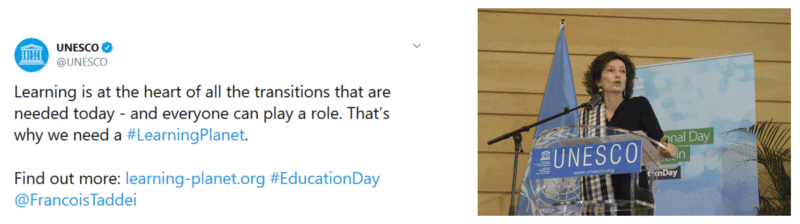
At the opening session, Audrey Azoulay, Director-General of UNESCO, stressed the need for immediate, large-scale action. In 2020, many people are still studying inappropriately: ” We know that [...] time is running out. We have 258 million children and adolescents who are not in school, more than 400 million who are in school but not learning as they should. It's time for us to give ourselves the means to meet this challenge. “
National and international institutions were well represented at the opening and closing sessions:
Jean-Michel Blanquer, French Minister of Education, agrees wholeheartedly: ” We need to make sure that in the future, our young people are properly trained, especially for the new jobs that will emerge. That's why phenomenal changes need to take place in the coming years, state by state, region by region, city by city [...]. We have to make sure that everyone in the world is involved. “
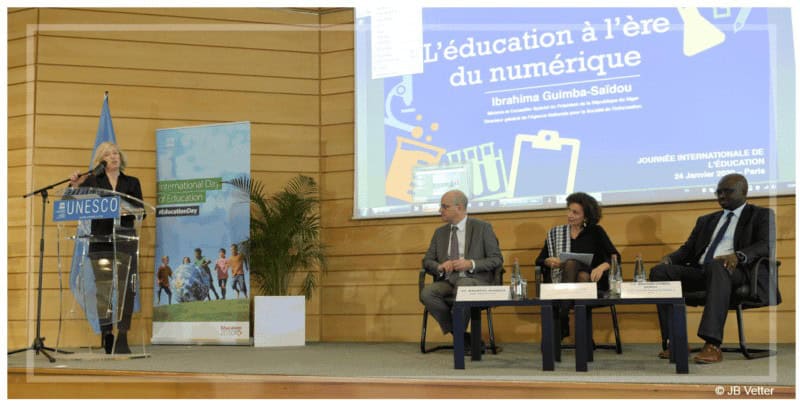
H.E. Ibrahima Guimba-Saidou, Minister and Special Advisor to the President of Niger, and Managing Director of ANSI, shares the same conviction. Niger is a large country with the world's youngest and fastest-growing population. While this can be seen as an enormous challenge, it is also a unique opportunity if supported by a coherent political vision that places quality education at the heart of an innovative and sustainable development model. There is no doubt that the vision and will to create a thriving learning ecosystem exists in Niger and is already taking shape, with the creation of the Innovation City in Niamey and a series of ambitious new programs. The “Smart Villages” project, for example, connects 15,000 Niger villages to digital tools. This project was launched to provide sustainable solutions that could revolutionize the lives of rural populations and promote the use of ICT for all types of learners, especially young people: ”Through this program, Village Intelligent, we have succeeded in using our limited resources to bring about change. We told ourselves that we didn't need to mobilize a lot of financial resources to start transforming our society. So we decided to mobilize young people through contests and competitions. “As well as helping to develop specific new knowledge for everyone, the #IntelligentVillage helps people to identify, analyze and access information anytime and anywhere, capitalizing on immediate data: “What's important is what you actually learn. In this program, that starts with consultation with local communities and start-up groups. They meet with a community, identify priorities and then develop applications. And these apps help us to ensure that everyone can learn [whether learners or teachers] differently, wherever they are, even in the middle of the desert. “
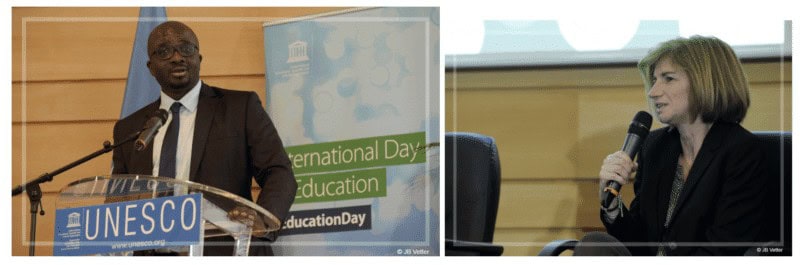
At the closing session, Sarah Marniesse, Head of the Development Campus at AFD (Agence Française de Développement), echoed the need for urgent and radical transformation: “We need to make the most of the opportunities we have in the world.“We're in a situation where if we carry on doing what we're used to doing, we're heading for disaster. Learning differently is certainly an emergency that needs to be taken seriously. Today, we need to change mentalities
The main discussions revolved around the sharing of exemplary projects by leading innovators:
Hailing from Asia and Africa, Latin America and the USA, as well as Europe and Russia, some twenty practitioners from a wide range of backgrounds shared their views on the programs and solutions they are successfully implementing in the field of learning for the SDGs. All demonstrated their ability to support a holistic approach to learning, placing the learner at the heart of their goal-, project-, challenge- and research-based pedagogies, while focusing on certain key priorities such as inclusion, ensuring gender equity, encouraging reflexivity and/or empathy.
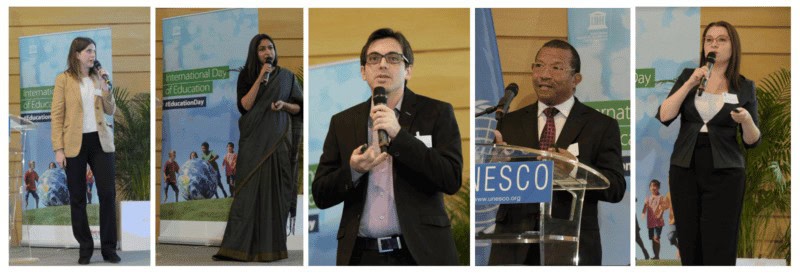
1. Karen Kelly, Laboratoria Partnerships Manager - 2. Chandrika Bahadur, President, Sustainable Development Solutions Network (SDSN) - 3. Flavio Bassi, Vice-President, Ashoka Latin America - 4. Guy Etienne, Founder, Collège Catts Pressoir in Haiti - 5. Ekaterina Loshkareva, WorldSkills International board member, strategic development.
For a detailed program of IDE 2020 and the conference click here and for full video recording of all conferences click here for the English version, and here for the French version.
Youth representatives were also present and active throughout the event:
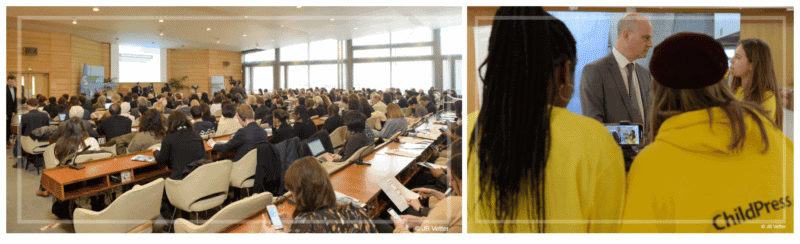
From Brazil, China, India and Romania, CRI Masters students served as moderators for each of the four thematic sessions on learning for people, peace, planet and prosperity. Meanwhile, a team of young reporters from ChildPress covered the festival in depth, interviewing a wide range of speakers and participants; they were supported in their efforts to capture the best views shared throughout the day by student volunteers who also conducted interviews and videos, sharing their insights on the #LP social media channels.
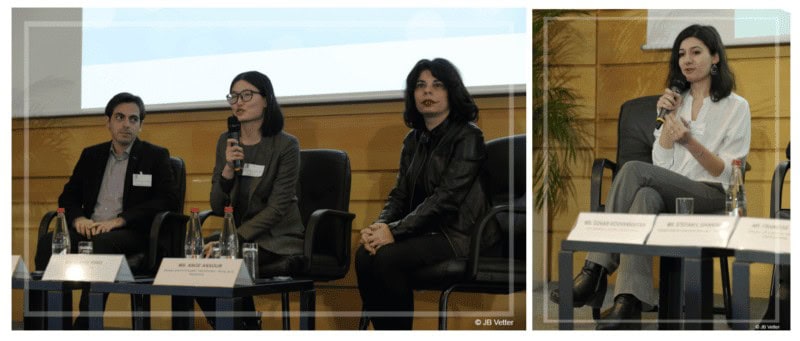
At the closing session, Gohar Hovhannisyan, vice-president of the European Students' Union (which represents 20 million students in Europe), called for a more focused education system that enables real and deep engagement of learners at every stage of their personal learning journey.
Finally, the initiators of #LearningPlanet closed the event with a strong call to action:
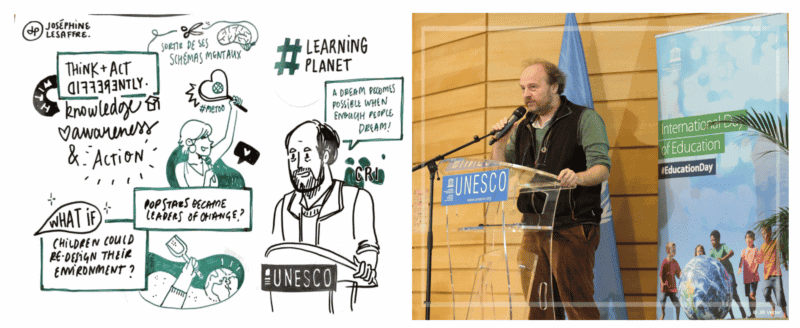
After an inspiring exchange of views with Stefania Giannini, ADG Education at UNESCO, and Sarah Marniesse, AFD, François Taddei, CRI co-founder and Chief Exploration Officer, emphasized the importance of collective intelligence and collective action in turning our shared dreams of positive futures into reality. He also stressed the importance of celebrating knowledge both individually and collectively, and invited the whole world to embark on this path: ” I don't know much about the future, but there should certainly be a January 24 every year. So we'll be invited to celebrate learning in the years to come, just as we celebrate it today, and ideally to celebrate it everywhere. [...] We'd like to invite everyone to celebrate what they learn and what's really important to them, so think about it for yourself.. “