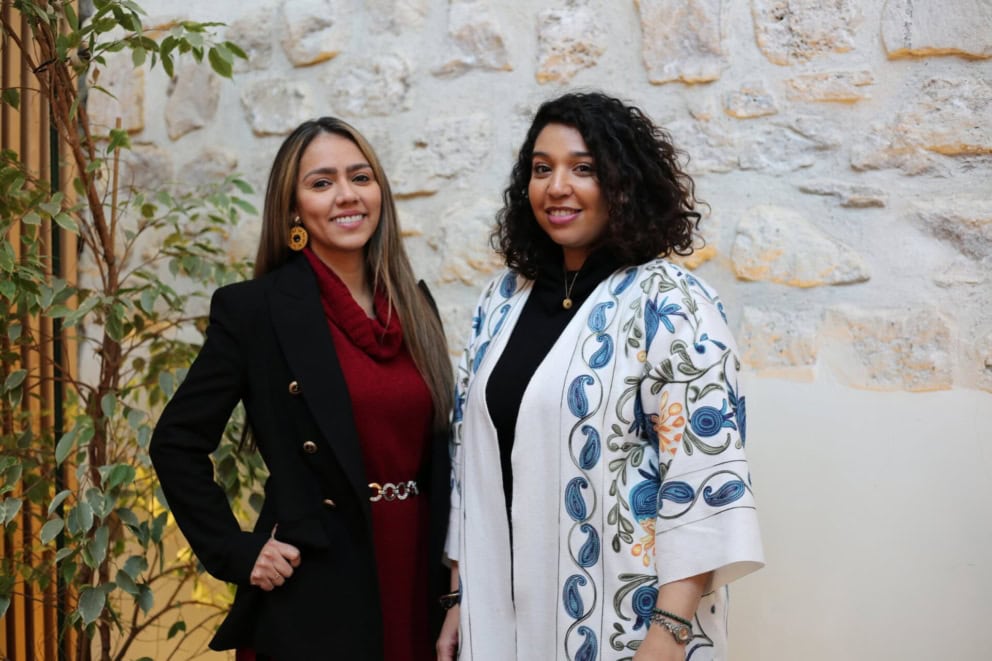
Inès Allag and María Angélica Mejía Cáceres have a common goal, and that’s devising new ways to learn and teach that they can then share with others. Read on to get to learn all about these two innovators engineering new pathways in education from the offices of the Institute of Challenges (Institut des défis), a body jointly run by the Learning Planet Institute and Paris Cité University.
Experience Abroad Fosters New Ideas in Teaching
Inès Allag spent much of her life hopping from country to country, in which time she’s observed different styles of teaching at work. After her schooling in France through the undergraduate level, she was on an exchange programme in Turkey when an English professor felt so confident in her translation skills—a confidence she in no way shared—that he asked her to start teaching the subject. Despite her trepidation, she launched herself into the gauntlet of leading a classroom, starting her on a course of continual travel and teaching that took her to destinations as distant as New Zealand, at every turn experimenting with different education methods, trying her hand with digital education tools, etc.
When she finally made it back to France, she taught in the public-school system and realized what a highly idiosyncratic education landscape the country is home to. It eventually inspired her to leave teaching to get a degree in education engineering. “In my time teaching at the university level, I enjoyed being free to structure my own courses so much that I wanted to pursue it as a career. The field of education engineering is where you get to do just that,” says Inès. She earned her degree in 2022 and joined the Institute of Challenges soon after.
For María Angélica Mejía Cáceres as well, it was her experience as a teacher that piqued her interest in education engineering. “I’m Columbian and did both my undergrad and master’s in education and science [biology, chemistry, and physics] with a particular focus on environmental education.” María Angélica went on to get her PhD in Brazil in education, health, and science in the hopes of training educators to teach environmental education, and that’s precisely what she did, starting out in primary school before moving onto to high-school and university education.
It was while she was invited as a researcher in Germany that she first read about the Learning Planet Institute online. When she finally got to visit the campus, she felt right at home. “The Institute’s focus on environmental education in a highly eclectic learning space spoke to me right away,” she says. María Angélica joined forces with Inès and the rest of the Institute of Challenges in February 2024 to head the body’s education-innovation efforts.
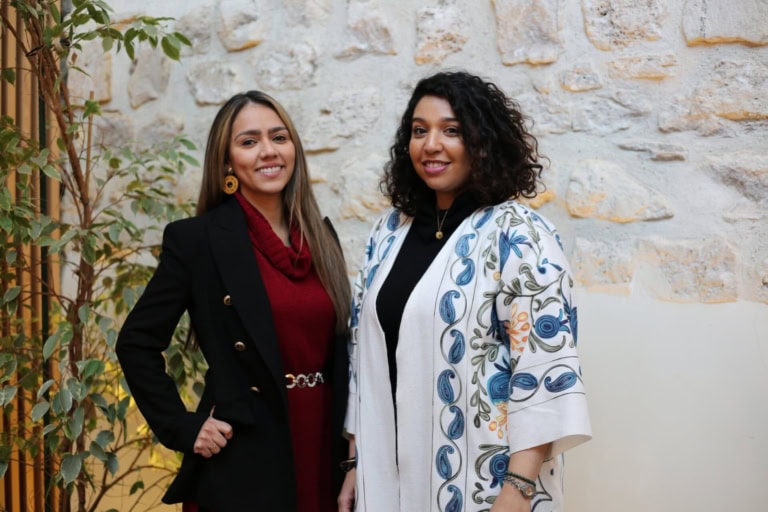
Education Engineering and Innovating: Two Ventricles in the Beating Heart of the Learning Planet Institute
Inès and María Angélica’s interests are so similar, it’s almost as if they were meant to work together at the Learning Planet Institute, whose long list of innovative-education programmes—from Builders of Possibilities (Bâtisseurs de Possibles), to HOP!’s project-based development of inclusive teaching methods, as well as how the LPI co-designs academic-degree programmes and trains teachers in new, collaborative educational approaches—evidence the value of innovating and retooling in the field of education.
“Education engineering is the art of designing academic programmes tailored to the needs of students first and foremost ,” says Inès. “That means hand-selecting the resources guiding the programme, the right learning approaches and tools […] In tandem to that, you devise how educators will be trained, so it goes far beyond course content, touching even areas of logistics and organisational structure as well. It’s engineering a programme on the meta level. ”
For Inès, education engineering and innovating are two sides of the same coin. “'Innovating' is a bit of a misleading word because you see a lot of older teaching methods such as the Socratic method and others getting re-introduced into the classroom,” she says, and María Angélica can only smile at hearing this. She couldn’t agree more. “Something we have in common is we both question traditional methodologies and seek out alternatives. For example, we try to generate greater student participation by designing the education environment to be more collaborative, favoring project-based learning, finding pathways for art to contribute to lessons, and more.”
The Institute of Challenges, A Learning Lab
Within the Challenge Institute (IDD), Inès and María Angélica have no shortage of missions. «You asked us what a typical day in our jobs was like, and there isn't one!, they enthuse. Co-created in 2020 by’Université Paris Cité and the Learning Planet Institute, this interdisciplinary institute has a role to play: designing new teaching and educational approaches to support the ecological and societal transitions in universities and cities. It's a journey full of successes, challenges and failures, which has helped to connect the university, the city and civil society players around projects and issues linked to sustainability. Since its inception, the SDI has seen the launch of 8 experimental programmes in areas such as digital technology, pedagogy and teaching.
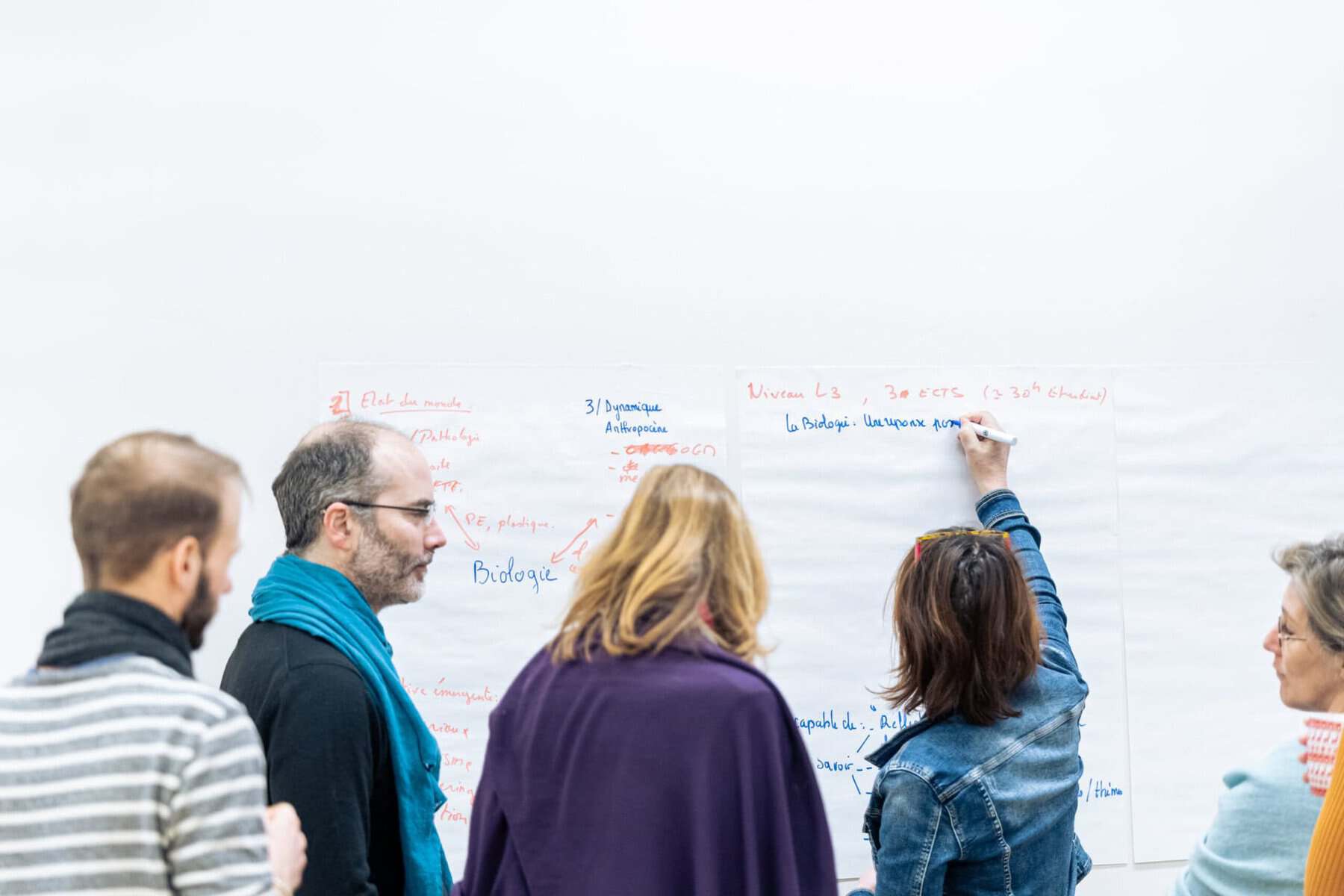
Training differently: between project-based pedagogy and mentoring
María Angélica and Inès haven't completely put away their teaching hats - quite the opposite, in fact. They have both worked on the design of the pedagogical model for the new AIRE Master's degree in global health, in collaboration with the Master's teaching team and students. «We have worked hard to design a coherent model, based on feedback from students. This is very important so that we can improve our approach each time.», explains María Angélica.
In Master 1, she teaches a course in sustainability science. «Sixteen nationalities are represented in this Master's course, and we have taken account of students» demands in this area: they needed an approach to the environment that was not only biological but also (multi-) cultural. Today, we use project-based teaching in this course: the students identify a problem that speaks to them, that is close to their hearts, and try to find a solution.»
Inès adds: «This is where our complementarity between engineering and innovation comes into its own. In this course, for example, I advised on the methodology to be adopted in project teaching, anticipating what needed to be put in place to succeed, and also supporting the mentoring programme.»
In the AIRE Master's program, students are mentored, and the role of mentor is not something you can improvise," stresses Inès, who has been able to develop her skills in this area at the IDD. «Even good teachers are not necessarily good mentors! In educational engineering, we question everything that is supposed to be obvious. We often think that someone who is an expert in a subject will be able to teach it, but that's not true. You have to learn how to teach. That's why we're here, to guide mentors and teachers.»
Building bridges between teachers and disciplines
Guiding teachers is one thing, connecting them is another. «Everything is often very siloed between subjects within the university».», explains Inès. «We're trying to break down the walls and open up a bit more to build bridges between teachers, get them to think together and share their practices, for example in terms of setting up teaching methods. In response to teachers' isolation, IDD has set up a community of practice, PedaGo!, This is a forum for discussing educational issues and sharing experiences and best practices. «IDD planted the seed», says María Angélica, and PédaGo! continues to operate independently.
These programs are just a few examples. The Institut des Défis team recently worked on the publication of the iN&Di guide, A document that bears witness to the IDD's approach to creating an intersectional program to raise awareness of inclusion and diversity.
A community on the move to rethink education
There's no doubt that Inès and María Angélica are passionate when they talk about their work. Both emphasize how lucky they are to be at the crossroads of disciplines and to be able to train in a wide range of skills (marketing, digital, project management, training...). They also consider themselves fortunate in the creative freedom they are able to develop. «Here at the Learning Planet Institute, everyone is given the space to be creative, to do things their own way, and that gives rise to beautiful things.»
An article written by Marie Ollivier
Thanks to Inès Allag and María Angélica Mejía Cáceres for answering our questions.