In the face of the climate emergency and anxiety about the future, traditional diplomas are no longer enough. With the Learning Planet Academy, the Learning Planet Institute is continuing and expanding its commitment to transforming education to meet the today's global challenges. The association is taking a new step in its commitment by offering innovative learning pathways, co-constructed with youth and designed to (re)empower them and meet the challenges of the XXIᵉ century. Supported in particular by the United Nations University and UNESCO, this initiative embodies the vision of an education focused on impact. Gaëll Mainguy, Executive Director, outlines its ambitions.
If you had to present the LPAcademy in a few words, what would you say?
The LPAcademy is a holistic educational project. Our programmes are developed in collaboration with young people to meet their needs and adapt to their expectations.
Ultimately, our aim is to offer courses on essential topics that are often overlooked at university: climate, sustainability, peace, democracy, social and emotional learning, and mental health.
How does LPAcademy build on twenty years of work at the Learning Planet Institute?
The LPAcademy is the continuation and culmination of the Learning Planet Institute’s work on how we learn, teach and conduct research. It is built on four complementary pillars.
Education sits at the core. LPAcademy offers learning pathways such as Ikigai+ , which helps students find their direction, and MOODs ( Meaningful Open Opportunities for Discovery ). These are certified online programmes that encourage learners to develop real-world, impact-driven projects.
This work is grounded in research, which underpins everything we do. Our R&D activities continuously inform our methods and enable the development of new tools and projects.
Support and capacity-building allow us to work alongside institutions and territories as they transform. One example is Grigny , in the Île-de-France region, where our teams support educators working with young people aged 0 to 25. This includes working with the city’s Early Childhood Department to design and implement a new approach to support the transition from nursery to school, and to strengthen early learning and language development before primary education. Internationally, the project WasiLab aims to support the emergence of sustainable initiatives in Ecuador.
Finally, advocacy brings these approaches to the international stage by amplifying young people’s voices and contributing to the evolution of education policies.
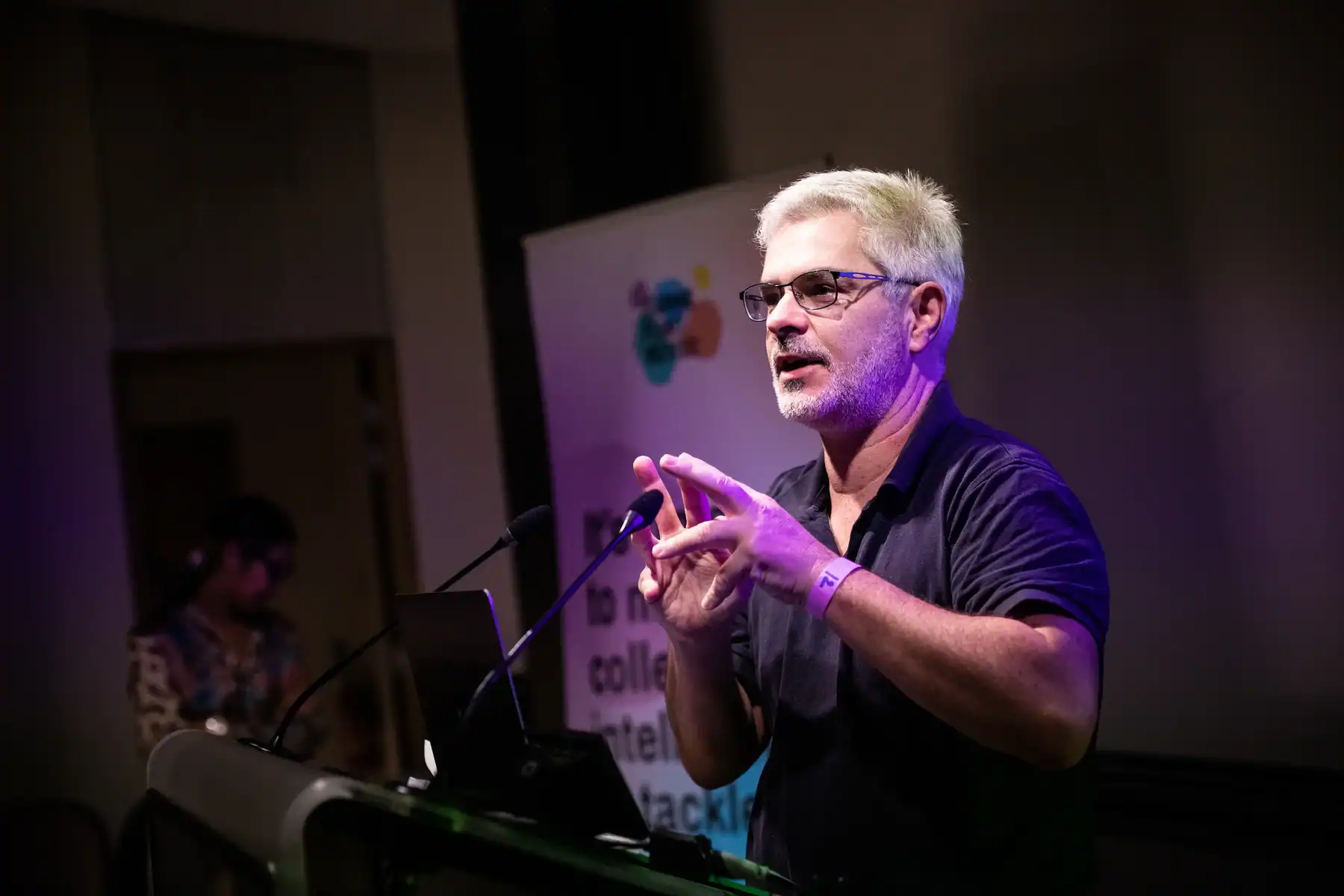
Learning programmes designed for action and transition
What learning formats will the LPAcademy offer?
At LPAcademy, as in everything we have done for the past 20 years, learning is active : students learn by doing. They develop concrete projects at the intersection of research and social entrepreneurship, with a strong focus on impact.
We also place a strong emphasis on ethical reflection, which is essential for our organisations, our technologies and our societies.
You have said that some topics are still insufficiently addressed at university, and that ethical reflection is not always explored in depth. Did this lead you to create LPAcademy?
Yes, in part. At the core of the issue is the fact that, collectively, we are not well prepared for today’s challenges.
The latest OECD PISA studies show that our education systems are struggling to develop the skills that are essential for the 21st century, such as learning to ask the right questions in an uncertain world, as well as adaptability, creativity, critical thinking, collaboration and the rational use of artificial intelligence.
All these skills will be at the heart of the LPAcademy.
Why is there such a gap between today’s education systems and the needs of the contemporary world?
Traditional education too often relies on the one-way transmission of knowledge from teacher to student. These methods do not prepare learners to tackle problems with no predefined solutions, which is the reality of most complex and emerging challenges.
Education systems are also frequently built around competition. Yet today’s challenges require collaboration, not competition based on yesterday’s knowledge. Institutions exhaust themselves chasing global rankings and place students in competition to be the best in the world. What we need instead is to prepare the best students for the world — for their country, their region and their communities.
This is all the more important as these challenges generate significant anxiety among young people, as shown by several international studies.
Yes, which is why organisations such as the OECD, UNESCO and the United Nations — including the United Nations University (UNU) — are calling for new learning frameworks.
Young people need to understand global transformations and develop the skills required to build their future and more peaceful, sustainable and inclusive societies.
Responding to these needs is central to the mission of the Learning Planet Institute: to empower learners and organisations to meet new challenges through interdisciplinary, collaborative and adaptive approaches to learning.
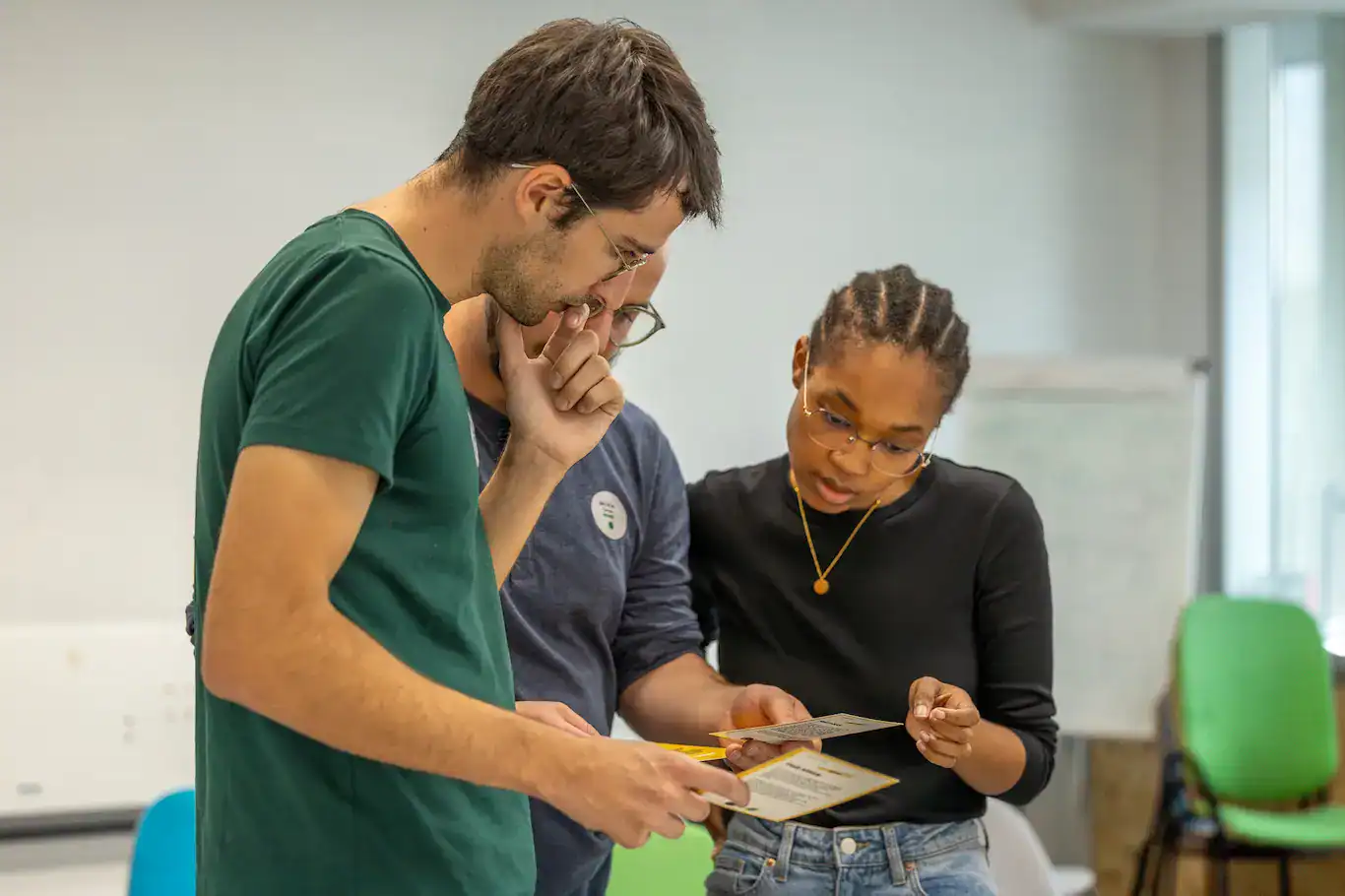
Skills to become citizens of the planet
What does it mean in practice to train students to be “the best for the world, not the best in the world”?
Our educational vision is to support students in learning to care for themselves, for others and for the planet.
At the LPAcademy, this will take three main forms:
Firstly, access to high-quality knowledge on subjects that are taught too little (Sustainable Development Goals, climate, peace, sustainability, socio-emotional learning); ;
Secondly, the acquisition of 21st century skills using a variety of methods and tools (project-based learning, collective intelligence, tutoring, AI, etc.); ;
Last but not least, the Learning Planet Institute has awarded a certificate as a UNESCO category 2 centre and hub of the United Nations University.
In short, LPAcamedy meets both collective and individual needs.
Yes. It aims to transform education systems for the benefit of the planet, while also helping each young person better understand themselves, grasp global challenges and develop the skills needed to take concrete action.
Taking action is one of the most effective ways to reduce anxiety in the face of complexity and uncertainty.
Who is LPAcademy for?
The LPAcademy is primarily aimed at young people aged 15 to 25 around the world, with online pathways designed in particular for university students.
We also seek to reach a wider audience: secondary and higher education teachers through online training, education institutions through executive programmes and advisory support for those wishing to transform their ecosystem, territory or organisation, and education systems themselves through our advocacy work.
Supporting change at multiple levels is essential to achieving lasting impact.
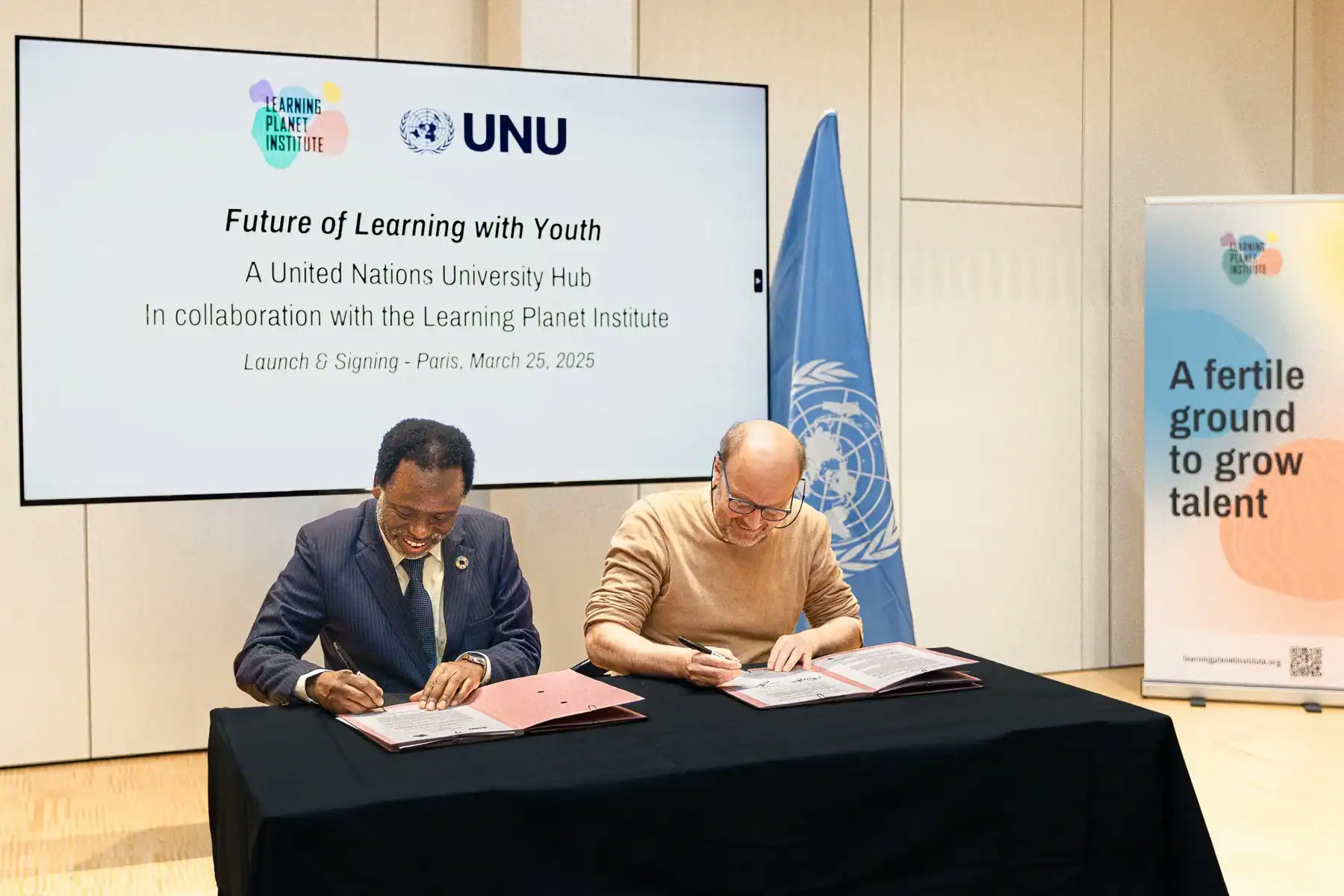
Two major international recognitions
How does the LPAcademy fit within this international ecosystem? What role does the United Nations University play in the project?
The Learning Planet Institute and the’United Nations University have been working together for several years.
The UNU focuses mainly on research and public policy, and is interested in our participatory approach with young people.
This collaboration was recently strengthened with the opening of the first UNU hub in France, based on your campus.
Yes, in March 2025, UNU and the Institute embarked on a close collaboration around the «United Nations University Hub on the Future of Learning with Youth in the Age of Artificial Intelligence (AI)». (United Nations University Hub on the Future of Learning with Youth in the Age of Artificial Intelligence (AI)).
This hub is structured around three pillars: research on co-construction with young people, training for youth, educators and decision-makers, and advocacy on these issues.
This partnership provides the LPAcademy with a strong scientific foundation and access to a global network, enhancing both its reach and its credibility.
This milestone was soon followed by another major international recognition from UNESCO.
Indeed, in November 2025, the Learning Planet Institute was officially designated a UNESCO Category II Centre (C2C) in France .
This status enables LPI, as part of a global network of centres of excellence, to make a significant contribution to the implementation of UNESCO’s global priorities, programmes and development agendas.
In practical terms, this will mean a broader international deployment of our methods, tools and practices, increased research and development activities in the field of learning transitions, and a stronger voice for young people in decisions shaping the future.
Partners committed to impact-driven projects
Who supports the Learning Planet Institute in these initiatives?
The Learning Planet Institute relies on strong partnerships with key international players such as UNU and UNESCO. We also contribute to the work of the OECD and are preparing agreements with governments and an increasing number of education institutions.
Our supporters include universities such as’Université Paris Cité (which accredits our diplomas), the City of Paris, the French government, as well as a number of major foundations and companies (Stellantis, Porticus, Dubai Cares, Aga Khan Foundation, L'Oréal Foundation, JPMorganChase, Orange Foundation).
These partnerships enable us to develop accredited degrees and tools with global reach.
Do you have any concrete examples?
In 2024-2025, with the support of UNESCO, we have launched the Youth Design Challenge. This challenge invites young people aged between 15 and 26 to co-design a new-generation global academy, adapted to today's transitions.
This year, the challenge brought together more than 3,000 participants from over 100 countries, who presented innovative projects focused on engagement, wellbeing and sustainability.
It is also a very concrete way of building the LPAcademy.
So LPAcademy is already taking shape?
Exactly. We are currently developing new learning formats: the MOODs ( Meaningful Open Opportunities for Discovery ) are co-designed with young people and partners and combine different activities to support the development of 21st-century skills and knowledge on key topics such as climate , sustainability and peace .
What are the LPAcademy’s short- and medium-term objectives?
In the coming months, we aim to scale up our work by developing new learning pathways and expanding our partner network, particularly by deploying these programmes within partner universities. Within three years, we aim to reach nearly 35,000 learners.
Discover the official launch of the Learning Planet Academy
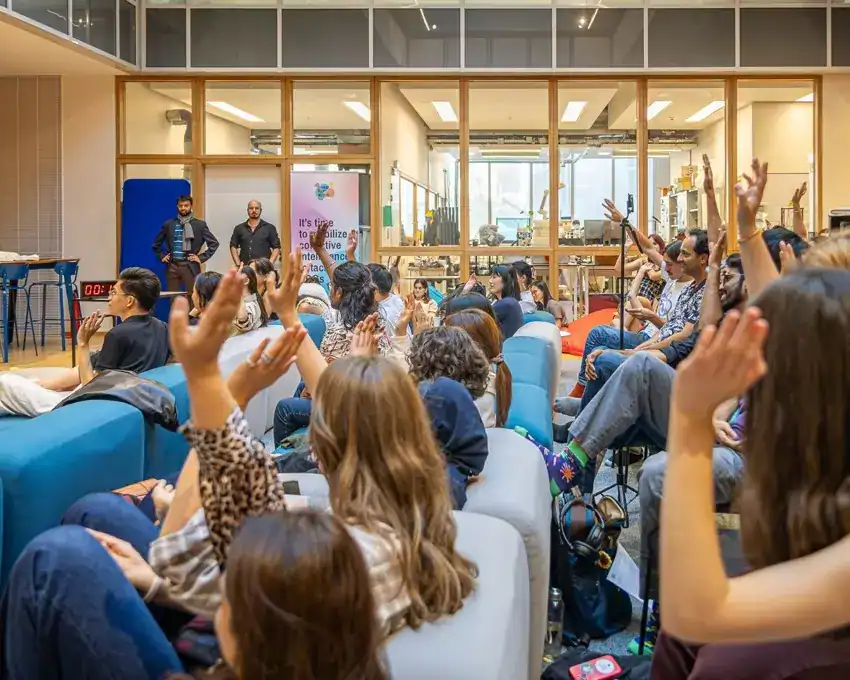
During the 7th edition of the LearningPlanet Festival, we officially launched the Learning Planet Academy on 22 January, alongside speakers from the United Nations, UNESCO, the student community and civil society. A truly landmark moment in the history of the Learning Planet Institute.

Join us
Enrol in one of our academic programmes: https://www.learningplanetinstitute.org/fr/programmes/lecole-universitaire-de-recherche-interdisciplinaire-de-paris-eurip/
Get involved in one of our youth programmes: https://www.learningplanetinstitute.org/en/programs/
Support the Learning Planet Academy : https://www.learningplanetinstitute.org/en/learning-planet-academy/
An article written by Marie Ollivier
Thank you to Gaëll Mainguy for answering our questions