
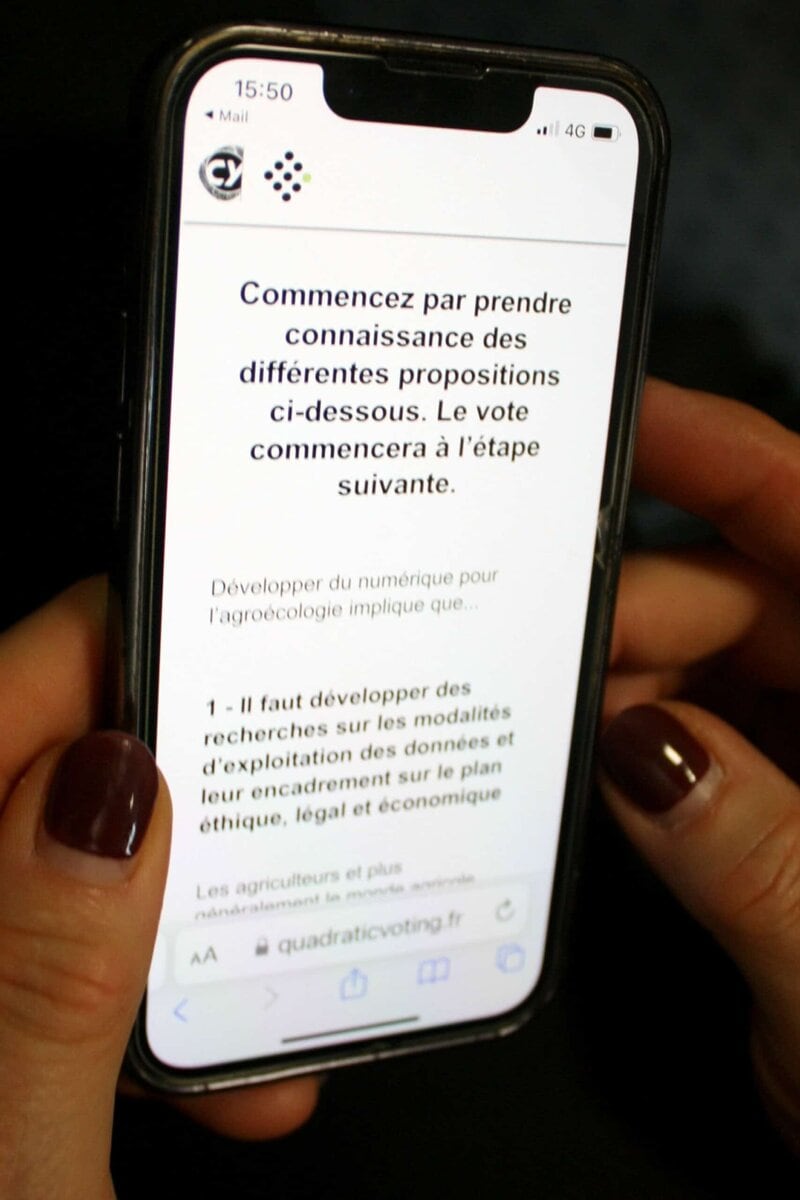
The LINDDA action-research project explores how design research can support the coupling of agroecology - a way of designing production systems that rely on the functionalities offered by ecosystems - and digital technology, and thus accelerate sustainable transitions. Among the issues addressed by the research team: collective decision-making in a transition context. Within this framework, and for the first time in France, a trial of a new collective decision-making tool was implemented to collectively guide research programming and use digital technology to support the agro-ecological transition.
The LINDDA research project: at the crossroads of digital technology, design and agroecology
In 2023, the Learning Planet Institute embarked on the LINDDA project (Living INfrastructure to Design responsible Digital technology for Agroecological transition, or «Designing the living infrastructure for responsible digital technology in support of the agro-ecological transition»).
A PEPR research-action program
Coordinated by Muriel Mambrini-Doudet (Learning Planet Institute) and Annie Gentes (CY design school - CY Cergy Paris Université, This action-research project is part of the «Agroecology and Digital Technologies» Priority Research Program and Equipment (PEPR), co-sponsored by the French Ministry of Ecology and Sustainable Development and the French Ministry of Ecology and Sustainable Development.’INRAE and theInria, and financed as part of the investment plan France 2030. 65 million euros are thus allocated to the agro-ecology and digital research.
The Ministry of Agriculture and Food Sovereignty is convinced that to accelerate the ecological transition of agricultural systems and meet the challenges of food security, climate and the environment, digital technology is a strategic lever. In addition, research and innovation are essential to mobilize digital technology in any transition, particularly in the agro-ecological transition.
Interdisciplinarity and collaboration at the heart of the research program
LINDDA explores the place and possible role of design digital transitions. The aim of this project is to develop resources for design and interdisciplinary research aimed at :
- provide tools for interdisciplinary work and the ability to link different scales of activity and policy,
- specify the properties of living infrastructures,
- specifying the added value of design to develop a responsible digital farming, responsible agriculture based on responsible digital methods (to find out more, see the INRAE white paper «Responsible agriculture").« Agriculture and digital »).
To meet these challenges, LINDDA illustrates the conviction of its designers that it is no longer necessary to work in silos, but rather to create new ones. bridges between research fields. LINDDA's research team includes experts in digital technology for agro-ecological transition (Inrae), holistic modeling (Inria), ergonomics (Cnam), the design (CY School of Design) and interdisciplinary design (Learning Planet Institute):
- design : Annie Gentes - CY School of Design
- interdisciplinary process : Muriel Mambrini-Doudet - Learning Planet Institute
- modeling, robotics and digital technology : Véronique Bellon-Maurel - INRAE and Peter Sturm - Inria
- ergonomics : Flore Barcellini - Cnam and Marianne Cerf - INRAE
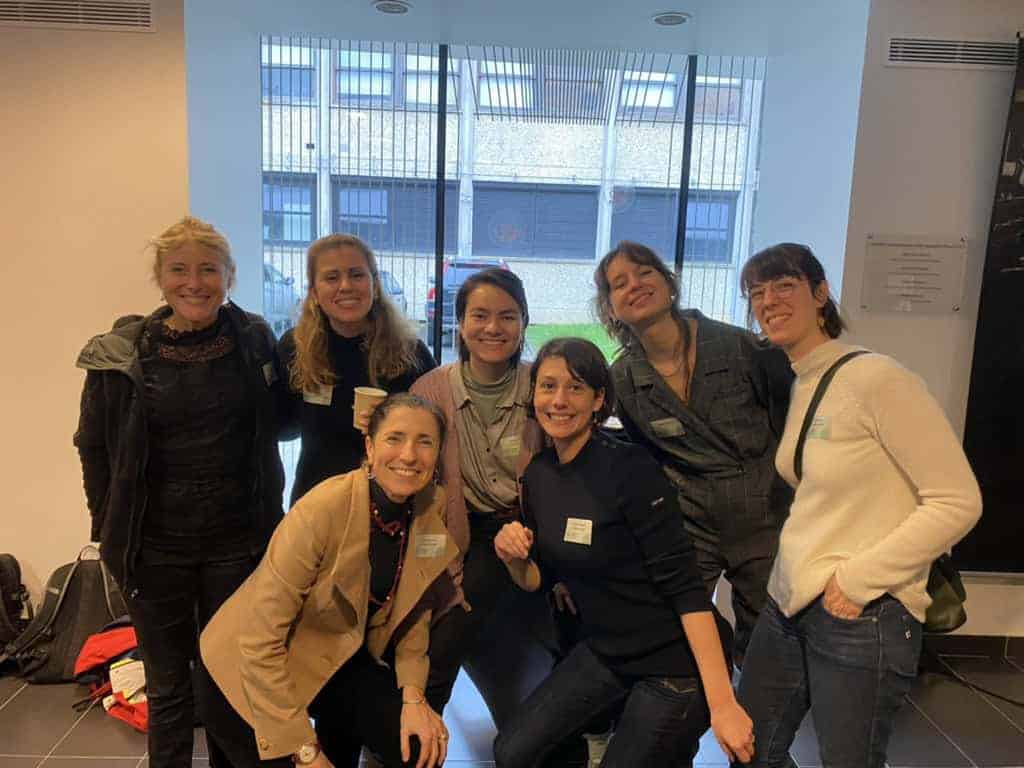
Choosing future research directions for responsible digital technology in support of the agro-ecological transition
Through the PEPR «Agroecology and Digital» program, research and innovation should guide the use of digital technology in the agroecological transition, and ultimately accelerate it. A wide range of research directions can be envisaged to promote responsible digital technology in the agro-ecological transition. What remains to be determined is which research avenues to explore, and above all, with what degree of priority. What are the most urgent questions for the scientific community? What are the most urgent issues for the agro-ecological transition? How can we prioritize actions and budgets?
Quadratic voting, a collective decision-making tool and a novel experiment
On the occasion of the first days of the « Agroecology and digital technology: data, agri-equipment and genetic resources for agro-ecological transition and adaptation to climatic hazards »On January 31 and February 1, 2024, the LINDDA research team worked on a method to collectively determine the values of future research orientations and thus guide the prioritization of digital research and actions for the agroecological transition.
Based on the work of Stéphanie Hémon on the design territory Pauline Oger on the design inclusive transition, and Giulia Marcocchia on the question of ecosystem emergence, the LINDDA research team has observed that the design transition is hampered, among other things, by problems of collective decision-making. Deciding priorities collectively and democratically is often a challenge.
The aim was to identify the properties of decision-making tools that would enable the values of those concerned to be aligned democratically, avoiding the pitfalls of «majority dictatorship» and the effects of polarization.
And so, for the first time in France, an experiment with quadratic voting has been implemented to guide research programming and put digital technology at the service of France's agro-ecological transition.
Quadratic voting in the LINDDA project
In its simplest version, quadratic voting allocates each voter a budget of voice credits (Glen Weyl - political economics). Voters use these credits to buy votes - according to a predetermined grid of values - for a candidate or a proposal.
Example: The first vote for a candidate costs one credit. But voting twice for the same candidate costs four credits (i.e. two squared); giving three votes to a candidate costs nine credits (three squared), and so on.
Voters thus express a degree of preference and a will. Voters have to make compromises, limited by their credit bank. Quadratic voting is a flexible multi-option preferential voting method that allows participants to distribute a certain number of points between several proposals according to the intensity of their preferences.
Quadratic voting in the LINDDA project
This first quadratic voting experiment was organized under the direction of Annie Gentes and Justine Peneau from CY école de design and Muriel Mambrini-Doudet from the Learning Planet Institute. By slightly «hijacking» the quadratic vote, the research team has turned it into a research governance tool.
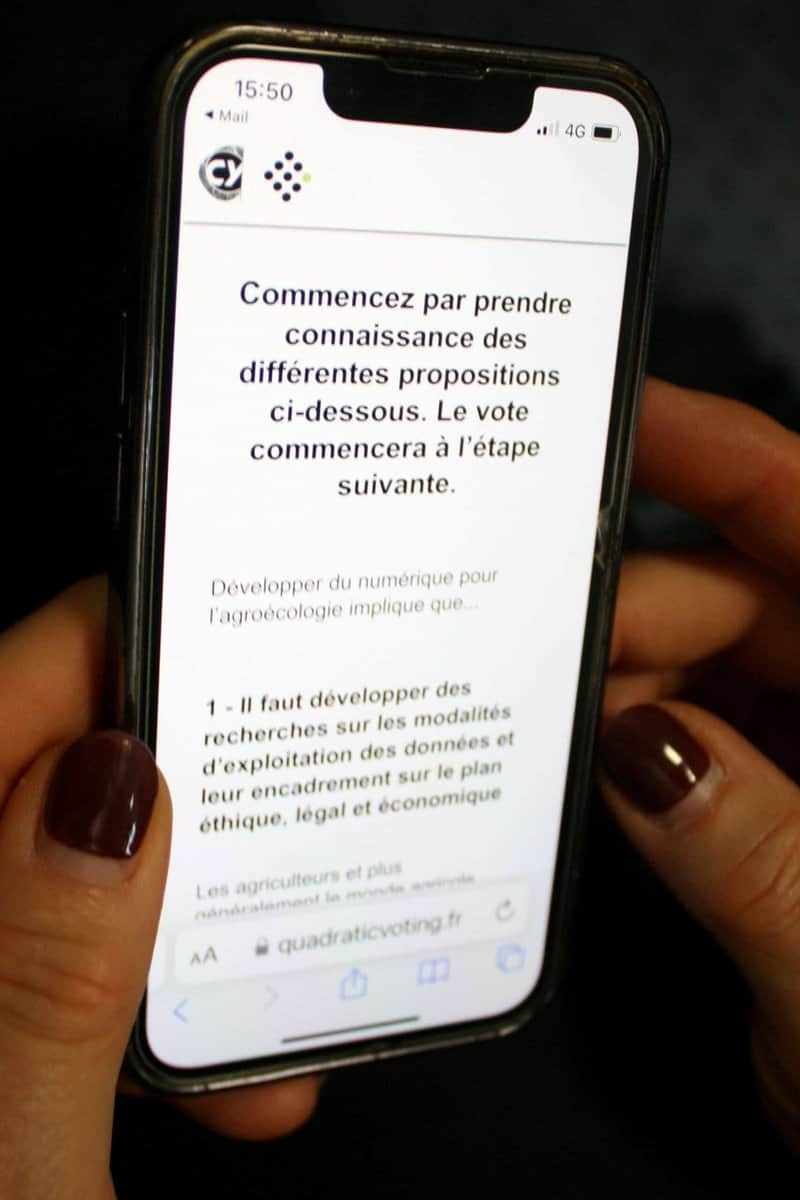
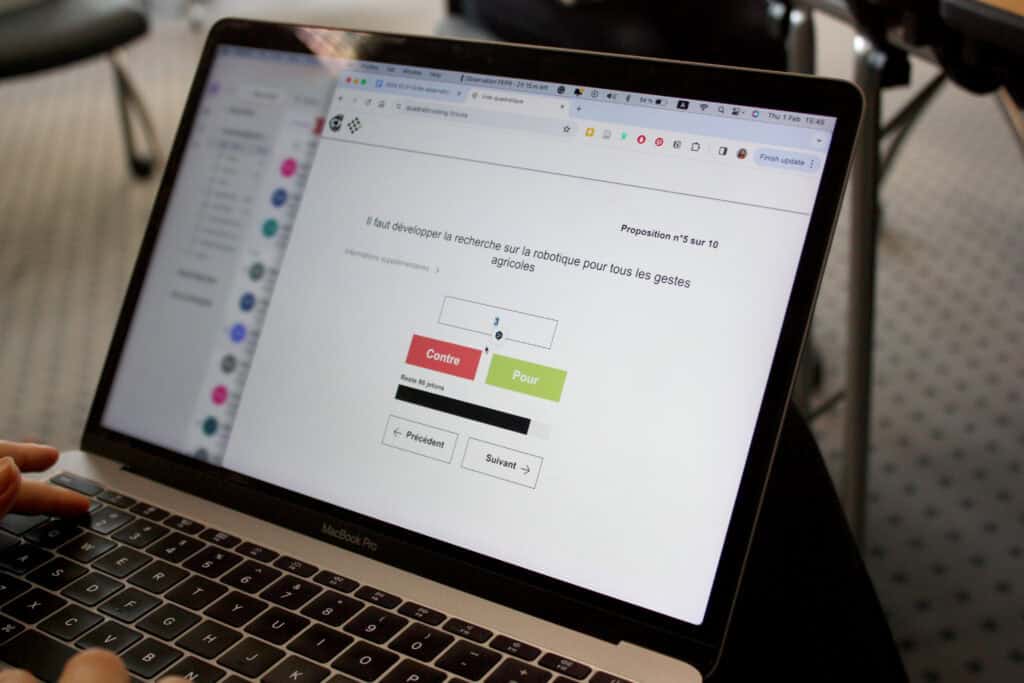
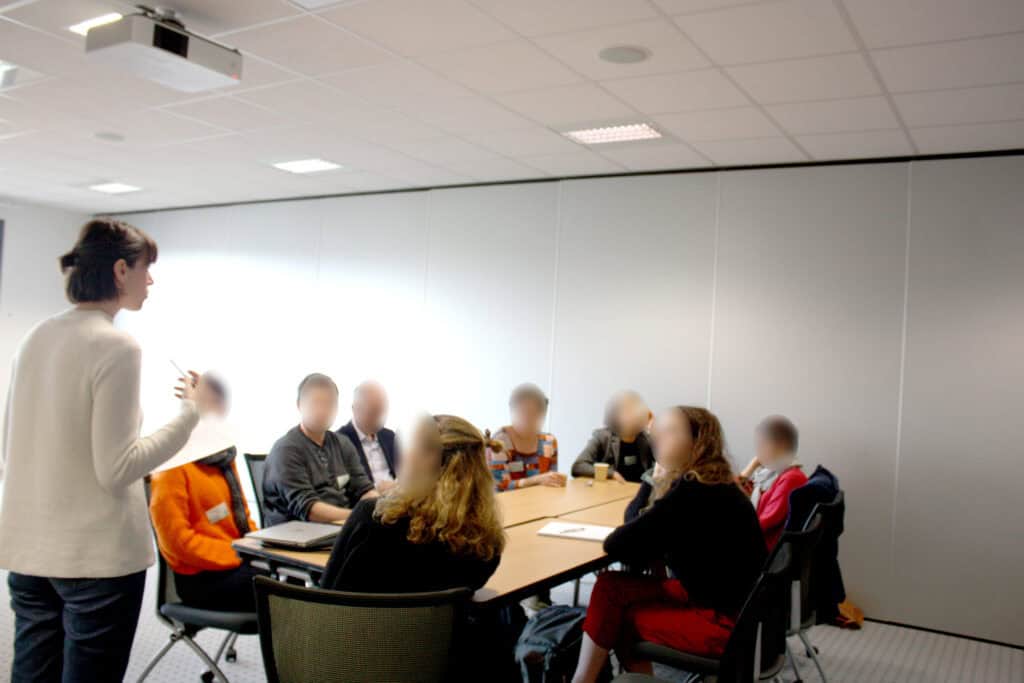
The quadratic voting platform has been developed by Ophélie Baribaud and the CY Design research laboratory. While the process is based on complex calculations of the probability of optimizing the common interest, the methods of participation are simple. During a two-hour workshop, participants will be asked to weigh up a choice of 10 research orientations. They will be able to rank the proposals individually, see what makes sense collectively, and revisit the knowledge required for sustainable transitions.
A total of 50 participants voted - each with 99 credits - and 8 took part in a focus group on the voting application and experience.
Quadratic voting as a research governance tool: feedback from an initial experiment
The results are analyzed in 2 parts:
- analysis of voting statistics
- a qualitative analysis of the experience (thanks to feedback from the focus group and 13 interviews to come)
Although the results are not yet available, some initial data on voting behavior are already emerging at the end of the experiment:
- more than half the participants use all - or almost all - their credits, and very few don't use any at all. spend than a few, revealing a voting dynamic focused on credit spending and therefore the desire to make one's opinion count in the vote.
- there was no polarization of votes, which seems to confirm one of the advantages of quadratic voting, which is to support a nuanced interest in different proposals.
The aim of the vote was to prioritize 10 multidisciplinary research orientations in agroecology/digital technology, drafted by the two PEPR agroecology and digital technology managers. Claire Rogel-Gaillard and Jacques Sainte-Marie with the collaboration of the research team.
Find out more about the proposals
For Muriel Mambrini-Doudet, it was precisely the drafting of the proposals that proved the most complex.
« Much lies in the wording of the questions; if they are to effectively launch the discussion on scientific orientations to meet the challenges of sustainability, they need to be constructed as heterogeneous vectors of knowledge associating different scientific fields, practices, uses, political orientations... Each of them needs to cover a different dimension so that they provide a 360° tour of the issues with a maximum of nuance. (...) It seems to me, then, that we need to supplement the decision-making tool with a tool for designing questions. This would seem to be possible by combining research specific to design with research into interdisciplinary processes.”
This first experiment with quadratic voting in research has also given rise to reflections and discussions on the types of votes and possible applications of this voting in the lives of the participants. Annie Gentes is particularly interested in this feedback from participants:
« People were immediately interested in this voting method, which can be used in condominiums, town halls and other collective organizations. The participants had other voting experiences, such as majority voting. They discussed the respective merits of these two systems. In fact, the participants quickly understood how to vote with this system. »
« On the other hand, there was a demand for more in-depth knowledge of this decision-making tool. Due to lack of time, we were unable to create a training area for this vote, which nevertheless seems important for acculturating participants to quadratic voting and, above all, enabling them to take a critical step back from the vote they are familiar with.. »
Experimentation and research don't stop there. For Annie Gentes and Justine Peneau, «the platform developed for the 2024 PEPR days will once again be deployed in different contexts: companies, regional projects...».
Learn more
- Press kit «Building a collective strategy: quadratic voting, a tool for democratic design and decision-making».»
PDF link
- LINDDA project on Projects
Read also
- LINDDA, the project that will help agriculture go green, Cnam
- Agroecology and Digital Program Days 2024
Special thanks to Annie Gentes, Justine Peneau and Muriel Mambrini-Doudet for their invaluable contributions.