The relationship between science and society has changed profoundly over the course of history. Our changing world is gradually evolving towards a society of equals, characterized by a new way of producing and exchanging, whether in the digital world or in the world of learning and research. These changes call for a new role for science.
In recent years, the contribution of citizens to scientific research has increased with the rise of the Internet and the development of “crowdsourcing” (participative production of knowledge). Initiatives are multiplying and spreading in many scientific and technical fields: data collection to describe plant and animal species, observation of the stars or celestial phenomena, climate and environmental surveys... By relying on simple, rigorous protocols, citizen science opens up a new avenue for scientific and academic research in which everyone can get involved. The result is considerable mutual benefit: on the one hand, the production of knowledge is enriched, and on the other, citizens are trained in scientific methods and issues.
CRI aims to inspire and empower citizens to contribute to a positive future by encouraging an open culture and broad personal participation at all levels and in all contexts. This is why it has long been interested in citizen science projects such as the development of platform for collective citizen science in the health sector, the use of peer production in citizen sciencethe organization of a hackathon to invent the future of our water... It has also organized around a hundred events on citizen science as part of the European research program on citizen science. DITO with the aim of increasing the involvement of citizens and politicians in scientific research and innovation.
Nonetheless, citizen science is still little known to certain audiences, and its various fields of action raise a number of questions, not least about the nature of citizens' contributions and, more generally, the place they can claim to occupy in the production of knowledge.
Is this a citizen science activity?
Muki Haklay is co-director of UCL's “Extreme Citizen Science” project. UCL Extreme Citizen Sciencea research group that brings together academics from various fields to promote, analyze and improve all aspects of citizen science. He recently joined CRI as a short-term researcher, working on the development and evaluation of the characteristics of citizen science, as part of the EU-Citizen.Science project. EU-Citizen.Science project. His study aims to establish guidelines that can be used by research funders, political bodies and scientists to decide which activities they wish to consider as citizen science, and under what conditions: What are the boundaries of this field? What aspects do people agree or disagree on when describing activities as “citizen science”?
This question has political implications, such as the decision of expert panels that agree to fund scientific projects to qualify an activity as citizen science and fund it or not.
A vignette study to get respondents actively involved in research
To conduct their research, Muki and a team of people, such as project partners and CRI fellows, developed a method for thinking about the important factors to consider when determining whether or not an activity falls under citizen science:
- Firstly, through collaborative workshops, they identified all the factors likely to lead to confusion or disagreement, i.e. to enable someone to question whether the activity falls within the scope of citizen science.
- On this basis, they developed some 50 short stories - vignettes - of around 70 to 100 words each, describing a wide range of activities involving the public in university research.
Here is an example of a thumbnail:

- Next, they set up a vignette study in which people read each case and express their views on the extent to which this activity falls under citizen science: is it citizen science? to what degree? and also reflect on why they make this association (or not).
The qualitative information and responses they received enabled them to see the levels of disagreement between cases, and to understand which issues people consider difficult or controversial in the field of citizen science. From this, they will develop a set of characteristics that can be used by people who have to make decisions, so that they can choose which ones are important for their project and even establish criteria.
The aim of this survey is not to dictate what citizen science is and what it isn't, but to enable a wide range of activities that form part of it. Muki Haklay wanted to adopt an approach that would enable interviewees to actively participate in the research and reflect on the case. The vignette study made it possible to integrate a specific topic into a wider context (however brief) by asking the questions implicitly. Vignette studies are a familiar type of survey, but no other example of citizen science analysis has used this approach to date.
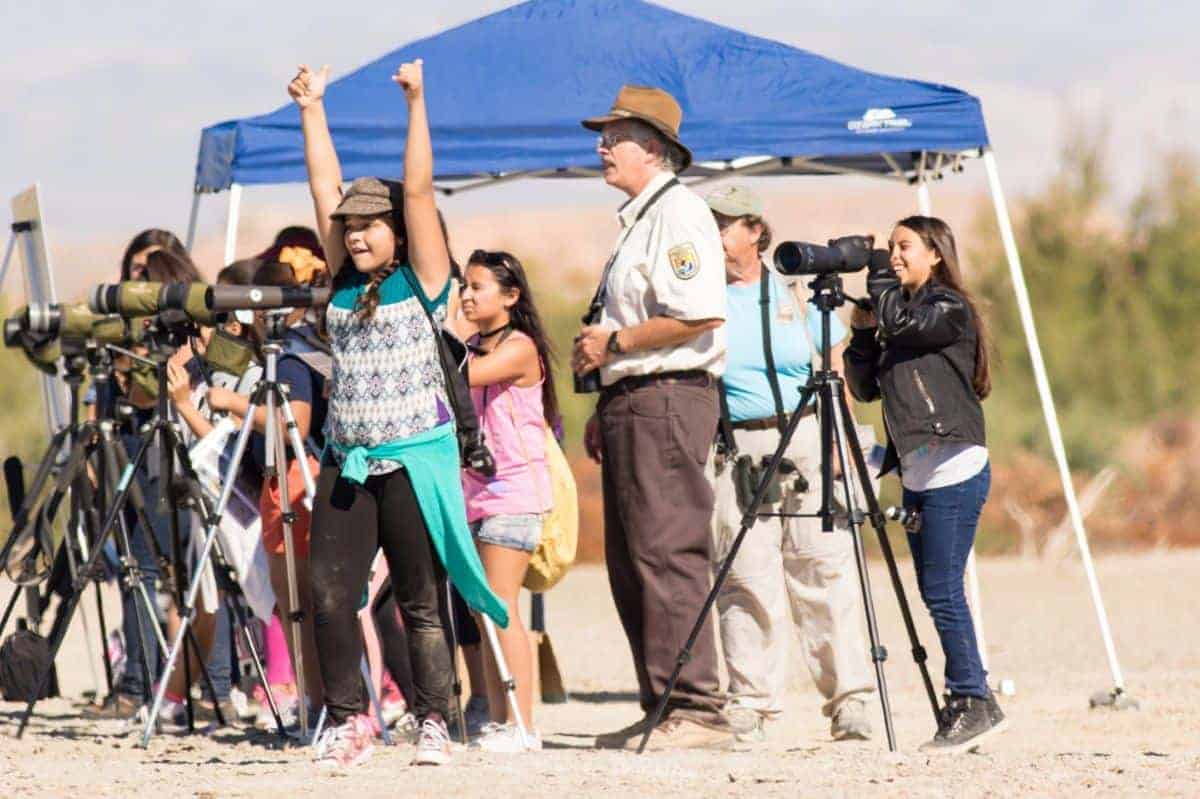
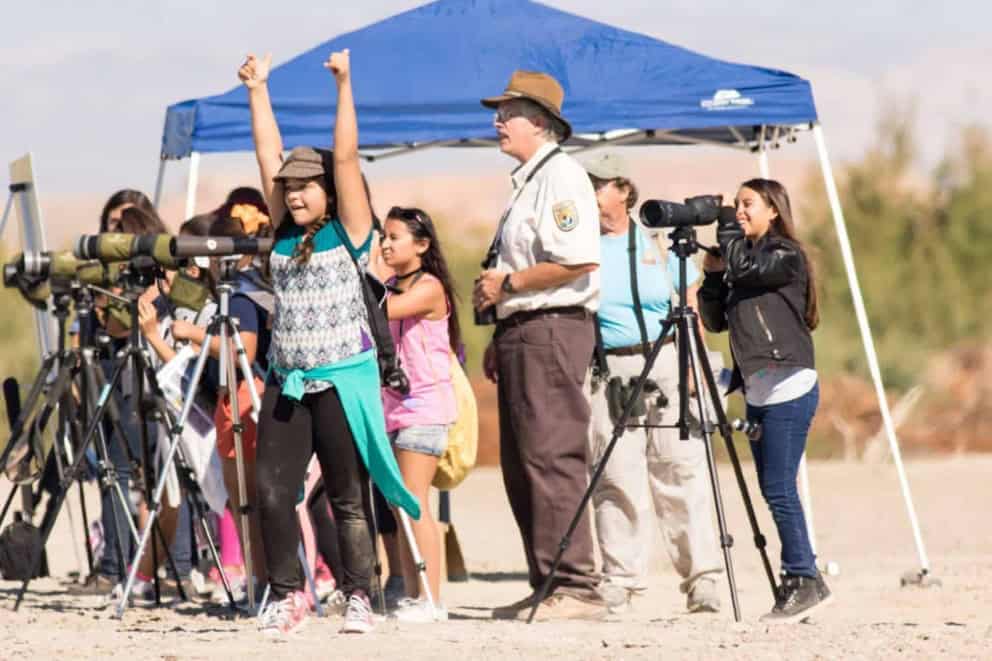
Photo credit: Salton Sea National Wildlife Refuge Migratory Bird Day - Kyle Christensen Wildlands Conservancy
A set of useful guidelines for new areas of citizen science
Muki Haklay had many interactions with people at CRI throughout her internship. Whether it was working with the L2 student interns who tested a pilot of the survey, or with the board of directors, all contributed to the design and implementation of this survey. Digital literacy at CRI was an extremely valuable factor in enabling such research and facilitating the identification of the right tool.
The survey, which was completed after Christmas, received over 390 responses. Analysis will take place in early January. A set of guidelines will be published by the end of January, and further discussions will take place in May.
The resulting features will be useful for CRI's activities to highlight initiatives developed in learning territories, in line with its Educational Planet project, a new field of citizen science.
Collaborations with the CRI research community are set to continue. Discussions are already underway on how UCL's Extreme Citizen Science group and CRI can collaborate more closely and continue to dialogue on experiences and knowledge.
Our partners