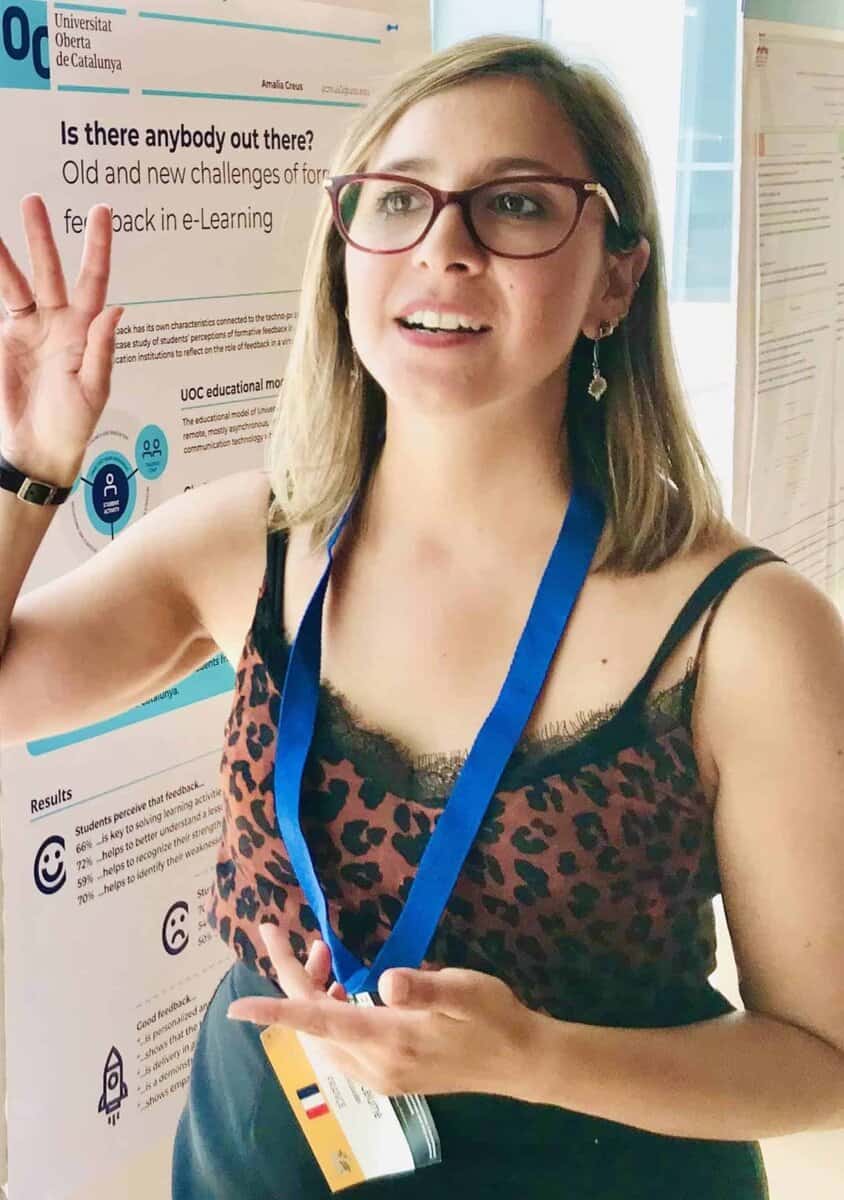
Macarena-Paz Celume, an alumnus of the AIRE master's program class of 2015, has been teaching for 7 years in the master's program that saw her projects grow up, and has remained loyal to the Learning Planet Institute's community and values. She is also in charge of research for one of the Institute's inclusion programs. If the relationship between the association and Macarena is so fruitful, it's thanks to a shared ambition: to contribute to the transformation of education.
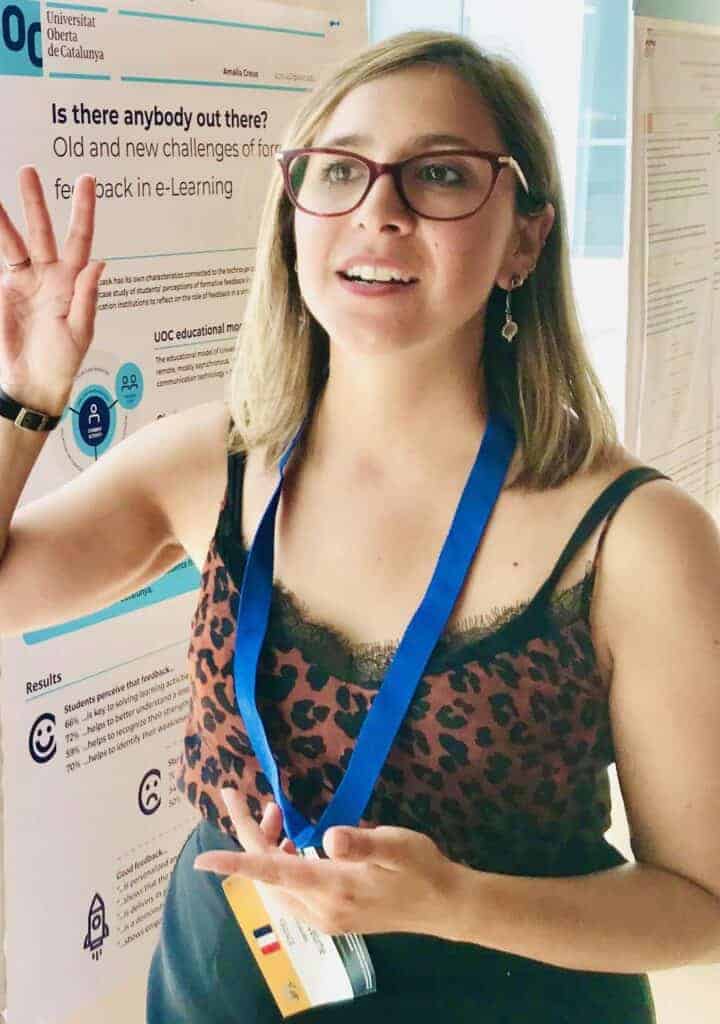
My guiding principle is to reduce the gaps in education. To do this, I'm working to change the way we think about academic success, to integrate psycho-social skills into learning paths and to value social, emotional and creative skills. In fact, I'm continuing to develop the same project with which I applied to the Learning Planet Institute, full of hope, so many years ago. It's my life project.
INTERDISCIPLINARITY AS OUR DNA
The story of Macarena-Paz Celume with the Learning Planet Institute began when she decided to do her thesis in Paris. Initially disconcerted by the traditional university framework, which forced her to follow a particular discipline, she never gave up: «My main obstacle was the interdisciplinary nature of my research topic.»
Interdisciplinarity is an integral part of Macarena's DNA : younger, she said she wanted to be «actress, singer, teacher, astronomer and psychologist.» She adds: «And I'm very lucky because that's almost all I do today! I sing with a band, I do theater with a troupe, I'm a teacher and I have a PhD in psychology.»
It was this same aspiration that eventually led her to the Learning Planet Institute: «One day, I received a concrete reply telling me that my project was interesting but very interdisciplinary. So I stupidly googled «interdisciplinary research» and came across the Learning Planet Institute. I couldn't believe it existed, and that it existed in France!»
A MASTER'S PROGRAM THAT SUPPORTS ITS STUDENTS
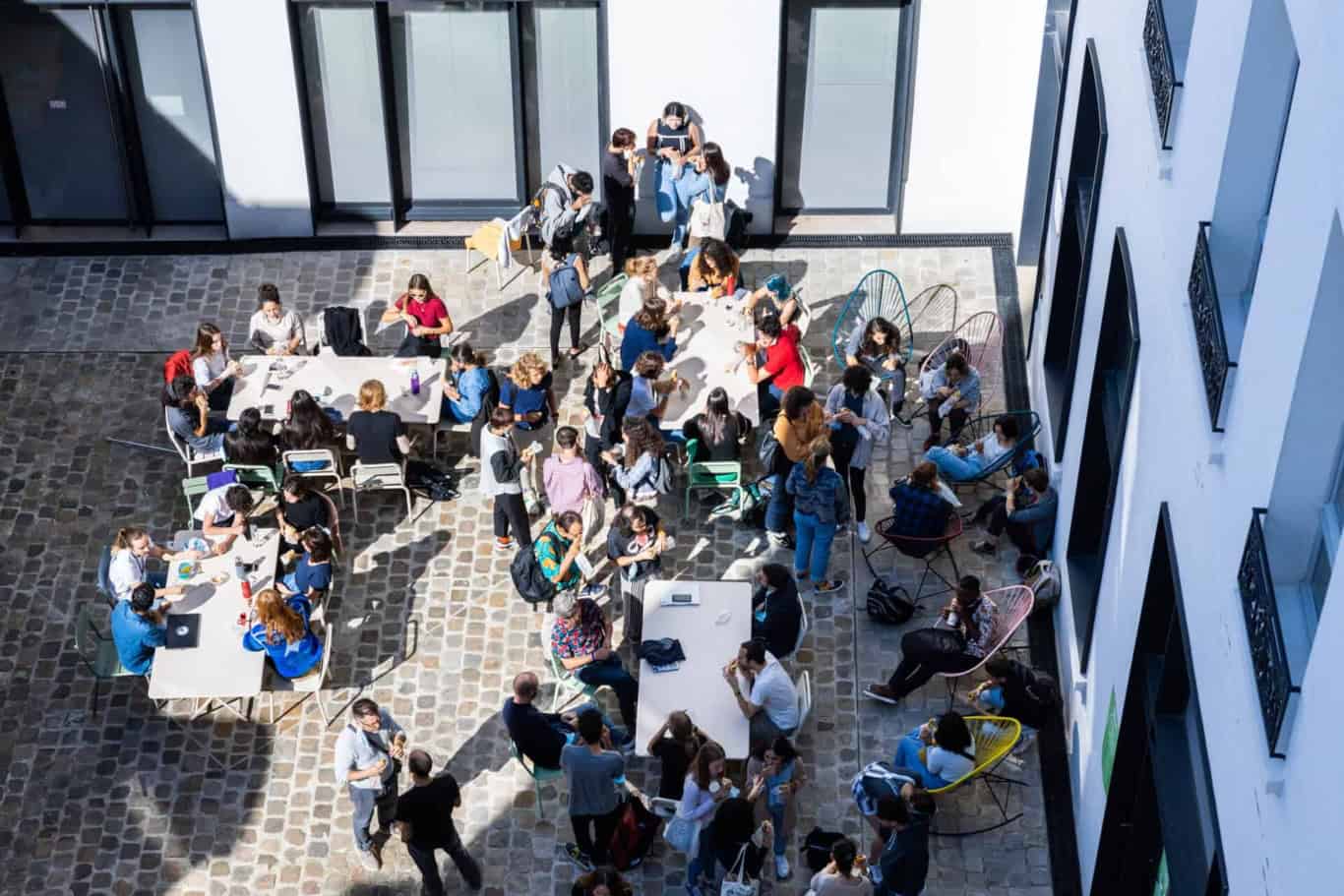
Registration for the’FIRE doctoral school had already closed, Macarena turned to the master AIRE, specialized in Learning sciences, d’Université Paris Cité, hosted by the Learning Planet Institute. She has given herself a year to refine her research project and take advantage of the Institute's ecosystem before completing her doctorate in Psychology. The researcher describes the campus as « a place where it's possible to discover other ways of working, to be open to change, to question one's opinions, to broaden one's horizons in order to seek better ways, in every possible field.»
«This Master's degree opened up a whole range of perspectives for me. First of all, what interdisciplinarity really means.» In fact, the program is enriched by the articulation of disciplines such as psychology, computer science, educational science, design and so on. The Master's program strives to go beyond top-down teaching, emphasizing peer learning and learning by doing. «I was able to rub shoulders with people from all over the world. (editor's note: there are 19 different nationalities in the AIRE master's program), I've been enriched by these encounters and these projects.» The small size of the Master's classes (34 students) enables constant monitoring and personalized learning.
What unites the students is their desire to change the face of education, to innovate in teaching and to change the way we learn: «In this academic course, everyone is working on different projects, but we are united around a common ambition: to contribute to education. »
The entrepreneurial spirit and determination to make things happen that I experienced there I still use today in my professional life, and it's this same caring atmosphere that I try to pass on to my students today.·e·s in my projects.
The researcher then created workshops combining active pedagogy and theater (theater pedagogy) to enable children and teenagers to express their emotions while playing with their creativity. It's this same project that she continues to implement, 7 years on, with partners from the Académie de Paris and Marseille, colleagues at l’INSPE d'Aix-en Provence, and with his students at Aix-Marseille University.
THE LEARNING PLANET INSTITUTE ECOSYSTEM SUPPORTS ALUMNI PROJECTS
When you join the Learning Planet Institute community, you don't leave once you've graduated. During their training, students are encouraged to get involved in clubs, events and the life of the Institute, enabling them to lay the groundwork for their professional projects: « What helped me afterwards was that I was well identified in the ecosystem. Not only as an alumnus, but also because I still teach courses at the master's level and was able to take part in a number of projects during my studies.»
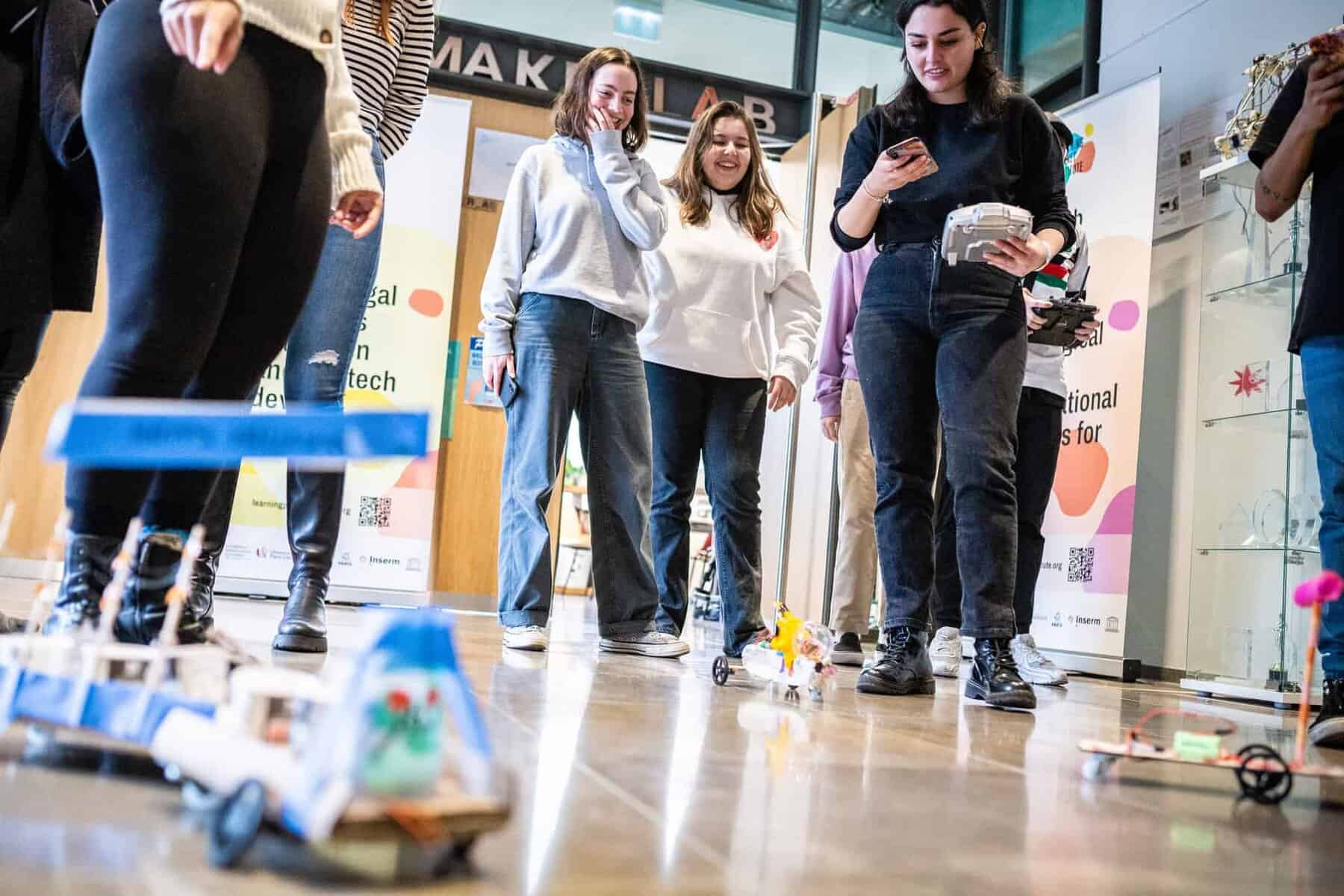
When asked what experiences at the Learning Planet Institute have shaped Macarena's career path, she answers without hesitation: « Starting to teach there! The fact that I started to follow the different dissertations of the different generations that arrived at the Institute, so I could see the evolution of questions. It gave me an enormous amount of training in university teaching.»
At the Learning Planet Institute, I've had a real opportunity to experiment with innovative teaching methods at university level.
USE RESEARCH TO DEVELOP INCLUSION PROGRAMS
In addition to his research work D. thesis on the development of creativity and socio-cognitive and emotional skills, Macarena-Paz Celume joins in 2019 Learning Planet Institute's Inclusion team, as head of research and program evaluation.
« One of the strengths of the Learning Planet Institute is that you don't have to have an ultra-focused career path, as we like to do in France. But if you come up with a project, if you have the right frame of mind, if your skills speak for you, you'll be taken seriously.»
The aim of the Institut's inclusion programs is to help people who are far removed from the job market to find employment or become entrepreneurs. They are distinguished by the contribution of the Institut's teaching expertise and research methods, and by their focus on sustainable development issues.
This is how the researcher joined the Inclusion «that has three principles: competence, integration and education. I coordinate the different territories in which the program is implemented to have a common research protocol at the national level.»
USE THE ACTION-RESEARCH APPROACH TO ADAPT TO INDIVIDUAL CONSTRAINTS AND LOCAL REALITIES
Why integrate research into an employment access program? One of the distinctive features of Learning Planet Institute's Inclusion programs is that they are based on an action-research approach. This enables researchers to « get a snapshot of the project at a given moment» and continuously adapt programs in line with feedback from the field and ongoing research. This ensures that support is tailored to local and individual constraints, and enables beneficiaries to become more involved.
«The action research enabled us to see if there were any small flops in the project, thanks to regular reviews and interviews. As a result, we have a clear picture of the project as it unfolds, enabling us to respond quickly to any bottlenecks. The teaching team can then improve the workshops and better adapt to the needs of our participants.»
This method pays off: «We're seeing results, significant changes between people entering and exiting the educational pathway. We see an increase in their fulfillment, which is very important since we focus a lot on this part of the psychological characteristics.»
In fact, the Inclusion team very quickly decided not to limit their contribution to operational skills, but also to work on the "soft skills" of their employees. «Emotional and social skills, such as empathy, tenacity, curiosity and creativity. They go hand in hand with more operational skills, to develop a job or set up a project. They help you identify what you want to do and how you can get there.» This is Macarena-Paz Celume's trademark.
I'm convinced that tomorrow's businesses will need people who are creative, agile and critical.
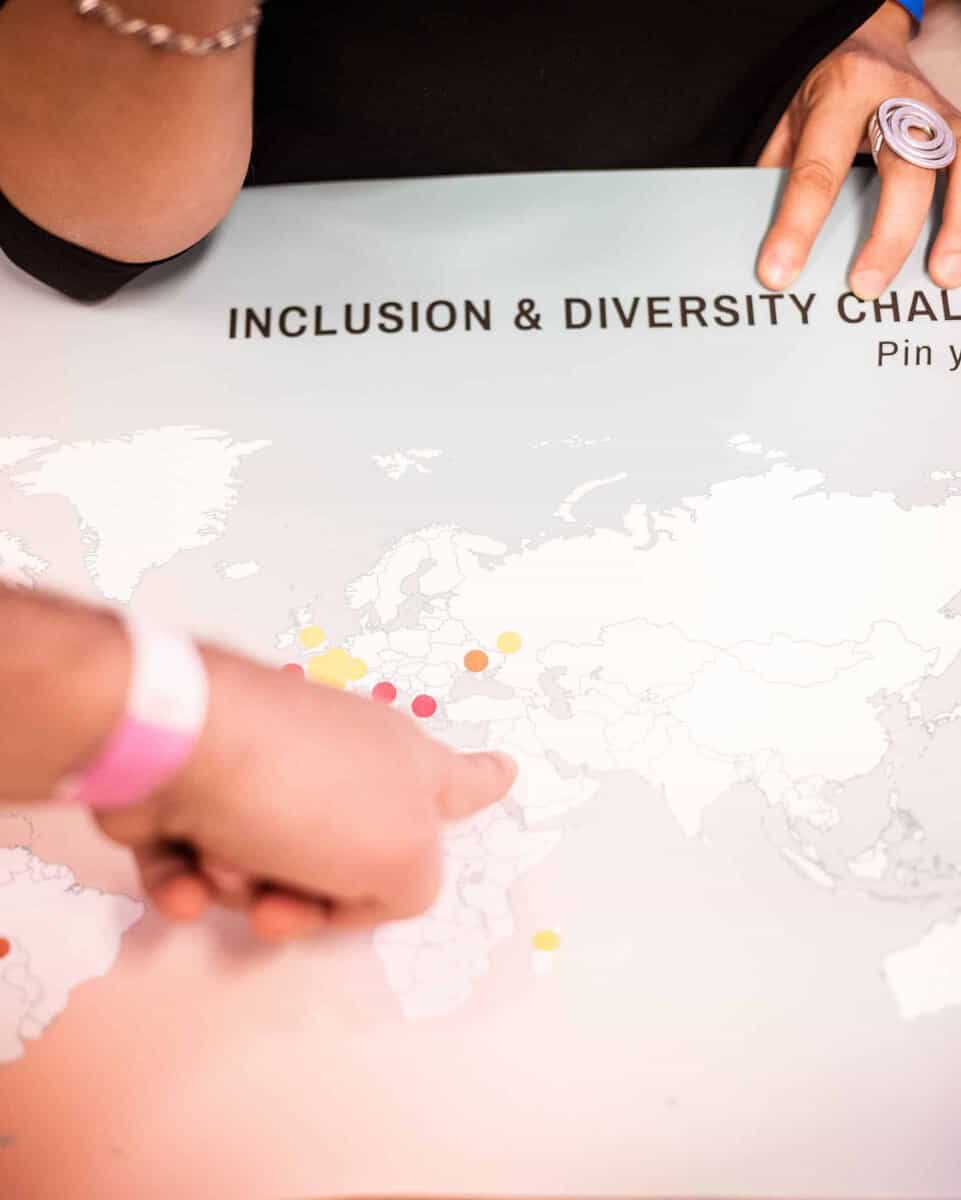
Macarena adds: «Action research in an inclusion project brings to light other issues that go beyond skills development: over-indebtedness, administrative situation, mobility, childcare and discrimination. These are essential variables in the inclusion equation.»
The teams will soon be announcing their results: « We're going to show where our project stands and present the XXIᵉ century skills repository linked to the job we've created.»
Such a journey requires incredible determination. It's Macarena's day-to-day commitment to emotional and social development, to changing the way we look at education, and to helping people develop so that they, in turn, can make a difference.
LEARN MORE
Explore more portraits of our alumni
Discover the master AIRE (Interdisciplinary Approaches to Research and Teaching)
About Learning Planet Institute's Inclusion programs
Discover our Inclusion programs, This new program offers innovative teaching methods to help young people who are far from the job market (with a particular focus on young people from the "Quartiers Prioritaires de la Politique de la Ville" (Priority Urban Neighborhoods)) into employment or entrepreneurship. The aim is to build a career path that makes sense for them, while integrating the challenges of sustainable development.
This publication is part of the UNESCO Chair in Learning Sciences, established between UNESCO and Université Paris Cité, in partnership with the Learning Planet Institute. Views and opinions expressed are however those of the author(s) only and do not necessarily reflect those of UNESCO. UNESCO cannot be held responsible for them.
Thanks to Macarena-Paz Celume for taking the time to answer our questions.