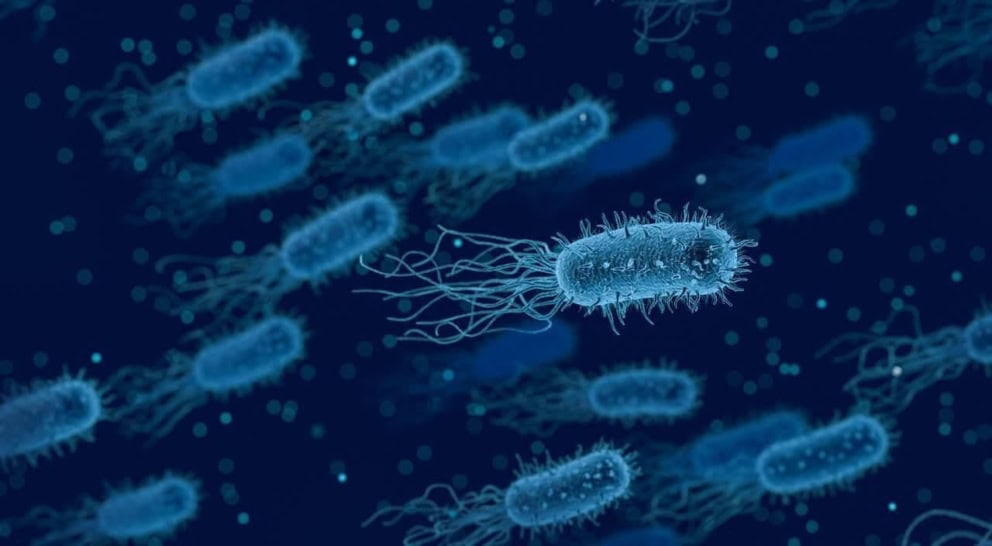
A new paper on bacterial aging has been written by former (Ulrich K. Steiner, Ming Ni, Peipei Chen, Xiaohu Song) and current (François Taddei, Ariel B. Lindner) CRI researchers. She used experimental data and mathematical approaches to show that the bacterial aging model (in particular E. coli) can be explained by two stochastic processes.
The full text of the study is available here
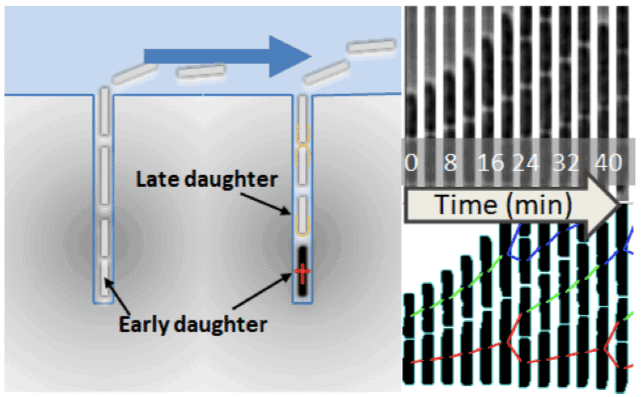
Despite advances in aging research, a multitude of aging models and empirical evidence for various models of senescence, understanding of the biological processes that shape senescence is lacking. This work shows that senescence of an isogenic bacterial population of Escherichia coli results from two stochastic processes. The first is a process of random deterioration within the cell, as generated by the random accumulation of damage. The second process is linked to the stochastic asymmetric transmission, during cell fission, of an unknown factor that influences mortality. This work calls for the exploration of similar stochastic influences that shape aging patterns beyond simple organisms.