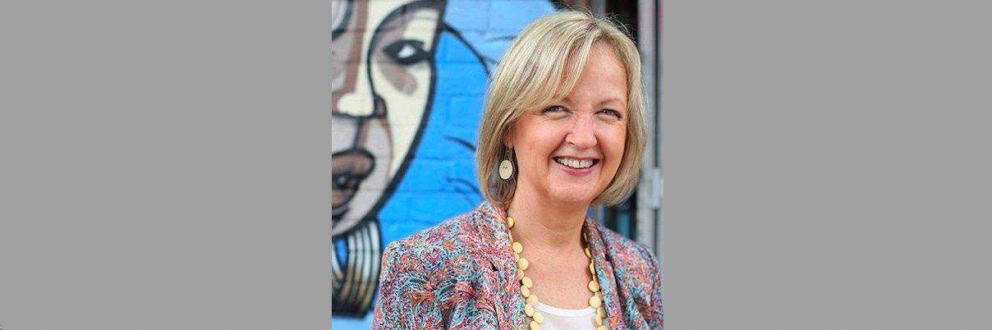
Throughout her career, Jan Owen has led national conversations, campaigns and advocacy on the rights and limitless potential of children and young people worldwide, on the future of education and work, and on building powerful investments and partnerships between communities, businesses, governments and philanthropic organizations.
She is a national thought leader on the future of work and youth, workforce adaptability and the transformation of education in Australia.
Jan was named one of Australia's True Leaders in 2018 and the inaugural Australian Financial Review and Westpac Woman of Influence in 2012 for her relentless commitment to unlocking the talent of young people, driving social innovation and entrepreneurship, and leading change in education.
She has received honorary doctorates from the University of Sydney and Murdoch University, Perth, and was appointed a Member of the Order of Australia in 2000 for services to the Australian community.
She is the author of Every Childhood Lasts a Lifetime (1996) and The Future Chasers (2014).
Why did you co-create Learning Creates Australia?
Young people, parents and employers have made their voices heard. Our 19th and 20th century education model is failing more and more often. It is clearly not adapted to a world where change and adaptation are constant requirements in the world of work, in our environment and in our social and economic systems. We believe that education needs to be rethought in collaboration with young people and with the involvement of the whole ecosystem, both inside and outside the school environment.
What are the main challenges you're tackling, and how?
At the end of the 13 years of schooling in Australia, we have reduced learning to a score, a single number.
Think about how ridiculous this is when everyday learning, especially in the 21st century, is mostly done over time and on the job, organically and experientially. To teach, coach and learn, we really need to look at the whole young person and see what they know and can do in different ways and in different contexts.
We have adopted an innovative social laboratory approach that involves diverse stakeholders and uses evidence, design thinking, prototyping and experimentation to develop new ways of recognizing learning, particularly for students who have been disenfranchised, disengaged or excluded from the education system.
Why do you think it's important to celebrate learning (“learning to take care of ourselves, others and the planet”), especially after what we all experienced in 2020?
Learning is a state of mind that we retain for the rest of our lives. An 82-year-old, like my father, can cultivate a beginner's mind full of interest, curiosity, openness and non-judgment. A 17-year-old, like Greta Thunberg, can adopt a mature mindset, considering the essential nature and connectedness of all things. It's the ability to access and activate many different mindsets, rather than our fixed worldviews, that cultivates lifelong learning. Staying open, collaborating and adapting to new and old ways of doing and being - these are the key lessons we'll learn in 2020.
We are called to act as true global citizens. What we do anywhere in the world today has a simultaneous impact on local and global populations.
We have less than a decade left to repair the damage we've done to Mother Earth. The repercussions are already being felt.
Ensuring that our children acquire the knowledge, skills, tools and know-how to build a safe, just and sustainable world should be our number one priority. Lifelong learning is both a right and an existential necessity that must be unleashed, nurtured and celebrated in every child and young person. As communities, organizations, businesses or governments, we need to see education and learning as a truly collective endeavor. Our future depends on it.