
How do research fields evolve? Are there universal patterns behind the growth and decline of research fields? And can we better understand the roots of innovation?
These questions are at the heart of a recent article published by the’Interaction Data Lab from Learning Planet Institute. Using data from 1.5 million articles in the arXiv preprint repository, they collected publication histories from 175 research fields in physics, mathematics and computer science.
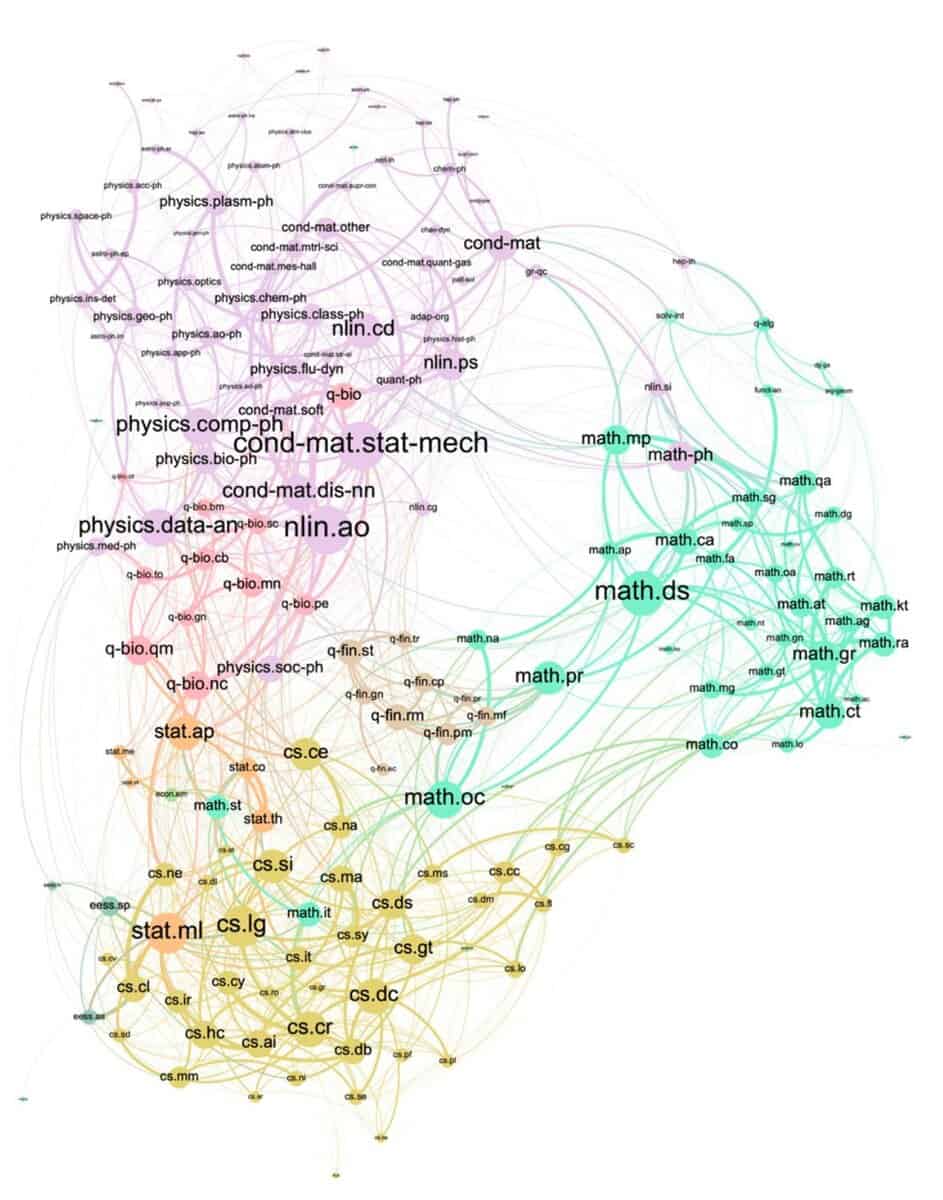
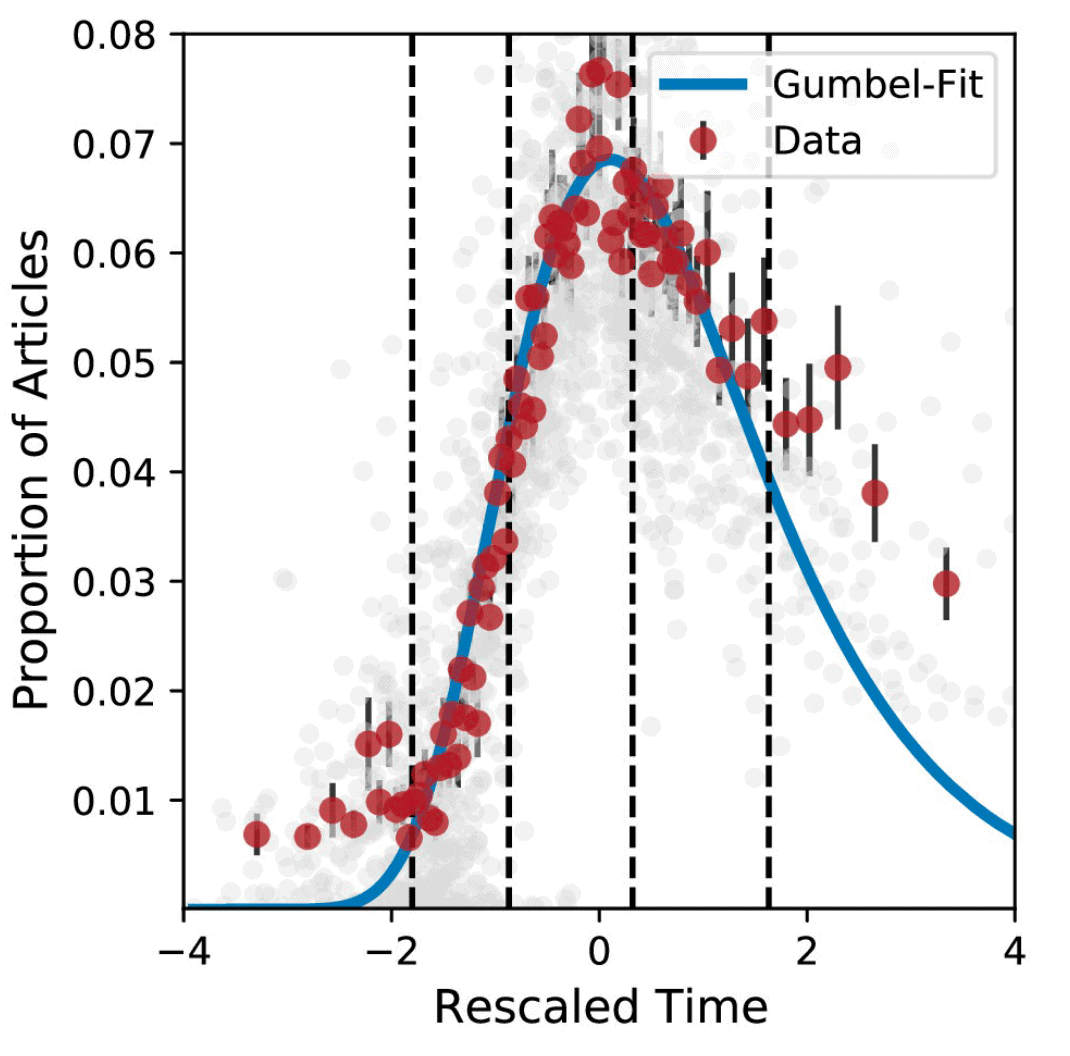
Some of these fields reached their peak in the 1990s and are hardly active today (such as high-energy physics), while others are booming (such as artificial intelligence). Some have been important for decades, while others have only attracted interest in recent years. Despite this diversity, the team's researchers found that all fields follow a well-defined upward and downward curve, characterized by a peak of activity (when the field is most active compared to the first article) and a width (duration of sustained activity). By estimating these parameters for each domain, the researchers were able to align all the curves on a universal “law” of evolution, enabling them to compare the different domains in the same terms.
Using this method, the team then examined the characteristics shared by scientists and articles at different stages in the evolution of a research field: its creation, adoption, apogee, early and late decline. They found that early stages, when the field is in its most “innovative” phase, are characterized by small interdisciplinary teams of early-career researchers publishing groundbreaking work, while late phases highlight the role of large, specialized teams building on previous work in the field.
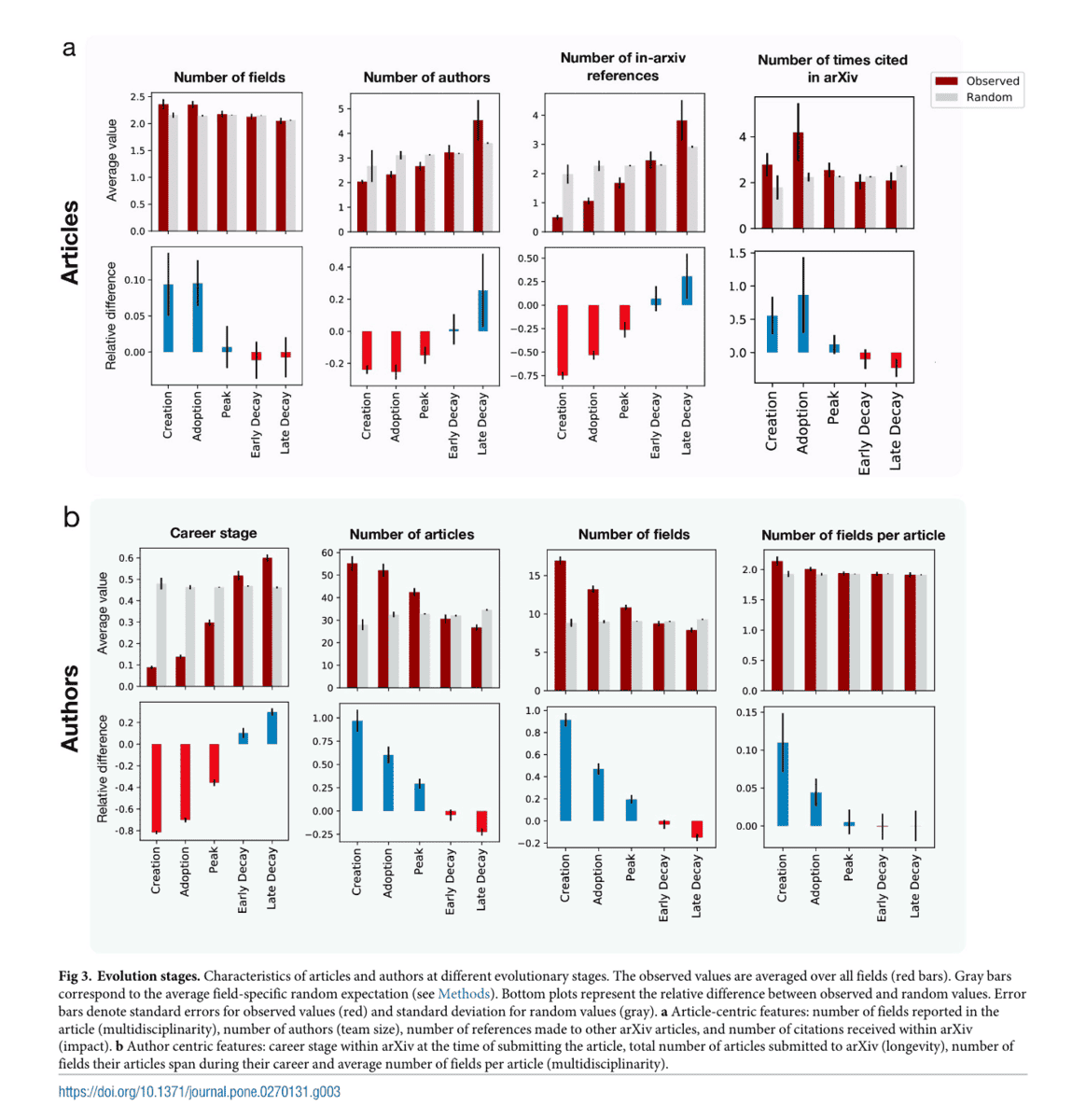
As such, these results reveal key characteristics shared by research “pioneers”: young, interdisciplinary, risk-taking. Future work will extend these results to larger databases, beyond the technical fields studied.
For more information, read the full article here:

and read this thread on Twitter:
How are research fields evolving? Check out our new article quantifying the rise and decline of scientific fields! https://t.co/fmTDxuSOuv.? ???
- marc santolini (@msantolini) June 24, 2022