On July 2, five classes met online to present and discuss their projects. Bâtisseurs de Possibles of the year. The kindergarten and primary school pupils chose to tackle issues that affect them, such as bullying, well-being at school, waste and poverty. They then imagined and built incredibly imaginative solutions, which they had the pleasure of sharing with other classes. A meeting that illustrates the principle at the heart of the Bâtisseurs program: enabling students to take action, to have a positive impact on the world.
Well done to all the students and their teachers!
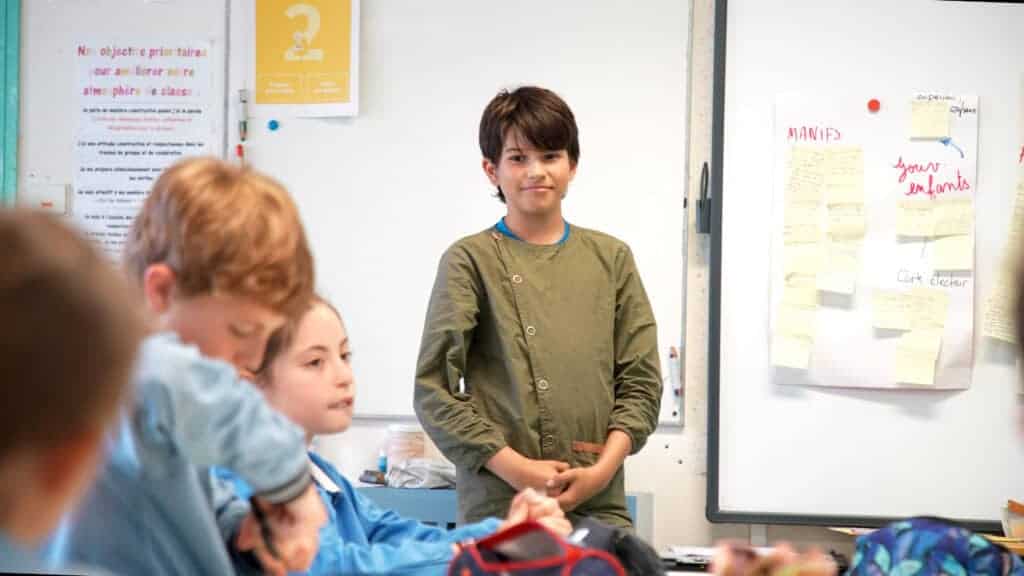
The Builder method: 4 steps to building a classroom project
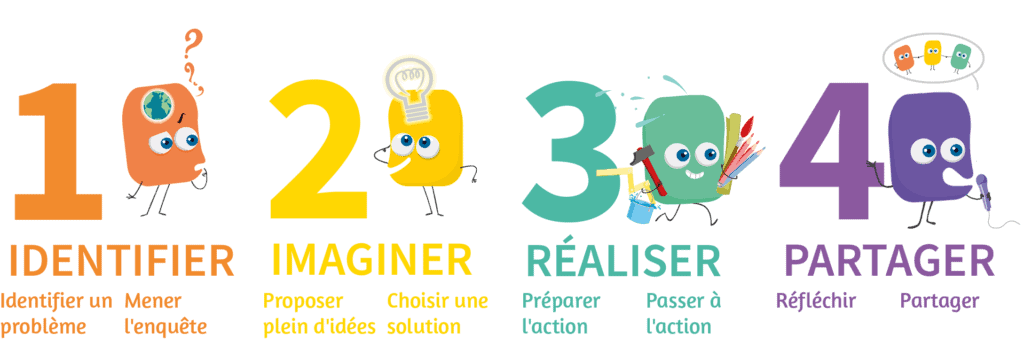
From kindergarten to high school, the Bâtisseurs de Possibles (Builders of Possibilities) approach guides the class through four key stages to help students find and build a solution to a problem they have raised: 1-Identify a problem; 2-Find a solution (and dare to come up with crazy ideas); 3-Realize the solution; 4-Share the solution.
For each stage, the Bâtisseurs de Possibles program offers a methodology and tools (collective intelligence games, guiding frameworks for facilitating sessions) to facilitate cooperation, observation and the implementation of solutions.
Thanks to a project-based approach to teaching, students are actively involved in the learning process, from the identification of a problem affecting them in their daily lives (class, school, neighborhood, community, society, planet, etc.) - linked to the issues at stake. Sustainable development goals, defined by the UN - to its resolution.
« There's too much fighting in the yard » - Good health and well-being at school
Léa Souccar-Lecourvoisier's Grande Section class, École Notre Dame - Viry-Châtillon (91)
1 - Identify a problem: «There are too many fights in the yard».»
«First we took a big long view to look for all the problems!»
Using the "Builders of Possibilities" method, the kindergarteners identified several issues that challenge them in their daily lives at school. After a vote by the whole class, the pupils chose to focus on the problem of fighting in the playground.
2 - Finding a solution: less individual play and more cooperation
Several avenues were explored to solve this problem. Firstly, by pooling their feelings, the students identified bicycles, scooters and other individual games as being regularly at the heart of fights. An initial solution was to remove the games. The experiment proved inconclusive: « The first day was okay, but the second was not. And on the third, there were still fights.»
This was followed by other experiments and proposals: create a «Ça m'énerve» museum with drawings of everything that annoys students on the playground, put each student in an individual cardboard box (to prevent them from getting into fights), fill the playground like a ball pool, make a bank of games...
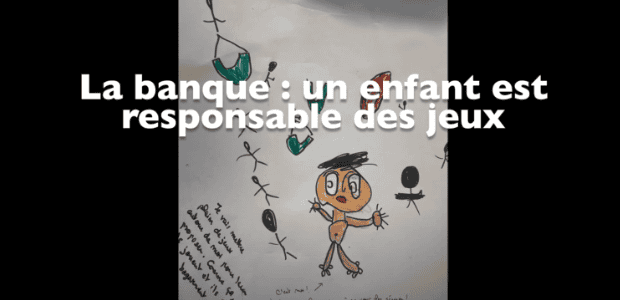
3 - Make it happen: learn team games
In the end, the chosen solution was to learn collaborative team games. «We asked our parents to teach us team games.»
A problem and a solution that appealed to the students in the other classes to whom the project was presented: «I think it's a very good idea because fighting is dangerous.»
Art-cèlement - Fighting bullying at school
Anne-Lore Greter-Traoré's CM1 class, from Lycée Jean Mermoz - Dakar (Senegal)
1 - Identifying a problem: bullying at school
The CM1 students identified harassment as a major problem. However, the notion of harassment had to be clarified.
2 - Finding a solution: a step with many obstacles
School bullying is a vast and very sensitive subject; the group had a lot of hang-ups. So the class turned to mediators for help. Working with experts in the field, the students identified the « four words of harassment »Violence, repetition, consequences and the long term.
«We did an experiment: we crumpled up some paper, put it under a dictionary and went on vacation. When we came back, the paper was still crumpled, if a little less so. It just goes to show that harassment has long-term consequences.»
3 - Producing this solution: an exhibition « Art-cèlement » and a riser bar
Among the solutions found, the CM1 class chose two: to set up an exhibition on this subject in the school, with a presentation to other classes, and to create a prototype of the « rising bar »In other words, a barometer assessing the victim's level of resentment and the sanction proposed in return. The class was able to exchange ideas with another CM1 class from the Bâtisseurs de Possibles network, in the Jura region, and gather feedback from the rising bar test. As a result, Anne-Lore's pupils adapted their rising bar before proposing it to the rest of the school.
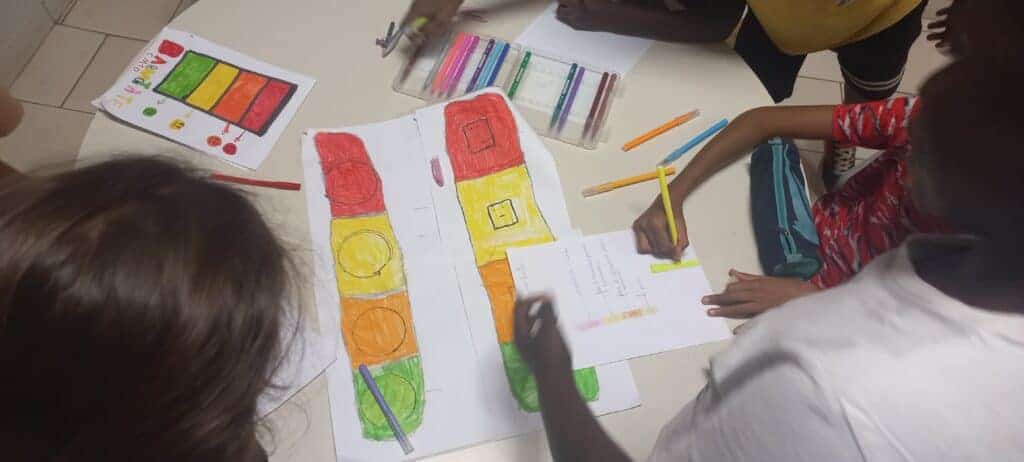
«At first, it was hard to figure out what harassment was and find solutions, but today we're happy to share this with you.»
Among the exchanges sparked by this presentation, we note the observation made by the students among themselves:
«Why is it that when we go to adults to stop being picked on, sometimes the others keep going?»
«Because sometimes adults don't pay enough attention.»
Promoting well-being at school
Chrystelle NINOT's CM1 class at Louis Robert school - Coulommiers (77)
1 - Identifying a problem: bullying at school
A few thousand kilometers from Anne-Lore Greter Traoré's class, Chrystelle Ninot's CM1 pupils have also chosen to fight against bullying.
Their observation: in general, stalkers feel bad about themselves. They need to feel stronger than others because they lack self-confidence. Stalkers need even more support.
The students reported on a key episode in their approach to the problem of harassment: a meeting with a schoolgirl who agreed to testify as a victim of harassment. «We were very touched.»
2 - Find a solution: a place where « blow »
After discussion, the students imagined a place where the children could take a breather, a place where they felt at ease.
3 - Realize this solution: le Coin de Paradis
Using drawings and sketches created together, the students created a wellness area in the courtyard. Le Coin de Paradis« is accessible by means of a badge.« Responsible», which indicates that the student wearing it is committed to the principles of tolerance and respect. In this Paradise Corner, you'll find coloring pages, books, a space for discussion and exchange, etc...
Spontaneous reaction in one of the other classes present at the project presentation: «Me, I'd love to have a piece of paradise!...»
Reducing the number of toys
Ramona Coupel-Dulgheru's CP class from the’new school Emilie Brandt - Levallois Perret (92)
1 - Identify a problem: too much waste
The problems identified by the first-grade pupils - the Curionautes - are numerous: garbage, cigarette butts, rats, war, cut-down trees, etc. After using the Snowball method, they decided to work together to combat the problem of too much garbage. More specifically, they went to the heart of the problem and determined that one of the sources of the problem was the large number of toys they each had in their homes.
2 & 3 - Finding a solution and applying it: new toys... but already in use
To combat toy waste while discovering new games, the students organized a toy swap.
«To build the world we do good to the Earth
With Les Bâtisseurs, we do our part
We're learning that we're never too small to change the world
If you feel you're too small, think of the mosquito that manages to annoy and bite you!»
Curionautes
Helping people - including migrants - who live on the streets
Ramona Coupel-Dulgheru's CM2 class at École Nouvelle Emilie Brandt - Levallois Perret (92)
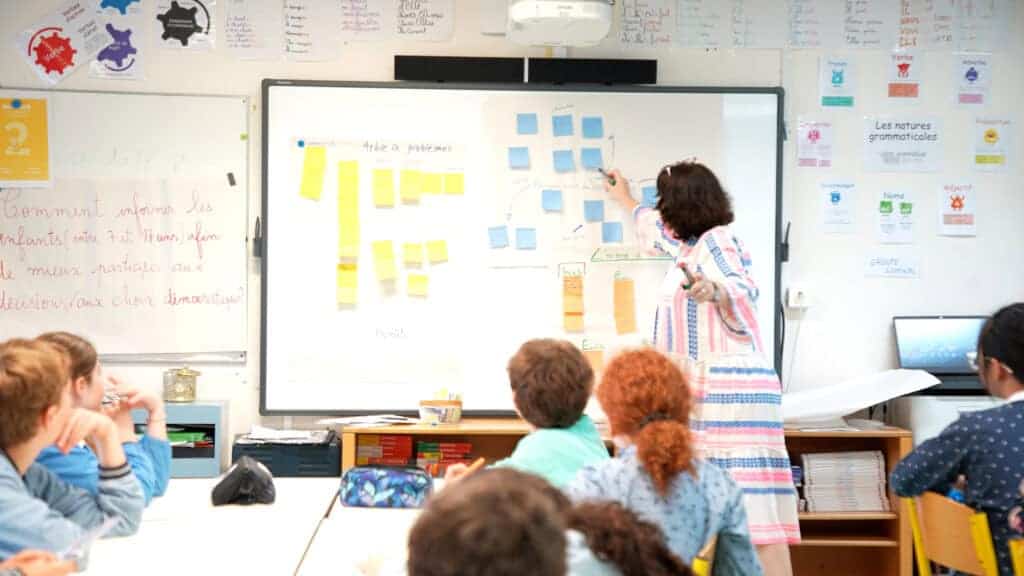
1 - Identifying a problem: different types of poverty
Thanks to the Snowball method, the CM2 class, which has renamed itself the «SNCF class »("Connecteurs Futés" Digital Scientists) voted to discuss the topic of poverty. Together, they conducted a survey on the different types of poverty. The issues raised were: how can we help schools in Madagascar? How can we help SOS Méditerranée, how can we help migrants coming from war? How can we reduce hunger? The issue finally chosen by the students was «How can we help migrants and people living on the streets? »
2 - Find a solution: 7 solution categories
The 5th graders came up with a whole host of ideas, classifying them into seven categories: sales, parties, events, collections, donations, associations and face-to-face. Of these categories, the group chose to focus on fundraising.
3 - Implementing this solution: awareness-raising and collection
Taking advantage of the end-of-year fair, the students displayed panels on the subject to raise public awareness of their problem. At the end of the exhibition, there was a donation box to collect money. This money was then divided between students, each of whom was responsible for distributing envelopes - each containing 20 euros and a note - to people living on the streets.
Class to class question
«What made you want to work on migrants and poverty?»
«Because some people saw people in the street outside their homes and were touched by it. »
A big well done to the classes who presented their projects on July 2, and who made the meeting a moment of spontaneous sharing and exchange! From the testimonies of the various students present, one common feedback: the joy of working in a group.
«I liked it because we were tolerant, in particular by accepting other people's choices even if we didn't agree with them.»
«I liked the group work and sharing it with other classes.»
«I felt a lot of empathy, I felt what people who are harassed go through with the high school girl's testimony.»
«You are wonderful classes!»
This 2023/2024 school year, 80 classes were enrolled in the Builders of Possibilities program - well done to all the groups who embarked on the adventure!
Read the testimonials of 3 teachers taking part in the program:
- Interview with Ramona Coupel-Dulgheru
- Interview Béatrice Poignonec
- Interview Anne-Lore Greter-Traoré
GET YOUR CLASS INVOLVED IN A "BUILDERS OF POSSIBILITIES" PROJECT
Join the Builders of Possibilities program for the 2024- 2025 school year!
The Bâtisseurs de Possibles® system, adapted from Design for Change to the French school context, today federates a network of committed teachers, teaching resources and tools, and support (training, follow-up, etc.).
Whether you want to discover the process step by step or launch a project with your students, the Bâtisseurs de Possibles network is there to help you!
Beyond the benefits for student skills such as cooperation, empathy, speaking up and creativity, the fact of making students actors in their own lives is a key factor in the success of the project. reduces eco-anxiety.
Read about the experiences of teachers in Bâtisseurs 2023-2024 classes:
Béatrice Poignonec - CE2 class
Ramona Coupel-Dulgheru - CP and CM2 classes
Anne-Lore Greter-Traoré - CM1 class
Virtual meeting between participating classes 2024
This publication is part of the UNESCO Chair in Learning Sciences«, established between UNESCO and Université Paris Cité, in partnership with the Learning Planet Institute. The ideas and opinions expressed in this publication are those of the authors. They do not necessarily represent the views of UNESCO and do not commit the Organization.