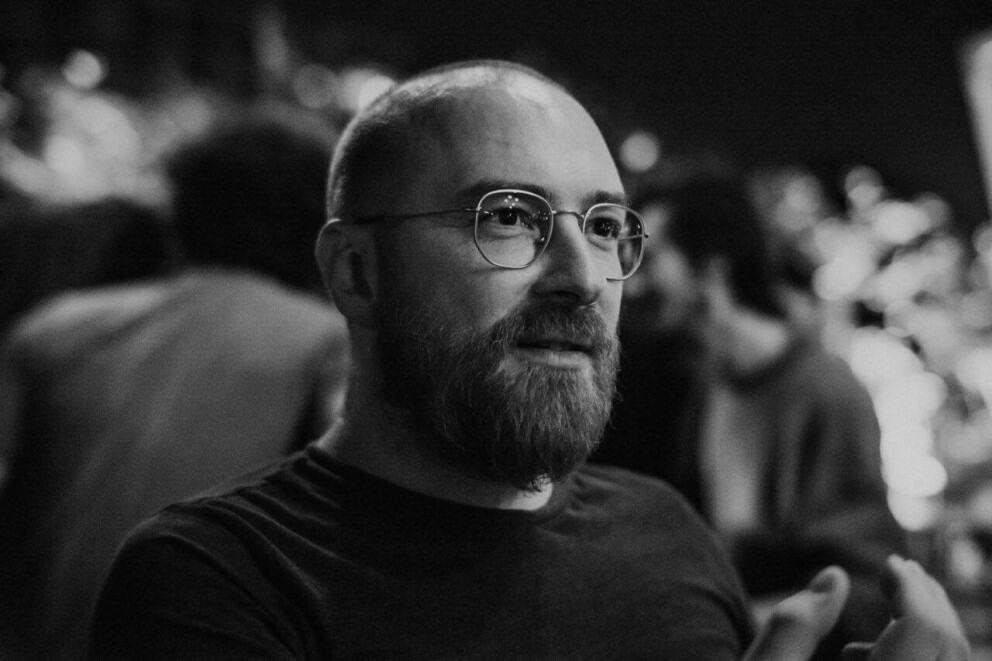
Michael RERA will be joining us in the coming months. He and his team will be working on the project: “An integrated approach to the study of aging: molecular mechanisms, network theory and applications to society”.
Since being recruited by the CNRS in 2013, Michael has developed a new framework for studying aging, based on a phenotype he discovered and described in 2011, the Smurf phenotype. Named after cartoon characters, individuals with the smurf phenotype actually turn blue - towards the end of their lives, their intestines become much more permeable to a blue dye with which they are fed, making them visibly blue on the outside. This phenomenon occurs in fruit flies, Michael's main study system, but also in other animals, including zebrafish and nematodes. It enables aging to be studied not as a continuous, progressive phenomenon, but as a process made up of two consecutive phases separated by an abrupt transition. This shift in thinking about aging means that Michael's team can both tackle entirely new questions and revisit old ones from a fresh angle.
With his UTELife (Understanding The End-of-Life) research team, and thanks to numerous collaborations with mathematicians (Sylvie Méléard - CMAP, Grégory Nuel, LPSM), an epidemiologist (Nicolas Todd), a philosopher (Marie Gaille - SHERE) and many others, Michael will strive to better understand the mechanisms of aging itself, to address long-standing questions about the evolutionary basis of aging, and to answer important questions about the ethics of predicting imminent natural death.Her team includes Dr Céline Cansell, a post-doctoral fellow with expertise in the central regulation of energy metabolism in mammals, and Flaminia Zane, a second-year PhD student studying the signature of smurf-specific gene expression.
He will also work closely with other IRC fellows and their teams. In particular, he will work with Radoslaw Ejsmont's team to develop new early markers of aging, Marc Santolini's team to decipher changes in the gene network during the smurf transition and Remy Kusterfor end-of-life ethology, and Bastian Greshake for crowd ethics in the prediction of imminent death from natural causes.
Michael began his interest in ageing in 2005 as a Master 2 student in Hervé Tricoire's team, with the model organism Drosophila melanogaster. Prior to this, he studied biology, physics and mathematics at the Université Pierre et Marie Curie and the Magistère Européen de Génétique at the Université Paris Diderot. Michael is expected to officially join CRI by summer 2020.
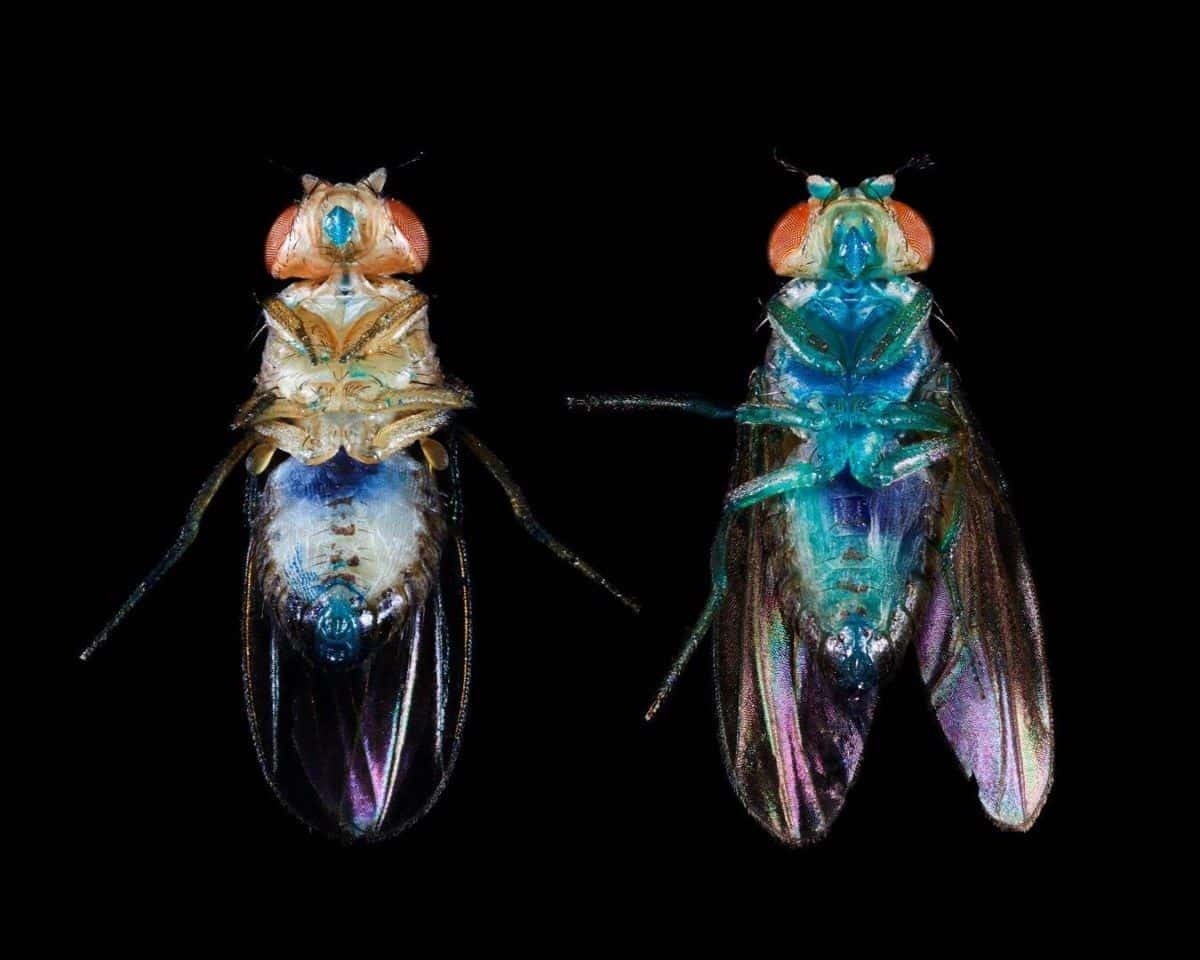
Drosophila melanogaster - ©Aurore Colibert and Michael Rera
____________________________________________________________________