What can schools and educators do in the face of this ecological moral imperative? How can we support children and teenagers? Do we need to change our training and curricula? These and many other questions are on the minds of the entire educational and scientific communities.
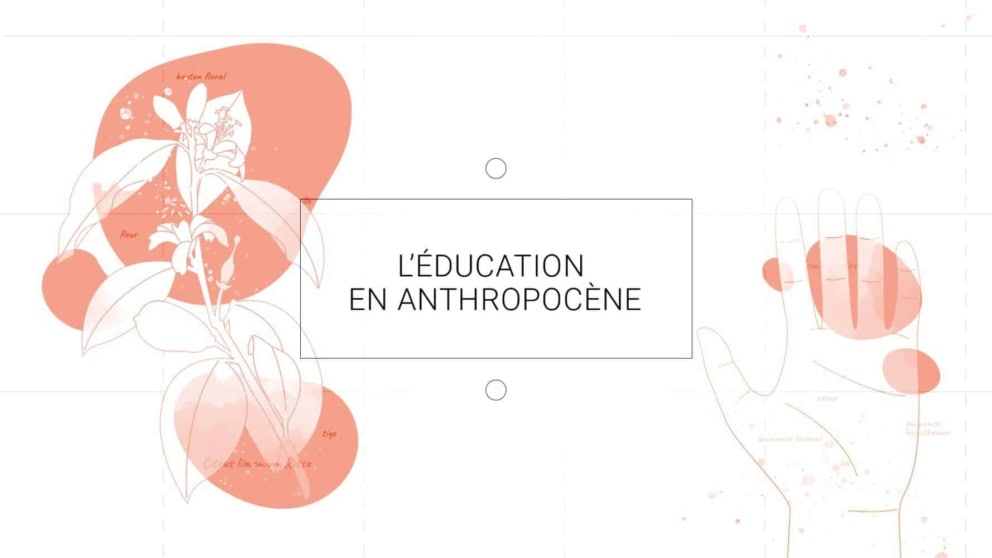
To understand and try to answer these questions, Savanturiers-Ecole de la Recherche, educational program CRI launches its new MOOC“Education in the Anthropocene”.
A MOOC TO HELP SCHOOLS MEET ECOLOGICAL CHALLENGES
More than 25 researchers, experts, teachers and young people provide historical insights, outlooks and solutions for the classroom and for young people's involvement.
This MOOC is an invitation to members of the educational and scientific community to join Savanturiers in reflecting on the principles, aims, values and operating methods of education in the Anthropocene.
Registration opened on October 20.
OFFICIAL LAUNCH ON NOVEMBER 3
The official launch of the six-week course will take place on November 3, 2021 and will be the occasion round table, online, of 6 to 7 pm, with François Taddei, CRI director and biology researcher, Ange Ansour, director of Savanturiers and Nathanaël Wallenhorst, PhD in education and philosophy, and lecturer at the Université Catholique de l'Ouest.
IN SUMMARY
Description
A six-week course to analyze and understand the issues, values and pedagogical perspectives of education in the Anthropocene.
♀️ Effort: 2 hours
Rhythm: Self-rhythmic
Agenda
Registration
from october 18, 2021 to december 7
Courses
from November 3, 2021 to December 8
At the end of this course, you will be able to :
- understand the notion of the Anthropocene, and find your way around the various terminological controversies; ;
- a historical and scientific overview of education for sustainable development ;
- get to know contemporary educational projects that question the posture of the educator in the Anthropocene; ;
- explore the Savanturiers program - School of research through the prism of education for sustainable development; ;
- know and better identify the Anthropocene generation