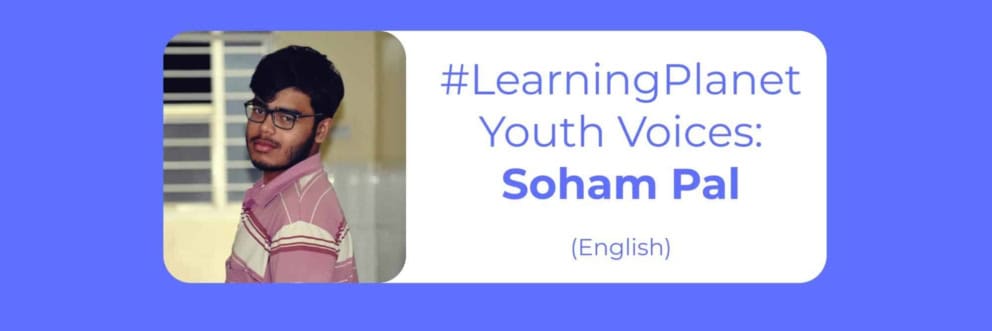
Meet Soham:
soham, 19, in his third year of a B.Tech+M.Tech in biotechnology, has a positive impact on everyone around him. He is passionate about his work and exceeds every goal he sets himself. He believes in the idiom “action speaks louder than words”. Soham likes to draw, listen to music and, hard as it may be to believe, he can spend an entire day watching a TV series. He enjoys social work and also believes that “shared knowledge is multiplied power”.”
What don't adults understand about young people? What's the most common misconception they have about young people?
Adults still don't understand that young people are a very important part of today's society, because they are more influential. Young people can make informed decisions that are much more relevant and effective in contemporary situations because they are much more familiar with current progress than adults, who have witnessed rapid change compared to the times when they grew up. Many adults believe that as long as young people don't earn money, they shouldn't be “free”.
Adults often mistakenly think that young people also need intimacy, that they can have ideas that can work, that they can lead something, and that they can also have problems like anxiety or depression. Most adults think that young people don't face these problems and therefore have nothing to worry about, but these problems are more common in young people than in adults.
What was the first moment of enlightenment that encouraged you to take action for the society in which you live?
I've been closely involved with the NGO DIKSHA since the age of 4. Since then, I've been able to see that DIKSHA firmly believes in empowering young people, and that the organization encourages them to make their own decisions and express themselves freely, without judgment. What struck me was that DIKSHA gives equal importance to all age groups and listens to everyone's opinions and ideas before reaching a conclusion. About four years ago, an incident occurred at school and it was then that I realized that very few students had realized the importance of youth empowerment as I had. Most of them don't even believe they can express their opinions and continue to blindly obey what they're told to do.
What difficulties did you face in the beginning? How did you overcome them?
I encountered most difficulties at school. Not being good at sports, I was more often than not isolated and excluded from most discussions, or even from making friends. I didn't just face this because I wasn't good at sports, but also because I was body-shamed, which helped create a major trauma in my life. The saddest part was that every time I wanted to open up and talk about it to someone who could help me at school, I wasn't even listened to properly, except once, during my last year of high school. As the youngest in the family, I was often compared to my brother, surprisingly not by parents, but by family members.
Overcoming these challenges was a bit difficult, but I never felt like giving up at any point, thanks to the immense support of my parents and maternal grandparents. They never intervened directly in a problem, but always guided me to do the right thing, supported me in every situation and, above all, believed in me. Over the years, this led me to believe that I could express my opinions, that I could lead and that I wasn't “unproductive”.
How would you like adults to help you with your initiative?
Adults should encourage young people in whatever they want to do and whatever they're good at, instead of following society's rules and focusing on their results in their subjects. What counts is their desire to learn more and become what they dream of being. Young people should be allowed to make their own decisions, instead of adults making decisions for them. Finally, young people should not be judged for their choices or opinions.
What advice would you give to young people who want to make a positive impact? How should they start?
My advice to aspiring young people is to follow their own passions and do what they want to do. Question the established rules of life and write your own life scenarios. Don't worry too much about what people will say, because people will always criticize and judge young people.
Conditions and situations vary in everyone's life, as do goals and upper limits. Everyone faces different kinds of challenges, and some don't always have the resources or support to undertake what they want. However, what everyone needs to know is that they must speak for themselves and not pay attention to what others say. It's their life, and it's up to them to enjoy it and live it as they see fit.
(Photo courtesy of Soham Pal; copyright: Soham Pal)