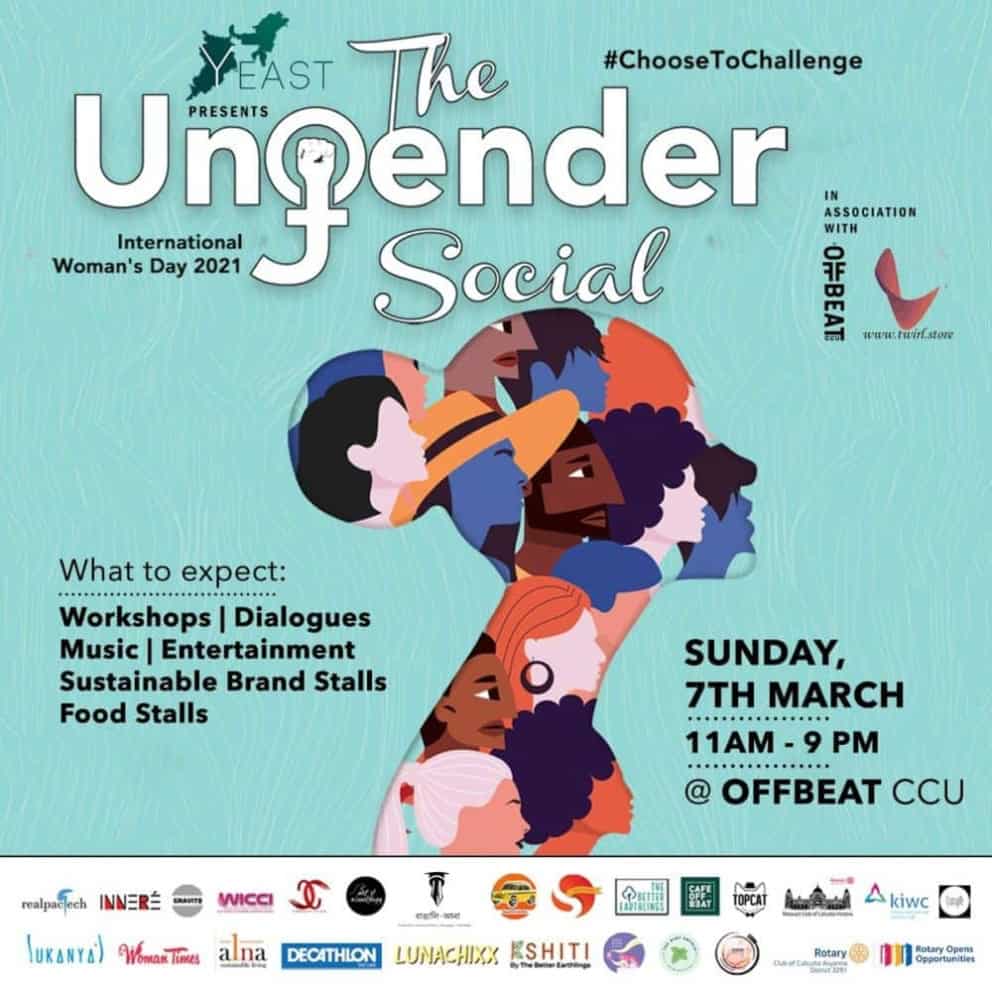
Most of the “Ungender Social” event will take place on site, but the round table will be broadcast live on the Y-East Facebook page from 4 p.m. IST (11:30 a.m. CET) on Sunday, March 7, 2021. Stay tuned!
To find out more about Y-East, click here.
1. Can you tell us about the path that led you to co-found Y-East?
When I finished my master's degree in sustainable development and social innovation in Paris, I was certain that I wanted to work in a high-impact field, in a geographical area where I would feel I could make a difference on a daily basis - and the opportunity to be based in Kolkata matched these professional ambitions exactly. On moving to the City of Joy, I adopted the position of an outside observer and quickly gathered some key observations:
1- By comparison, eastern and northeastern India were seen as underdeveloped regions, logistically difficult to access, struggling to retain talent, relatively unattractive to investment, barely visible when it came to business, entrepreneurship and impact success stories; ;
2- the social and environmental sustainability space (e.g. civil society organizations, social enterprises, etc.) was highly fragmented into a multitude of small organizations working in their own small pockets of expertise and beneficiaries, with only rare opportunities to connect and collaborate with each other and reach wider audiences. What's more, on the whole, sustainable development was not seen as an educational or corporate priority, and public awareness was lagging behind at the local level ;
3- The sector also suffered from a lack of unity and visibility on the map of local players, and found it hard to be taken seriously, particularly by government agencies or private companies. This most likely stems from a perceived lack of professionalism, the difficulty of implementing anything at scale, and the inability to “play in the big league” with large sums of money.
Despite all this, and in my opinion, Eastern India has a rare regional potential, being at the crossroads of several other countries, and having been one of the bastions of commerce and exceptional intellectual capacity in the past (this is still the case today, but unfortunately the region is suffering from a major brain drain). The concept of Y-East as a collaborative platform dedicated to all these organizations focused on sustainable development in Eastern India was born out of all these observations. Today, we are.., Y-East is the only aggregation platform in Eastern India bringing together professional organizations from the social and sustainability sectors, with a geographical focus on Eastern and North-Eastern India. Y-East's activities focus primarily on collaboration, networking, outreach opportunities for its members, educational and awareness-raising initiatives, impact research and studies. It currently brings together over 100 professional organizations, holds monthly professional meetings in Kolkata and Darjeeling, and has organized / supported around 100 multi-stakeholder programs since its inception in early 2019, with the firm belief that meaningful impact at scale cannot happen without a sincere intention to collaborate and join forces. In this way, Y-East is truly positioning itself as an embodiment of Sustainable Development Goal 17: Partnerships for the Goals.
Our next event, The Ungender Social, reflects this spirit of collaboration, involving over 30 local organizations.
2. What does International Women's Day mean to you (alternatively, what are your thoughts on IWD)?
Although I'm aware of all the inequalities that work to women's disadvantage, I think it's important for me to admit and remember that I haven't personally suffered as a woman - at least not in any significantly perceptible way. On the whole, I've had the privilege of evolving in an equitable environment that offered equal opportunities to both sexes, so I may lack depth and personal experience when addressing gender issues. That said, this privileged position has enabled me to develop a strong motivation to build environments in which all genders can flourish on an equal footing, with the firm conviction that gender does not and should not affect an individual's ability to reach their maximum potential and offer their talents to the world while having the choice and pride to simply be themselves. For me, it makes less and less sense to talk about men separately from women and vice versa. I think it's high time to “de-gender” the sexes, to stop thinking of them as separate categories. Equality, at the end of the day, calls on all of us to stop distinguishing “men” from “women”. Ultimately, it's our common humanity and, consequently, access to the same rights and opportunities that must prevail.
So I tend to hope that International Women's Day will soon become obsolete, because to a large extent it reinforces a dichotomous perception and dialogue, and doesn't include all genders. That said, in our transition to a world of equal opportunity and treatment, women - and all oppressed genders for that matter - certainly deserve to be celebrated a little more, and that's why I never fail to celebrate International Women's Day as it should be.
3. How does the Ungender Social event differ from other IWD events? Why should we choose to challenge gender prejudices and assumptions and build a society on models of equity and inclusion? (-> excerpt from event description)
We spent a lot of time conceptualizing the Ungender Social (in its name, visuals, activities, etc.) as an event that would begin to move away from the dichotomous narrative in the direction of a safe space without gender boundaries. To achieve this goal, we didn't emphasize “women” in the title, we didn't represent only women in the event's visuals, we didn't limit the audience to women only, and we didn't plan only activities traditionally associated with women. We see Ungender Social as an iconic annual event, and we plan to further enhance this inclusive narrative year on year. In a way, beyond choosing to challenge the gender status quo, we've also chosen to challenge the way we approach and talk about that status quo. Multiple actions and solutions need to be implemented to rectify the balance, and I see the way we talk about gender as an aspect of the issue that is often overlooked - and which can fuel the problem if we don't pay more attention to it.
The Ungender Social is therefore conceived as a multi-stakeholder platform for exchanging, learning and redefining the contours of gender as traditionally understood. We included sustainable women-led brands and food stalls; a series of roundtables to spark high-level discussions on gender in the arts, sports, technology, science, media and business; and a series of workshops ranging from self-defense to DJ-ing. Without the support of all our partners, and in particular Offbeat CCU, our ecosystem and partner in Kolkata, we wouldn't have been able to organize the event. Collaboration mode in action!