From April 6 to July 31, 2022, seven exhibitions on the theme of “Bifurcations” will be unveiled at the 12th Saint-Étienne International Design Biennial. One of them, “Le Monde, sinon rien, Pour un Bauhaus du Vivant” (The World, if not nothing, For a Living Bauhaus), mobilizes numerous researchers and students at the Learning Planet Institute.
“Since March 2020, France has turned the corner in record time”. Intended as an illustration of our different paths and as a demonstration of contemporary design issues, “Bifurcations”mobilizes many members of the Learning Planet Institute (students, designers, researchers and makers) around an exhibition : Le Monde, sinon rien, Pour un Bauhaus du Vivant.
An exhibition that resonates with LearningPlanet Institute's commitments: navigating between disciplines, learning by doing, making a commitment to the environment.
Echoing the Staatliches Bauhaus, a school created by the German architect, designer and urban planner Walter Gropius for artists and craftsmen capable of giving meaning to an era in turmoil, the exhibition Le Monde, sinon rien, Pour un Bauhaus du Vivant brings together artists and scientists to explore the upheavals brought about by the Anthropocene (the era in which human beings make lasting changes to their environment).
The exhibition, based on a network of schools and laboratories, resonates with the Learning Planet Institute, a third place at the crossroads of science, digital technology and learning, linked by environmental commitments.
“The Learning Planet Institute's involvement came from the idea of bringing scientists and designers together under the same principle of creative schools.” So it made sense for Sophie Pène, the exhibition's curator, to build bridges between the Institute and the Biennale. The Learning Planet Institute, armed with its desire to transform education through learning by doing and action, to enable everyone to act directly on their local and global environment. The former director of Master of AIRE d’Université Paris Cité, housed at the Learning Planet Institute, provided a space for the talents she met at the Institute to express themselves, in line with the Biennial's artistic ambitions.
Sophie Pène adds: “I'd like to take this opportunity to thank my co-commissioner, Benjamin Graindorge, designer, scenographer and teacher at’Esadse. I would also like to underline the confidence shown by Thierry Mandon, director of Cité du design, former Secretary of State for‘Higher Education and Research, in François Taddei and Learning Planet Institute teams to complement designers' approach to learning.”
FIVE TOTEMS TO HIGHLIGHT OPEN SOURCE AND INTERDISCIPLINARY PROJECTS BY RESEARCHERS, STUDENTS AND MAKERS
L’exhibition is divided into five major “totems”:
· Ghosts reminds us of the importance of the past and the legacies in which our explorations are rooted.
· Polyphony is the term used to describe the sensory life of a territory. There are sounds, songs and voices. Polysensoriality is the sign that living worlds cooperate in interdependence, emulation and, sometimes, tension.
- Bird songs for human(e) voices from Pauline Provini (UMR U1284, Université Paris Cité - Inserm, Learning Planet Institute) manufactures a device to give humans back their voices by studying how birds sing.
- MakerLab sensors by Adrien Husson, Joël Chevrier and Kevin Lhoste. For the past 10 years, at the Learning Planet Institute's MakerLab, all newcomers have been invited to use Movuino, an open-source motion sensor, as an introduction to the design of connected objects. Discover 3 years of research by Adrien Husson, designer-researcher, in the research team of Joël Chevrier, Professor of Physics (University of Grenoble and UMR 1284, Université Paris Cité - Inserm, Learning Planet Institute) and supported by Kévin Lhoste, researcher, maker and manager of the MakerLab.
- The Sensitive Pen by Ana Phelippeau and Adrien Husson takes up the design of the Bic® 4 Couleurs. Familiar and discreet, it incorporates a Movuino sensor, which records writing, hand posture and grip, and pressure on the lead. Sensitive Pen facilitates diagnosis of handwriting disorders in both children and adults. Neurology, design and making come together for lightweight solutions to health problems.
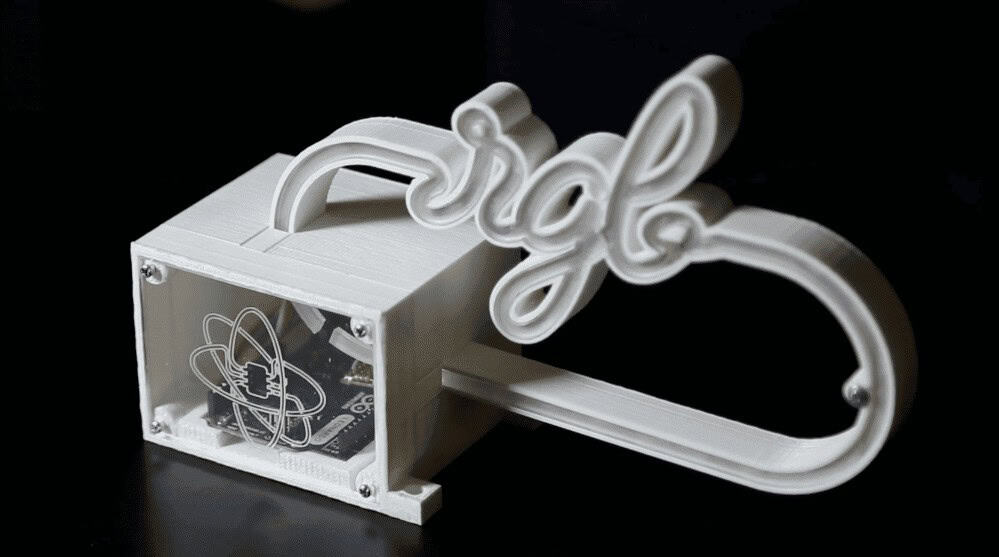
- The RGB lamp (Red-Green-Blue) from’Adrien Husson. A motion sensor controls the lamp's color changes. The user plays with movement-color synesthesia.
· Territory refers to the aesthetic, mental or physical space where and from which we live.
- Transbiome, Clara Lehenaff and Bastian Greshake Tzovaras. Trans women who undergo affirmative genital surgery have a new organ - the neovagina - with real gynecological needs. Indeed, every part of our bodies contains bacteria and fungi, which normally constitute a healthy ecology of microbes - our “microbiomes”. So the two researchers are studying what a “normal” microbiome is for a trans woman.
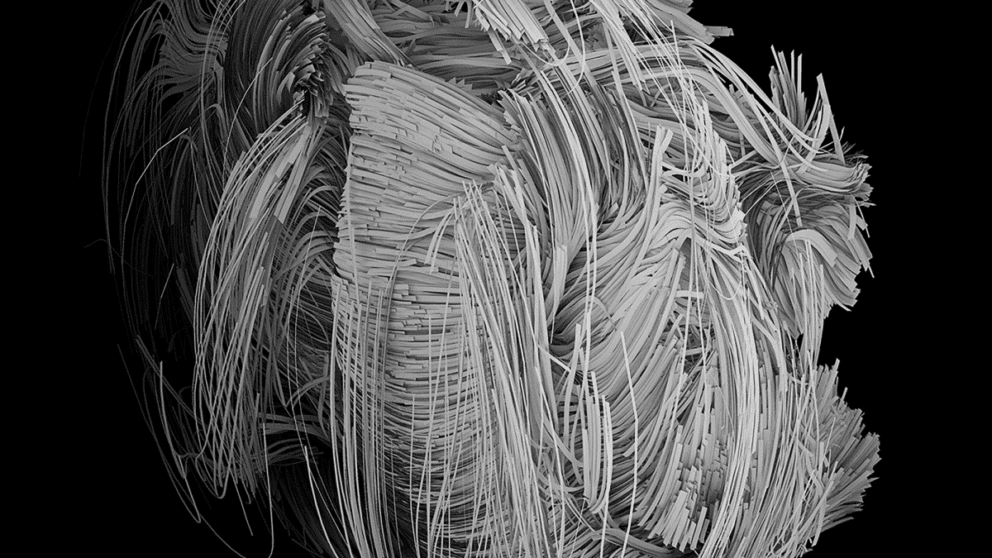
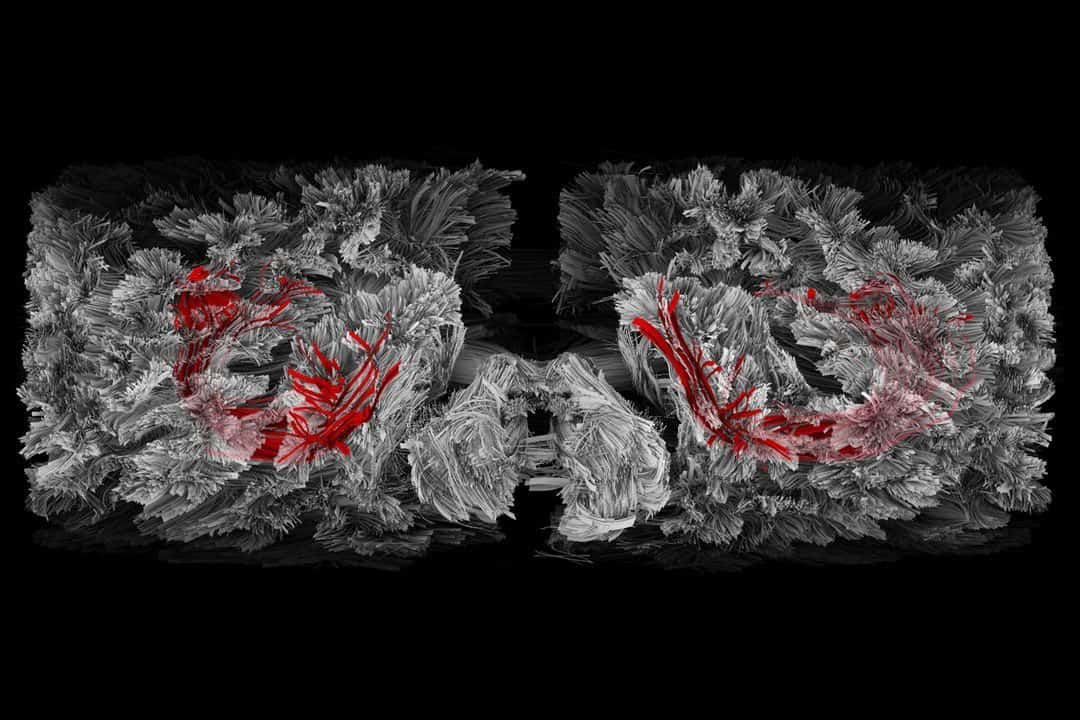
- The Brain Project, Katja Heuer and Roberto Toro and Vaibhav Sahu
The Brain Project illustrates an area of open science research, the open data of neuroanatomy. Brains (human or animal) are modeled by Katja Heuer and Roberto Toro (Pasteur, formerly UMR U1284, Université Paris Cité - Inserm, Learning Planet Institute) from millions of connections. Their doctoral student, Vaibhav Sahu (FIRE doctoral school, Université Paris Cité, Learning Planet Institute), has built an optical machine that enables visual analysis of layers of data. Contemporary research is transforming the way we think about organs.
· Survey evokes the creative work done in art and design schools and research laboratories, where everyone starts with a curiosity or a question, then leads an expedition in search of sources and analogies.
· Diplomacy reminds us that translation and accompaniment are a function of creative activity. This, above all, in a world in transformation, where some people - mostly the youngest - are picking up on alerts, traces and paths that not everyone else is yet aware of. The worlds revealed by young creators and researchers reveal possibilities that we, in turn, can sense and appropriate for our own intentions and projects.
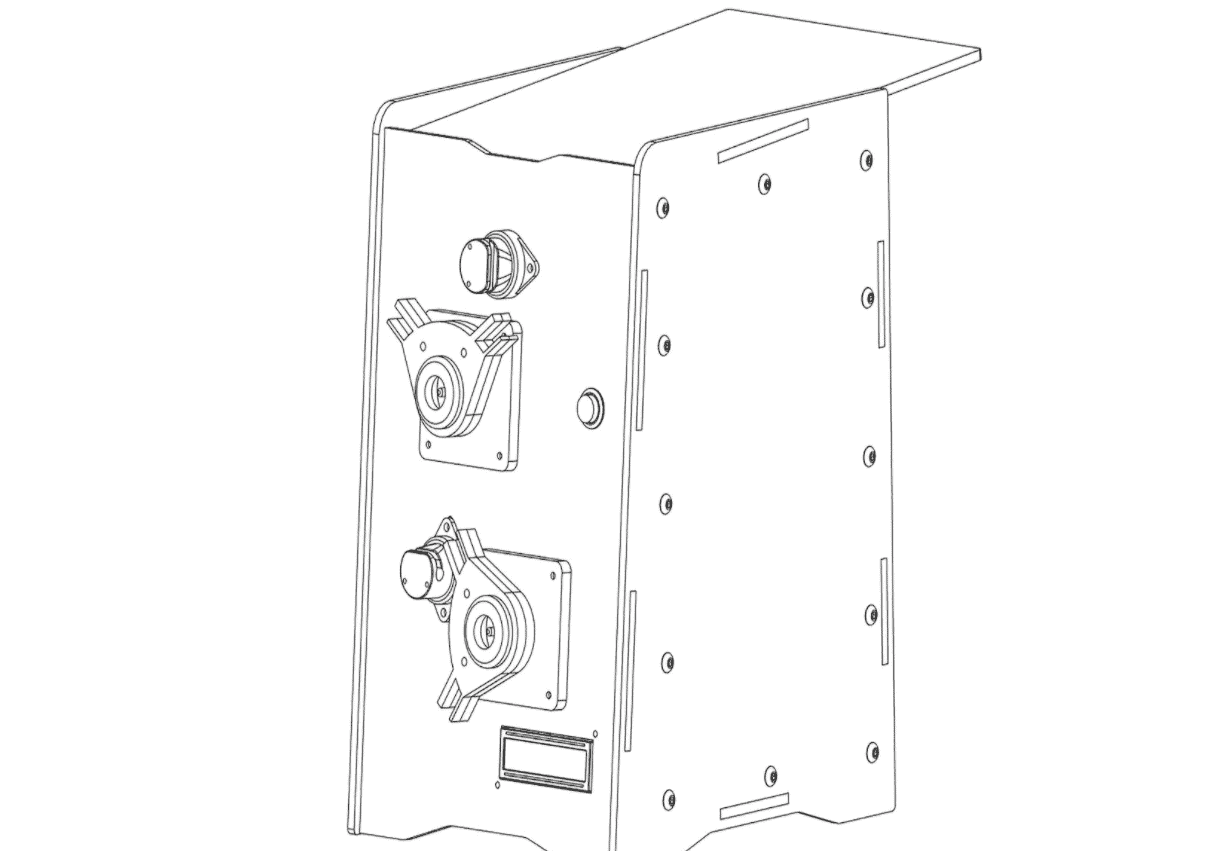
- Open Dialysis from Chetan Kumar Velumurugan (FIRE doctoral school, Université Paris Cité, Learning Planet Institute). Chronic kidney disease (CKD) kills 1.5 million people every year. Dialysis is an essential treatment. But dialysis machines are too expensive for many parts of the world. Open Dialysis is an open-source, low-cost dialysis system.
- The mosquito box, or Bitoscope by Félix Hol, biophysicist at the Institut Pasteur and UMR U1284 (Université Paris Cité - Inserm, Learning Planet Institute). This box analyzes the rationality of mosquito choices by observing their behaviors during a bite (wandering, exploring the skin, choosing where to pierce the skin). It's a simple device, made at low cost at MakerLab by Félix Hol with Kevin Lhoste.
- Stress Detection by Rajeev Mylapalli (FIRE doctoral school, Université Paris Cité, Learning Planet Institute). It's a prototype for self-monitoring stress levels: two batteries, an Arduino board, a Movuino sensor and a wristwatch printed at MakerLab.
Note that Marion Voillot (FIRE doctoral school, Université Paris Cité, Learning Planet Institute, IRCAM-STMS and ENSCI-Les Ateliers) will also be running a workshop as part of the Biennial, on Wednesday April 13, on the theme of CoMo.education, developed within the’IRCAM is designed for kindergarten teachers and students to tell stories with sound and movement. The aim of this workshop is to raise awareness among education professionals of the need to integrate digital technology into their teaching practices.
“Le Monde, sinon rien” facilitates and initiates a virtual school of re-creation by networking schools, laboratories and workshops from different disciplinary fields. Students come to anchor themselves in a state of the world and affirm their ability to redesign the objects of the world for human and non-human, living and non-living beings..” A determination not unlike that of the Learning Planet Institute, proud to see so many talents and projects showcased at this 12th International Design Biennial in St Etienne.
Practical information
April 6 to July 31
Location
Cité du design
Building H
3 rue Javelin Pagnon
42000 Saint-Étienne
Opening hours
Tuesday to Sunday, 10 am - 6 pm
Saturday, 10am - 8pm
Police station
Benjamin Graindorge - Saint-Étienne School of Art and Design
Sophie Pène - Learning Planet Institute
Links
Biennale website
Le Monde, sinon rien, Pour un Bauhaus du Vivant“ exhibition website”