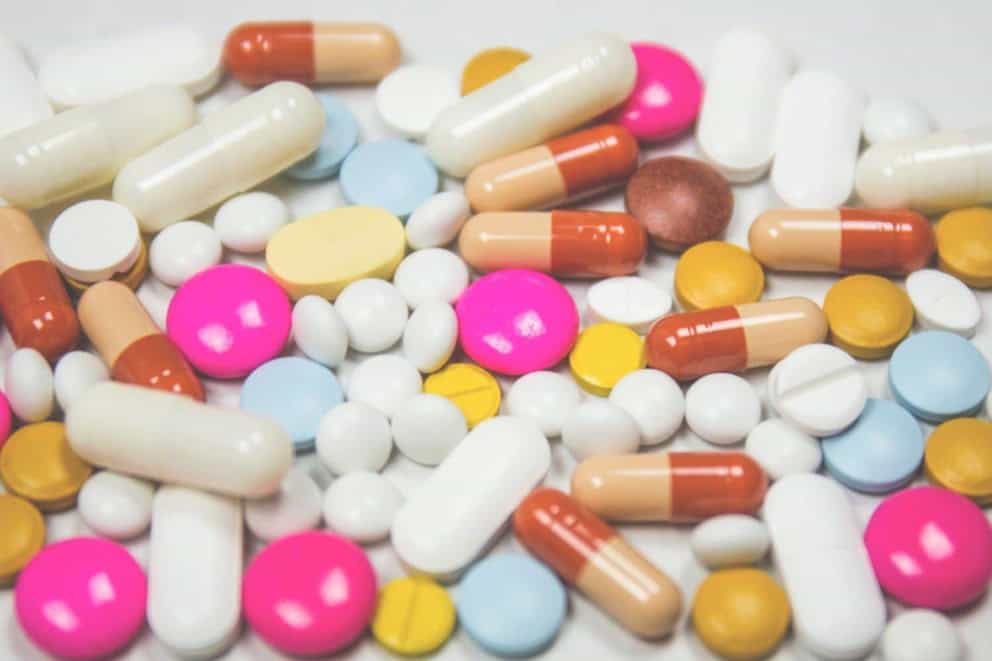
Introduced in the 1940s with the launch of penicillin, antibiotics are a class of drugs used to treat bacterial infections. Over a hundred of them were developed in the second half of the 20th century, and have become a miracle of modern medicine. Today, they are the most widely used class of drugs in medicine. We rely on antibiotics to treat many infections, such as urinary tract infections, strep throat and certain types of pneumonia. However, there are a number of risks, , Even before antibiotics were on the market, scientists had observed that antibiotic resistance could occur. In 1945, the year he was awarded the Nobel Prize for his discovery of penicillin, Alexander Fleming warned: “... that antibiotic resistance is a very real problem.“There is a danger that ignorant people can easily give themselves an insufficient dose and, by exposing their microbes to non-lethal quantities of the drug, make them resistant to it.” Resistance to antibiotics has appeared rapidly, leading to the emergence of multi-resistant bacteria., also known as superbugs. In general, only certain bacteria spontaneously mutate their genes to become drug-resistant, but these germs are at a disadvantage in the absence of antibiotics. If people take low doses of antibiotics, the non-resistant bacteria are killed off, while the few mutants that are resistant can survive. They would then multiply and take over.
In 2014, the World Health Organization (WHO) published its first global report on antimicrobial resistance, which reveals that “this serious threat is no longer a prediction for the future; it is already manifesting itself in every region of the world, and can affect anyone, at any age, in any country” Experts warned that we were approaching a “post-antibiotic zone” in which common infections and minor injuries would once again be fatal.
While antibiotic resistance occurs naturally, overuse of antibiotics accelerates the process. Overuse of antibiotics is a case in point. As antibiotics only treat bacterial infections, taking an antibiotic for a viral sore throat is not effective and can create bacteria that are harder to kill. Visit Center for Disease Control and Prevention (CDC) estimates that at least a third of all antibiotic prescriptions are unnecessary. Another phenomenon that promotes antibiotic resistance is under-dosing, which occurs when treatment is interrupted before the prescription is complete. Abuse also occurs in animals, particularly on factory farms where farmers administer antibiotics to prevent disease and stimulate growth. Resistant bacteria then spread and can be transmitted to humans through the food chain.
In France, a national plan to preserve the effectiveness of antibiotics was drawn up in 2000. Despite a public awareness campaign, antibiotic consumption levels remain high. According to the WHO, antibiotic resistance is one of the greatest threats to global health, food security and development today.. As antibiotics lose their effectiveness, a growing number of infections, such as pneumonia, gonorrhea, tuberculosis and salmonellosis, become more difficult to treat.
Tuberculosis, a re-emerging disease
For a long time, tuberculosis was difficult to treat, but antibiotics were a major breakthrough and mortality rates fell in the second half of the 20th century. Many people believe that tuberculosis is a disease of the past, but it has never been completely eradicated. Worse still, it has reappeared in drug-resistant forms.
Tuberculosis has been infecting humans for many centuries, and was once called phthisis in ancient Greece or scofula in the Middle Ages. This infectious disease usually affects the lungs, but can also affect other parts of the body. Common symptoms of active pulmonary tuberculosis include cough with sputum and blood, chest pain, weight loss and fever. The bacterium responsible, discovered by Robert Koch in 1882, is called Mycobacterium tuberculosis. Today, a combination of antibiotics is used to treat tuberculosis, and the full course of treatment takes several months. The causes of drug-resistant tuberculosis include incomplete or irregular treatment, incorrect treatment or poor-quality medication. The prevalence of tuberculosis has now reached such alarming levels that the WHO has declared it a global health emergency.. As the disease becomes increasingly difficult to cure, there is an urgent need to improve our understanding of drug-resistant tuberculosis, to improve tuberculosis diagnosis and to identify new drugs effective against resistant bacteria.
At CRI, this health challenge involves 2 interdisciplinary teams at the intersection of teaching and open research. These teams are working on projects aimed at combating antibiotic resistance and drug-resistant tuberculosis, as well as improving our knowledge and involving citizens.
New weapons for drug discovery
Despite major advances in drug research technology, the development of effective antibiotics remains a long, complex and costly process. New antibiotics have been rare over the past 30 years. At CRI, the House of Transgenes works on open science technology to simplify the drug discovery process. “There are a lot of people with tuberculosis, but few of them have money to spend on treatment. And because it's so difficult to develop new drugs, pharmaceutical companies aren't investing in the development of new TB treatments.”, explains Jake Wintermute. This long-time fellow, who loves his passion for transgenics, is excited by the prospect of a future in which biology and biotechnology will play a more direct role in our daily lives. He left the USA eight years ago to work as a post-doctoral fellow with Ariel Lindner, co-founder and research director of CRI. Back then, CRI didn't exist in the form we know it today. It was essentially ”a ‘a simple broom cupboard at the end of a dirty corridor at Cochin Hospital “as he puts it. While CRI has grown over the years to become “an institute with impact”, Jake Wintermute has developed his research into synthetic biology, working on the biology of aging and metabolism. The idea of’using genetic engineering to find new ways of treating tuberculosis came about in 2013, when he mentored a team of students taking part in the International Genetically Engineered Machines (iGEM) competition. In addition to winning first prize, the students“ project evolved into Jake Wintermute's grant proposal. "He a was entirely inspired by them. It was born out of the students” natural passion for helping people and solving problems such as finding drugs for tuberculosis. And it works. Thanks to them, we are able to demonstrate the basic concept of the system".
The team is now working on a a safe model for making drug discovery cheaper and faster. Currently, the standard method for discovering a new tuberculosis drug is to culture the tuberculosis bacterium.(Mycobacterium tuberculosis) and test new drugs directly on it. This method is expensive, firstly because tuberculosis bacteria are dangerous and require a lot of expensive equipment to handle safely, and secondly because tuberculosis bacteria grow very slowly. It takes around 14 days to carry out an experiment on tuberculosis bacteria. The team House of transgenes has therefore chosen a different approach. It transfers the tuberculosis genes into another bacterium, Escherichia coli (also known as’E. coli), so that drug discoveries can be made directly on the skin. E. coli. Thanks to this method, scientists never manipulate real tuberculosis and never have to get close to it. Even the genes they use do not come directly from the tuberculosis bacterium. They only use the information contained in the tuberculosis genome database, and the genes are chemically synthesized, then sent to them by mail. “ Instead of testing drugs on a very dangerous and pathogenic bacterium, we can find new drugs using modified E. coli, a harmless laboratory bacterium that grows faster.”, explains researcher Nadine Bongaerts, who joined the team four years ago. The construct she developed during her PhD is called TESEC, for “Target-Essential Surrogate E. coli”strains. The long-term vision is of an easy-to-use toolbox, capable of conveying drug discovery technologies, designed to be reproduced and enriched by scientific communities worldwide. As Jake Wintermute says, Many people want to take part in the drug discovery process, but they don't have access to the right facilities. If we can make this technology very cheap, very fast and totally safe, we can tap into their enthusiasm and enable them to participate. The image that comes to mind is that of a medical or biology student, whether in high school or university, just learning the basics of interacting with microbes. Why not design a course for this person in which he or she performs a tuberculosis screening using our toolbox?
The researcher has also created a free online course entitled “Synthetic Biology 1”. This course is aimed at anyone interested in “the art and science of designing DNA sequences for living cells”. If you follow the lessons, you can learn how to make yogurt, for example. Along the way, you'll learn how to cultivate, feed and care for bacteria. And “it's something you can do at home, in your kitchen, without any prior training in biology”It's part of his vision of make science more accessible, outside the academic community or the traditional biotech industry. He explains that synthetic biology is also an opportunity to have a direct impact on real-world problems in the future. “TheToday, biological engineering is in a similar situation to that of electronic engineering in the 1960s and 70s. Back then, there were very important innovations in the field of computing: cheap electronics that were widely available, free software that could be shared. This enabled the field of computing to develop very rapidly, from an expensive field reserved for a small number of specialized groups to a less expensive field spread throughout the world. We therefore believe that biology is in a similar situation today, because biology is becoming much easier to design, and DNA has become much cheaper to edit or synthesize. Our understanding of biology is evolving to the point where we can begin to make changes in a living system whose results are predictable.”
Synthetic biology has enabled the team to develop its open scientific tool. Initially, they focused the project on tuberculosis drug discovery, but the TESEC toolbox could be applied to any pathogen. As Nadine Bongaerts explains, “people can easily, like lego bricks, take certain parts and make other combinations. It's a community toolbox that everyone can share, but also build on their own”.
Combating the emergence of antimicrobial resistance
Although preventable and treatable, tuberculosis has become a major threat to global health. “If we look at the incidence of drug-resistant tuberculosis worldwide, we can't find a single country on the map that doesn't have a reported case. This means that it is more or less a global problem”, explains Anshu Bhardwaj, long-term research manager. She has been working on tuberculosis for ten years, driven by a desire to contribute to public health. A year ago, she combined her experience in crowdsourcing and genomics with IRC's interdisciplinary approach. Her team's objective AB-Open lab is meet the challenge of antimicrobial resistance using genomics and artificial intelligence tools. Le global action plan adopted by the World Health Assembly, defines five objectives for combating antimicrobial resistance. The first two aim to improve knowledge through surveillance and research, while raising awareness of antimicrobial resistance through communication and training.
In the case of tuberculosis, one of the challenges is to identify infections caused by non-tuberculous mycobacteria (NTM). NTMs are a class of 180 different species naturally present in the environment. They live in water or soil and can infect humans or animals. Clinically, they are very similar to tuberculosis. Symptoms include cough, fever, shortness of breath, weight loss or lack of appetite, feelings of fatigue... As the presentation of the disease is similar to that of tuberculosis, it is essential to know the NTM species and their drug resistance profiles in order to prescribe appropriate treatment.
Today, tuberculosis diagnosis has been improved because clinicians use a precise method to identify Mycobacterium tuberculosis, based on unique fragments of the bacterial genome. The same markers are not yet known or established for DTMs. “When you ask clinicians what they actually do for diagnosis, you realize that only a few laboratories are currently attempting to characterize NTMs,” explains Anshu Bhardwaj Explains Anshu Bhardwaj. She adds that the treatment of NTM infections is still empirical. “The drugs we give to a TB patient are the same as those we give to an NCD patient. But in the case of TB, we have a fixed regimen, so we know which drug and which combination is given for how long. There's no global standard for NTM infections that everyone follows, so clinicians try to mix and match. We see how the patient reacts and keep changing treatments. The problem is that if you don't match the right antibiotic to the right pathogen, instead of curing the patient, you're actually helping to increase resistance.”
Consequently, the aim of her project at CRI is to ‘”identify markers that we can use to determine whether it's tuberculosis or NTM. Then, if it's a NTM, which one, and once you know which one, can you tell whether or not that particular species or strain will respond to antibiotic X Y Z but may respond to A B and C?”
Rania Assab, a postdoctoral researcher at AB-openlab, is working on a calculation software to better delimit DTM species: “We compare the sequences of entire NTM genomes and work on identifying commonalities or unique fragments. Beyond these genes, which ones are signatures of resistance to a particular antibiotic?” Among DTM species, they work in particular on Mycobacterium abscessus. It is the most pathogenic germ and the most resistant to drugs, which is why scientists have dubbed it “incurable nightmare“. This mycobacterium has intrinsic and acquired resistance to commonly used antibiotics, limiting treatment options for infections.
The project is crowdfunded, as the researchers work in close collaboration with partners from all over the world. They want feedback from the community at the interface between patients and protocol development. “Drug discoveries are usually made in a very confidential environment. So when things fail, we never know why they fail. Even when things succeed, only the results are shared, but not the process. There are a lot of gaps in learning, so we thought: why not make the process open to everyone's participation? Anshu Bhardwaj explains: “We're setting up reference laboratories for the algorithms we develop. They can test them in the clinic, and if they work, they can use them. And if they don't, they can give us feedback on how to improve them. We don't do this work in isolation”.”
Another part of the work focuses on education. Since antimicrobial resistance is a complex concept to communicate, the idea was to start by educating children and teenagers. That's why AB-openlab post-doctoral researcher Raphaël Goujet is developing a game application for understanding the concept and challenges of antimicrobial resistance: “It's not just about learning something. It won't be an educational game where you have to memorize things, this game is designed to encourage people to use antibiotics wisely.”. The first prototype is already available, with 9 levels of play. “We are introducing concepts that are not very easy to communicate”, explains Anshu Bhardwaj. “For example, if we look at behavior, when a doctor prescribes a regimen of antibiotics for 5 days, many people don't finish it because they feel fine after 3 days. Another example: at home, someone else is ill and the doctor prescribes an antibiotic. A week later, I fall ill and it could be the same infection. So I prescribe antibiotics to myself. All these practices are wrong and lead to the misuse of antibiotics. The game is strategic: if you don't kill the right pathogen with the right antibiotic, more resistant pathogens will appear, and you'll lose the game. If you don't administer the right number of doses of antibiotics, the pathogen will come back. To win, the player must correctly understand how antibiotics work. A chatbot is being developed in parallel using the power of artificial intelligence, and will be integrated into the game. It will advise the player and give specific details on the different pathogens, their life cycle, symptoms and treatments... For Anshu Bhardwaj, this project was made possible by the unique environment of the CRI, which fosters interdisciplinarity thanks to numerous collaborations:“It allows me to integrate different skills easily. It allows someone like me, who is a biologist, to work with someone who did his PhD in game design.”.