
The world has gone digital, in a version that is fast, precise, high-performance and inescapably present. The current health crisis has reinforced its presence in our daily lives, whether professional or personal. During the containment period, it revealed a number of positive aspects. We've been able to stay in touch with geographically distant relatives; many students have been able to continue their studies thanks to campuses that have gone digital; and, thanks to teleworking, which has earned its spurs, many business sectors have been able to continue their missions. Nevertheless, this technology is materialized in hard objects that impose their shape and volume on us, change our relationship to the world, erect a screen between reality and ourselves, and ultimately enclose our bodies.
The MotionLab teams, under the direction of Prof. Joel Chevrier, take an interdisciplinary approach to studying the links between movement, education and digital technology. Their initial approach is based on digital technology: we are surrounded by sensors in our smartphones and other everyday connected objects, the usefulness of which we don't always realize. In particular, the research team is studying the impact of our movements on our learning. Their hypothesis is that the mind learns better when the body is engaged.
Through Soft Mirror, Claire Eliot takes us into a disruptive approach to our relationship with ourselves, others and the world.
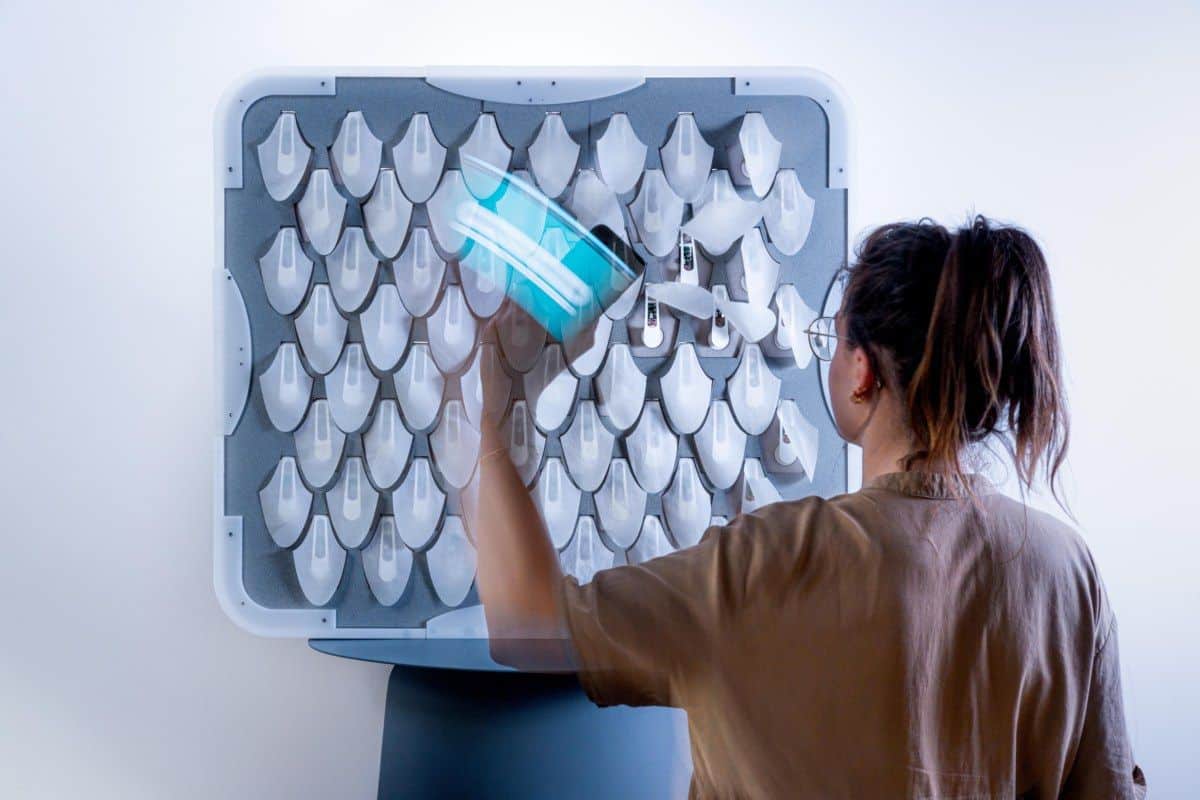
A teacher, researcher and e-textile designer, she works on the integration of technological systems (thread, spool, motors, sensors, etc.) embedded in textiles. With a keen interest in learning, the designer imagines new functionalities enabled by the properties of flexible materials. She maintains an ongoing interdisciplinary dialogue with the world of design and craftsmanship. While traditional know-how and technological innovation are nowadays opposed, her work seeks, on the contrary, to weave new links between tradition and modernity by embodying the notion of ’digital craftsmanship”.
In his projects, textile is an interactive medium that opens up new perspectives for interfacing and communicating between the body and its environment.
Exhibited at Design Designer, Soft Mirror is a creation composed of a wall of petals, each one embroidered on a stretched fabric. This soft, supple, close, moving textile incorporates technology that is discreet, modest and almost invisible. These non-metallic, reflection-free mirrors, composed of e-tissue, are capable of kinetic interaction with the observer, via a smartphone, which in a way forces him to question his relationship to the digital, to himself and to others.
Hitbox, by’Adrien Husson invites us to (re-)discover our bodies through movement.
Arts et Métiers engineer, designer, teacher and researcher, Adrien Husson develops projects combining movement, education and digital technology. The applications of the prototypes imagined and designed by Adrien range from post-traumatic rehabilitation to sports training, and follow on from personal projects relating to movement training in boxing and digital art.
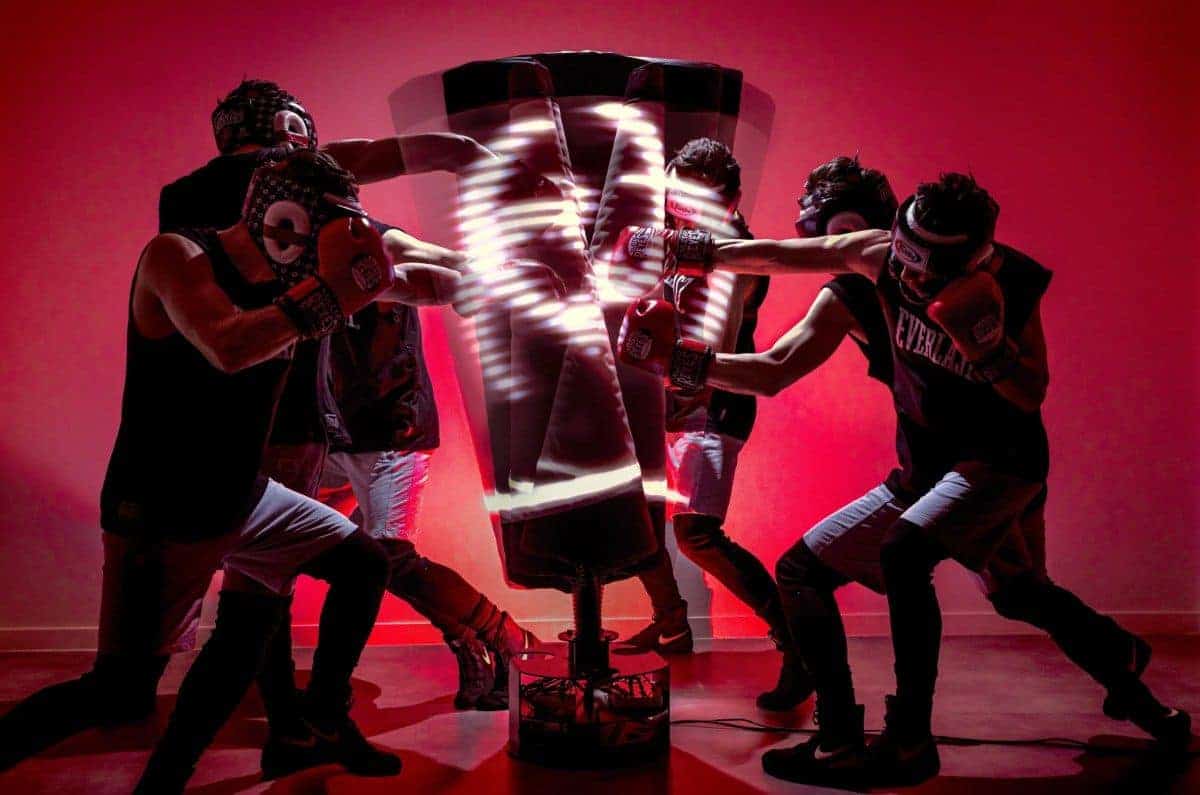
Hitbox, is an interactive punching bag. This device is both a training device and a fun tool, but much more than that, it's a data collection interface that enables researchers to study the impact of digital technology on sporting practices and their enhancement: stimulating and monitoring effort, developing new sporting practices and integrating them into athletes' ecosystems, and so on. These punching bags enable a group experience to be developed around the learning of boxing and the mobility it implies.
To discover Claire and Adrien's creations, go to Lille, Capital of Design, until November 15, 2020.