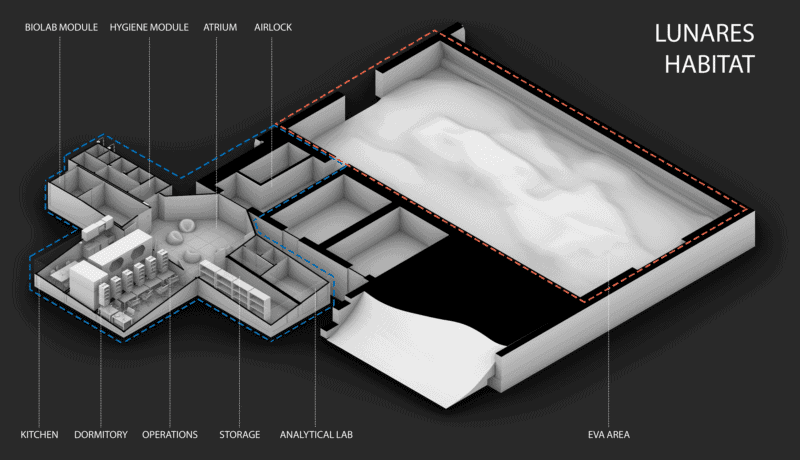
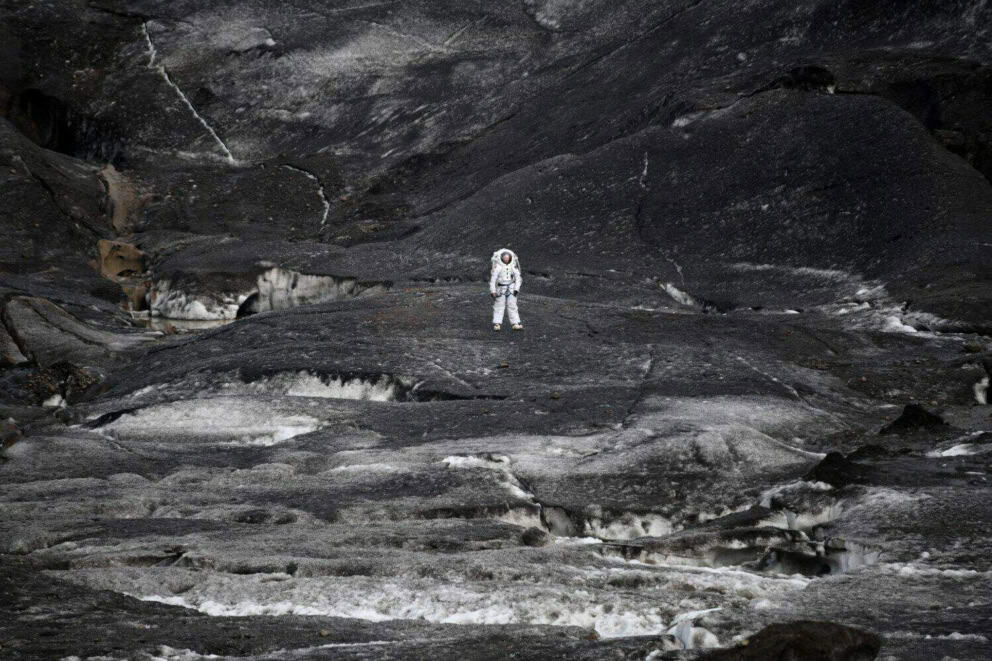
On Thursday February 11, as part of the Défis Savanturiers program, explorer and astronaut Benjamin Pothier was on hand to take us on a tour of the Lunares base., which simulates living conditions on the Moon, and answer questions from students from kindergarten to high school.
DIRECTION BASE LUNARES!
Since January 13, scientists have been working with us to devise challenges for children and teenagers.
During the fourth challenge, the students met Benjamin Pothier, astronaut-analogue and commander of the “Lunares 11 Orpheus” mission, which is taking place at the base. Lunares. The mission will involve six astronauts living together for 15 days in a reproduction lunar habitat in Poland. This small international community will experiment with living conditions on the Moon, working together on extravehicular missions while remaining isolated from the rest of the world.
As part of the Défis Savanturiers program, the astronaut gave us a live tour of his new home and answered the students' many questions:
“Is the Moon made of stone? ?
- Have you ever seen a black hole?
– What do we eat on the Moon?
– Is it hot on Mars? ”
CONFINEMENT IN SPACE
Benjamin Pothier explained to the students that their experience of confinement was not far removed from the training astronauts undergo to learn to live in isolation on a space station. The students took the opportunity to ask questions that they could directly transpose to their own experience.
“WHAT IS THE IMPACT OF CONFINEMENT ON THE BODY AND PSYCHOLOGICALLY?”
The astronaut explained that part of his brain, more specifically the hippocampus, would be studied to see how it evolved during a period of confinement. The hippocampus plays a fundamental role in learning and memory. As such, its atrophy can have psychological effects. He also suggested that students consider the question of how deprivation of sunlight for 15 days will inevitably lead to vitamin D deficiency.
“WHAT WAYS DO YOU USE TO KEEP FROM GETTING DEPRESSED DURING A LOCKDOWN?”
The commander told them that the whole team had very precise mission orders, describing everything they had to do, every hour, for 15 days. “Planning your life gives you control”. He then turns to the question of cohabitation, essential to space travel and confinement: “Living with several people requires a great deal of adaptability, as everyone has seen in France. It requires a great deal of preparation.”
At the students' request, Benjamin Pothier recounts his experience of leaving a base after being isolated there, a response that resonates with us all: “Going out after a confinement is like going from a Youtube video to an HD movie. You've forgotten the smell of the rain, the trees, the colors. Your field of perception has narrowed, and all of a sudden it's like taking off your sunglasses and rediscovering the feeling of life outside, and it's a pretty magnificent moment. You see as if through the eyes of a child discovering something.”
If today six astronauts are isolated in Poland, it's because Mars is on everyone's mind!
“Going to Mars implies that 4 people will live together, isolated, for 2 or 3 years. All these issues of cohabitation and confinement are important questions when preparing missions to Mars.”
SO YOU'RE ALL SET TO TRAVEL TO MARS!
Interested in the Savanturiers Challenges? Come and take a look at our topics !