François Taddei, director of’Learning Planet Institute, researcher at INSERM, professor at’University of Paris, next book Game Changing: Together Solving the Challenges of our Time, to be published in January 2022 by Calmann-Lévy
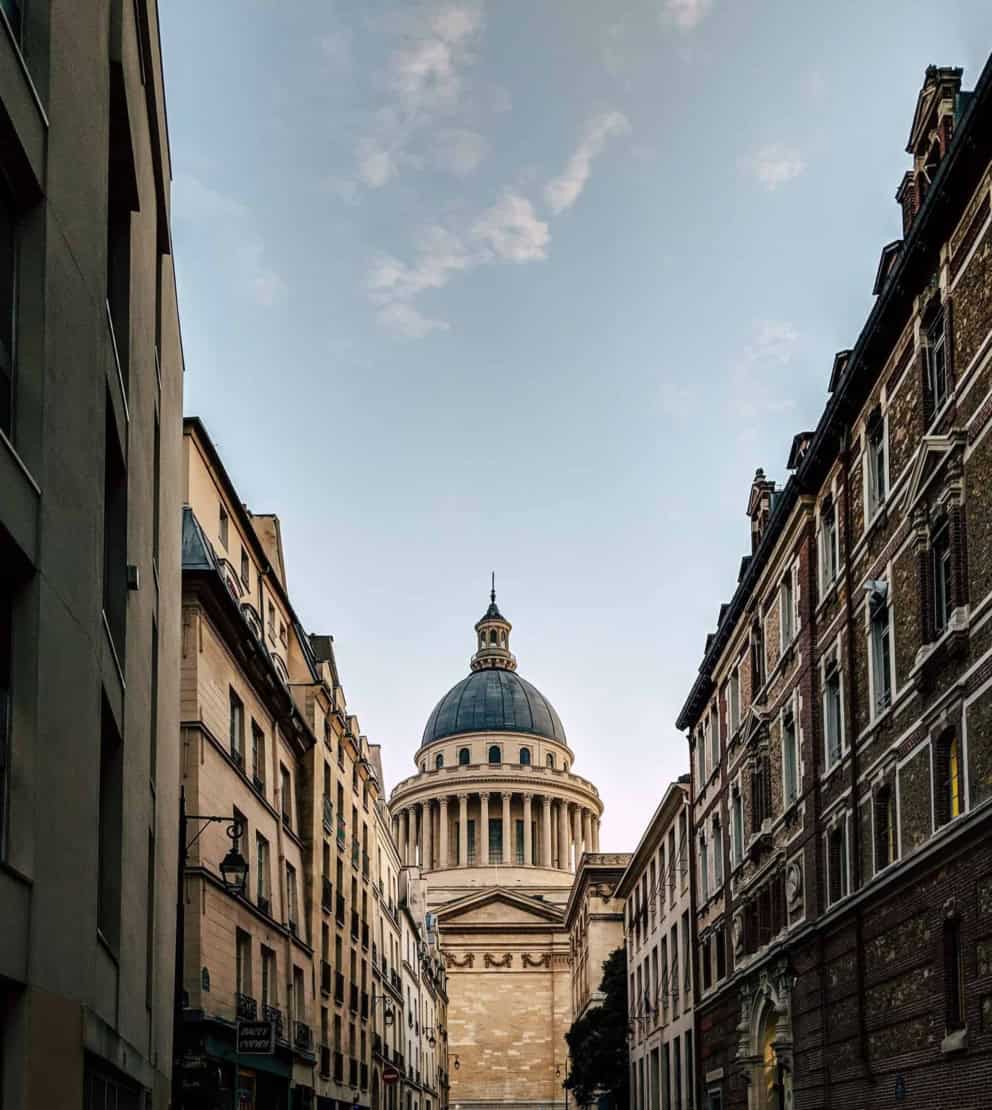
Anyone who's been to Paris probably hasn't missed the Pantheon, a large neoclassical building with a dome overlooking a hill in the Latin Quarter. The inscription above the portico reads ” At great men the homeland recognizesante”. This is the only indication that the building's crypt houses a national mausoleum containing the remains of some of France's greatest scientists, military commanders, writers, activists and thinkers since the Age of Enlightenment. Today, the official transfer of the remains of Josephine Baker, the sixth woman to enter the Pantheon and the first black woman in history, reminds us once again of how outdated and inappropriate this inscription is.
The ancient Greek pantheon was a collection of the principal gods. Revolutionary France, newly emboldened after taking the Bastille and guillotining the monarchs, wanted to erect a physical pantheon to honor the secular equivalent of its gods, i.e. the great thinkers of the day. To paraphrase Hegel, who was a young man during the French Revolution, you make history when you are the first to formulate something that humanity needs but doesn't yet know. Josephine Baker was not only a world-class artist, but also a fearless agent of the French Resistance during the Second World War and a leading voice for racial harmony. Each time another figure is reburied in the Pantheon, the power of collective memory grows and our sense of Enlightenment identity is renewed.
But who decides who belongs in the Pantheon? The short answer is the French president, but the political mood of the moment plays an important role, meaning that presidents make the decision according to the pressure exerted by society. Exhuming a person's body to place it in a national mausoleum cannot be taken lightly, and in French politics there is perhaps no more presidential act than the one you can perform while in office, because the political message is second to none.
The remains of Joséphine Baker now rests in the Pantheon. Her political message is one of art, inclusion and liberation. She will be the sixth woman to be laid to rest in the Panthéon, 26 years after the first woman, Marie Curie, was inducted - that's six women for every 70 men.
Heroes of all genders
This ratio of around 14 to 1 shows how unrealistic it is to expect a tradition born before Napoleon became Napoleon to keep pace with the modern age. Nevertheless, it's important to talk about the great figures who inspire us, and I'm not talking about the national level, but about our personal lives. In French, it's becoming increasingly common to speak of such and such a person as being part of one's “personal pantheon”, i.e. someone who has marked one's life and changed one's way of thinking. This person is not necessarily deceased, and while the name of a pantheon member rarely elicits total consensus from the audience, it always elicits a good dose of repartee about culture and ideas. Whereas the neoclassical Pantheon stands in bricks and mortar atop a hill, I find the personal Pantheon more concrete and even more democratic.
The fact is, the number of heroes who, in our time, serve the common good and face adversity with generosity is well over 76. What's more, nothing could be further from their spirit than to be honored in a national mausoleum. Perhaps you're familiar with the Israeli honorary title of “Righteous Among the Nations”, reserved for non-Jews who risked their lives during the Holocaust to protect Jews from extermination. Nicolas Winton was one of them, nicknamed the “British Schindler” for saving 669 children, most of them Jewish, the night before the Nazi invasion of Czechoslovakia. He didn't like to talk about it much while he was alive. “There are all sorts of things you don't talk about, even in the family,” he once declared. “Everything that happened before the war didn't seem important in the light of the war itself.
Winton passed away in 2015, but he certainly wasn't the last of his kind. Martin Maindiaux is another intrepid, selfless individual in Winton's vein. He runs the non-profit organization Enfants du Mékong in Southeast Asia, which raises funds to build schools and finance sustainable development projects for impoverished children and communities along the Mekong River. In 1992, Dominique Pace also co-founded the non-profit organization Biblionef, which operates in over 90 countries, providing free books to underprivileged children in slums and rural areas. Frédérique Bedos is another, who founded the Imagine Project to help create professional-quality documentaries for high-impact, low-budget initiatives that deserve more visibility than they can afford. Their work raises the profile of people like Sister Ventura, a Mexican Sister of Charity who, for thirty years, has been working with the pygmy populations of northern Congo, whose survival is threatened by the country's rapid urban development.
Another altruistic filmmaker is Flore Vasseur, whose documentary Bigger Than Us follows young people from different countries around the world as they go beyond the ordinary to carry out local justice initiatives. The film's website is far from being a free promotional tool, but rather offers visitors the chance to connect with the initiatives featured in the film and become part of a global community of activists. Memory Banda, a young Malawian woman, is one of the film's many heroines. At the age of 22, she defied her community's local custom of raping pubescent girls to initiate them into womanhood, getting her country to ban the practice and even raise the age of consent to 18. If you think you're too small to start a revolution in your own community, watch Derek Siver's TED Talk on how to start a movement and you'll see that it's easier than you think to change the landscape and shape the future.
Sharing stories
Whether it's Memory's story or Winton's, they inspire us because their work goes beyond their immediate geographical and political context to say something bigger about humanity - that in the face of so much evil, when the smallest among us pull our heads out of the sand, revolutions can happen. National mausoleums are fine, but it's important that we have a living pantheon in our hearts that we can share with those around us. It's worth remembering here that, unlike the Greek pantheon, ours are secular pantheons of human beings whose work and lives can and must be examined with the utmost care. Infallibility has no place in a democracy.
People like to research their genetic ancestors. Building a personal pantheon is a way of tracing your intellectual ancestry, understanding where your mind and attitudes come from, and on whose shoulders you stand to see further than they ever could. Take time to reflect on these figures in private, but your personal pantheon should in any case be shared and celebrated with the communities of which you are a part, and these communities may even build their own pantheons. Religions have temples and relics dedicated to holy figures, sports teams have memorials and hall of fame for great players; we need our own spaces and occasions to celebrate the great figures in our own lives.
The United Nations has perhaps indirectly given us the opportunity to do just that, with its days dedicated to celebrating social values. The one you're probably most familiar with is March 8, International Women's Day, but there are nearly 200 others, all of which are opportunities to come together and build communities around different themes. The most recent is Universal Children's Day, which took place on20 November.Le 20 March is the International Day of Happiness, an opportunity not only to be happy, but also to celebrate the people who make you happy. Most of these days of celebration come and go unnoticed because no official celebrations are organized around them, but we can make these days of awareness our own by celebrating people in our pantheon, people who have pushed us to dream bigger, to make a difference, to help the disenfranchised, to be a voice for the voiceless, to build communities, to launch movements, and so on. As France celebrates the first black woman put in the Pantheon, it's important to remember that naming who's in your pantheon isn't just an icebreaker in conversation; it's a statement of your politics and intellectual legacy.
To start building your own pantheon, why not join a collaborative online pantheon where people come together to celebrate the personalities who inspire them? Visit The site linked to above is an online space. where you can build a pantheon with a positive online community, and because it's built by the many, it can only be mutually enriching for you and the others involved. We're still looking for an entry for this pantheon, so what do you think of the following options:
“Grateful citizens of the world pay tribute to those who have pushed back the boundaries of the possible”
“A grateful human race honors its greatest minds”.”
“A grateful planet pays tribute to its collective intelligence
Click on this link to vote for one of these options or make another suggestion in the text box at the bottom of the linked page.
Find out more about this topic:
Jacqueline Novogratz - Inspiring a life of immersion
This article was published by The Conversation.