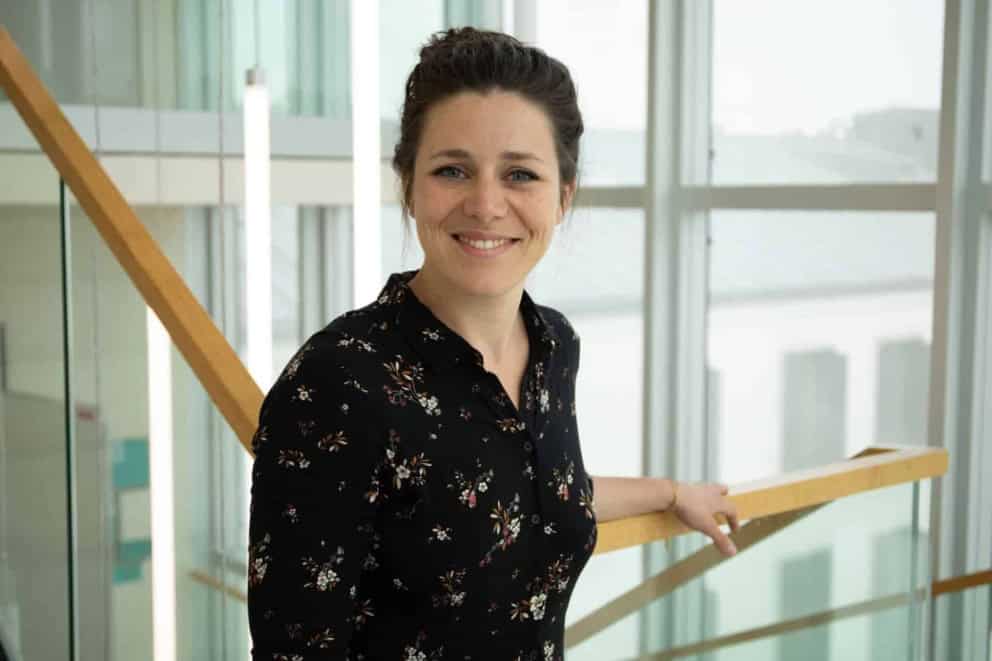
Last September, Pauline Martinot - a doctoral student in neuroscience at the Learning Planet Institute's FIRE doctoral school - and Aude Nyadanu - entrepreneur and founder of Lowpital - submitted a report, at the request of the French Minister of Health, on health promotion among young people. A considerable amount of work was carried out in 3 months, with a team of motivated volunteers and a methodology unprecedented for this kind of report.
In June 2021, Olivier Véran, France's Minister of Solidarity and Health, entrusted a ministerial mission on health promotion among young people to Pauline Martinot - a public health physician, doctoral student at the FIRE doctoral school (Université Paris Cité, Université PSL, Learning Planet Institute) in neuroscience, founder of the association Imhotep and founder of the think tank Les Ateliers Mercures - and Aude Nyadanu - entrepreneur and founder of Lowpital. The format is free and the only requirement given by the Minister: “no taboos! Together, Pauline and Aude became co-sponsors of the Santé Jeunes mission report “Towards a culture of health promotion among young people in France”.”, released in March 2022. Pauline reflects on her experience:
“This mission was my raison d'être. For years now, I've been saying to myself that we need to shift the emphasis in France from curative care to health promotion. (...) That's why I went into medicine”, Pauline Martinot
In this report, and through the solutions proposed, the co-authors aim to re-establish a positive concept of health among young people, far removed from our vision of health centered on care, hospitals, etc., and from a discourse based on the fear and worry of disease.
“Being healthy is a good thing before you go to the hospital or see a doctor!” reminds Pauline.
According to the World Health Organization (WHO), health [1] is “a state of complete physical, mental and social well-being”.”, which “is not merely the absence of disease or infirmity”. Self-confidence and a sense of inclusion in society are two fundamental elements of self-care. These 2 elements are essential for developing good mental health and for having the energy to carry out projects and open up to others. This resonates with the four NAPSO pillars of health: nutrition, physical activity, sleep and optimism. Without confidence in oneself and one's place in society, it is more difficult to activate these pillars and recognize one's own value, and finally to take care of oneself and one's health. Developing young people's individual well-being and their sense of inclusion in society are therefore essential to improving young people's health.
How can we develop a society in which young people feel confident and included, and how can we communicate with them about health?
Pauline and Aude, both instigators of interdisciplinary projects based on collective intelligence, naturally proposed an innovative methodology for this kind of exercise: consult, listen and co-construct. Over a period of 3 months, they and their team of volunteers went out to meet the people primarily concerned - young people, health and education professionals, administrators and politicians, parents - with a view to hearing and reporting on the issues at stake, but also to collaborating with the beneficiaries of public policies to promote health among young people.
An innovative methodology
Giving a voice to the people who matter most: young people
Surrounded by young, committed team, Pauline and Aude quickly set to work - reading academic works, defining audiences, questionnaires, individual and group interviews, suggestion box, etc. - to finalize and submit their report to the Minister in September 2021 (in 3 months!). Derived from design-thinking, their approach is deeply focused on the human element, on the actors and relays of health among young people, and on the young people themselves.
From the outset, the project's initiators set out to re-establish a dialogue with young people and, above all, to listen to them. The heterogeneous nature of the “young” audience means that the team has to define typical profiles according to age, place of residence, type of media consumed, parents“ socio-professional situation, etc. Particular attention is paid to NEETs ("newcomers to the world"). Particular attention is paid to NEET ("neither in employment nor in education or training” / not in employment, education or training), representing almost 13% of 15-29 year-olds in France in 2019 [2]! A total of 67 young people, aged between 12 and 25, from all over France were interviewed.
An interdisciplinary approach: consulting the professionals who work with young people in France
In addition to the young people themselves, the team also approached professionals and experts who work with and for young people. 197 professionals in the fields of education, health, politics, communication and administration from public, private and non-profit organizations working with young people, from infancy to adulthood, responded to the questionnaire created by Pauline, the Imhotep teams and with the help of’Ines Gravey (health designer). Several ministers and secretaries were also interviewed. The consultation and mobilization of this collective, interdisciplinary intelligence went beyond borders, thanks to an online consultation. Widely circulated and open to all, in French and English, it has enabled solutions and local initiatives to emerge that can be adapted to other territories or other scales.
“It was very intense! (...) I loved meeting all those people. And at the end of each interview, I said to myself that all the solutions are there, in every citizen. What's “just” missing is the feedback, the concrete things, to make it work.”, Pauline Martinot
Thanks to the interviewees' trust and confidence before the questionnaires and the use of very open-ended questions, the project's team of volunteers was able to gather some very qualitative testimonials and interesting verbatims. The wide range of responses and the diversity of the profiles interviewed make it possible to draw up a landscape that, if not completely exhaustive, is at least representative of the issues involved in promoting health among young people.
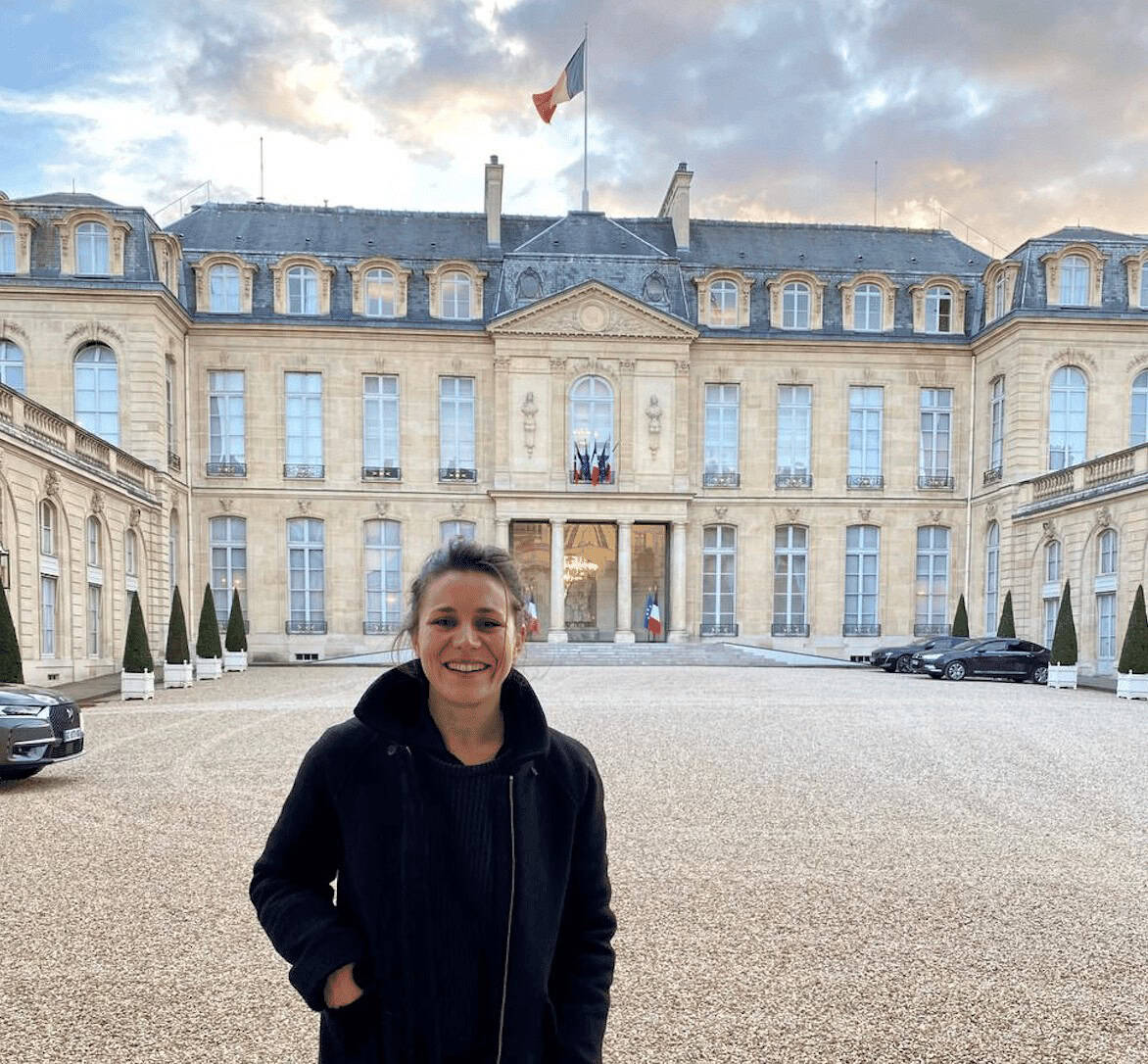
A need for commitment and interdisciplinarity
Self-confidence and lack of self-confidence
Young people's responses to questionnaires about their vision of the future highlight a number of trends: the most socially advantaged profiles - and without falling into caricature - are very pessimistic about the climate issue. The most underprivileged profiles are predominantly pessimistic about work and money in the future.
However, they all talk about mental health. “It was a big taboo just 2 or 3 years ago!”says Pauline. With the covid crisis, young people themselves have become more aware of the importance of mental health. Worldwide, suicide is the 3rd leading cause of death among 15-19 year-olds (WHO). In France, suicide accounts for 16% of deaths among 15-25 year olds (Fondation de France). At the start of 2021 in France, the data showed “an increase in emergency room visits for suicidal gestures, suicidal ideation and mood disorders among 11-17 year-olds” (Santé publique France). In the interviews, Pauline senses that young people are particularly sensitive to cyberbullying.
Young people also express their lack of self-confidence, their mistrust of the professionals who work with them, and the lack of trust placed in them. Some mention the school, which “breaks down self-confidence”Others cite a feeling of infantilization on the part of parents and the school.
“One young woman made an impression on me. She told me that if you think about it, in schooling, we're asked for our opinion 2 times: which sections we're going into at lycée [or which options we choose today], and again, it depends a bit on the parents, and which LV2. She's caricaturing, of course, but the fact is that students are rarely asked for their opinion.”
A demanding, committed audience
Access to information, multiplied by social networks and the internet in general, makes young people much more demanding in terms of information and explanations: “the answer “that's just the way it is” is completely unheard of for the young people we interviewed.”. As emphasized in the report submitted to the Minister, the 2 co-sponsors of the mission recommend making available to the public the knowledge, information and tools that will enable young people to take charge of their own lives and care for their loved ones. Shared feedback and solutions are available here.
“Regardless of the generations we interviewed, (...) they [young people] have a very, very strong ambition for society. They want to improve it, they want to get involved. They know a lot about a lot of things! (...) In interviews, they teach you a lot! With social networks, especially YouTube, they go looking for information, they're curious.”
In addition, the young people interviewed are calling for more personalized educational and career paths that meet their needs, in order to “.“breaking down silos”and “building a plural society”. Both highly pragmatic and dreamers, these young people are also ambitious: “they still allow themselves to dream and have ambitions for society and for improving it.”
According to Pauline Martinot, in all questionnaires, young people are demanding more autonomy, and the right and means to get involved as early as possible. “For them, there's no age limit to getting involved. Some of them told us that they had great ideas in CE1 for their school or neighborhood, but that they were told to wait until they were 18 to start contributing and implementing solutions.”
The health of young people: a profoundly interdisciplinary subject
To implement health promotion for young people, it is essential to draw on all the professionals - their knowledge, their experience of the system, etc. - who work in several fields and at different levels on the application of public health policies for young people. Among the professionals who work with young people on a daily basis, and who responded to the interviews proposed by the project team, it is the lack of cohesion and collaboration that is deplored. From the ultra-local to the national level, and across all areas of intervention with young people, experts are calling for better coordination and information flow. Solutions do exist, and some can be transposed and/or adapted according to location, scale and field(s). To encourage collaboration and exchanges between professionals in all the fields concerned, the mission report proposes the organization of events, moments of sharing and interdisciplinary work.
Following these interviews, the report also stresses the need to encourage civic initiatives and impact entrepreneurship for and with young people. “In our view, helping young people to solve their own problems is perhaps the best response, because it also means helping them to take charge of their lives, to feel included in society and to become genuine players in health promotion.”
Rethinking health promotion with young people means changing the way our society looks at young people, involving them in the construction and decision-making processes, and making the most of their proposals (they've got plenty of them!). A commitment that resonates with that of the Learning Planet Institute.
Thanks again to Pauline Martinot for this interview and her feedback on the commitment and contribution of their public health team to young people and professionals!
Visit the mission report here and mission summary here.
Find out more about the mission's co-sponsors :
Pauline Martinot is a doctoral student at’FIRE doctoral school. In addition to her medical training, she is also the founder of 2 independent, multi-disciplinary health organizations. The first, Imhotep, is an association that communicates about health with humor, accuracy (all messages are based on scientific publications) and a great deal of creativity thanks to multidisciplinary teams (from health professionals to comedians and standuppers!). The second, Les Ateliers Mercure, is a healthcare think tank made up of young professionals from or interested in the issues facing the French healthcare system, and proposing new approaches and solutions.
Aude Nyadanu is founder and president of Lowpital, which offers training and advice to healthcare professionals in their innovation projects.
More articles & videos on Pauline Martinot and her commitment to healthcare :
- “Promoting health among young people”Inserm (June 2022)
- Video “Rapport ministériel sur la santé des jeunes : quels retours d'expériences et quelles perspectives ?” (in French)” Think tank CRAPS (June 2022)
- “An intern, she wants to change the way doctors treat young people”Egora.fr (May 2022)
- “Intern chosen by Olivier Véran for a ministerial mission, at 30 years old, there were calls to complain about our youth and the fact that we weren't PUPH.”What'sup doc (April 2022)
- Video “La Consult’ de Pauline Martinot” (in French)”, What's up doc (May 2022)
- “Health doesn't speak to young people, and it's also our fault as doctors.”, ETX Daily Up (May 2022)
[1] World Health Organization (WHO) definition of health: “Health is a state of complete physical, mental and social well-being and not merely the absence of disease or infirmity”. : https://www.who.int/fr/about/governance/constitution
[2] In 2019, in France, 12.9 % of young people aged 15 to 29 are neither in employment, education or training (NEET). Source : INSEE, 2019 https://www.insee.fr/fr/statistiques/5346969