As recently announced by Pap Ndiaye, Minister of National Education and Youth, and Bruno Bonnell, Secretary General for Investment, LISA France 2030 is the winner of the “Innovation in schooling” call for expressions of interest (AMI).” operated by Banque des Territoires on behalf of the State.
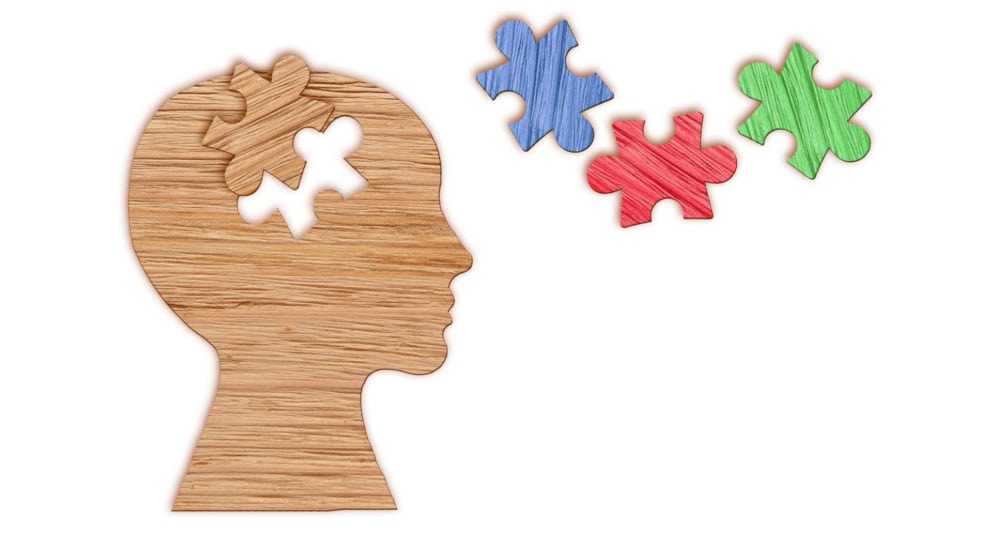
By offering new, effective and reliable tools to better identify, understand and support students' needs, LISA project (Learning, Integration, Support and Awareness) responds to the urgent need for well-being and mental health in children and adolescents.
The issue of mental health and well-being among young people is not new. But more precise assessments as well as the societal context (COVID-19 pandemic, eco-anxiety...), make its reality blatant and indisputable. Already in 2016, Mission bien-être et santé des jeunes estimated that one young person in five suffers from mental distress.
Since then, numerous assessments have confirmed the scale of the problem: a sharp increase in suicidal gestures and ideas (Santé publique France, 2022) and the prevalence of certain mental disorders such as Attention Deficit Disorder with or without Hyperactivity (ADHD), Autism Spectrum Disorder (ASD), dyslexia-dysorthographia, mood (depression) or anxiety disorders (Enabee, 2023)... An urgency recently - and on several occasions - highlighted by the Human rights defender and the High Council for Families, Children and the Elderly.
The impact of disorders affecting the well-being and mental health of a child or teenager can be extremely serious, not only for themselves, but also for those around them, their class, and their teachers. Indeed, these difficulties are associated with a lack of interest in school, failure or even dropping out, and can even lead to verbal or physical violence, towards oneself or others. Yet access to medical care is limited and uneven, and the lack of training, tools and effective methods for identifying and adapting to these problems means that teaching and educational staff, like families, often find themselves at a loss when faced with the difficulties of the young people concerned.
The LISA France 2030 project aims to better understand, better identify and better collaborate in order to better support the well-being and mental health of students..
- Better understanding : via the creation and implementation of a scalable, multi-channel training program on mental health for teachers and other members of the educational community.
- Locating : via the development and use of a digital platform to precisely identify each child's strengths and needs.
- Working together more effectively : via networking all the players involved (educators, clinicians, researchers, families, associations, local authorities, etc.), to encourage exchanges and facilitate referrals.
- Better support : via the creation and curation of practical and effective online resources, precisely recommended according to the identified needs of each student.
Deployment in over 230 pilot sites. After a development phase within the’Suger secondary school, Vaucresson and school iféa Émilie du Châtelet, in Clichy-la-Garenne, will gradually be extended to more than 230 pilot sites in the Ile-de-France academic region (Academies of Créteil, Paris and Versailles), as well as to all Schools under the full responsibility of Mission laïque française to reach a total of over 80,000 students.
The LISA France 2030 project, led by iféa and chaired by Elie Rotenberg (co-founder of LISA and iféa, member of the Learning Planet Institute Board of Directors), was born out of a collaboration between stakeholders and experts in the field of childhood and education, all keen to provide answers whose effectiveness is based on evidence. It brings together a consortium major players in education : iféa, Suger High School, Learning Planet Institute, French Secular Mission, Ile-de-France academic region (see Appendix 1). This process is supervised by an ethical and scientific committee. (see appendix 2), made up of world-class experts and supported by strong partnerships with leading institutions (see Appendix 3).
LISA France 2030 is intended to serve as a pilot project to be extended to other schools and academies in France, but also - with the support of its partners - internationally.
Elie Rotenberg
For further information or interview requests, please contact
For LISA France 2030 - Isabelle MERNY, Communications Director, Learning Planet Institute : presse@lisa.ifea.education - 07.80.91.66.04
For the rectorat de Paris - Marin Turban, Communications Department : marin.turban@ac-paris.fr - 06.47.79.71.84

Appendix 1: The consortium
- iféa the iféa network develops caring, demanding bilingual schools, putting the well-being and recognition of students' strengths and needs first.
- Suger Secondary School Founded in 1935, Suger is a secular private school under contract with the French state. It comprises a collège (including an international section), a general and technical lycée and a boarding school for girls. Its educational model is based on a caring and demanding pedagogy.
- Learning Planet Institute Learning Planet Institute: the Learning Planet Institute explores, experiments and shares new ways of learning and cooperating to meet the needs of young people and the planet. Through its activities, the Institute creates research and teaching programs based on interdisciplinarity, diversity and initiative.
- French Secular Mission Mission laïque française (MFL): a non-profit organization recognized as being in the public interest, MFL heads a network of 108 French educational establishments abroad, providing schooling for over 61,000 students in 37 countries. In addition, it acts as an operator for the French government and/or companies in educational cooperation initiatives.
- Ile-de-France academic region (Academies of Créteil, Paris and Versailles): the role of the academic region is to improve the coordination and implementation of public policies, particularly in the field of education, to ensure better service for users in the regions. The rector of the academic region is the privileged interlocutor of the president of the regional council and the prefect of the Ile-de-France region in the implementation of interministerial public policies. The Ile-de-France academic region is home to 3.1 million pupils and students, including 2.4 million 1st and 2nd grade pupils in all sectors (public, private under contract), representing around 20% of pupils in mainland France.
Appendix 2: the ethics and scientific committee
Chairman - Ariel B. Lindner, co-founder of the Learning Planet Institute and LISA and Director of U1284 INSERM Université Paris Cité
Vice-Chairman - Prof. Bennett L. Leventhal, Professor Emeritus of Child and Adolescent Psychiatry at the University of Chicago
- Member - Prof. Richard Delorme, InovAND Center of Excellence, Child & Adolescent Psychiatry Department, Hôpital Robert Debré, APHP
- Member - Prof. Bruno Falissard, Center de Recherche en Epidémiologie et Santé des Populations, U1018 INSERM, Maison de Solenn
- Member - Dr Caroline Huron, Learning Planet Institute, U1284 INSERM Université Paris Cité, President of Cartable Fantastique, CSEN, CN TSA-TND
- Member - Prof. Yasser Khazaal, Professor of Addiction Psychiatry at the University of Lausanne, Faculty of Biology and Medicine, Associate Researcher at the Research Centre of the Institut universitaire de santé mentale de Montréal, Associate Professor in the Department of Psychiatry and Addiction at the University of Montreal.
Appendix 3: partner institutions
- Clepsy.fr / Child and Adolescent Psychiatry Department, Robert Debré Hospital, APHP
- Child Mind Institute
- U1284 INSERM