The 2026 applications to join the EURIP Graduate School are now open!
20 February 2026
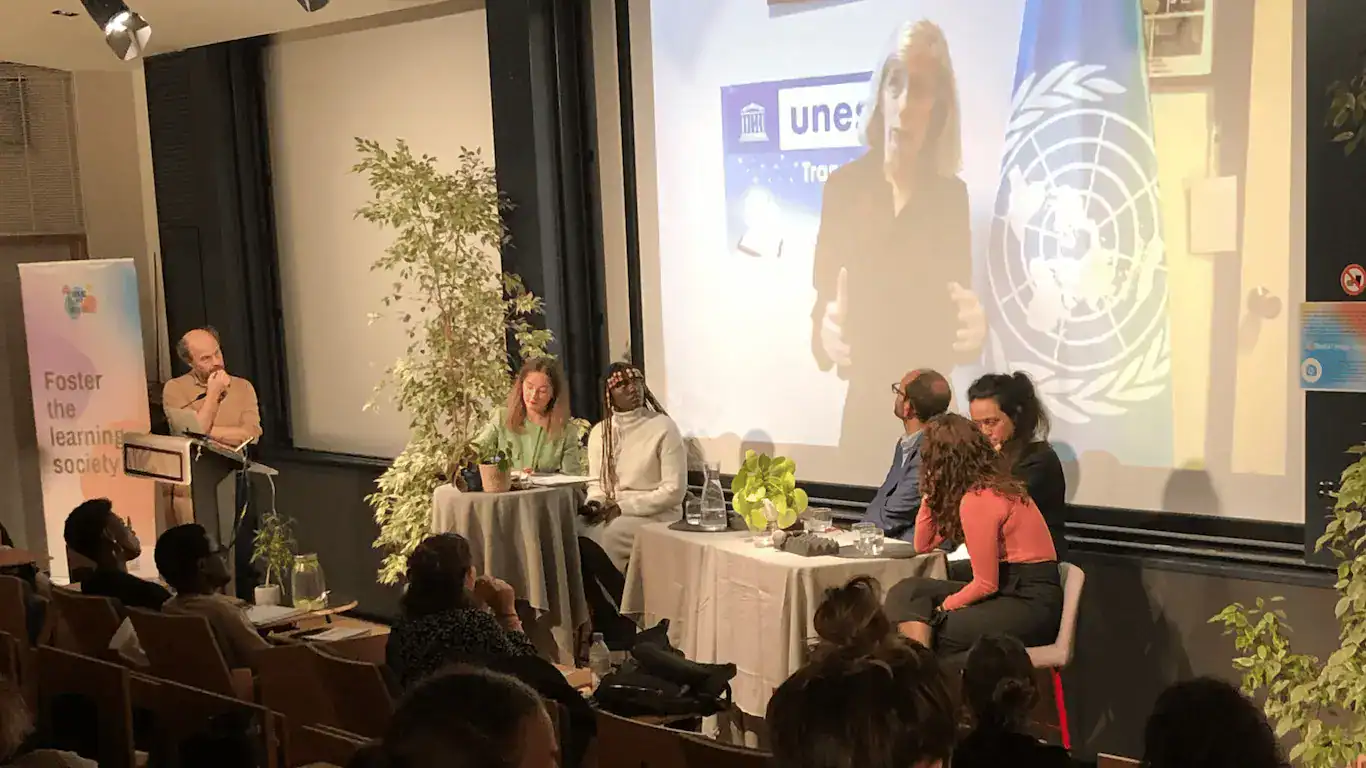
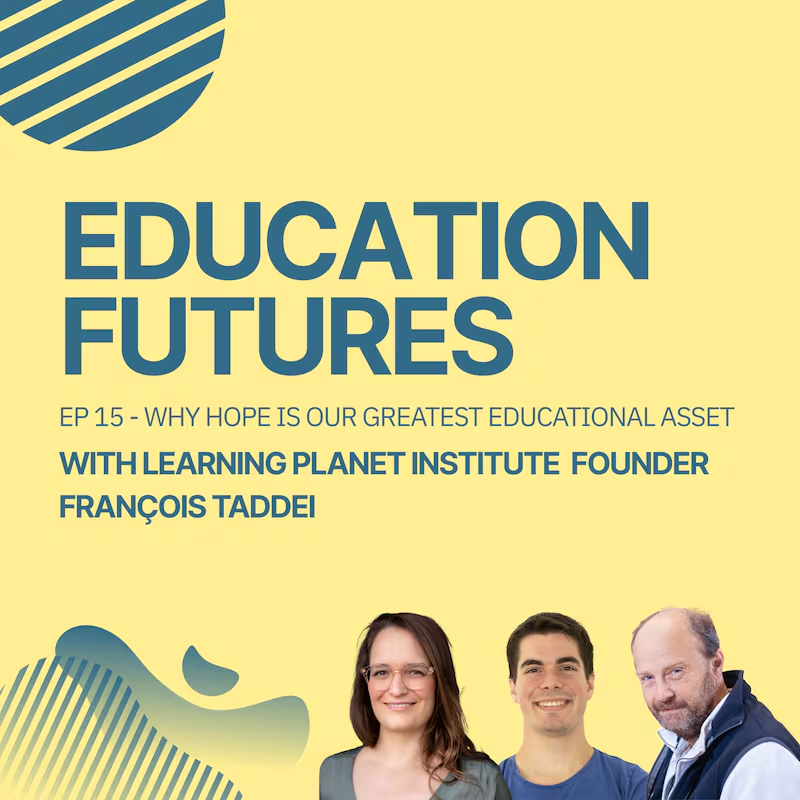
Since 2014, François TADDEI, founder and President of the Learning Planet Institute, has held the UNESCO Chair "Learning Sciences" jointly hosted by Université Paris Cité and the Institute.
Bringing together research, pedagogy and technology, this Chair supports teachers, researchers, teams and networks of stakeholders in building a learning society for a more sustainable world. It is founded on a strong belief: that youth, lifelong learning and collective intelligence are the most powerful drivers of positive change in our societies.
With a four-year mandate, the "Learning Sciences" Chair was renewed in 2018 and again in 2022. For the 2022–2026 period, its work focuses on three main areas.
In an era shaped by collective intelligence and major transitions, and to support the emergence of a learning society, we aim to strengthen the Chair’s research on the evolution of learning processes and collective decision-making.

Co-creating a learning society to address today’s challenges by scaling up access to innovative educational content and methods for learners and educators. Positioning the Institute as a leading actor at the intersection of Education, Research and Youth.
Continuing to lead our global community of practice dedicated to transforming education and co-creating a learning society. Supporting the development of projects that help individuals care for themselves, others and the planet. Expanding this community, including companies aligned with the Learning Planet Institute’s values and the SDGs. Celebrating learning through the annual LearningPlanet Festival and targeted events, and securing the resources needed to sustain the development of the LearningPlanet Alliance.
Strengthening and expanding the LearningPlanet Alliance’s achievements: the LearningPlanet Festival, platform, processes, new institutional partnerships, and new funding sources (sponsorship, philanthropy, etc.)
Powered by
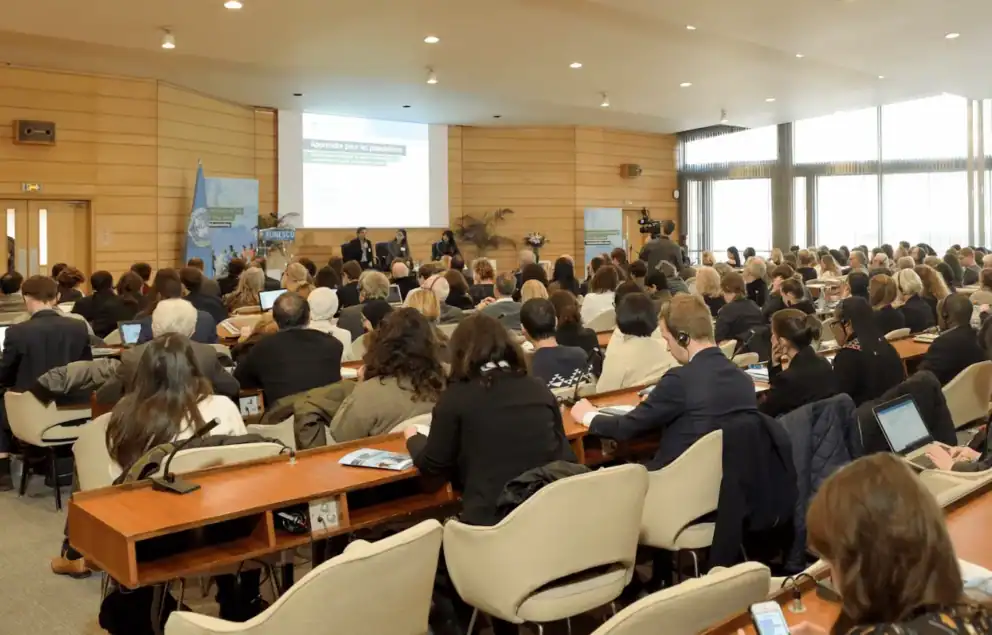
To deepen the themes explored by the Sciences of Learning Chair, the Learning Planet Institute launched a conference series in 2023. This initiative is part of our collaboration with UNESCO to build a planetary university dedicated to peace education, sustainable lifestyles and global citizenship — equipping individuals with the skills needed to shape a better future.
How can peace education evolve to foster lasting, positive peace and enable young leaders to become key actors in conflict transformation? What strategies can be developed with young people so they become true builders of peace and drive meaningful change within their communities? How can international institutions, researchers and educators work together to strengthen the impact and reach of peace education worldwide? This conference invited participants to rethink peace education — not only as a tool for awareness and dialogue, but as a powerful catalyst for empowering individuals and civil society to actively build peace.
In the presence of : Hilary Cremin (University of Cambridge), Christopher Castle (UNESCO), Ilgın Paslı-Brombach (planIMPACT), Rina Malagayo Alluri (University of Innsbruck/UNESCO), Pavel Luksha (Global Education Futures) and Candice Mama (Author)
What will the future of work look like in the context of ongoing environmental, demographic, social and digital transitions? How can education be reinvented to prepare professionals capable of addressing planetary and sustainable development challenges? This conference explored the evolution of jobs, the potential disappearance of certain professions, and the emergence of new creative skills essential for the careers of tomorrow.
In the presence of : Borhene Chakroun (UNESCO), Mahlet Rede (Econodata), Michael Fung (Institute for the Future of Education at Tecnologico de Monterre), Todd Lubart (Université Paris Descartes), Vicki Phillips (National Center on Education and the Economy), Louise Massacrier (Université Paris Cité/Learning Planet Institute), Zoe Lina Wehmeye (Université Paris Cité/Learning Planet Institute) and Iryna Nikolayeva (Learning Planet Institute).
How can young people be meaningfully included in institutional governance, curriculum design and education advocacy? How can power be (re)distributed to youth? How can we innovate and engage young people to shape the future of education together?
In the presence of : Manja Klemenčič (Harvard University, Bloomsbury Handbook of Student Politics and Representation in Higher Education), Michael Winter (Oikos International), Arissa Roy (youth activist), finalists from the Learning Planet Youth Design Challenge, Edward Stevenette (Learning Planet Institute) and François Taddei (Learning Planet Institute).
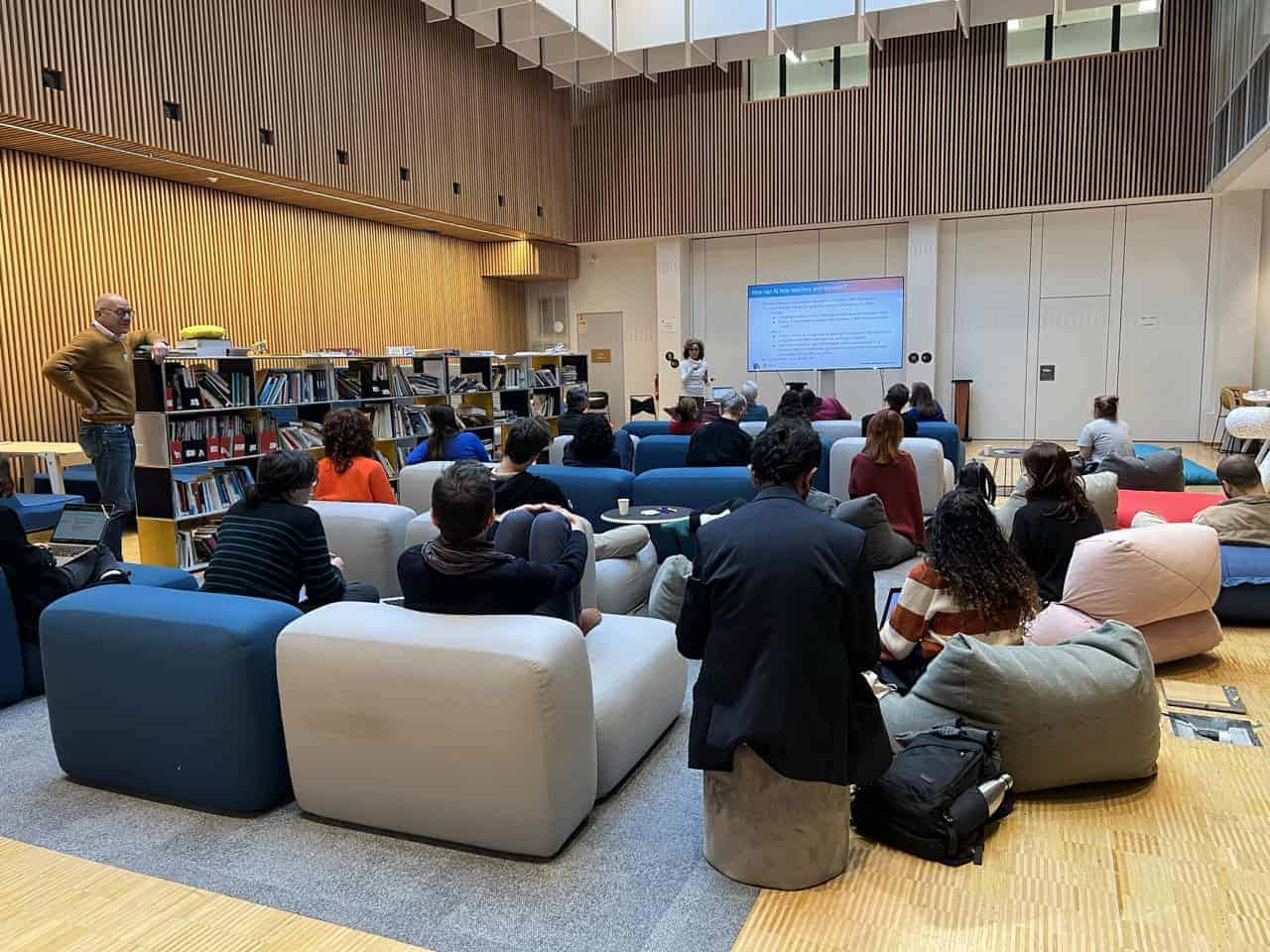
How can we explore the disruptive potential of generative AI in teaching and learning?
In the presence of : Justine Cassell (Inria/Carnegie Mellon University), Delphine Le Serre (EdHu2050), Fengchun Miao (UNESCO), Colin de la Higuera (Nantes Université), François Taddei (Learning Planet Institute) and Chabab Nastar (Learning Planet Institute).
What initiatives, best practices and inspiring models are being developed — in primary and secondary schools, higher education institutions and civil society organisations — to move both formal and informal education towards more environmentally responsible practices?
In the presence of : Won Jung Byun (UNESCO), Brian MacCraith (Arizona State University), Runa Khan (Friendship), Eric Guilyardi (Office for Climate Education), Nikita Gidwani (Aga Khan Education Service) and Gaëll Mainguy (Learning Planet Institute).
The report "Exploring Local Learning Ecosystems in the Global South: Pathways to Thriving for Every Child", published this year, states:
“Education needs to become an avenue through which global society will overcome the challenges, gaps and systemic barriers we have created, and which COVID-19 brought into sharp focus as never before: the digital divide, the imbalance of information flows, growing economic and social inequality - particularly the long-term impact of ACE (Adverse Childhood Experiences), religious, ethnic, and cultural divides, and the extreme ecological pressures humans have placed upon the Earth. The profound disruption of labour markets, as a result of technological advancements, is being further exacerbated by the current global financial instability.” How do learning ecosystems enable us to move from hardship to fulfillment?
In the presence of : Stefania Giannini (UNESCO), Laura Head (Université Paris Cité-Learning Planet Institute), Julia Hermida (Universidad Nacional de Hurlingham, CONICET), Edouard Kaminski (Université Paris Cité) and François Taddei (Learning Planet Institute).