
In April 2022, the Learning Planet Institute brought together 35 experts, including researchers, entrepreneurs, students and teachers, for a workshop on collective intelligence and learning. They identified themes, challenges and potential solutions at the intersection of these two fields, and collaboratively wrote a detailed opinion piece, which was published in the journal Human Computation.
Summary
Learning, defined as the process of constructing meaning and developing the skills to act on that meaning, is essential to help individuals, communities and organizations meet challenges. When these challenges become increasingly complex, requiring knowledge from diverse fields of expertise, it becomes difficult for isolated individuals to meet them. In this context, collective intelligence - the ability of groups of people to act together and solve problems using their collective knowledge - comes into its own.
Technologies are essential to support and understand learning and collective intelligence, hence the need for innovation in technologies that can meet users' needs for learning and collective problem-solving. Use-inspired research is an appropriate paradigm that embraces applied solutions and scientific explanations of learning and collective intelligence processes, and can improve the technologies that can support them.
While some conceptual and theoretical work explaining and linking learning to collective intelligence is emerging, the technological infrastructures as well as the methodologies employing them and the evidence supporting them are nascent. We have brought together a group of experts to create common ground and engage with the priorities of use-inspired research. Here we detail the directions and methods they have proposed as the most promising for advancing a scientific agenda around learning and collective intelligence.
Advanced workshop onresearch and development challenges at the interface of learning and collective intelligence was organized as part of the process of strengthening the Planet Learning Institute's position as a common ground, a space that brings together a range of stakeholders with diverse perspectives on the intersection of learning and collective intelligence.
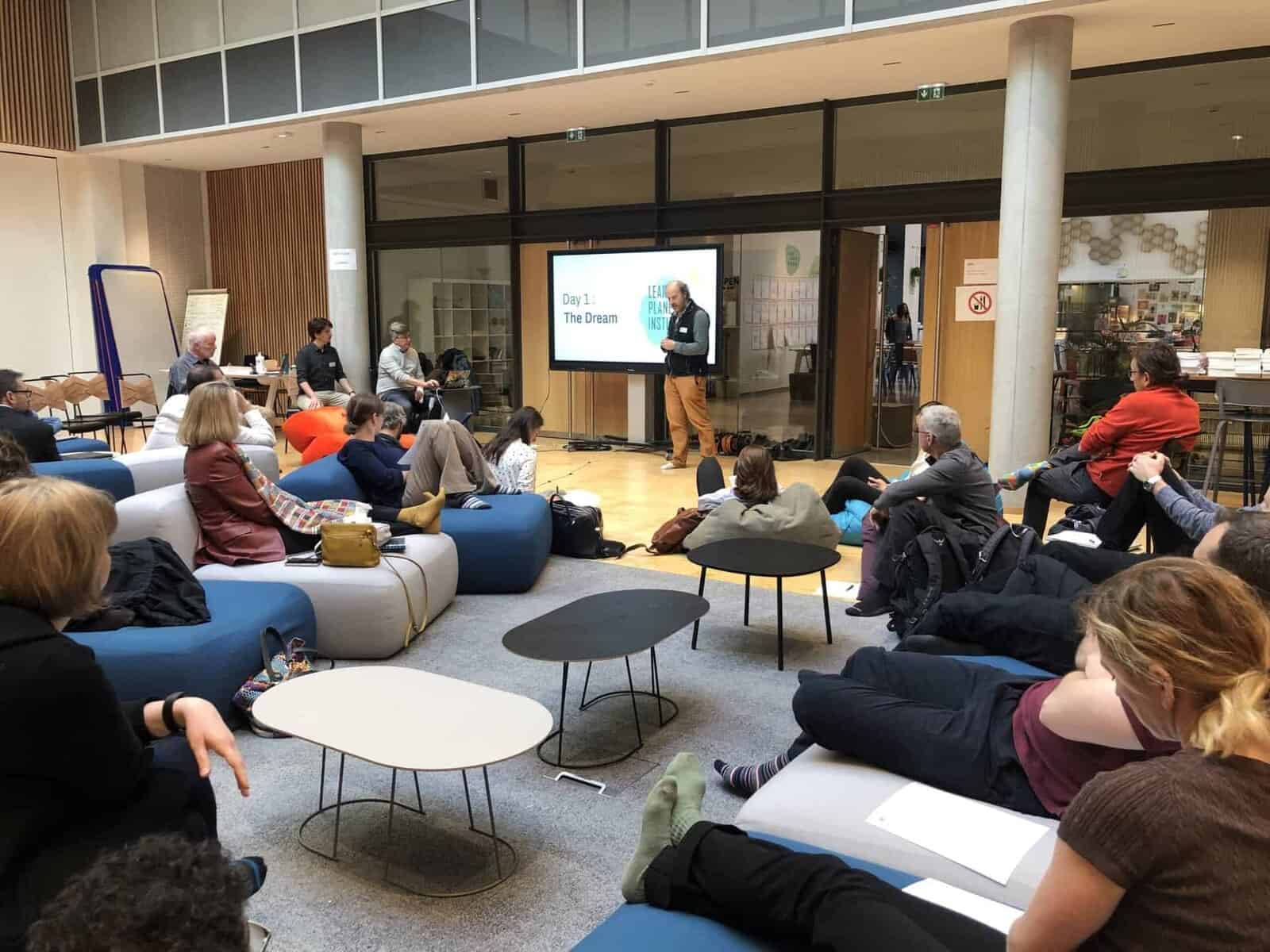
Stimulated by questions such as“What is your vision for the industry in the next 5 to 10 years??” and “What can't be done yet (open-ended questions)?“Participants spent 4 days identifying the key challenges at the intersection of learning and collective intelligence, then sketched out possible solutions based on research and development.
They focused on use-inspired research approaches that can meet the needs of both knowledge production and technological advancement. Through a series of focused discussions, using different facilitation methodologies, including the World Cafe, they converged to 4 different major themes and a total of 9 specific challenges. This list, which is not intended to be exhaustive, highlights promising directions and methods for advancing a scientific program around learning and collective intelligence.
- Processes, objectives and values of 21st century learning
- Challenge 1: How can we get people more involved in learning?
- Challenge 2. How can we develop skills for “learning to learn”?
- Challenge 3. How can we recycle the workforce needed for current and future jobs?
- Technology-assisted group learning
- Challenge 1: How do you connect learners?
- Challenge 2. How to combine learning and activism?
- Challenge 3. How to represent learning processes?
- Evaluation and assessment in informal learning
- Challenge 1: How can we achieve equitable, fair and accessible assessment in informal learning?
- Challenge 1: How can we achieve equitable, fair and accessible assessment in informal learning?
- Bringing about positive systemic change in the education of citizens
- Challenge 1: How can we include all types of learners as partners and agents of change in the development of the education system?
- Challenge 2. How can we create an agile learning ecosystem that adapts to the voices of all stakeholders in the face of evolving societal challenges?
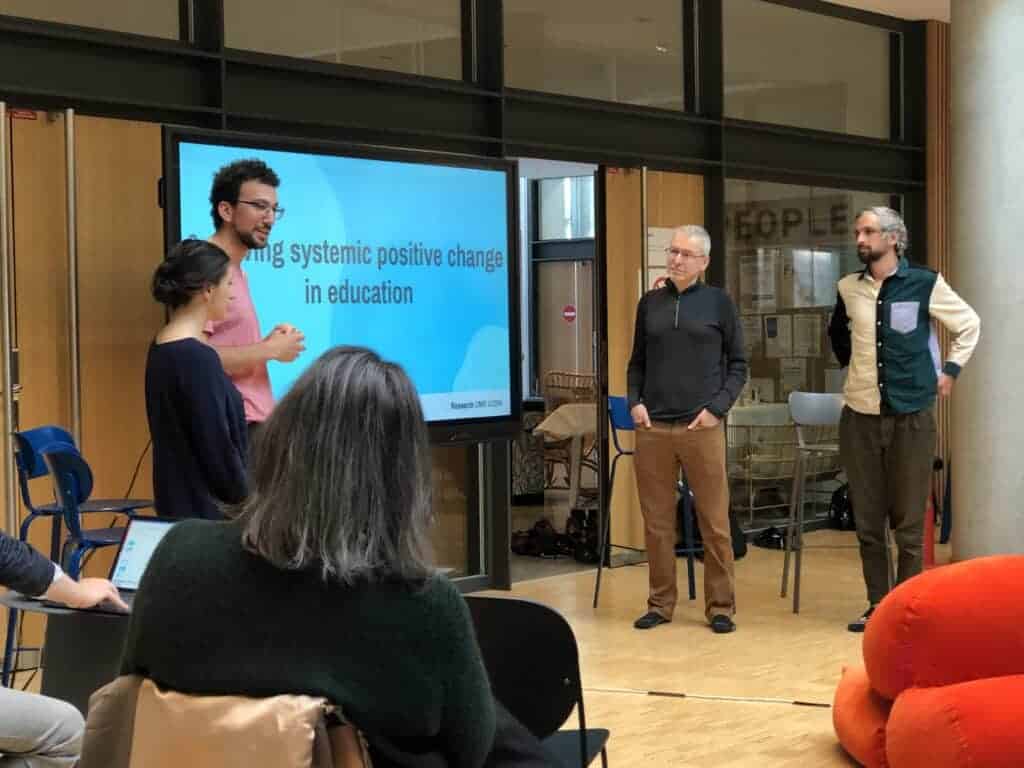
The contributions of the workshop participants enabled the Planet Learning Institute to present its collective efforts in printed form, and to implement some of its findings. The Institute firmly believes that the potential of collective intelligence and learning as drivers of transformation across multiple societal and industrial domains is enormous, and that this work could act as a catalyst, inspiring others and laying the foundations for the alignment needed to ensure positive outcomes.
Finally, the Learning Planet Institute is aware of the ever-changing nature of collective phenomena, and therefore submits this document to the wider community as a living document, welcoming future adjustments, improvements and all open contributions.
Read more :
- The R&D center of Learning Planet Institute
To promote the transformation of learning and thus have a positive impact on the planet, the R&D division draws on research and technology to develop projects around artificial intelligence, collective learning and intelligence, and frugal innovation. These projects are designed and carried out according to their purpose.
R&D is a fundamental, interdisciplinary activity. It feeds into and supports the Institute's four other main activities (Education, Digital Ecosystems, International Alliance and Organizational Transformation).
The Learning Planet Institute encourages and implements inclusive and open R&D: everyone is a potential researcher.
- The document
Misevic, D., Atal, I., Bedard, D., Cherel, E., Escamilla, J., Evans, L., Hannon, V., Huron, C., Irrmann, O., Kizilcec, R., Lazega, E., Lemoie, K., Lindner, A., Macedo, M., Mainguy, G., Mann, R., Masselot, C., Michelucci, P., Nikolayeva, I., Ogan, A., Pérez-Sanagustín, M., Pescetelli, N., Poquet, S., Rafner, J., Regester, D., Santolini, M., Sevin, J.-M., Shahaf, D., Sherson, J., Smith, J., Söllner, M., Soulié, F., Taddei, F., Tupikina, L., & Van Der Leeuw, S. (2023). Harnessing collective intelligence for the future of learning - a co-constructed research and development program. . Human Computation, 10(1), 1-30.
https://doi.org/10.15346/hc.v10i1.141
This publication is part of the UNESCO Chair in the Science of Learning, established between UNESCO and Université Paris Cité, in partnership with the Learning Planet Institute.
The ideas and opinions expressed in this publication are those of the authors. They do not necessarily represent the views of UNESCO and do not commit the Organization.